
Financial literacy Math Worksheets for Ages 3-8
4 filtered results
Difficulty Level
Grade
Age
-
From - To
Subject
Activity
Standards
Unlock the world of financial literacy for young learners with our engaging Math Worksheets for ages 3-8. Designed to introduce essential money concepts through fun and interactive activities, these worksheets help children grasp financial basics while developing their math skills. From counting coins to simple budgeting exercises, our resources make learning about saving, spending, and basic transactions exciting. Tailored to meet various developmental stages, these worksheets encourage problem-solving and critical thinking. Whether at home or in the classroom, equip your child with vital financial knowledge that lays the foundation for a bright future. Explore our collection and foster financial confidence today!
Favorites
With answer key
Interactive
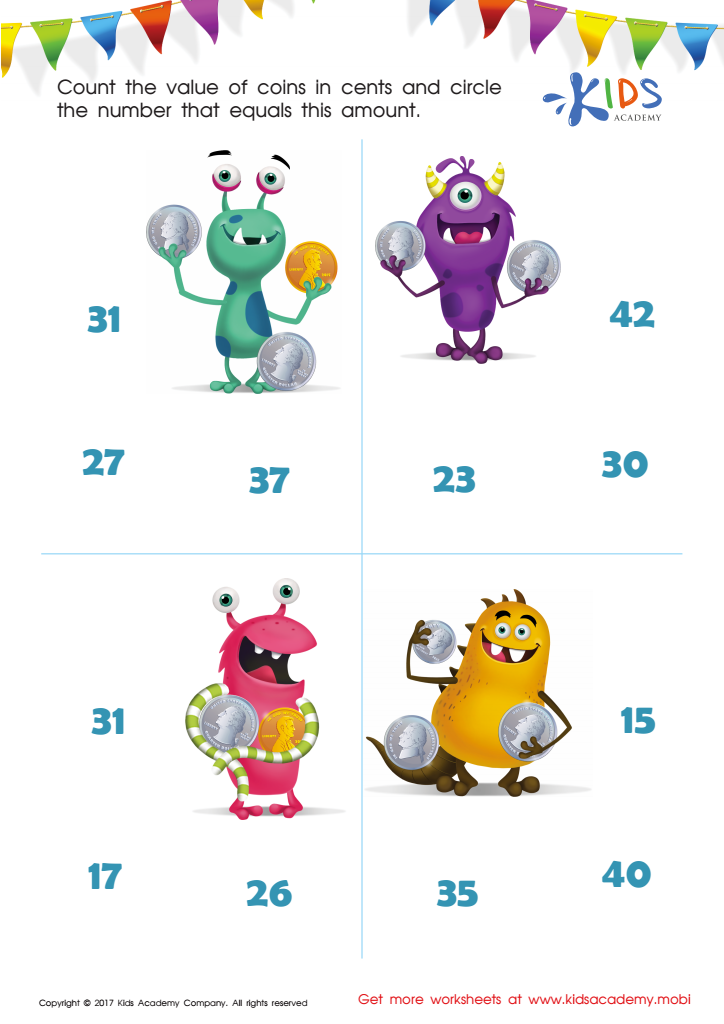
How Many Coins Money Worksheet
Have fun while counting coins: look at the monsters and count the coins in their hands. Challenge your little learners to count and write down the number of coins each one has. Enjoy the time together!
 Assign to My Students
How Many Coins Money Worksheet
Worksheet
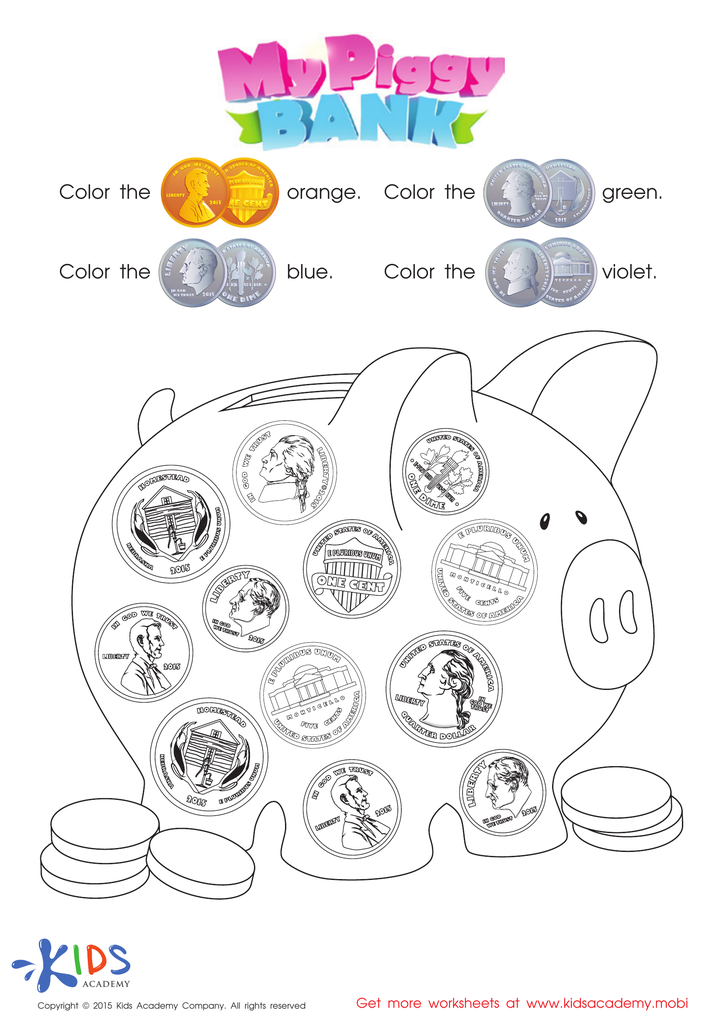
Recognizing Money Money Worksheet
Help the piggy bank by coloring its coins with Kids Academy's free money worksheets! Learn the different coins and their values with your kids. Printable worksheets are available to continue the lesson. Let's learn and have fun!
Recognizing Money Money Worksheet
Worksheet
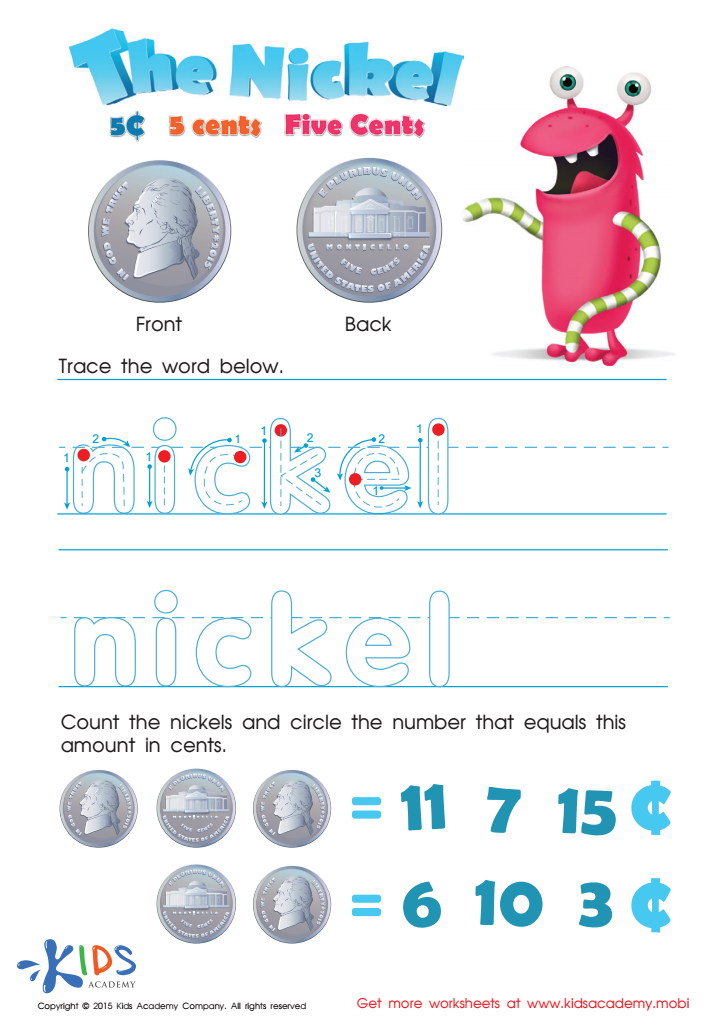
Five Cents or the Nickel Money Worksheet
Counting money games help kids make learning money fun and easy. Next up: the 5 cent coin, or nickel. Look at both sides and remember them. Then, trace the word "nickel" to help you remember. Finally, count the nickels and work out amounts in cents. Let's do this! Kids Academy helps make money learning easy and fun!
Five Cents or the Nickel Money Worksheet
Worksheet
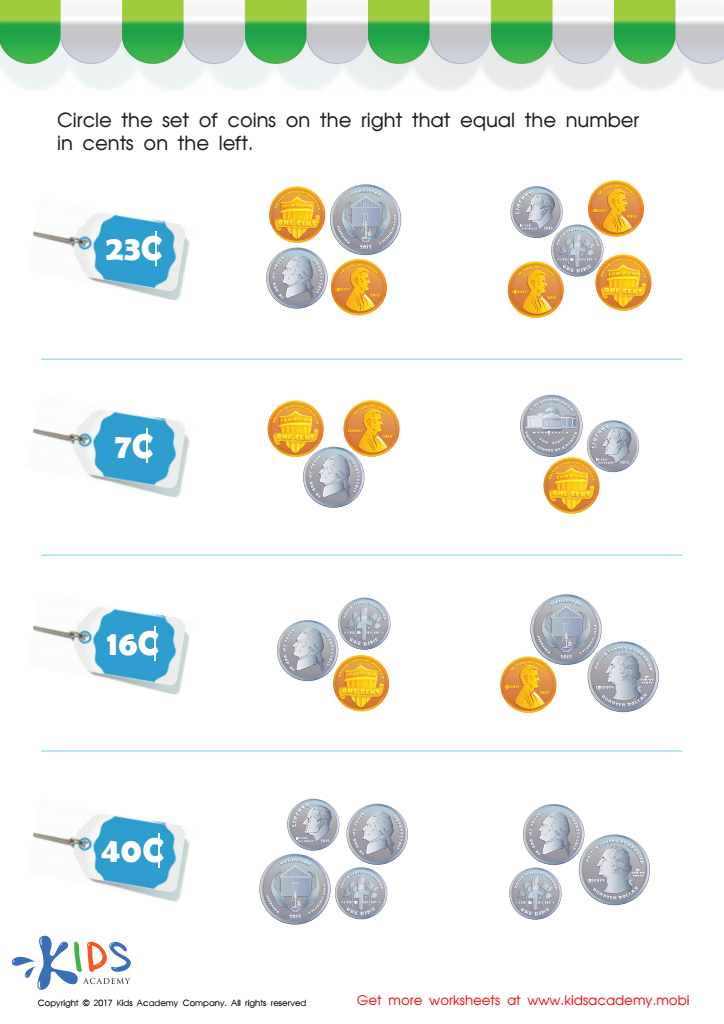
Picking the Coins You Need Money Worksheet
Let's learn to count money with Parents and Kids Academy! Investigate a real shop together: buy a globe, pencils, books, and a school bag using coins. Then, circle the coins you'll need. Visit our website for more free and fun money games for kids!
Picking the Coins You Need Money Worksheet
Worksheet
Join Kids Academy for Free
Who is primarily going to use this learning content?








Financial literacy is a crucial skill that children can begin to develop during their formative years. For ages 3-8, the foundation of numeracy and basic math skills serves as the cornerstone for understanding money management concepts. Introducing financial literacy at this early stage equips children with essential skills for future success.
Parents and teachers should engage children in financial literacy math to cultivate an understanding of basic concepts such as counting, addition, subtraction, and the value of money. Activities like playing store, using play money, or counting coins can make learning interactive and enjoyable. This not only strengthens math skills but also instills essential habits like saving, budgeting, and decision-making.
Financial literacy also promotes critical thinking as children learn to negotiate, prioritize their needs versus wants, and understand the importance of delayed gratification. These foundational skills pave the way for responsible financial behaviors in adolescence and adulthood.
In a world increasingly driven by financial complexities, early education ensures children are well-prepared to navigate economic challenges. Therefore, fostering a solid base in financial literacy math is an investment in children's future resilience and independence, ultimately shaping them into informed and responsible adults.








