Improve counting skills Math Worksheets for Ages 3-8 - Page 3
53 filtered results
-
From - To
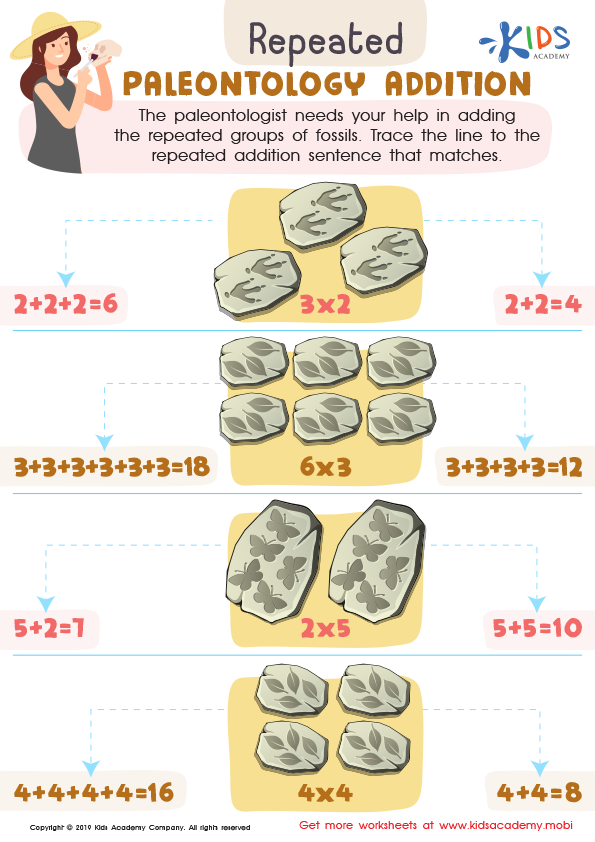
Repeated Archaeology Addition Worksheet
 Assign to My Students
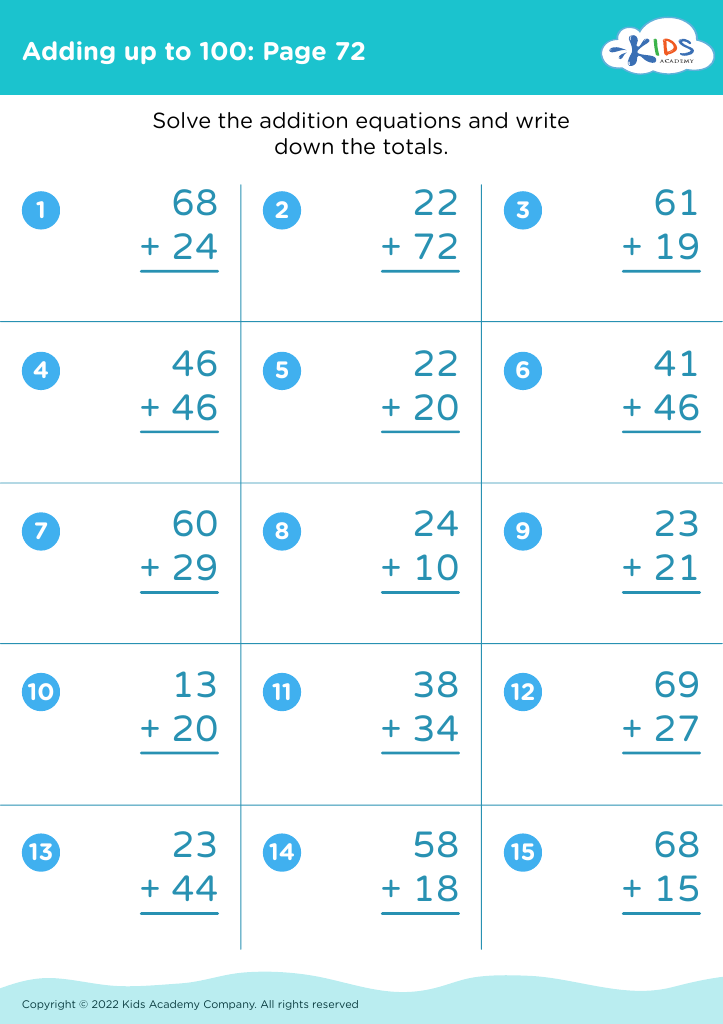
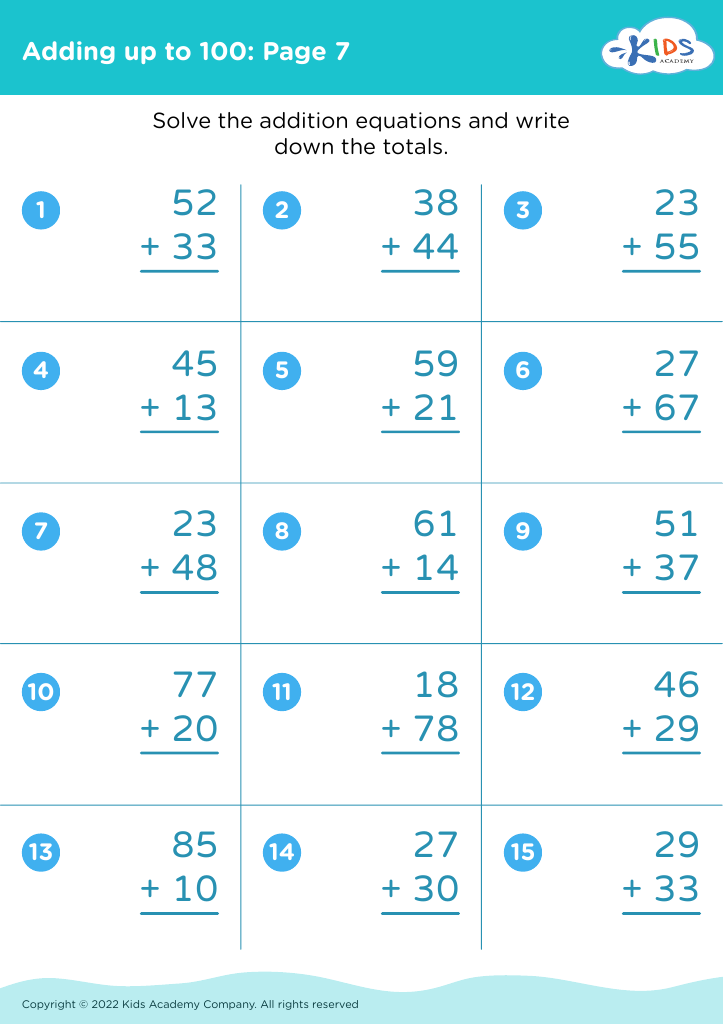
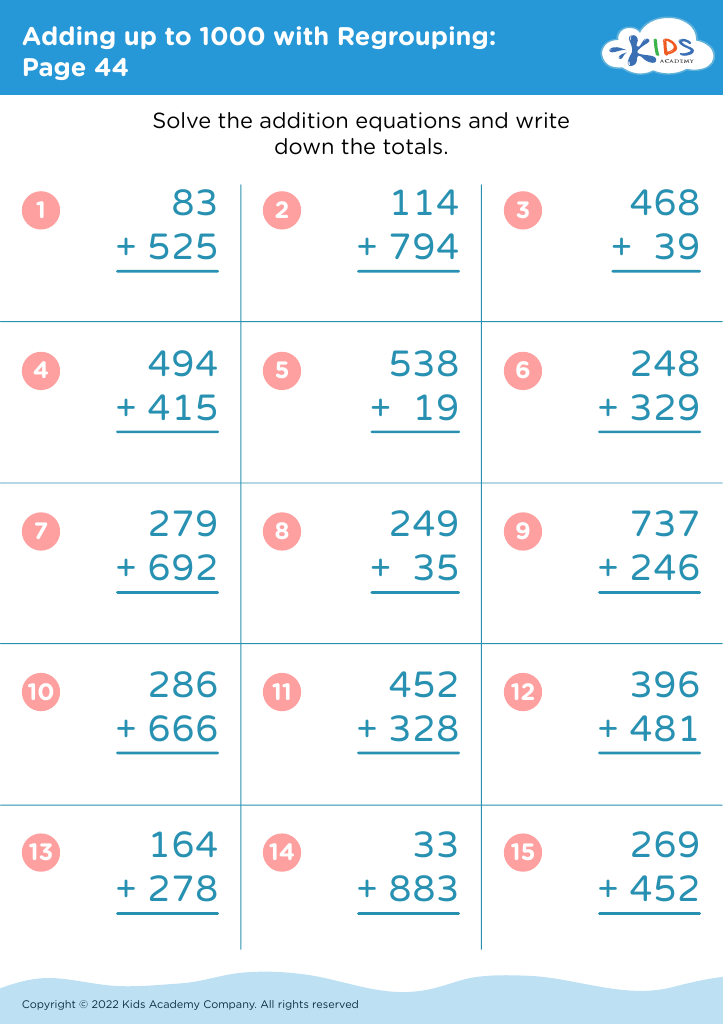
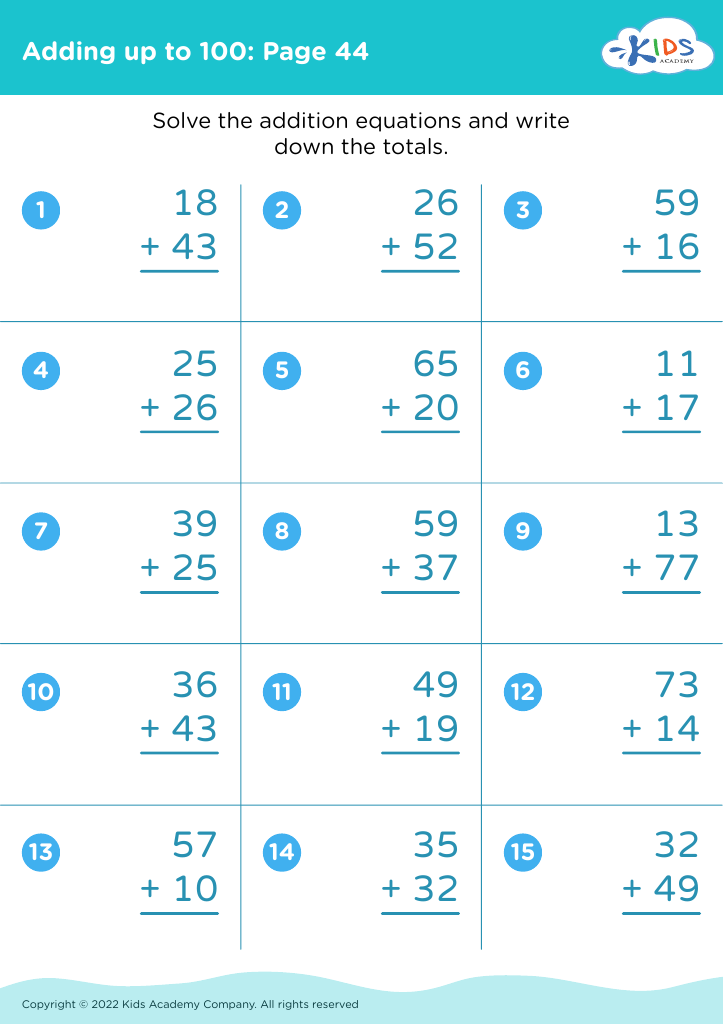








Counting skills are foundational for early math development and are crucial for children ages 3-8. Parents and teachers should prioritize improving these skills because they serve as building blocks for more complex mathematical concepts. Early familiarity with counting helps children understand number relationships, enhances their problem-solving abilities, and fosters critical thinking skills.
Moreover, proficient counting skills contribute to a child's overall cognitive development. Engaging in counting activities helps improve memory, attention span, and spatial awareness. These skills are not only vital for math but also support progress in reading readiness and other academic areas.
In addition, early counting proficiency can boost a child's confidence and motivation in learning environments. When children experience success and mastery in counting, they are more likely to embrace challenges and continue to explore mathematical learning.
Socially, counting games and group activities encourage teamwork and communication, enhancing social skills. Finally, fostering counting skills at an early age sets the stage for a lifetime of positive attitudes toward mathematics, making it more likely that children will pursue higher-level math as they progress in their education. In conclusion, investing in counting skills is essential for holistic child development and future academic success.








