
Improves counting skills Math Worksheets for Ages 3-8
10 filtered results
Difficulty Level
Grade
Age
-
From - To
Subject
Activity
Standards
Enhance your child's counting abilities with our comprehensive Math Worksheets for Ages 3-8! Our expertly designed worksheets help young learners build strong foundational skills in counting through engaging activities and colorful illustrations. From simple number recognition to advanced counting concepts, each worksheet is tailored to promote confidence and mastery in early math. Perfect for preschoolers and early elementary students, our worksheets support fun and interactive learning at home or in the classroom. Watch as your child enjoys learning while developing critical thinking and problem-solving skills. Foster a love for math early on with our proven resources!
Favorites
With answer key
Interactive
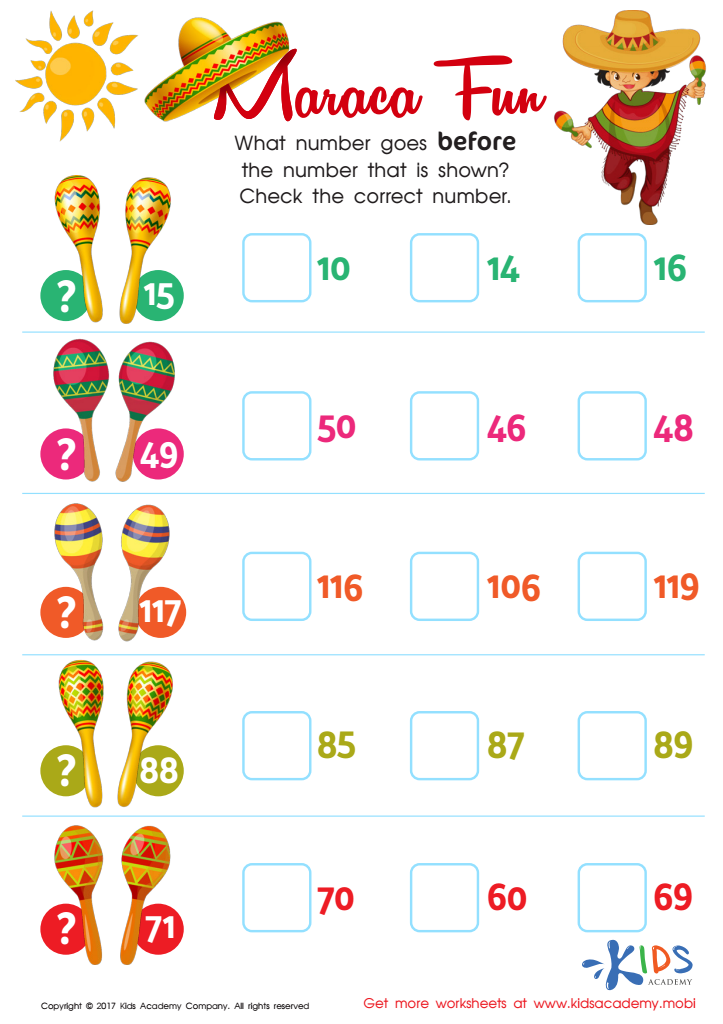
Counting: Maraca Fun Worksheet
Let your child add some Maraca fun to their math lessons by using this printable worksheet! They must figure out the numbers that come before the ones shown. Answers are provided on the other side; all your child needs to do is check the boxes with the correct numbers. Help them improve their counting and have fun along the way!
 Assign to My Students
Counting: Maraca Fun Worksheet
Worksheet
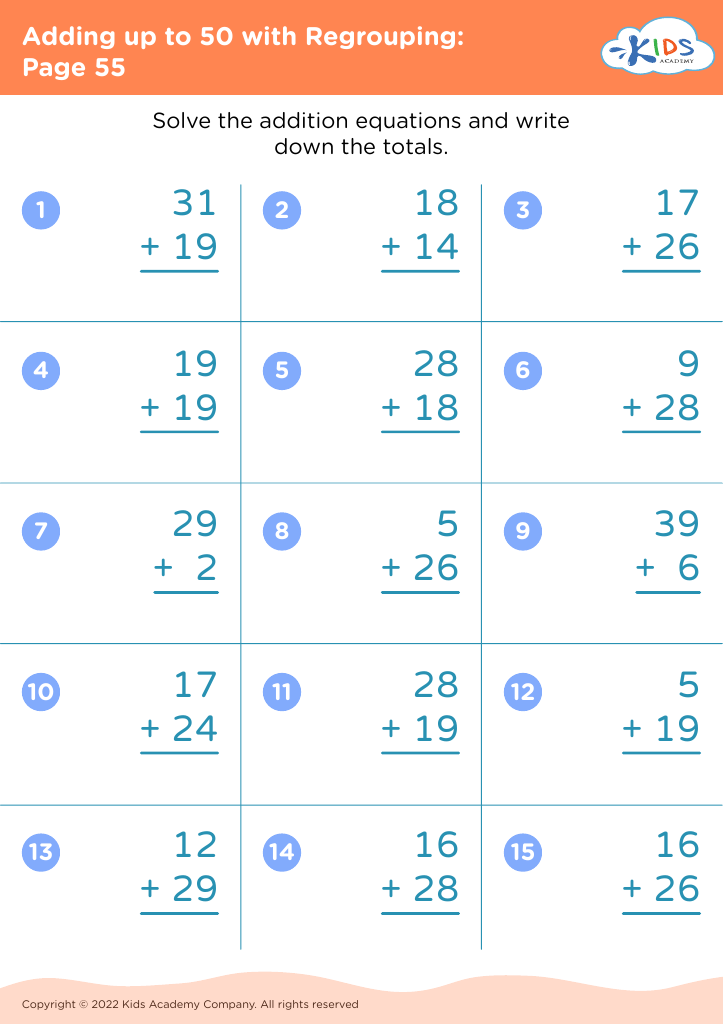
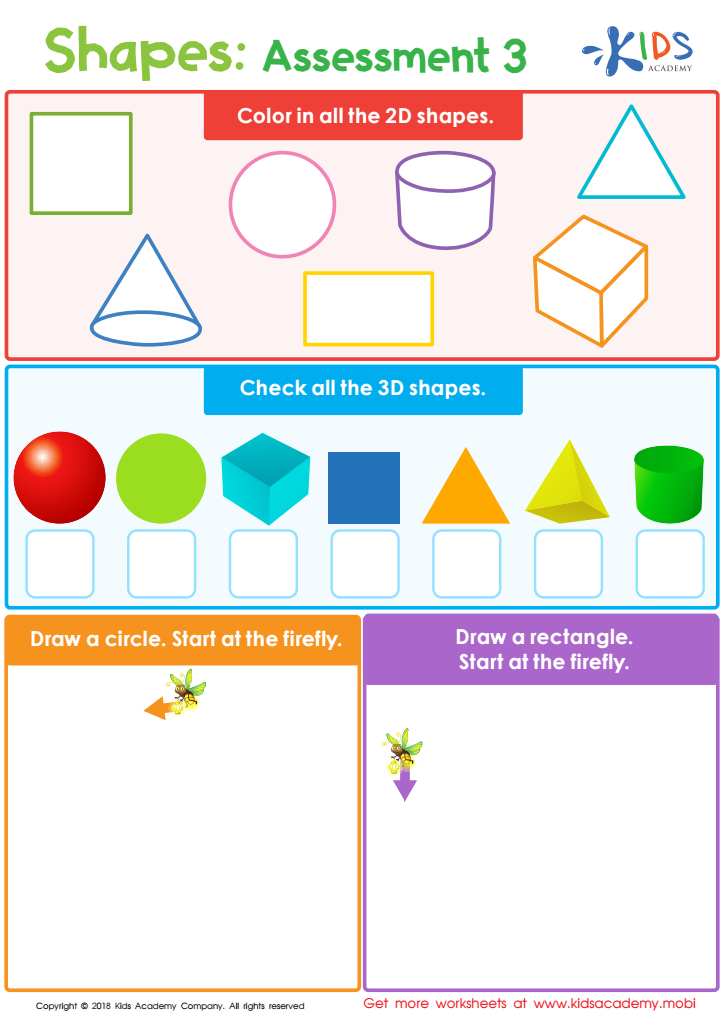
Shapes: Assessment 3 Worksheet
Shapes are everywhere! Help your students differentiate between 2D and 3D shapes. Ask them the difference between a triangle and pyramid, or a circle and a sphere. This worksheet tests their understanding of both types and is a useful assessment tool.
Shapes: Assessment 3 Worksheet
Worksheet
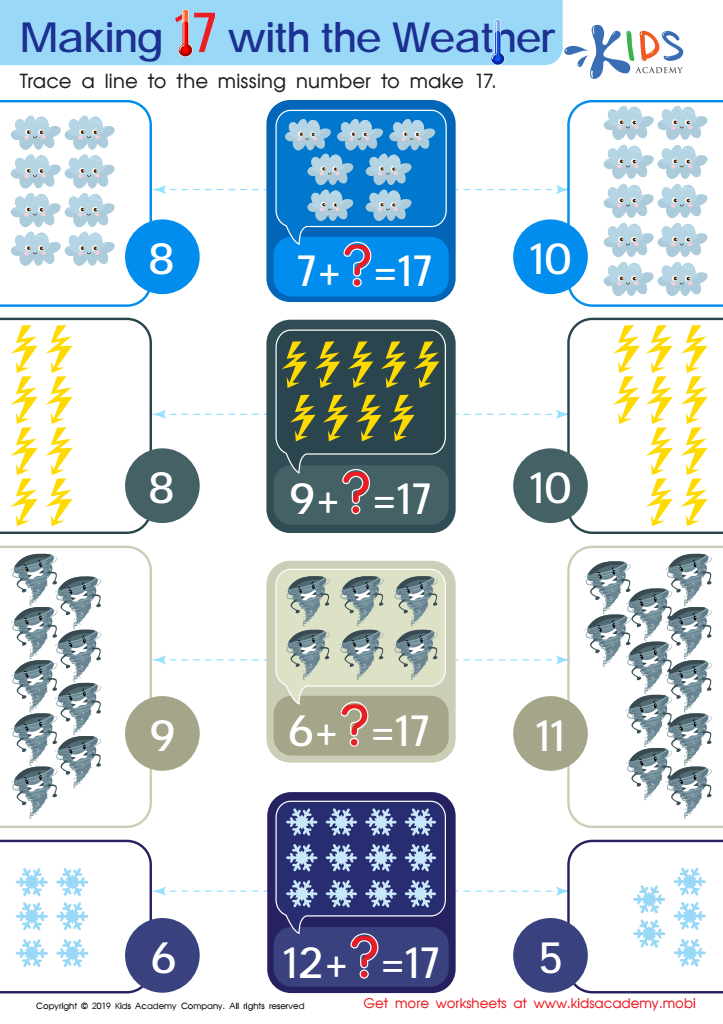
Making 17 with the Weather Worksheet
Show your kids the pictures in the worksheet and identify the weather. This exercise is to help them add simple numbers. There are 4 equations in the printout. Help them figure out the numbers to make 17, then trace a line to the missing number to complete the equation.
Making 17 with the Weather Worksheet
Worksheet
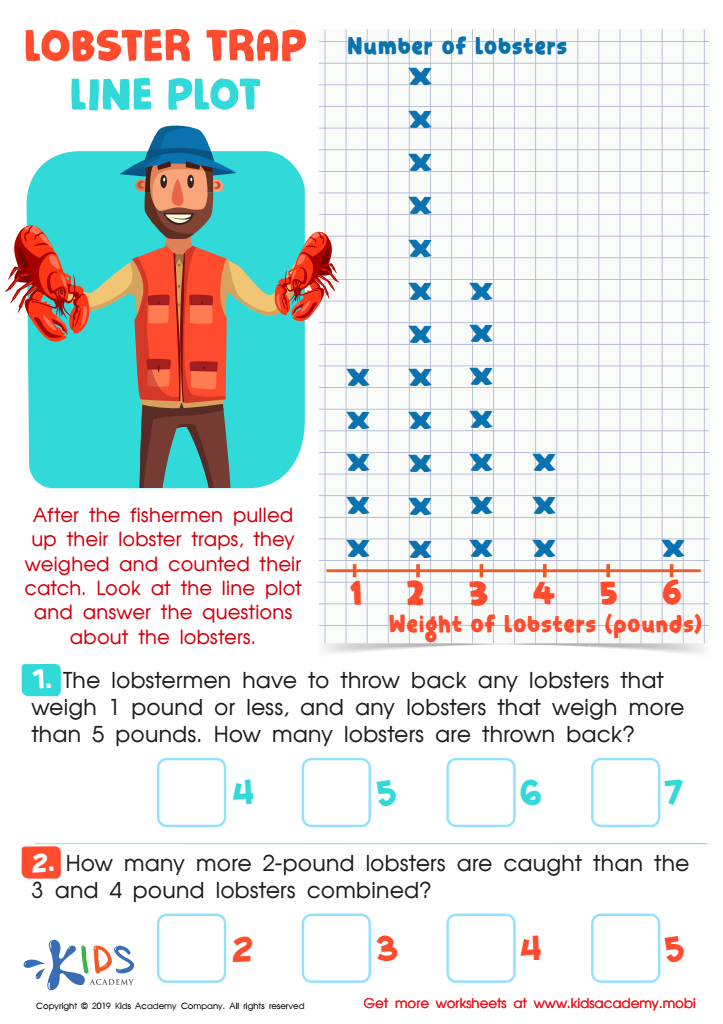
Lobster Trap Line Plot Worksheet
If your kids are working on line plots, this worksheet is perfect for them! Show them the picture and read the instructions. Help them look at the line plot and answer the questions at the bottom. Learning math can be fun, so make it enjoyable together!
Lobster Trap Line Plot Worksheet
Worksheet
Join Kids Academy for Free
Who is primarily going to use this learning content?




.jpg)

.jpg)

Improving counting skills in children aged 3-8 is fundamental as it lays the groundwork for more advanced mathematical concepts and everyday problem-solving abilities. At this formative stage, young minds are highly receptive and eager to learn, making it the perfect time to establish a robust number sense. When parents and teachers emphasize counting, they help children understand quantity, sequence, and numerical value, which are essential for their cognitive development.
Strong counting skills also enhance a child's confidence in dealing with numbers, reducing math-related anxiety and fostering a positive attitude toward learning. Early math proficiency is a key predictor of academic success, not only within mathematics but across other subjects that rely on logical thinking and the ability to follow sequences.
Helping a young child improve their counting skills is integrated into playful activities such as counting games, songs, and practical exercises like measuring ingredients while cooking. This makes learning enjoyable and relatable, encouraging children to apply their skills in real-life situations.
Moreover, an early focus on counting can help identify and address potential learning difficulties promptly, ensuring that every child receives the support they need to thrive. In summary, prioritizing counting skills for young children equips them with essential tools for educational achievement and instills a lifelong love for learning and problem-solving.








