Learning times tables Math Worksheets for Ages 3-8
3 filtered results
-
From - To
Discover the joy of mastering math with our "Learning Times Tables Math Worksheets for Ages 3-8"! These engaging and colorful worksheets are designed to make learning multiplication fun and easy for young minds. Perfect for home or classroom use, each sheet promotes number recognition, counting skills, and essential multiplication concepts. With carefully crafted exercises, children can build a strong mathematical foundation and boost their confidence. Whether starting with basic numbers or advancing to more complex problems, our worksheets cater to each child's pace and level. Turn math time into an exciting adventure with our expertly designed resources!
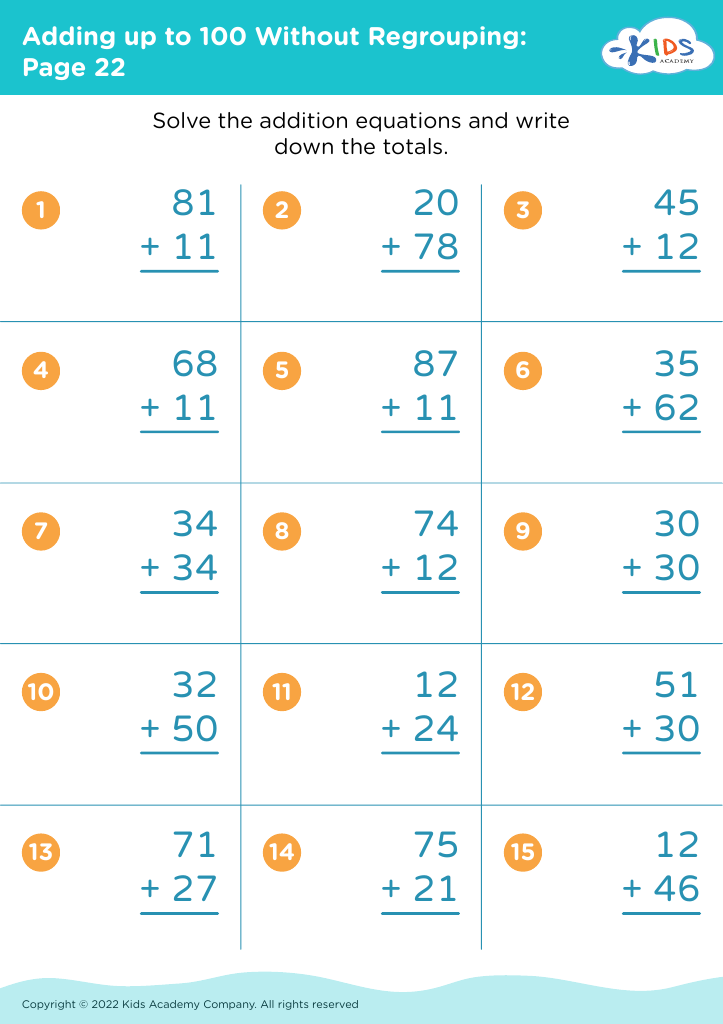
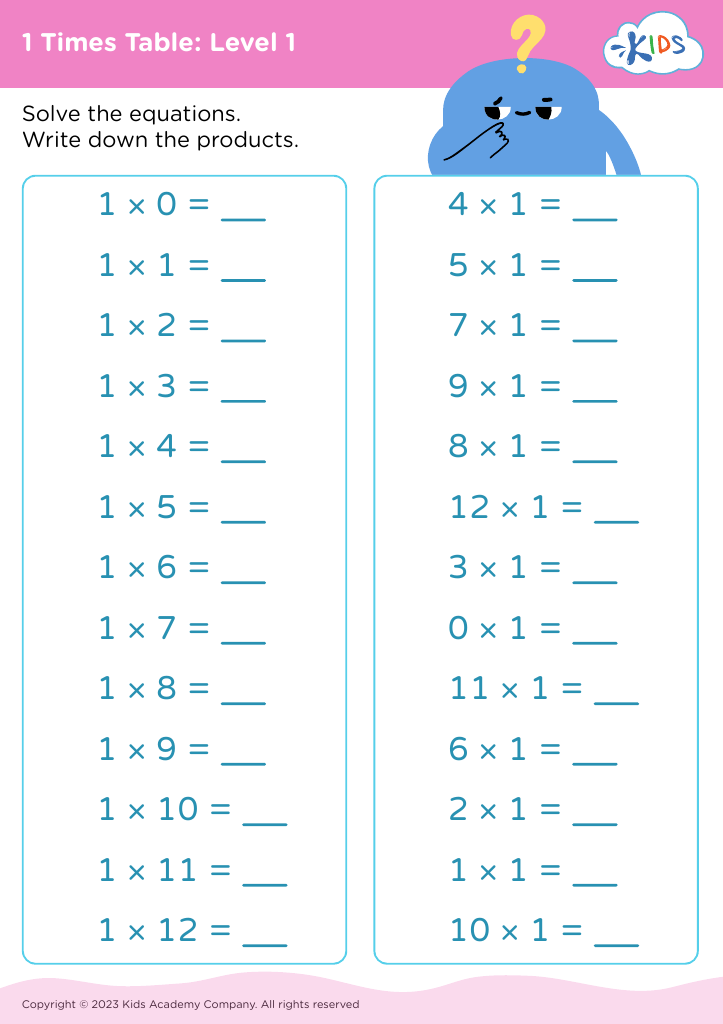
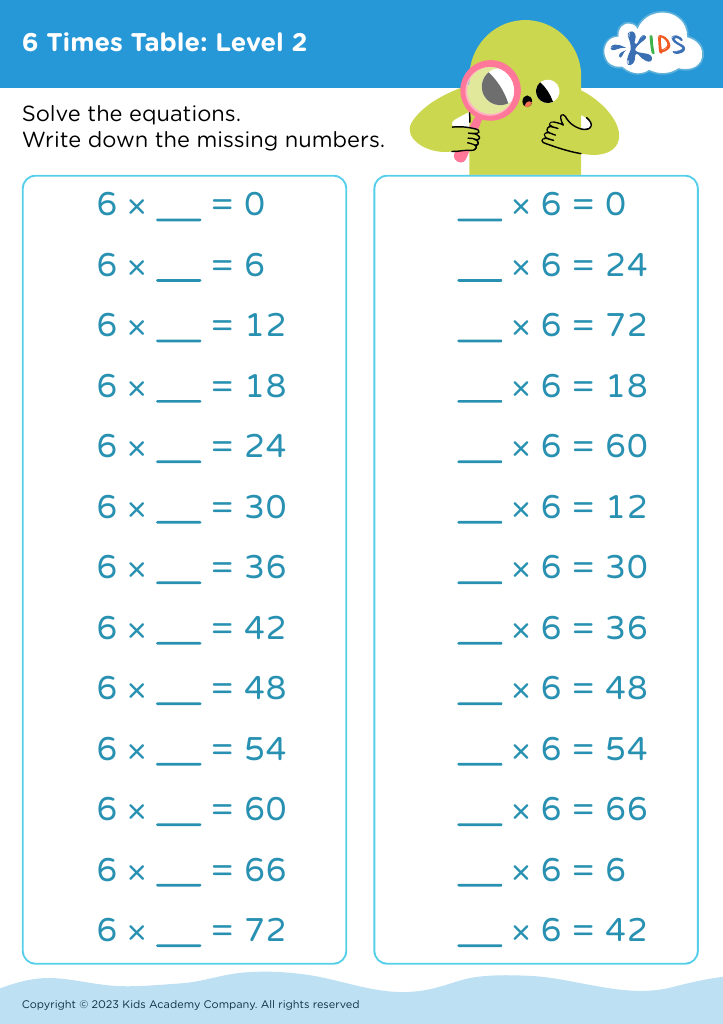







Learning times tables at an early age is fundamental for young children, typically those aged 3-8, as it forms the basis for numerous mathematical concepts and everyday tasks. Early mastery of multiplication tables strengthens a child’s arithmetic skills, facilitating quicker and more accurate mental calculations. This foundational knowledge is crucial for tackling more advanced mathematical operations covered in later school years, such as division, fractions, and algebra.
Beyond academic advantages, knowing times tables bolsters a child’s confidence in their ability to solve problems, fostering a positive attitude towards mathematics. Long-term, this confidence can lead to better performance not just in math, but across all subjects, as critical thinking and logical reasoning abilities improve. Additionally, strong mathematical skills are essential in daily life, from managing finances to planning and organizing activities.
For teachers, ensuring that their students know times tables means smoother transitions to advanced topics, enabling them to cover curricula more effectively. For parents, it means that their child can handle classroom challenges with more ease, which can reduce homework struggles and performance-related stress. Overall, a solid grasp of times tables prepares children for future academic success and practical problem-solving in the real world.








