
Practicing subtraction Math Worksheets for Ages 3-8
5 filtered results
Difficulty Level
Grade
Age
-
From - To
Subject
Activity
Standards
Unlock the fun of learning subtraction with our engaging math worksheets designed for children aged 3-8! Our collection includes colorful, easy-to-follow printables that help young learners master essential subtraction skills. Each worksheet is tailored to suit different learning levels, ensuring kids enjoy mastering this fundamental math concept. Featuring interactive exercises and playful illustrations, these activities keep students motivated while solidifying their understanding of subtraction. Ideal for home practice, school assignments, or enrichment activities, our subtraction worksheets provide a fun-filled approach to learning math. Start enhancing your child's math confidence today with our thoughtfully crafted resources!
Favorites
With answer key
Interactive
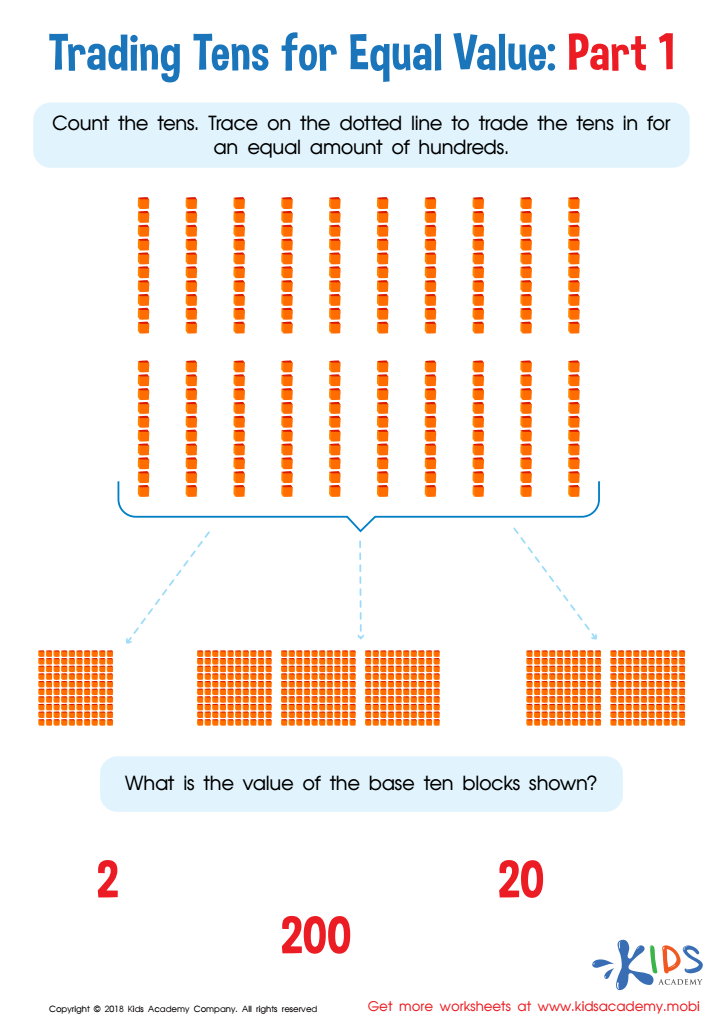
Trading Tens for Equal Value Worksheet: Part 1
This worksheet helps 3rd graders count large numbers and recognize base numbers. It lists 10 cubes and asks students to identify the hundreds, then circle the base blocks. This colorful pdf provides a fun, visual way to help students strengthen their math basics.
 Assign to My Students
Trading Tens for Equal Value Worksheet: Part 1
Worksheet
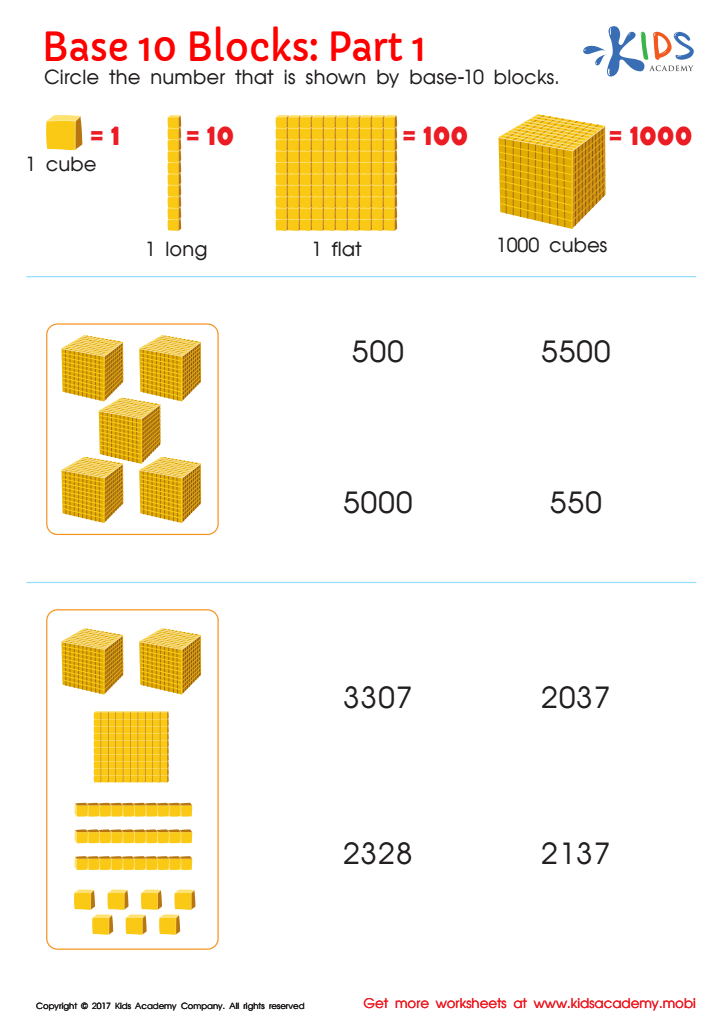
Place Value Thousands Worksheet
Kids aged 8+ can tackle the challenge of understanding place value with this thousands worksheet! It'll help develop their number sense and equip them with the skills to work with numbers up to the thousands.
Place Value Thousands Worksheet
Worksheet
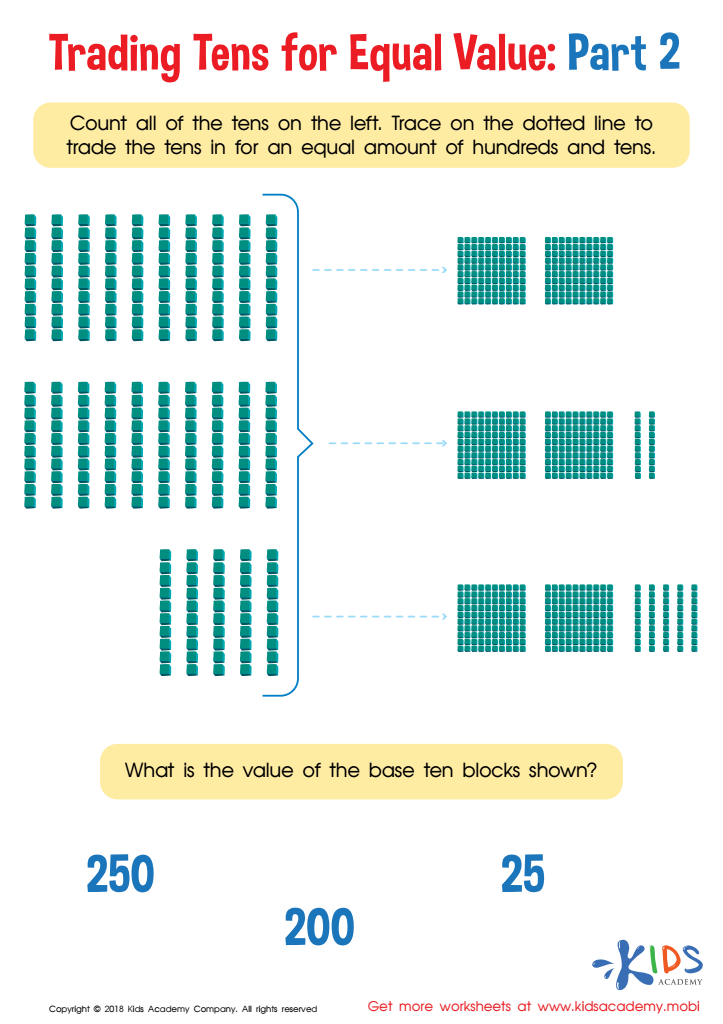
Trading Tens for Equal Value Worksheet: Part 2
Exchange coins for bills and cubes for longs or flats with this helpful place value worksheet! Encourage children to count all the tens, then trace the dotted line to the correct answer and determine the value. This concept can be tricky to teach in elementary math, but this worksheet can help!
Trading Tens for Equal Value Worksheet: Part 2
Worksheet
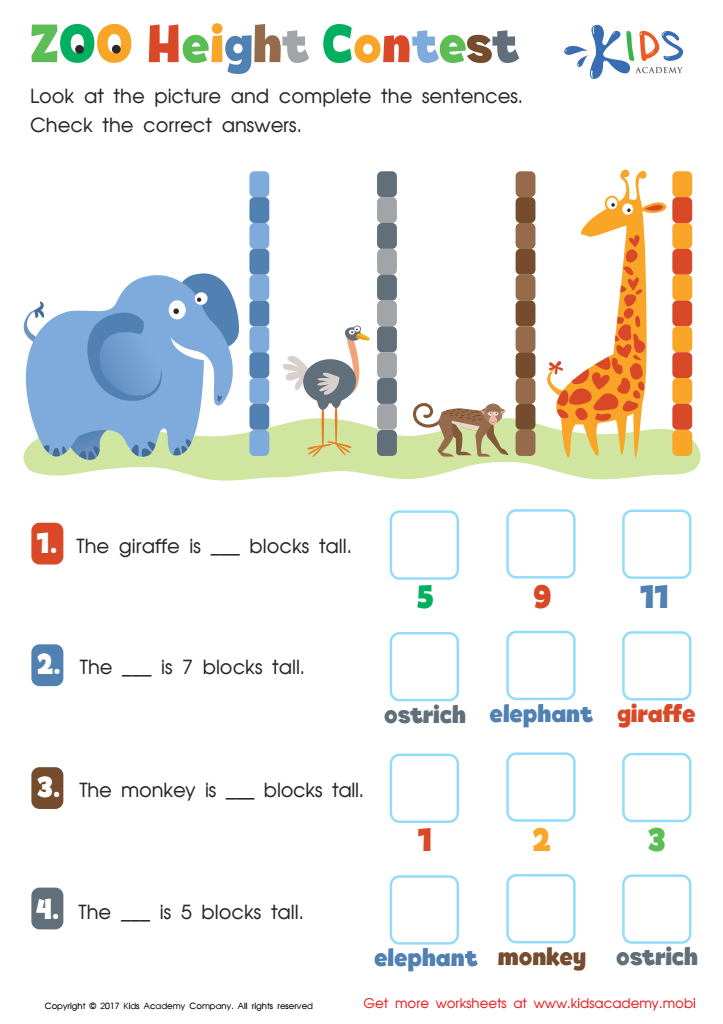
Zoo Height Contest Worksheet
Let's head to the zoo and use colorful blocks to measure your child's favorite animals! With this Kids Academy worksheet, help them practice and prepare for learning measurement. Guide them in looking at the zoo animals and counting blocks to find the height. Then, read the questions and check the box next to the correct answer.
Zoo Height Contest Worksheet
Worksheet
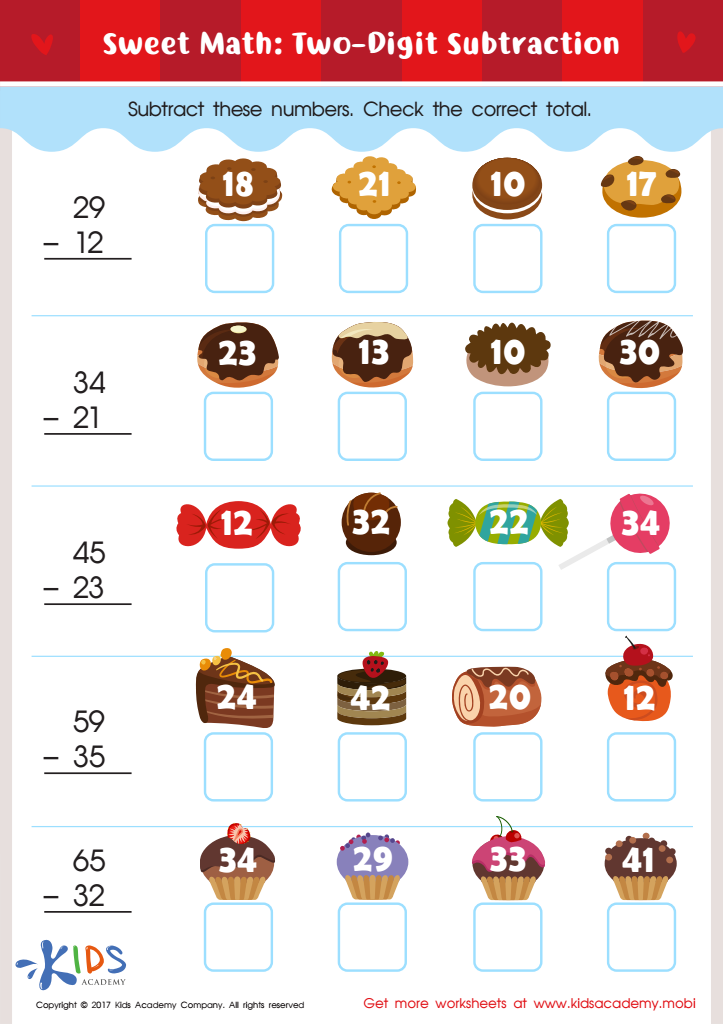
Two Digit Subtraction Worksheet
Make subtraction practice fun and easy with Kids Academy's delightful two digit subtraction worksheet PDF! Your child will love finding the sweet treat containing the correct answer to each 2-digit problem. Offer this quick practice and watch them learn!
Two Digit Subtraction Worksheet
Worksheet
Join Kids Academy for Free
Who is primarily going to use this learning content?






Practicing subtraction math for children aged 3-8 is essential for several reasons that significantly impact their overall development and academic success. At this early age, children are developing foundational cognitive skills that will influence their problem-solving abilities throughout their lives. Understanding subtraction helps children grasp the concept of "taking away," an important building block for more complex mathematical concepts such as addition, multiplication, and division.
Moreover, engaging in subtraction activities promotes critical thinking and logical reasoning. It encourages children to analyze problems and explore various strategies to arrive at solutions. This process enhances their perseverance and resilience, equipping them with essential skills for later academic challenges.
Subtraction also applies to real-world situations, such as sharing snacks or toys, making the learning experience relevant and meaningful. By fostering mathematical understanding in early childhood, parents and teachers can instill a sense of confidence and enthusiasm for learning.
Lastly, consistent practice strengthens memory and cognitive retention, making children more proficient in math as they progress. Ultimately, prioritizing subtraction practice not only enhances children's mathematical skills but also contributes to their overall cognitive, social, and emotional development, preparing them for success in school and beyond.








