Visual Learning Math Worksheets for Ages 3-8 - Page 5
101 filtered results
-
From - To
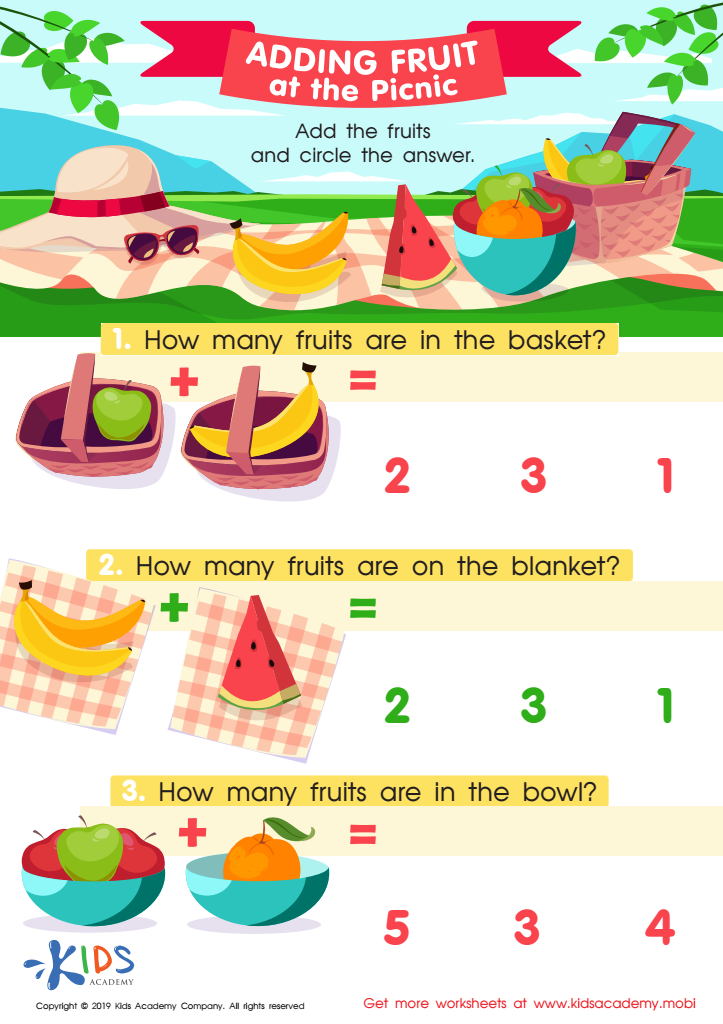
Adding Fruit at the Picnic Worksheet
 Assign to My Students
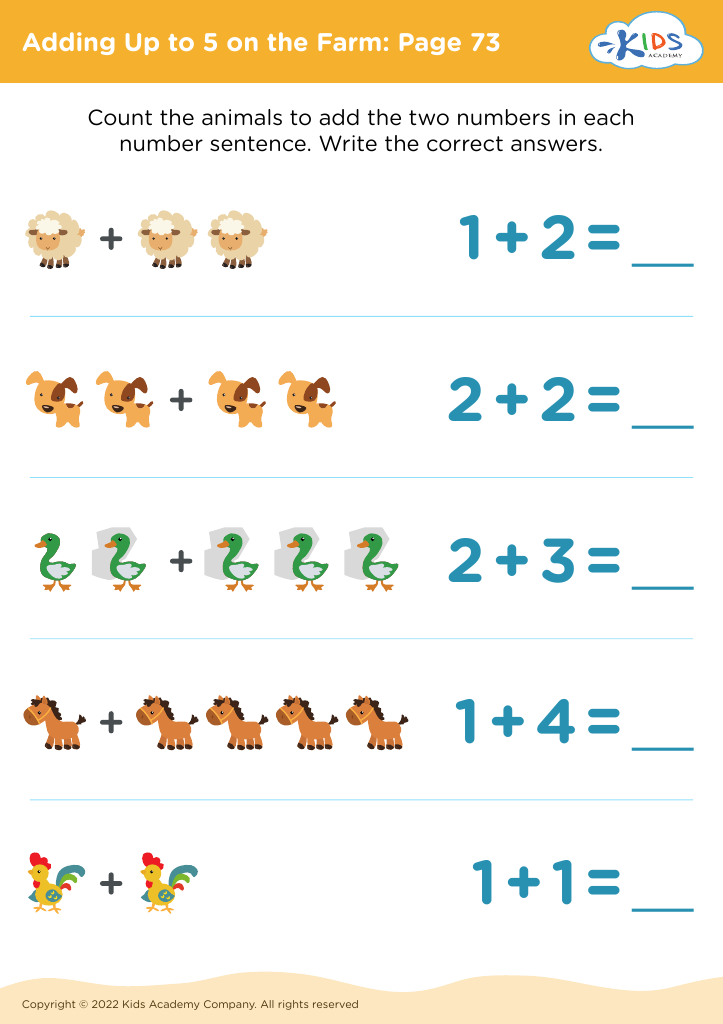
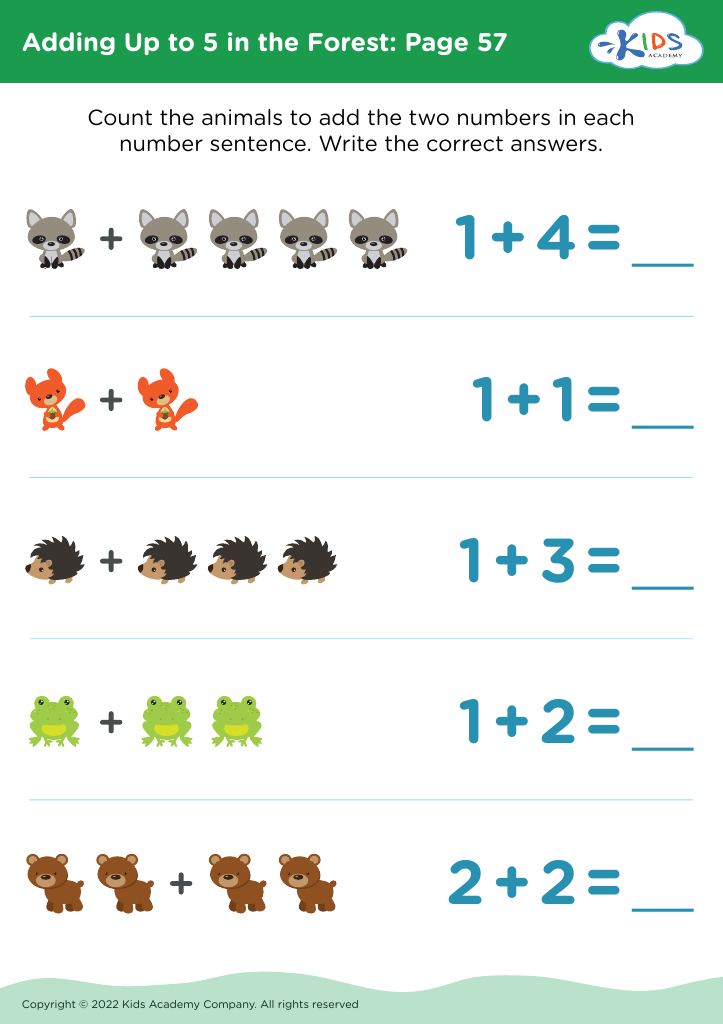
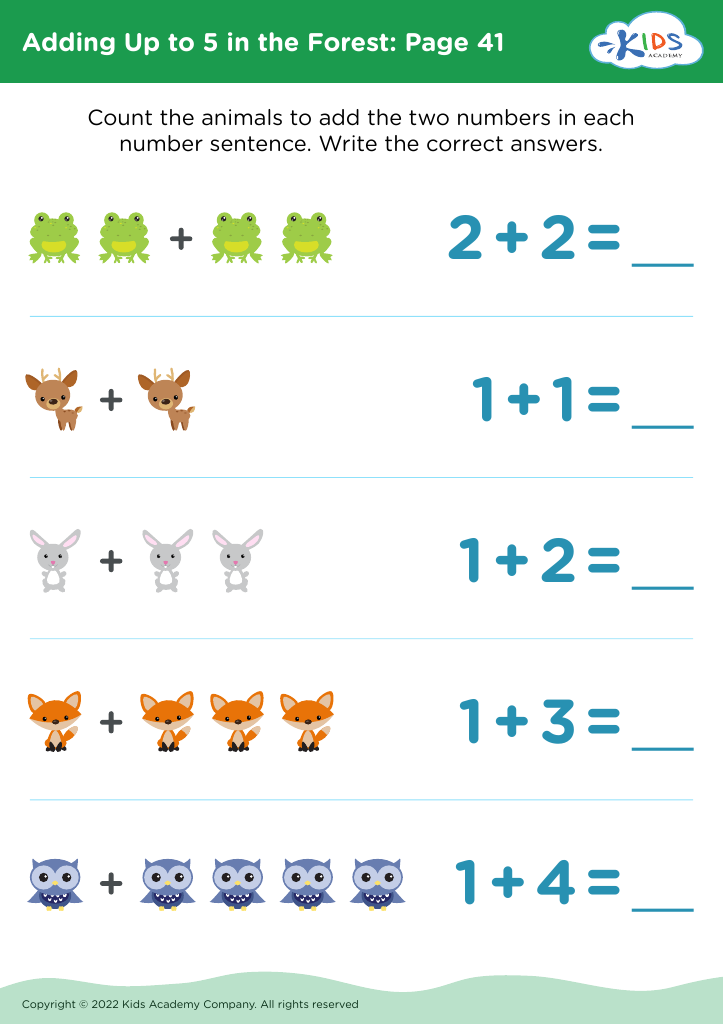








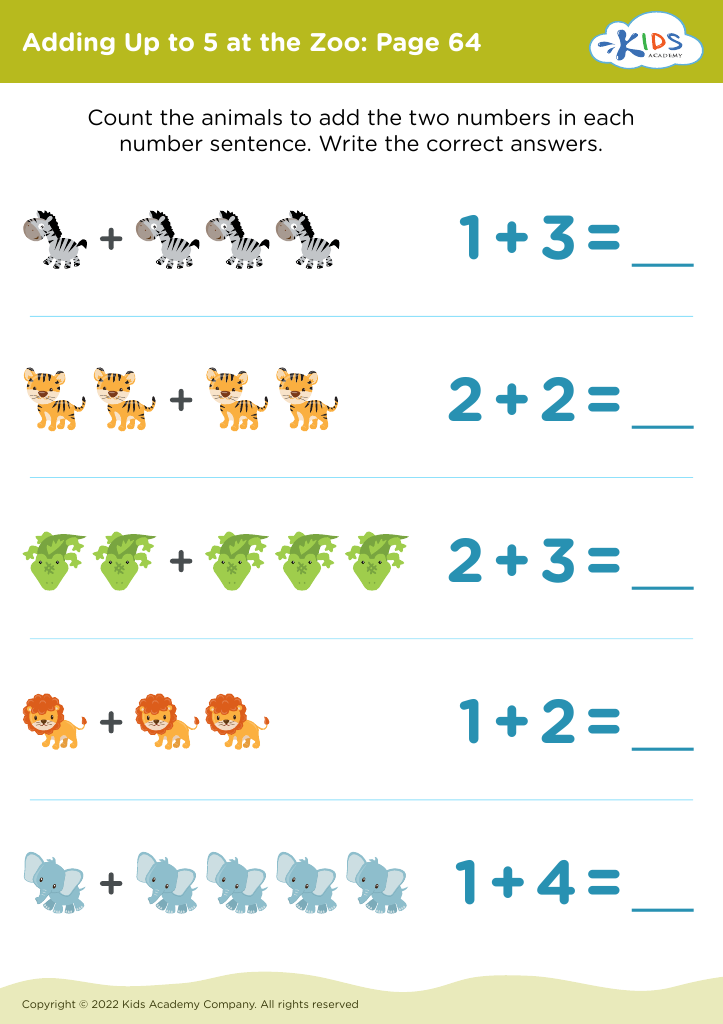
Visual learning math for ages 3-8 engages young learners by utilizing images, diagrams, and manipulatives, which can enhance cognitive development. Children in this age range naturally absorb information through visual stimuli, making this method particularly effective. By presenting mathematical concepts visually, educators and parents can help children intuitively grasp abstract ideas such as counting, patterns, and geometry.
Moreover, visual learning accommodates different learning styles, allowing children who might struggle with traditional methods to thrive. Engaging visuals encourage exploration and motivation, fostering a more enriching learning environment. For example, using blocks or drawings to solve problems makes math accessible and tangible.
Additionally, this approach strengthens critical thinking and problem-solving skills as children are encouraged to visualize and manipulate information. Early mastery of these foundational skills can lead to greater confidence in math, positively impacting future academic performance.
Parents and teachers should prioritize visual learning math because it lays the groundwork for a lifelong love of learning. Not only does it support cognitive development, but it also cultivates a strong mathematical foundation essential for later, more complex math concepts. By embracing visual math strategies, adults can enrich children's educational experiences and nurture their curiosity and imagination.








