Spatial awareness Numbers 0–10 Worksheets for Ages 3-8
3 filtered results
-
From - To
Introducing our "Spatial Awareness Numbers 0–10 Worksheets" for ages 3-8! These engaging activities are designed to help young learners understand numbers while developing their spatial awareness skills. Each worksheet provides fun exercises that blend counting, number recognition, and spatial reasoning. Perfect for preschool to early elementary children, these exercises encourage critical thinking and problem-solving. Your child will practice sequencing, identifying patterns, and placing numbers in different spatial arrangements. Ideal for both classroom and at-home learning, these worksheets make mastering numbers enjoyable and accessible. Build a strong mathematical foundation for your child today with these interactive and educational resources!
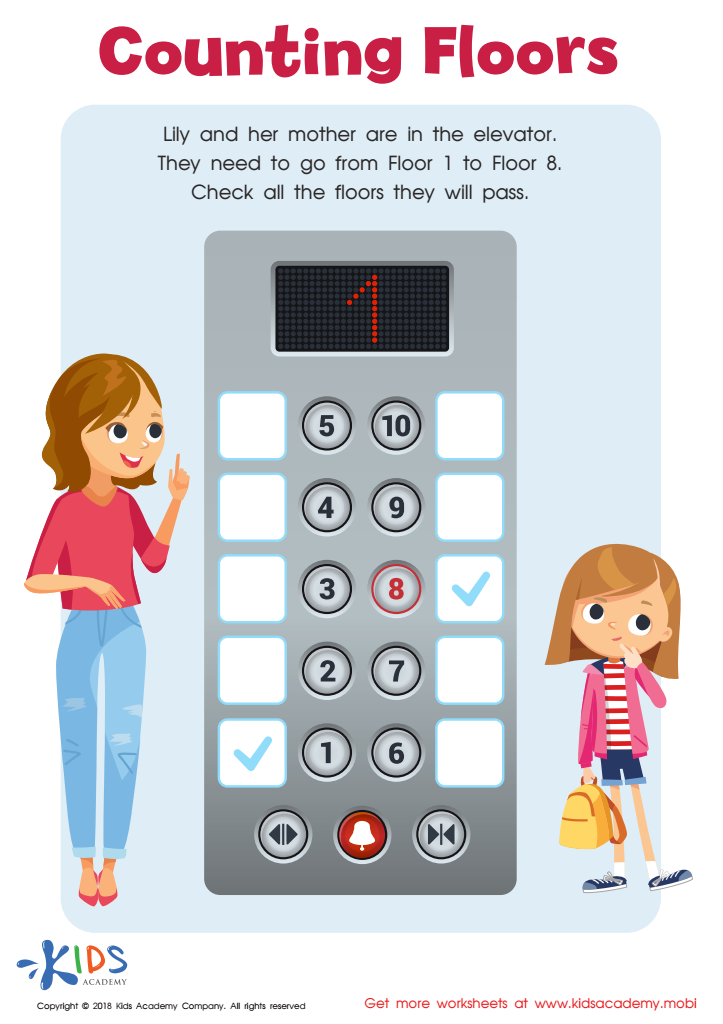
Counting Floors Worksheet
 Assign to My Students
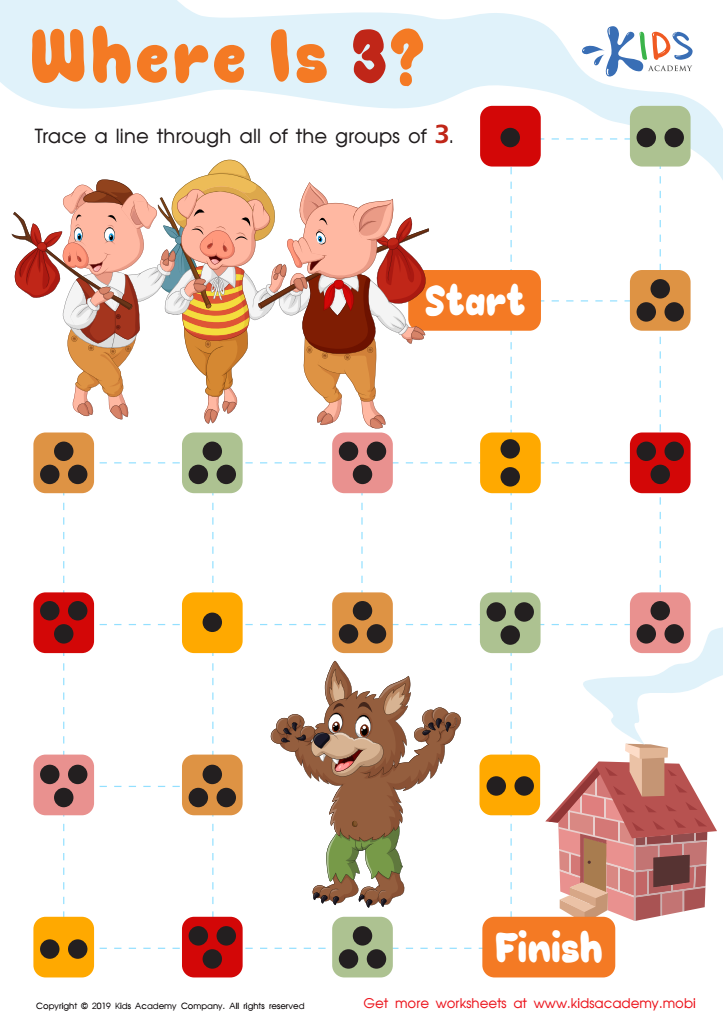
Where Is 3? Worksheet
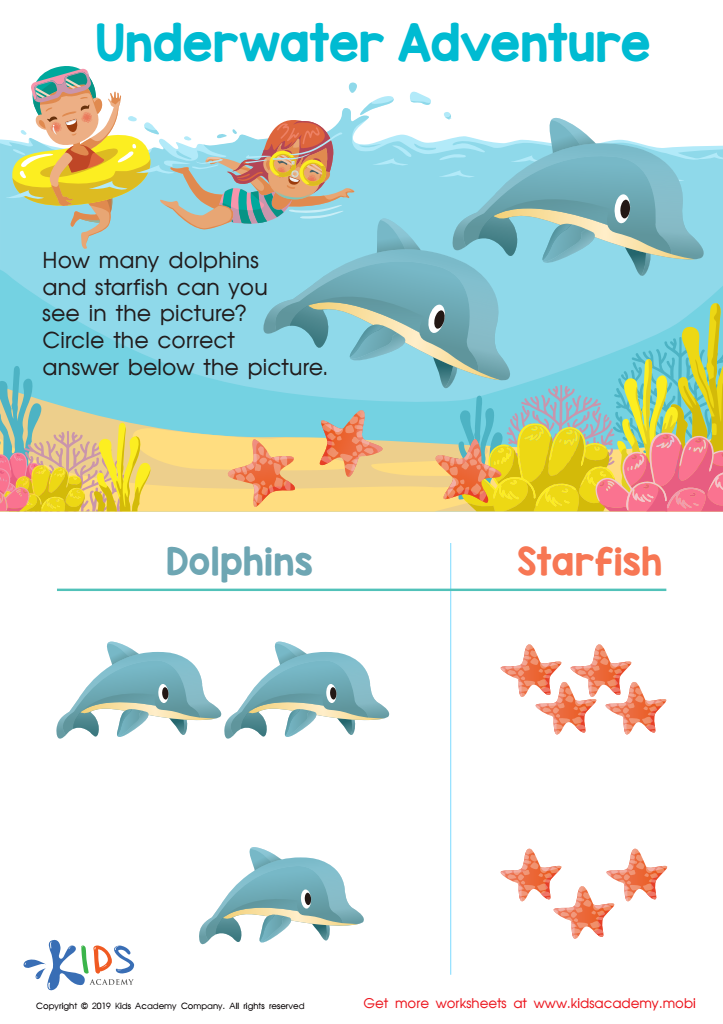
Underwater Adventure Worksheet








Caring about spatial awareness and numbers 0–10 in children ages 3–8 is crucial for fostering foundational cognitive and developmental skills. Spatial awareness—the ability to understand one’s position in space and how objects relate to each other—helps children navigate their physical world more effectively. It enhances their abilities in activities such as puzzles, block building, and physical movement, which are fundamental for motor skills and hand-eye coordination.
Understanding numbers 0–10 forms the cornerstone of early numeracy, setting the stage for more complex mathematical concepts. This knowledge promotes critical life skills, including problem-solving and logical thinking. Numbers are ubiquitous in daily life—everything from counting steps, identifying shapes, to understanding everyday concepts like time and money.
By focusing on these essential skills early on, parents and teachers can cultivate a child's confidence and proficiency in both math and spatial reasoning. Interactive activities, like playing numerical games or building with blocks, make learning engaging and more effective. Moreover, these experiences can nurture a lifelong interest in science, technology, engineering, and math (STEM) fields. Through thoughtful, playful education, children gain skills that support their overall academic achievement and everyday functioning, establishing robust learning habits that last a lifetime.