Logical thinking development Word Problems Worksheets for Ages 3-8
3 filtered results
-
From - To
Enhance your child's cognitive skills with our "Logical Thinking Development Word Problems Worksheets for Ages 3-8." These expertly crafted worksheets are designed to stimulate young minds by integrating engaging word problems that encourage logical reasoning and critical thinking. Perfect for early learners, these activities make math fun and accessible, helping children grasp foundational concepts while nurturing their problem-solving abilities. Ideal for parents and educators, our worksheets support seamless learning by providing diverse challenges that inspire curiosity and academic growth. Foster your child's logical thinking and watch them excel in mathematics and beyond with these invaluable educational resources.
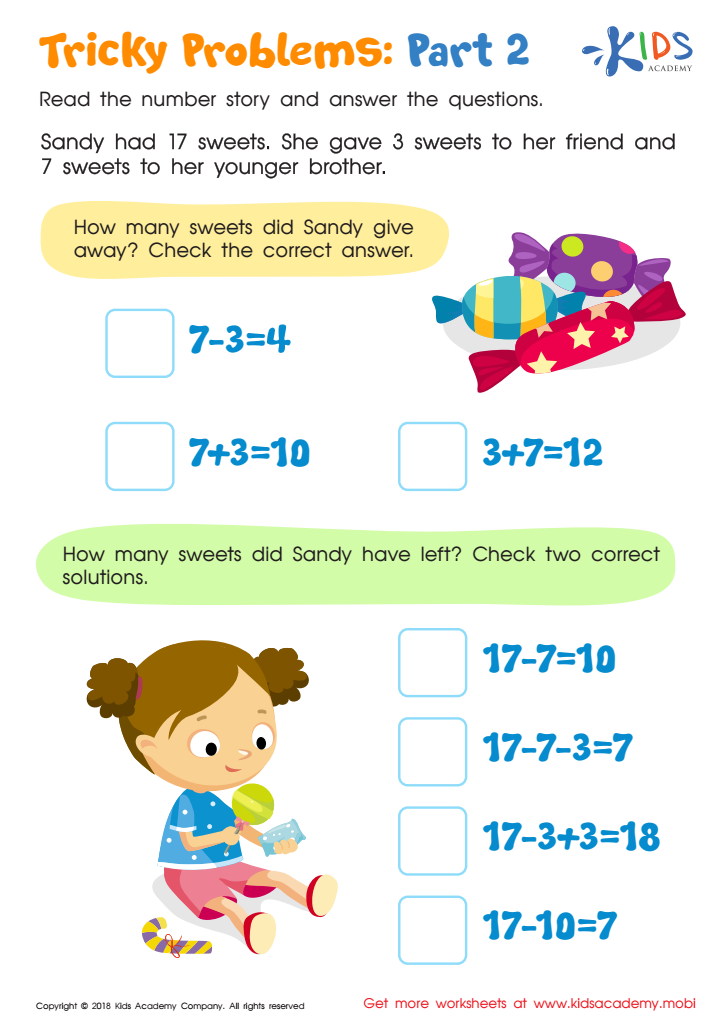
Tricky Problems Worksheet: Part 2
 Assign to My Students
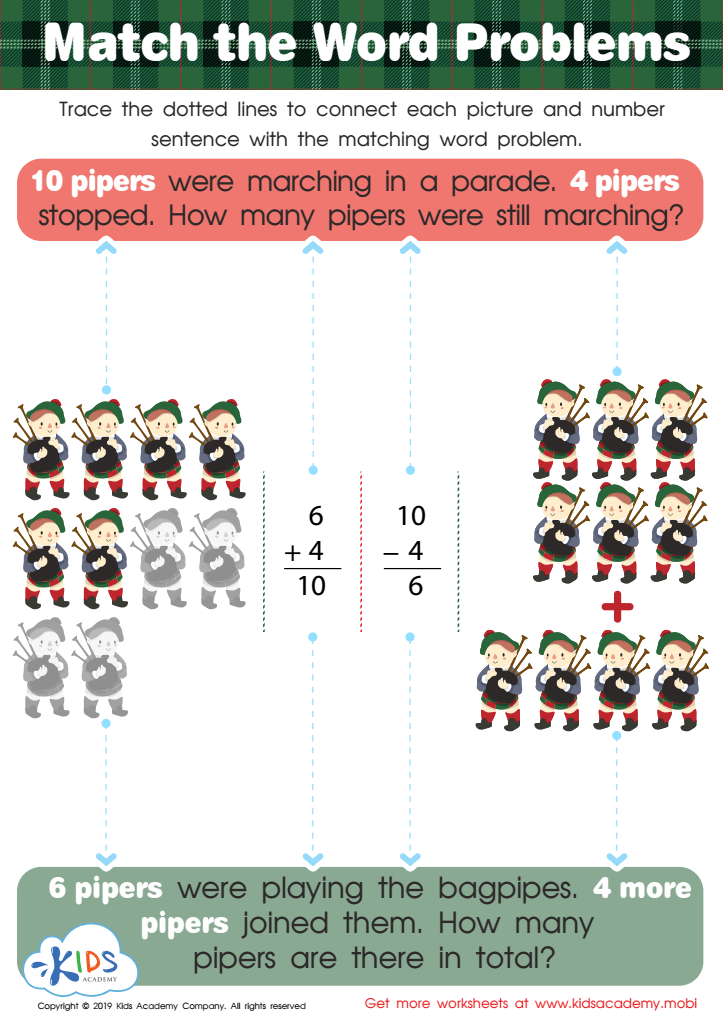
Match the Word Problems Worksheet
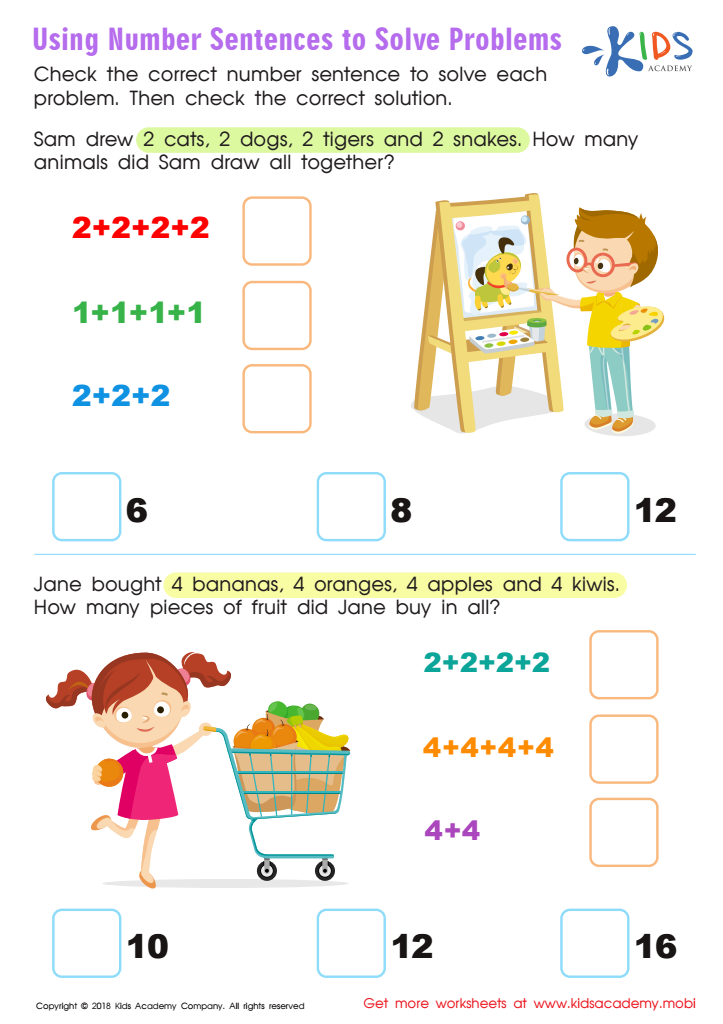
Using Number Sentences to Solve Problems Worksheet








Developing logical thinking skills through word problems is fundamental for children ages 3-8, as it lays the groundwork for future cognitive growth and academic success. Logical thinking, the ability to reason consistently and systematically, is essential for solving problems, making decisions, and understanding complex concepts in all subject areas.
Introducing logical thinking through word problems engages young minds in critical thinking and comprehension practice. These problems go beyond rote memorization, prompting children to analyze, interpret, and apply information. As they navigate through increasingly challenging scenarios, kids learn to identify relationships and patterns, fostering their analytical skills.
Moreover, word problems immerse children in real-world situations, enhancing their practical understanding of how math and logic apply to everyday life. They become adept at breaking down complex problems into manageable steps, which builds their confidence and instills a sense of achievement.
For parents and teachers, emphasizing logical thinking development recognizes that early cognitive skills are indicators of later success. Children proficient in logical thinking are better equipped to handle academic challenges, adapt to new situations, and develop effective problem-solving strategies.
Therefore, nurturing logical thinking through word problems at a young age not only supports academic excellence but also cultivates lifelong learners capable of critical and independent thought.








