Problem-solving abilities Word Problems Worksheets for Ages 3-8
4 filtered results
-
From - To
Our Problem-solving Abilities Word Problems Worksheets for Ages 3-8 are expertly crafted to enhance critical thinking and logical reasoning in young learners. Engaging and diverse, these worksheets encourage children to explore various scenarios through interesting word problems, fostering their analytical mind as they find solutions. Perfect for early math skills development, they help kids grasp the concepts of addition, subtraction, and more in a fun and interactive way. Ideal for both classroom and home learning, these printable worksheets support continuous practice, building a solid foundation for future academic success. Empower your child with the tools they need to master problem-solving today!
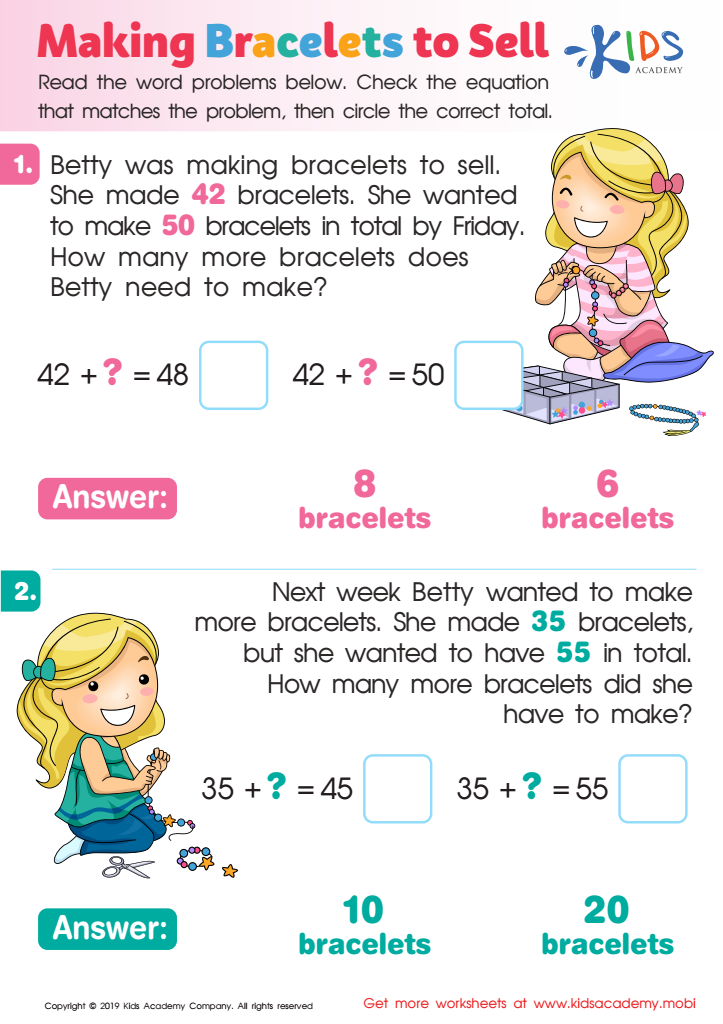
Making Bracelets to Sell Worksheet
 Assign to My Students
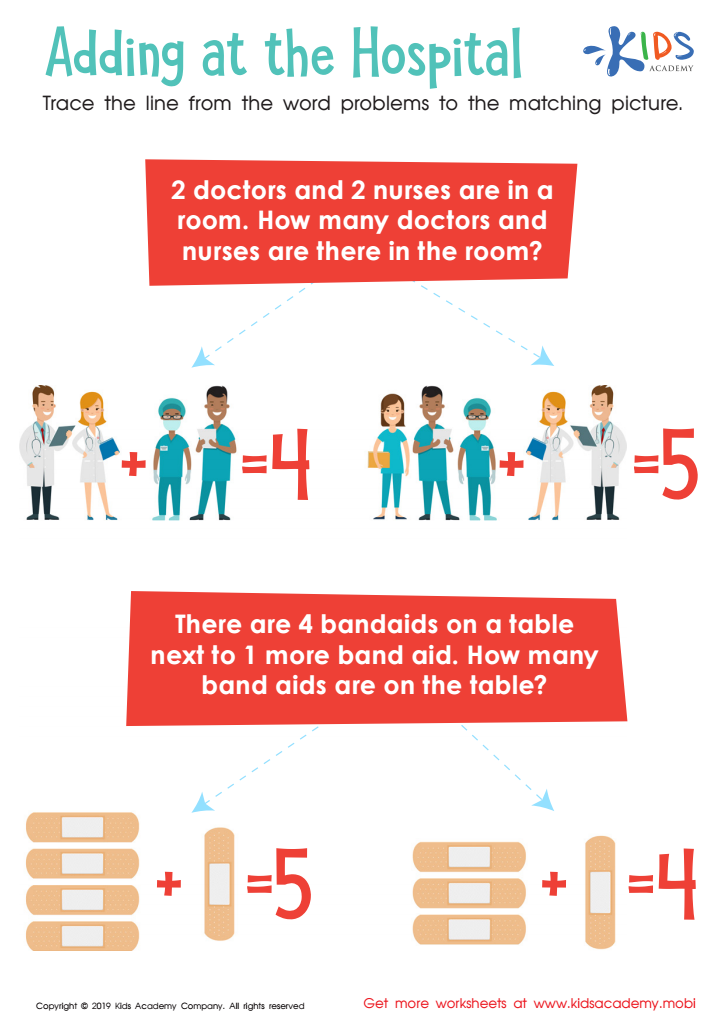
Adding at the Hospital Worksheet
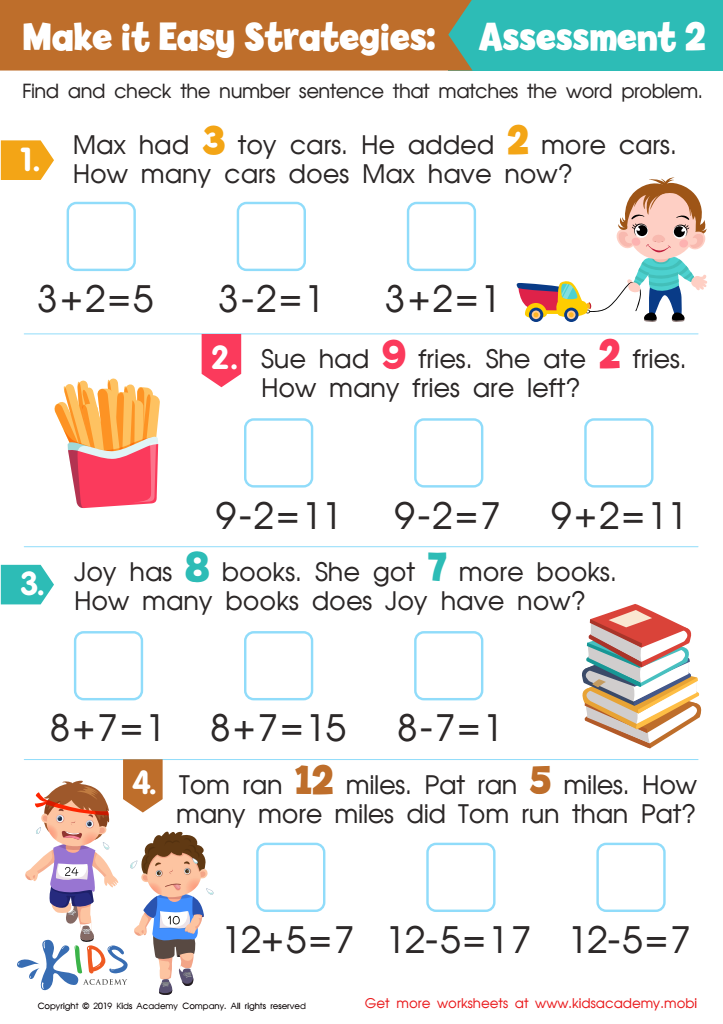
Make it Easy Strategies: Assessment 2 Worksheet
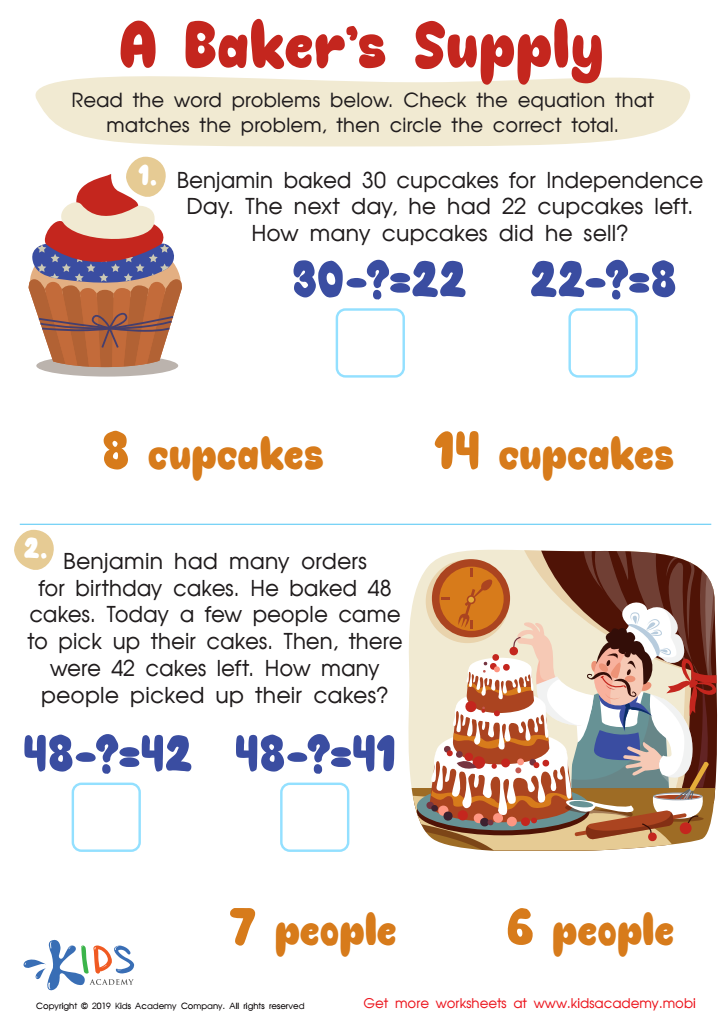
A Baker's Supply Worksheet








Problem-solving abilities are crucial building blocks for a child's intellectual development, making word problems vital for ages 3-8. When parents and teachers emphasize these skills, they foster critical thinking, boost confidence, and lay a strong foundation for future learning.
Critical Thinking and Cognitive Growth: Working on word problems engages young minds in logical reasoning and promotes cognitive growth. By deciphering problems, children develop analytical skills, pattern recognition, and the ability to connect concepts, essential for mastering not just math but daily life challenges.
Boosts Confidence and Independence: Successfully solving problems enhances self-esteem. Children begin to trust their abilities, tackle challenges with tenacity, and make decisions independently. This growth instills a mindset that can persist through future academic and personal pursuits.
Real-World Relevance: Word problems often incorporate real-life scenarios, making learning relevant and practical. Understanding these applications aids in grasping how skills are used outside the classroom, such as in budgeting, planning, and time management.
Foundational Literacy Skills: Reading and interpreting word problems sharpen literacy proficiency. They improve reading comprehension and vocabulary, integrating mathematical learning with language arts, ensuring well-rounded intellectual development.
Incorporating problem-solving word problems in early education equips children with essential skills, shaping them into thoughtful, competent individuals prepared for lifelong success.








