Enhancing observation skills Reading Non-Fiction Worksheets for Ages 3-8
4 filtered results
-
From - To
Our “Enhancing Observation Skills Reading Non-Fiction Worksheets for Ages 3-8” are designed to cultivate young learners' ability to notice detailed information in texts. Ideal for early education, these worksheets guide children through engaging activities that help develop critical thinking and reading comprehension. We use age-appropriate non-fiction materials to spark curiosity and promote engagement, ensuring that kids can connect what they read with the real world. Our worksheets incorporate vivid visuals and interactive exercises to make learning enjoyable and effective. Perfect for classroom or home use, boost your child's observational skills and foster a lifelong love for reading non-fiction!
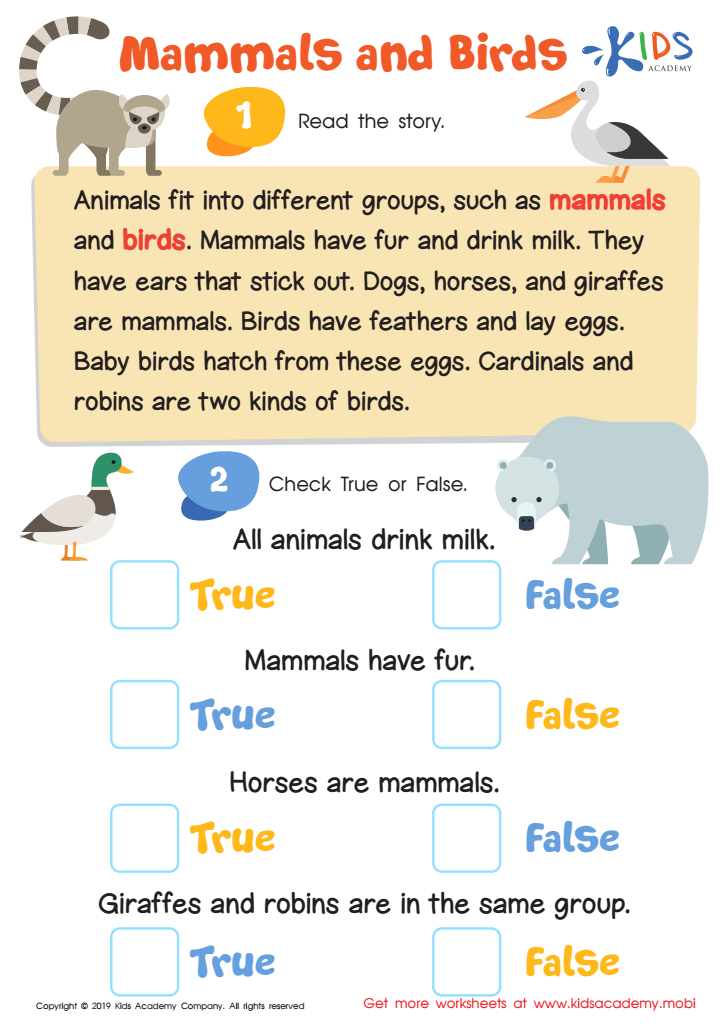
Mammals and Birds Worksheet
 Assign to My Students
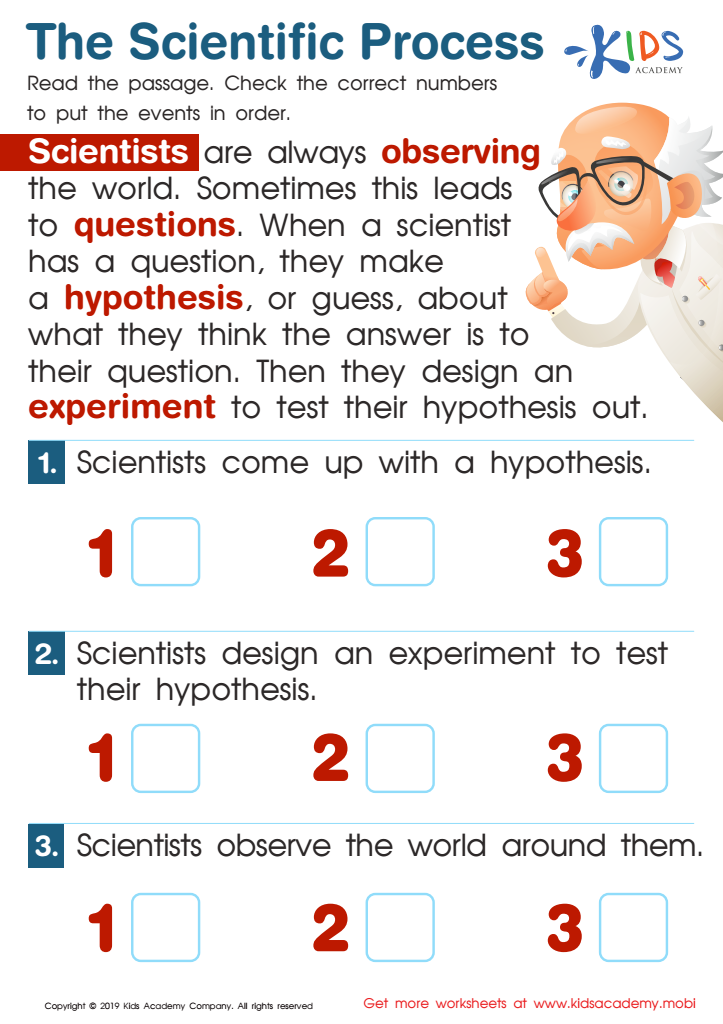
The Scientific Process Worksheet
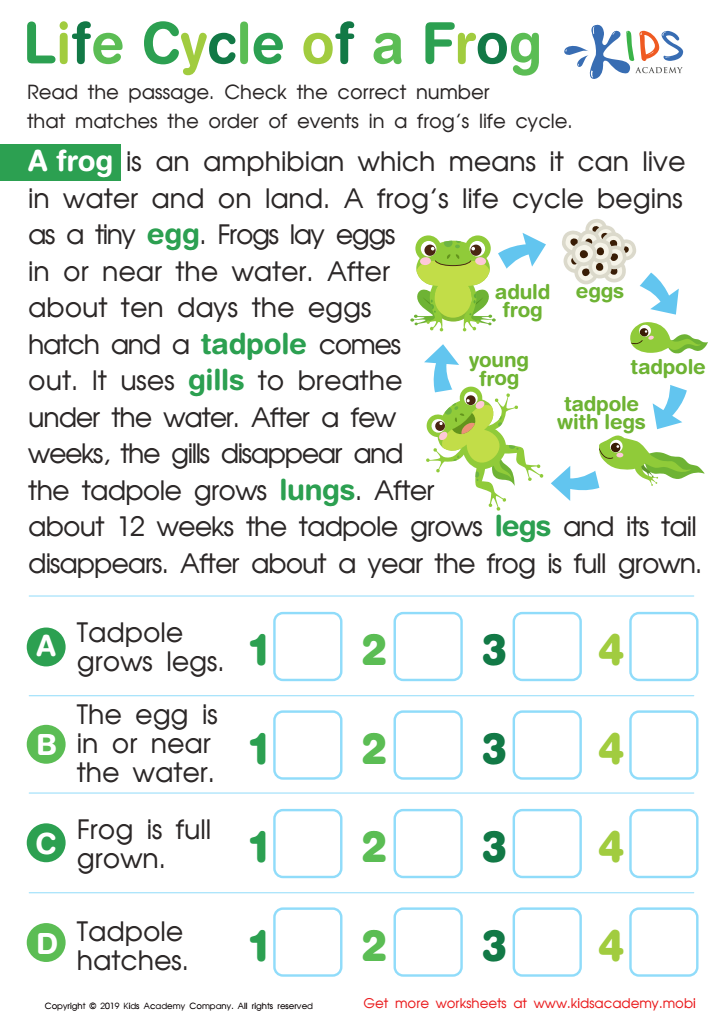
Life Cycle of a Frog Worksheet
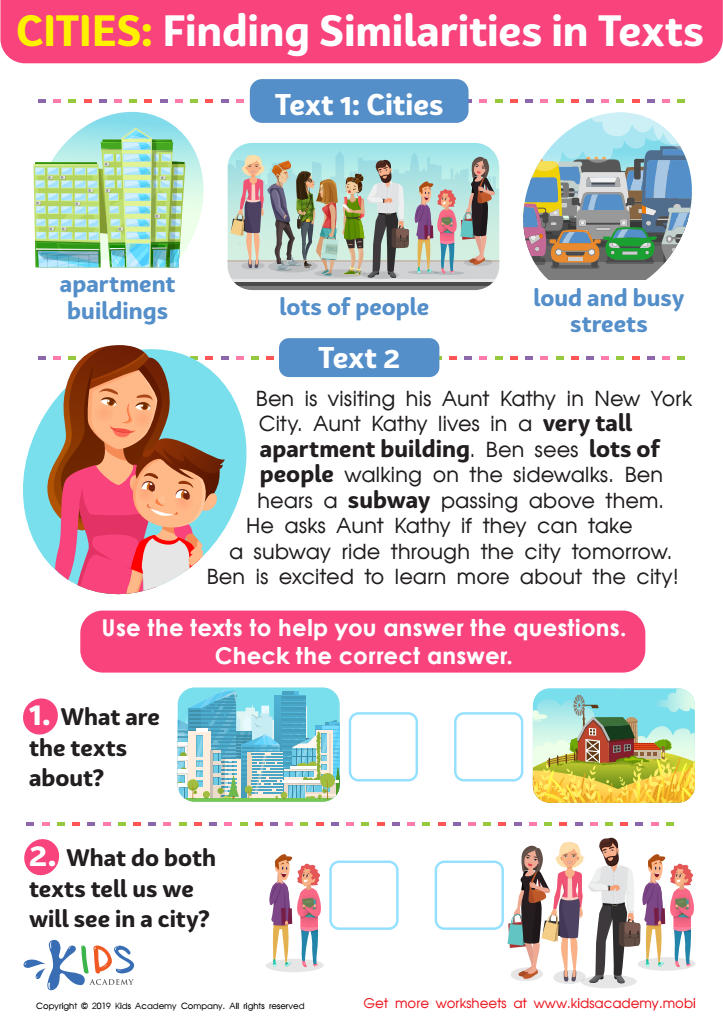
Cities: Finding Similarities Worksheet








Enhancing observation skills through reading non-fiction for ages 3-8 is crucial for a child's development. Non-fiction books introduce children to the real world, expanding their knowledge and curiosity about diverse subjects like animals, plants, space, weather, and cultures. This type of reading helps in developing critical thinking and comprehension skills as children learn to differentiate between facts and opinions.
Parents and teachers should care because strong observation skills lay a solid foundation for future learning. When children read non-fiction, they engage in careful observation of illustrations, photographs, and text, which improves attention to detail and hones their ability to process and analyze information. These skills are essential for science, math, and general problem-solving.
Moreover, nurturing observation skills through non-fiction reading encourages a lifelong love and habit of learning. It promotes intellectual curiosity and a scientific mindset, where asking questions and seeking answers become second nature. This is vital in a rapidly changing world where adaptability and continuous learning are prized.
Additionally, reading non-fiction helps build vocabulary by introducing specific terms and concepts, further assisting in language development. For early learners, strong language skills are linked to better academic performance later.
In sum, fostering observation skills via non-fiction at an early age equips children with critical life and academic skills, setting them up for success in multiple dimensions of their lives.








