Historical Knowledge Reading Non-Fiction Worksheets for Ages 3-8
5 filtered results
-
From - To
Unlock the world of history for young learners aged 3-8 with our engaging Historical Knowledge Reading Non-Fiction Worksheets! Designed to inspire curiosity and expand critical thinking skills, these worksheets offer captivating stories and facts about historical figures, events, and cultures. Children will enjoy reading age-appropriate, non-fiction texts that promote an understanding of the past while enhancing their literacy skills. Fun activities and visual aids enhance learning, making historical knowledge accessible and enjoyable. Perfect for home or classroom use, our worksheets foster a love for reading while building a strong foundation in history. Explore the past and ignite your child's imagination today!
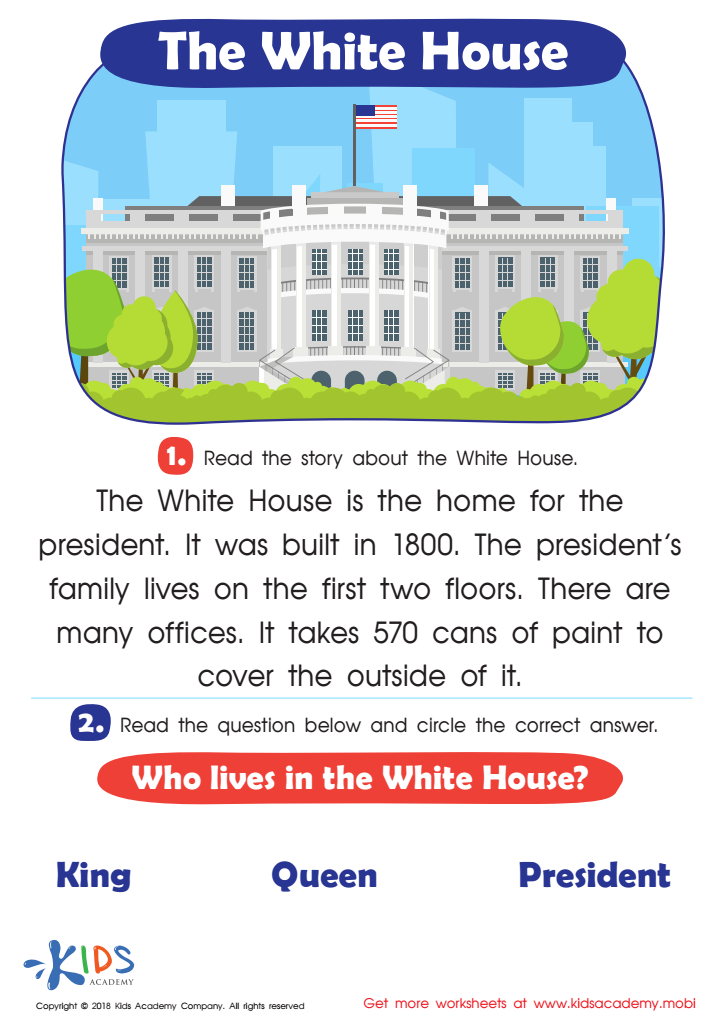
White House Worksheet
 Assign to My Students
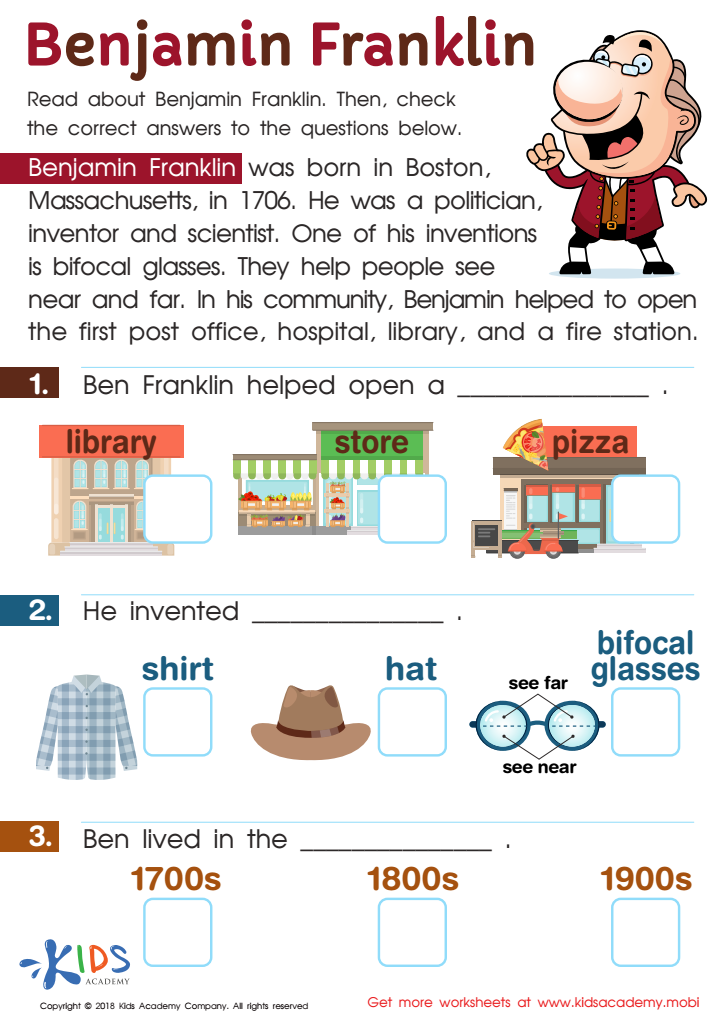
Benjamin Franklin Worksheet
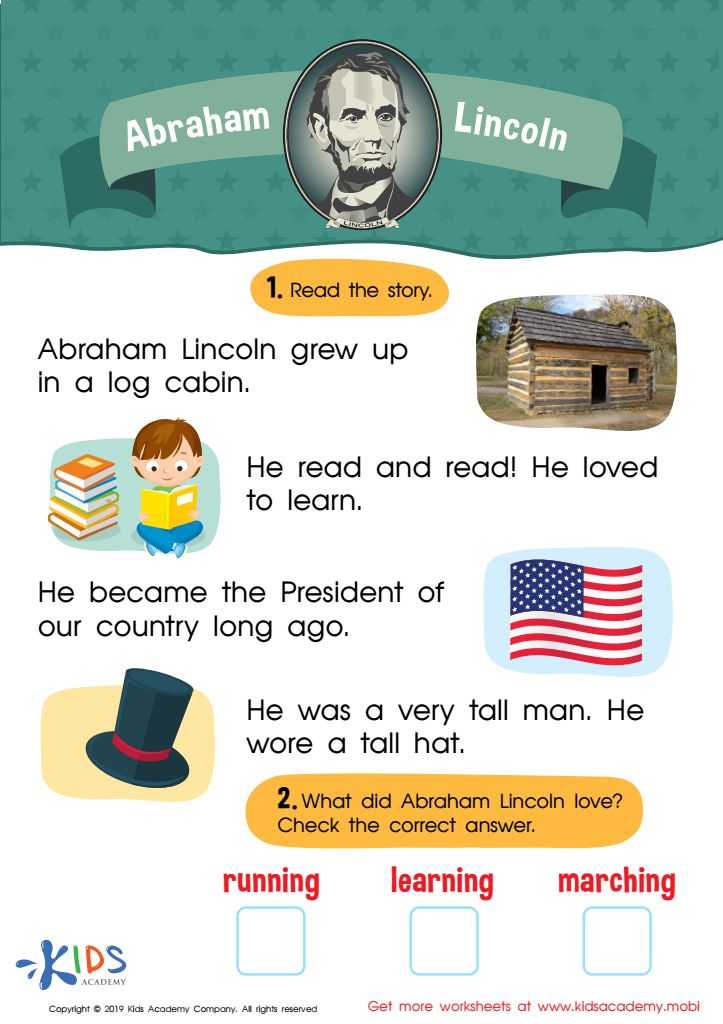
Abraham Lincoln Worksheet
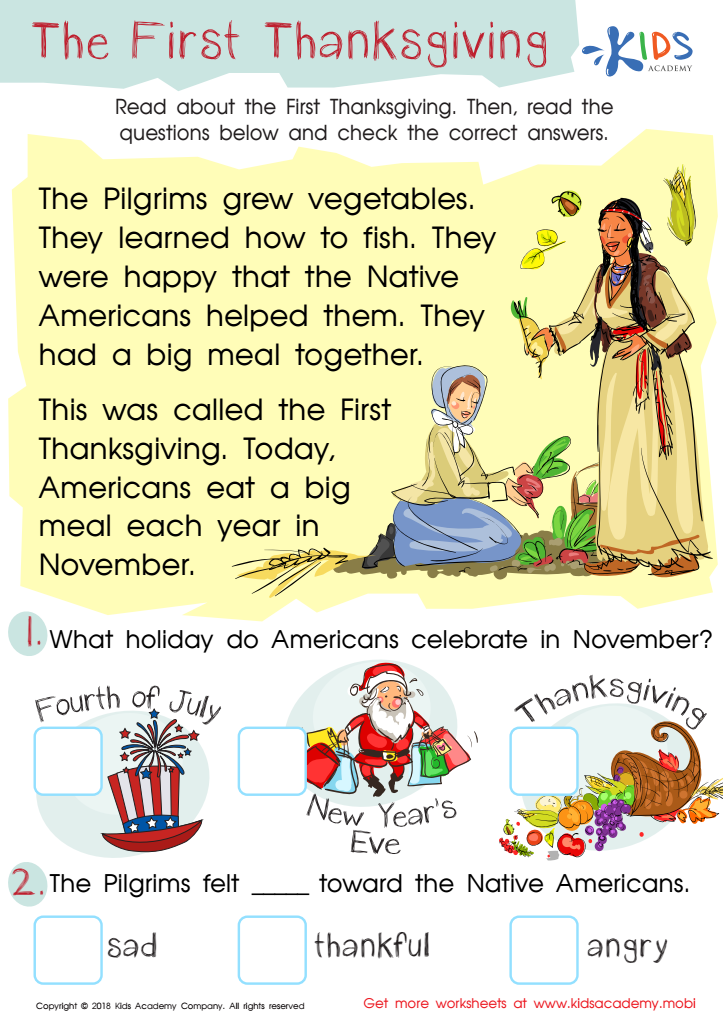
Assessment: First Thanksgiving Worksheet
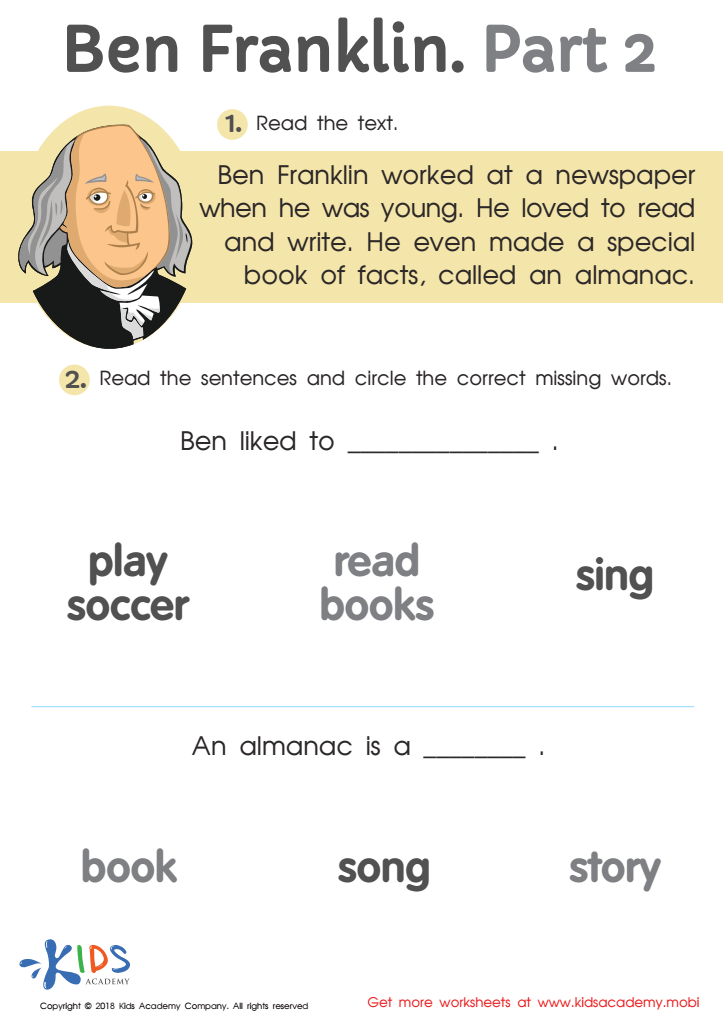
Ben Franklin Part 2 Worksheet








Parents and teachers should prioritize historical knowledge reading in non-fiction for children ages 3-8 because it fosters critical thinking, enhances cultural awareness, and builds a foundation for informed citizenship. Introducing young learners to historical narratives not only ignites their curiosity about the world but also helps them understand the events and people that shaped our society. This early exposure promotes an appreciation for diversity and encourages empathy as children learn about different cultures, values, and experiences.
Moreover, non-fiction reading develops essential literacy skills, such as vocabulary acquisition, comprehension, and critical analysis. Engaging with factual information allows children to differentiate between reality and fiction, sharpening their analytical skills and enabling them to evaluate sources of information as they grow.
Additionally, historical knowledge reinforces the idea that learning is a lifelong journey; children learn that stories extend beyond their immediate environment and that they are part of a larger narrative. This awareness promotes a sense of identity and belonging, fostering pride in their heritage and respect for others' histories. Ultimately, nurturing a love for historical reading helps create empathetic, informed individuals who are better equipped to engage with the complexities of today’s world.








