Reading Skills Reading Non-Fiction Worksheets for Ages 3-8
4 filtered results
-
From - To
Enhance your child's reading skills with our engaging non-fiction worksheets, designed for ages 3-8! These carefully crafted activities promote comprehension and critical thinking, allowing young learners to explore the world around them through interesting subjects. Our worksheets encourage kids to practice their reading ability while discovering fascinating facts about animals, nature, science, and more. With colorful illustrations and age-appropriate content, these resources excite children and foster a love for reading. Perfect for use at home or in the classroom, our non-fiction reading worksheets help build essential literacy skills that will benefit your child for years to come. Download and start learning today!
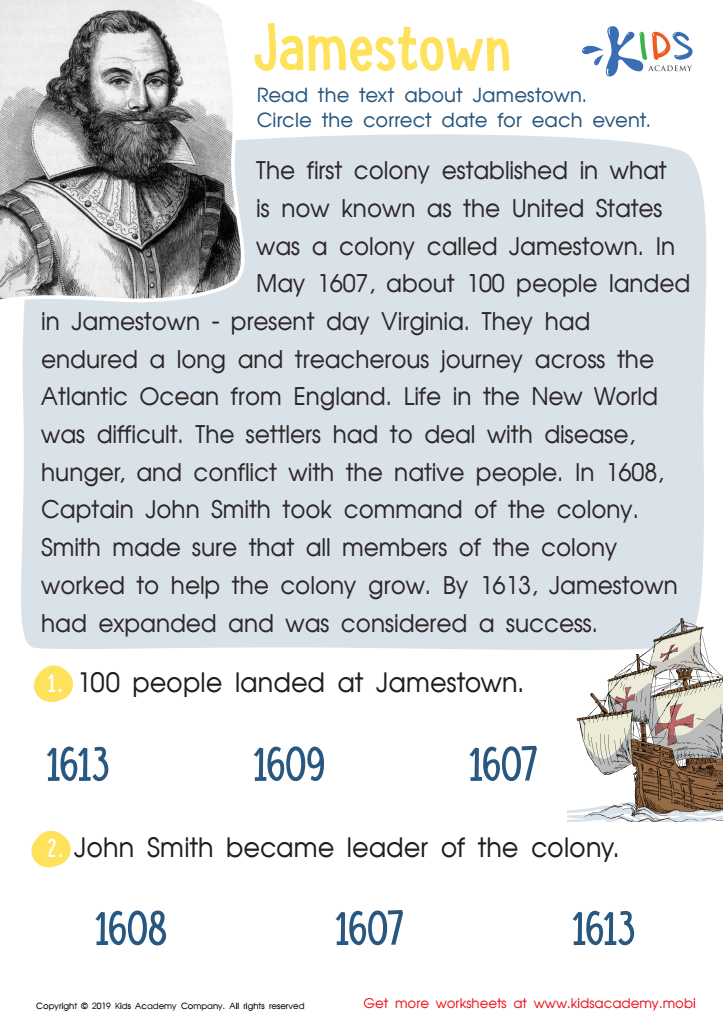
Jamestown Worksheet
 Assign to My Students
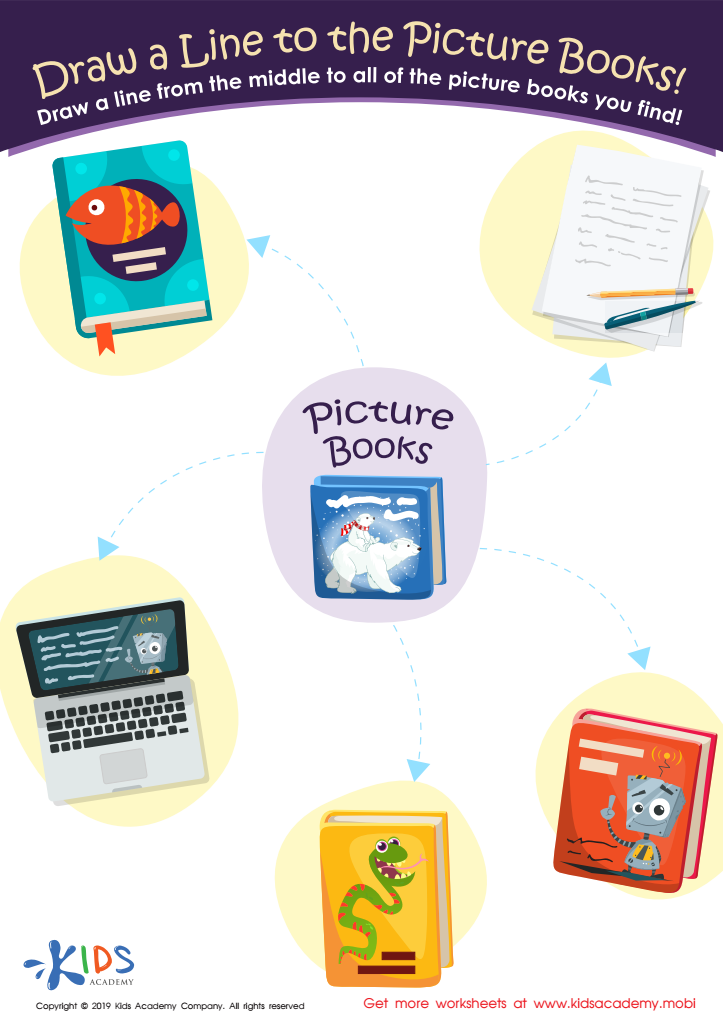
Draw a Line to the Picture Books Worksheet
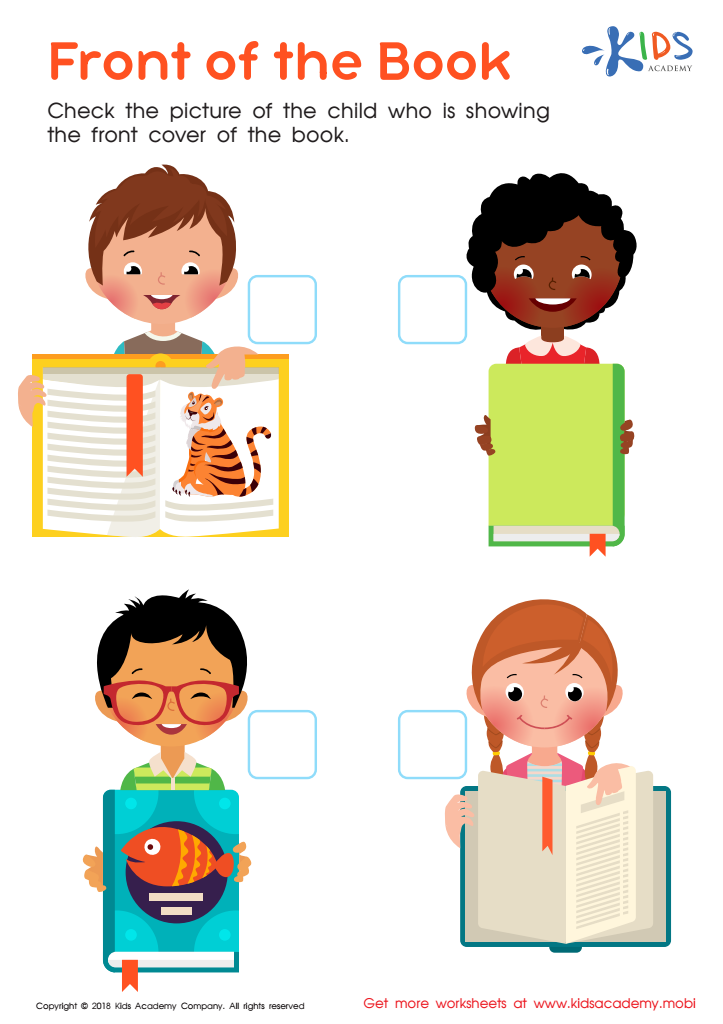
Front of the Book Worksheet
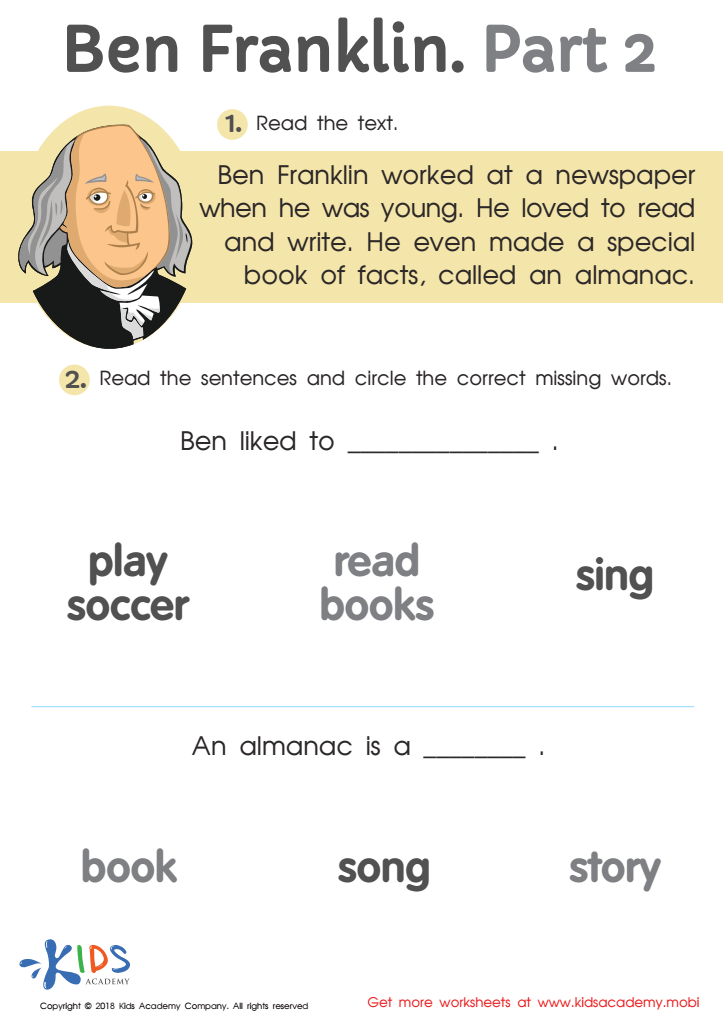
Ben Franklin Part 2 Worksheet








Reading skills, particularly in non-fiction, are crucial for children aged 3-8 as they lay the foundation for lifelong learning and critical thinking. Understanding non-fiction texts exposes young readers to facts, concepts, and ideas that expand their knowledge of the world around them. In this age group, children are naturally curious, and engaging with non-fiction helps satisfy this curiosity by providing valid information about various subjects, from animals and science to history and cultures.
Parents and teachers should prioritize non-fiction reading because it fosters important skills beyond mere comprehension, such as critical analysis and information synthesis. These skills are vital as children learn to distinguish between facts and opinions, an essential competency in today’s information-rich society. Additionally, non-fiction texts often include diverse linguistic structures and vocabulary, enhancing language development and communication skills.
Encouraging non-fiction reading also promotes independence and self-directed learning. As children explore topics of interest, they develop a love for reading and an intrinsic motivation to learn more. Ultimately, reading non-fiction not only equips young learners with knowledge but also nurtures their sense of wonder and inquiry, setting them on a path for academic success and personal growth. Thus, it is essential for educators and parents to foster this critical aspect of literacy.








