Understanding life cycles Reading Non-Fiction Worksheets for Ages 3-8
3 filtered results
-
From - To
Explore the fascinating world of life cycles with our engaging non-fiction reading worksheets designed for children ages 3-8. These educational resources introduce young learners to the concept of life cycles through colorful illustrations and age-appropriate text. Perfect for enhancing literacy skills, our worksheets encourage children to read, comprehend, and connect with the natural processes of growth and change. From the metamorphosis of butterflies to the life stages of plants and animals, these interactive activities foster curiosity and spark an interest in science. Download our worksheets today and empower your child with knowledge about the cycles that shape our world!
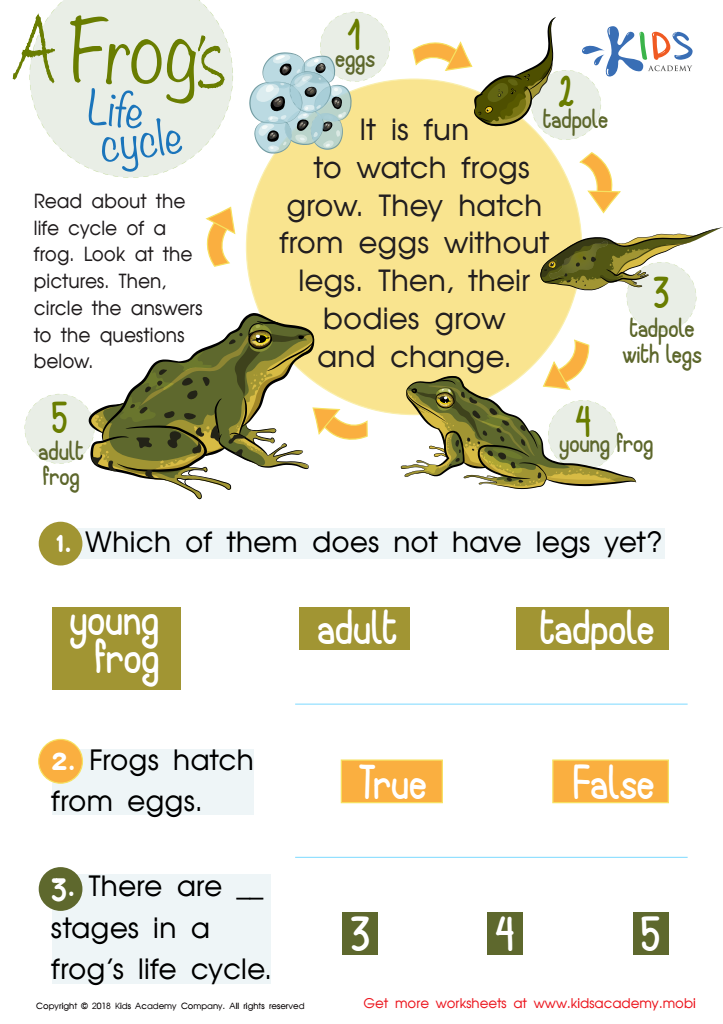
A Frog’s Life Cycle Worksheet
 Assign to My Students
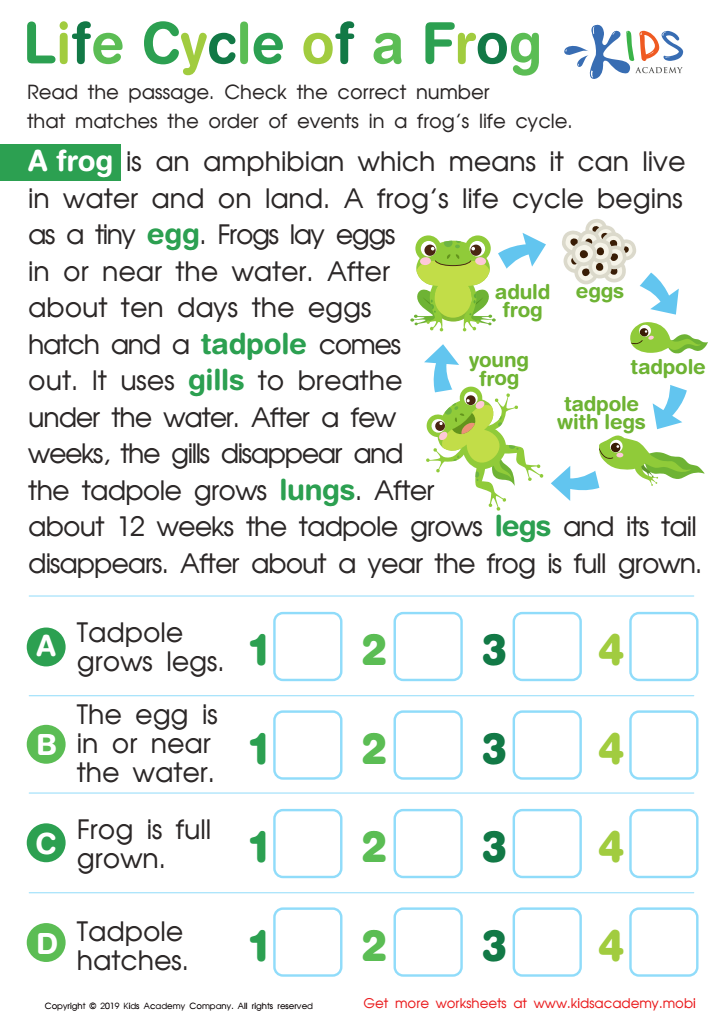
Life Cycle of a Frog Worksheet
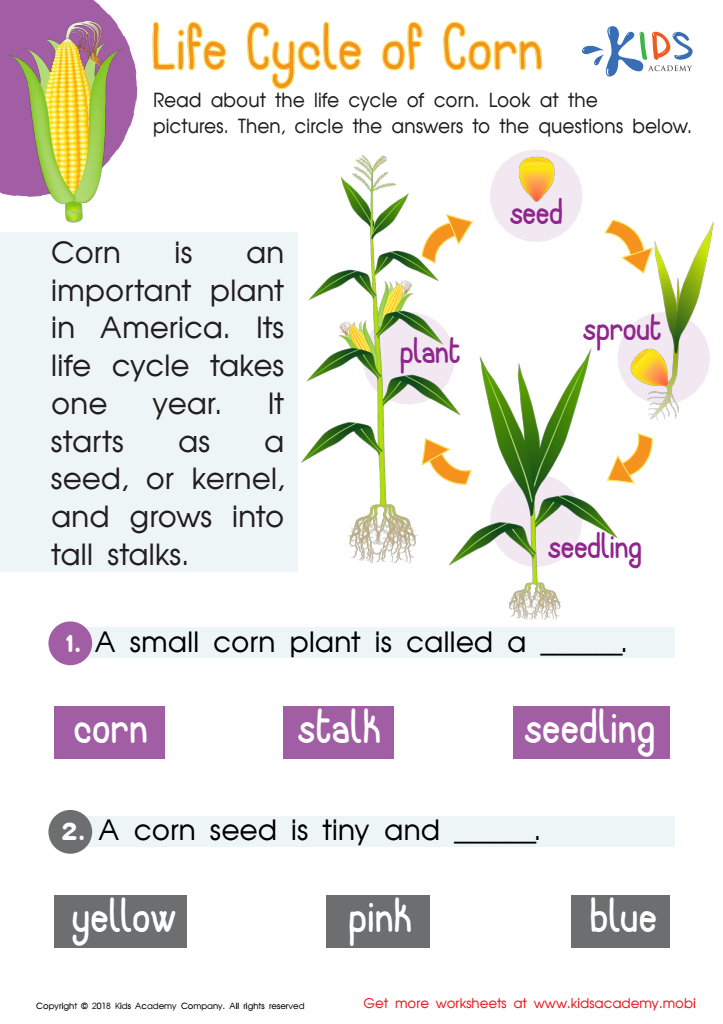
Life Cycle of Corn Worksheet








Understanding life cycles through reading non-fiction is essential for children aged 3-8, as it enriches their cognitive and emotional development. Parents and teachers should prioritize this reading genre because it introduces young learners to the natural world, fostering curiosity and a foundational understanding of biology. Engaging with non-fiction texts about life cycles—from insects to plants—encourages observational skills, critical thinking, and vocabulary expansion.
By exploring concepts like growth, change, and interdependence, children develop a sense of wonder and respect for living things, nurturing environmental stewardship from a young age. The structured format of non-fiction also helps children grasp scientific concepts through real-life examples, enabling them to connect what they learn to their surroundings.
Furthermore, reading together allows parents and teachers to facilitate meaningful conversations, reinforcing comprehension and encouraging questions. Discussing these topics together fosters emotional bonding and cultivates a lifelong love for reading and learning. Ultimately, introducing young children to life cycles through non-fiction not only enhances their knowledge but also amplifies their appreciation for the world, laying a robust groundwork for future academic success and responsible citizenship.








