Vocabulary Building Reading Non-Fiction Worksheets for Ages 3-8
4 filtered results
-
From - To
Enhance your child's vocabulary with our engaging Vocabulary Building Reading Non-Fiction Worksheets, designed for ages 3-8. Perfect for early learners, these worksheets encourage exploration of fascinating topics through captivating non-fiction texts. Each activity fosters comprehension while introducing new words, making learning fun and interactive. Children will develop essential language skills as they read, identify key vocabulary, and complete exercises tailored to their age group. Our user-friendly resources support educators and parents alike, ensuring a well-rounded literacy experience. Start building strong vocabulary foundations today and watch your child's confidence soar as they express themselves with new words!
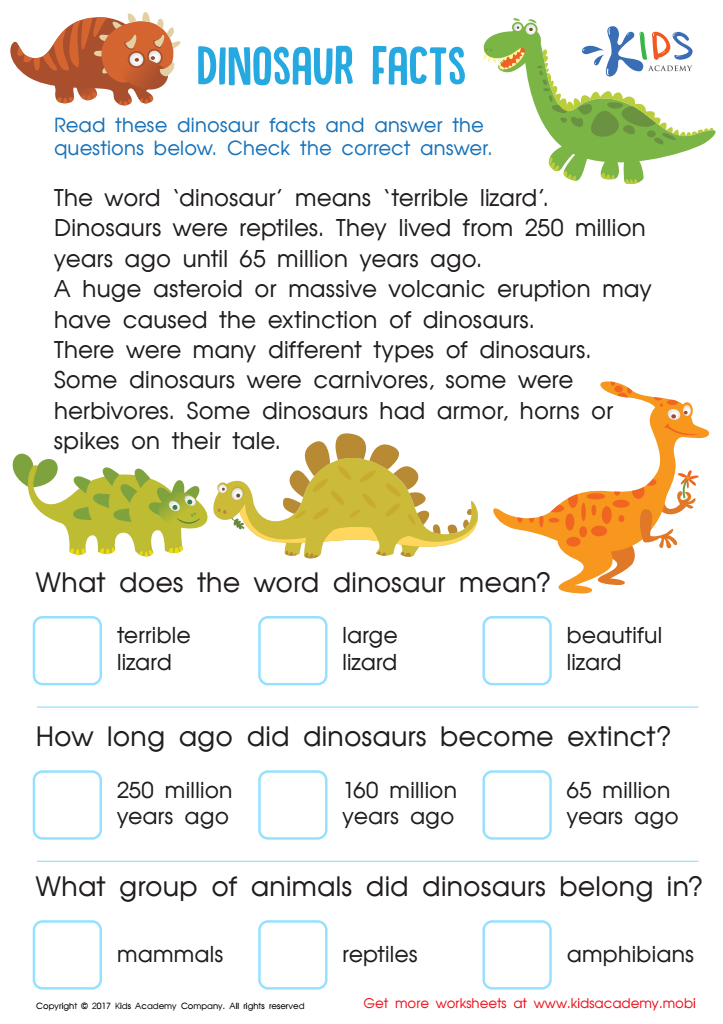
Dinosaur Facts Worksheet
 Assign to My Students
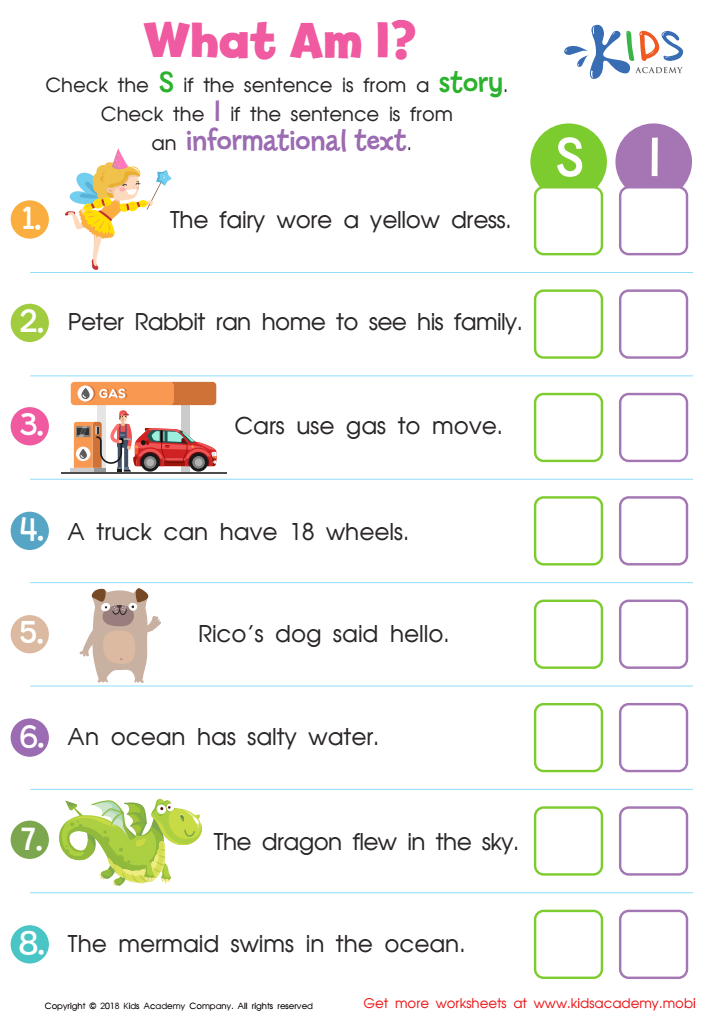
What Am I? Worksheet
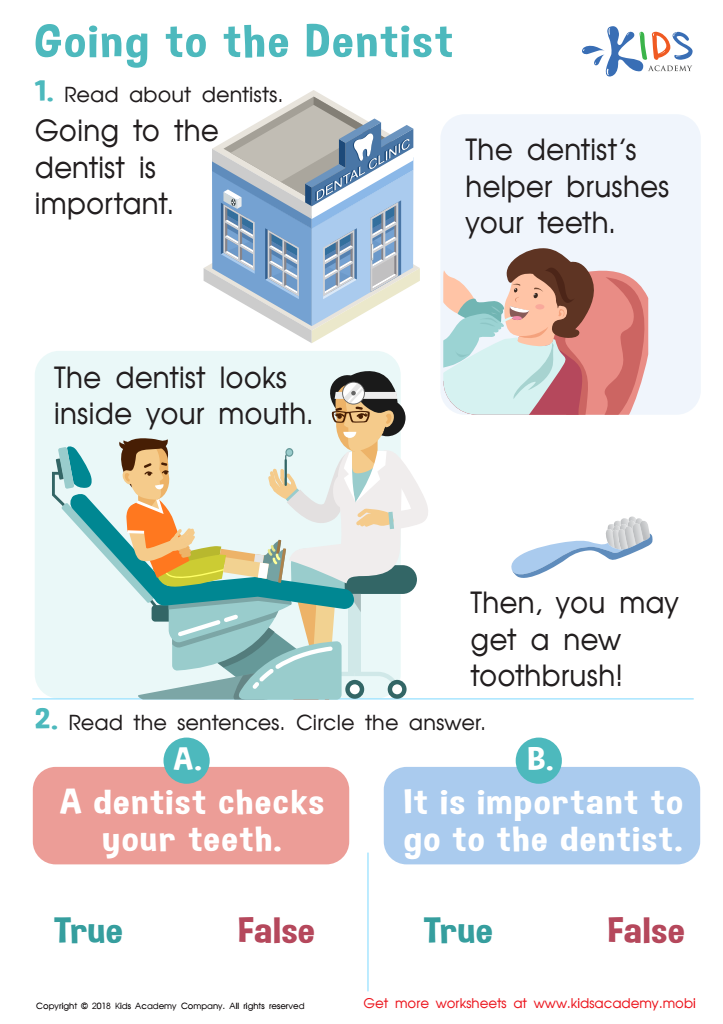
Going to the Dentist Part 2 Worksheet
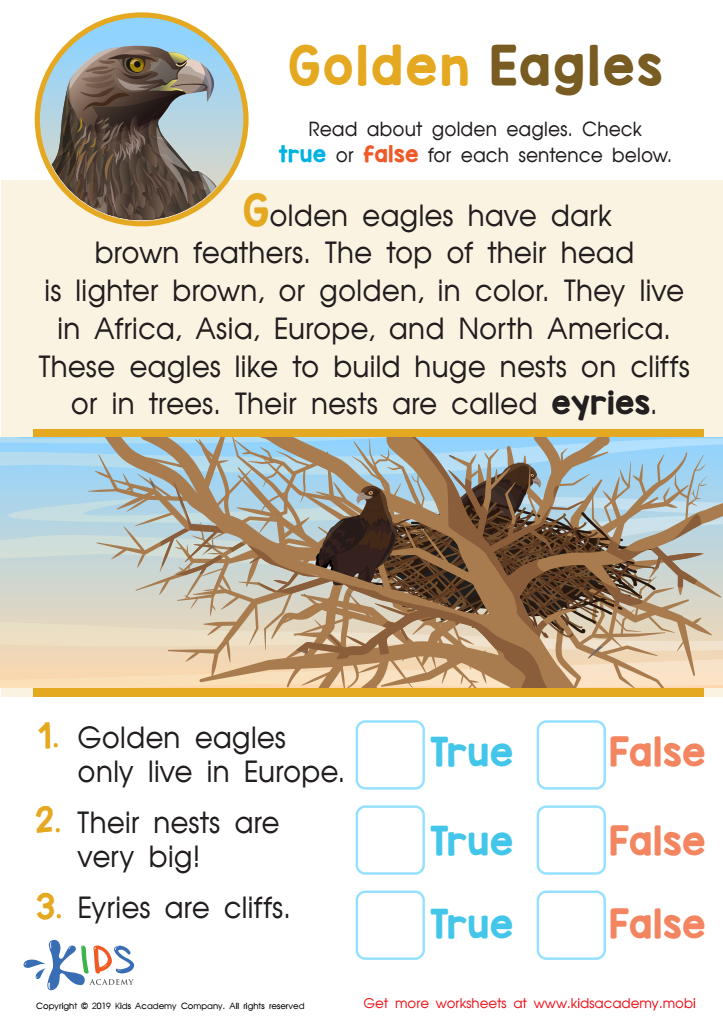
Golden Eagles Worksheet








Vocabulary building through reading non-fiction is crucial for children ages 3-8, as it lays the foundation for their overall literacy development and cognitive growth. At this early age, children are naturally curious and eager to learn about the world around them. Engaging with non-fiction texts allows them to explore diverse topics, from nature to history and science, fostering a sense of wonder and inquiry.
For parents and teachers, focusing on vocabulary in non-fiction reading is essential because it enhances language skills, which are predictive of academic success. A rich vocabulary enables children to understand and express ideas more clearly, helping them grasp complex concepts in later grades. Non-fiction texts often present new terminology that broadens their language repertoire, preparing them for effective communication in varied contexts.
Moreover, reading non-fiction encourages critical thinking and comprehension skills. Children learn to make connections between information, ask questions, and form opinions based on facts. By emphasizing vocabulary building through non-fiction materials, caregivers and educators empower young learners to become confident, knowledgeable individuals who view reading as a tool for exploration and learning. Ultimately, investing in this aspect of literacy is vital for shaping inquisitive, capable learners ready to tackle future academic challenges.








