Vocabulary development Reading Non-Fiction Worksheets for Ages 3-8
6 filtered results
-
From - To
Boost your child's vocabulary and reading skills with our engaging Non-Fiction Worksheets tailored for ages 3-8! At Kids Academy, we offer an array of printable exercises designed to enhance vocabulary development while introducing young learners to the world of non-fiction. Our worksheets feature diverse topics and interactive activities that foster comprehension, context usage, and critical thinking. Encourage your child to explore and learn new words, improve their reading confidence, and cultivate a lifelong love for learning. Perfect for teachers and parents, these resources are an excellent addition to early education tools. Start enriching your child's vocabulary journey today!
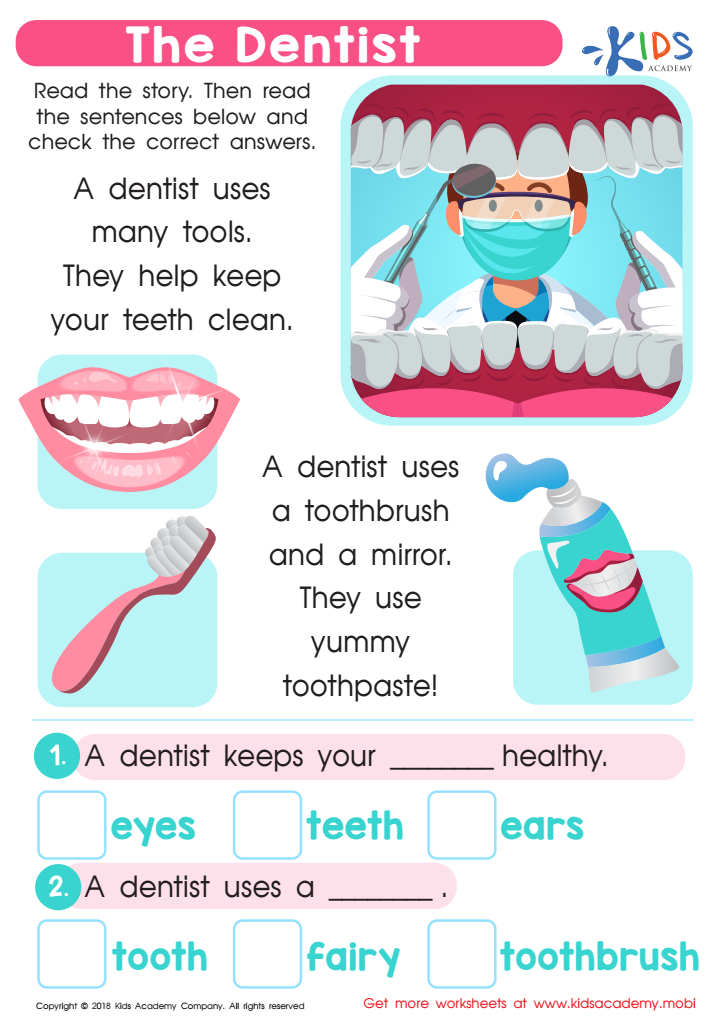
The Dentist Worksheet
 Assign to My Students
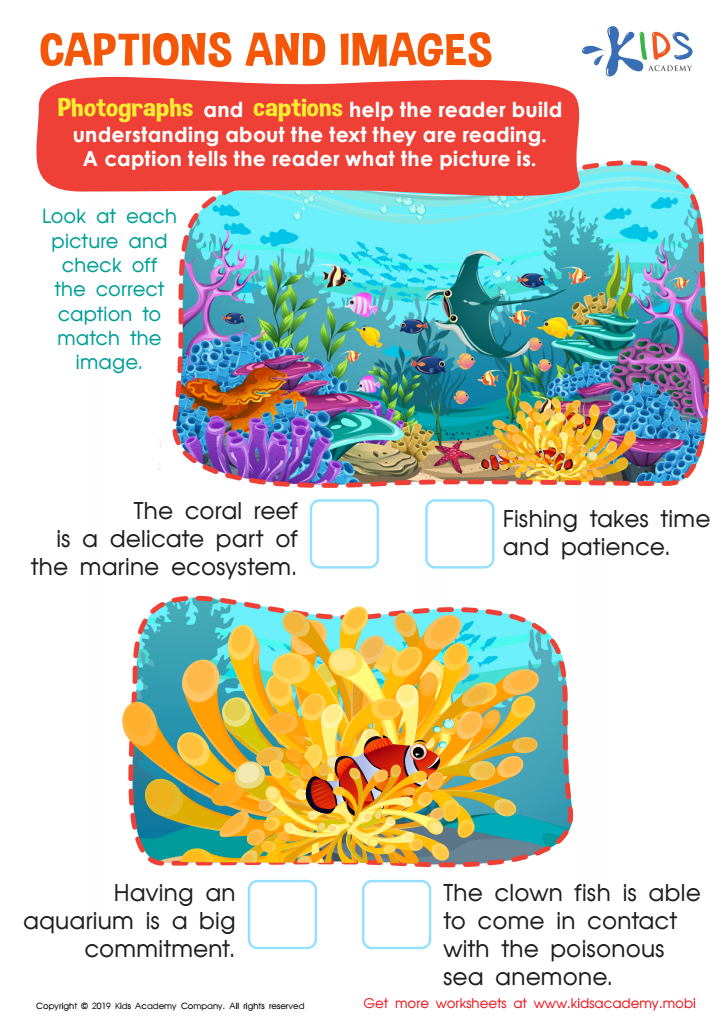
Captions and Images Worksheet
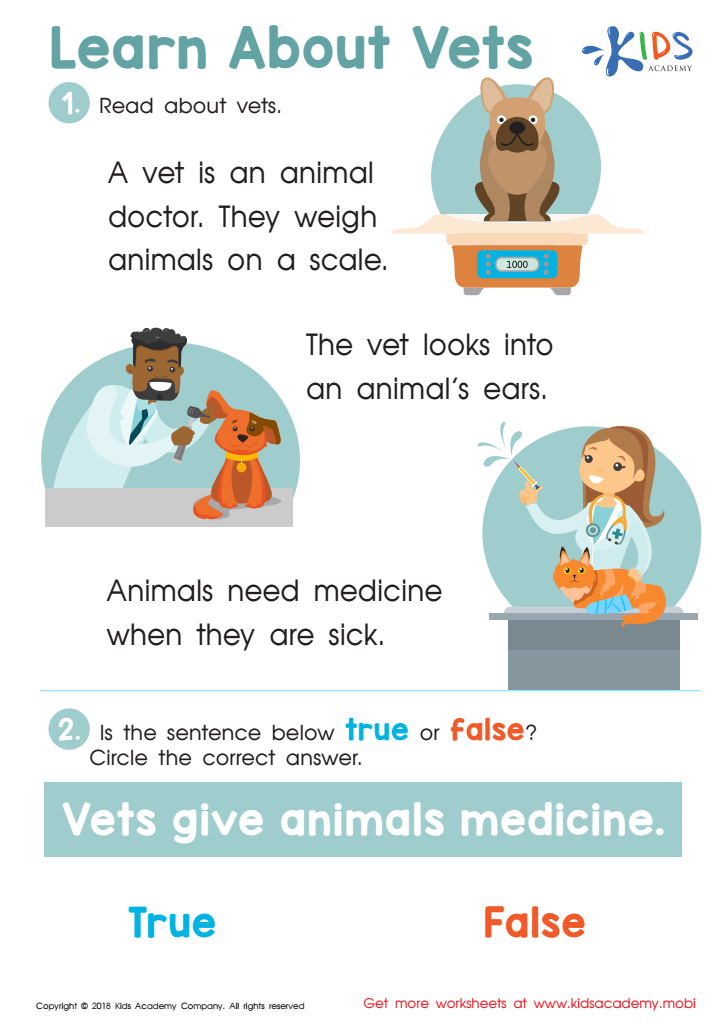
Learn About Vets Worksheet
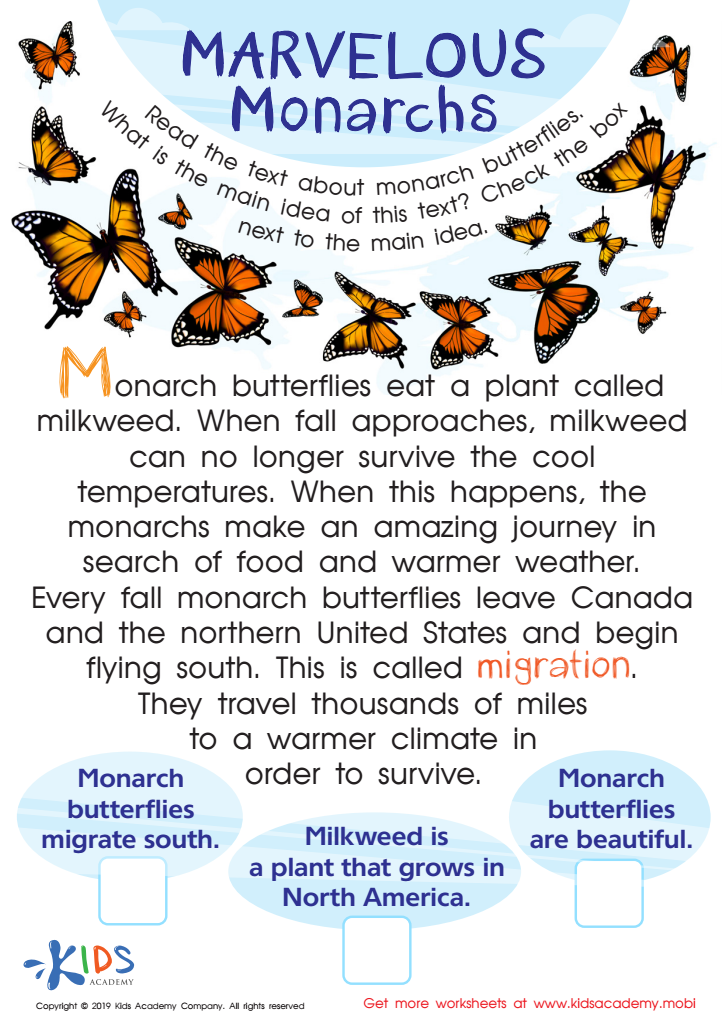
Marvelous Monarchs Worksheet
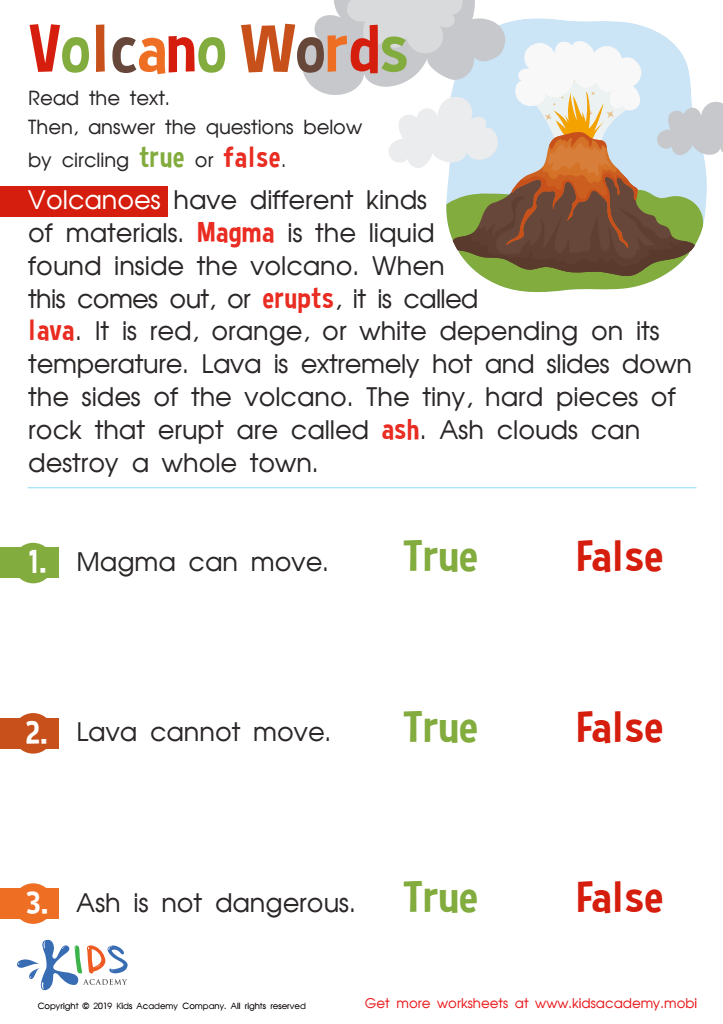
Volcano Words Worksheet
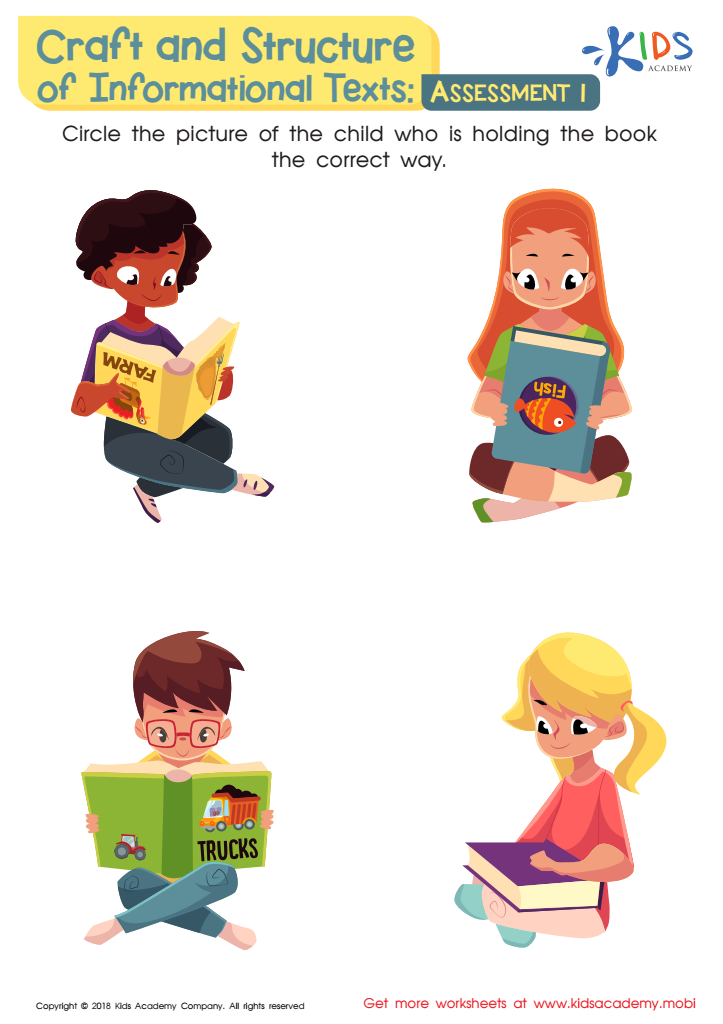
Craft and Structure of Informational Texts: Assessment 1 Worksheet








Vocabulary development through reading non-fiction for children aged 3-8 is crucial for a multitude of developmental reasons. During these formative years, children’s brains are like sponges, absorbing an extensive array of new information and concepts. Non-fiction texts often introduce terminology and concepts that are grounded in the real world, thereby expanding their understanding of the environment around them.
Rich vocabulary lays the foundation for reading comprehension and overall literacy. Children who are familiar with diverse words and their meanings can digest stories, instructions, and a multitude of other text-based information more effectively. Furthermore, an extensive vocabulary enhances children's ability to express themselves clearly and effectively, which aides in both social interactions and academic settings.
Introducing non-fiction reading also helps children develop an early interest in varied subjects such as science, history, and nature. These texts often stimulate curiosity and critical thinking, fostering a love for learning. Additionally, children become more adept at distinguishing facts from fiction, which is an essential skill in the information age.
Finally, parental and teacher involvement in nurturing vocabulary unplug’s potentials for more robust educational achievement. Encouraging non-fiction reading builds a well-rounded, inquisitive, and articulate individual, ready to tackle future academic challenges.








