Basic Addition Skills Sight Words Worksheets for Ages 3-8
8 filtered results
Difficulty Level
Grade
Age
-
From - To
Subject
Activity
Standards
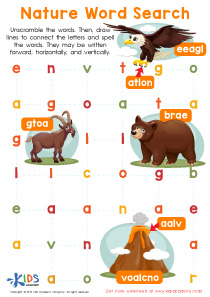
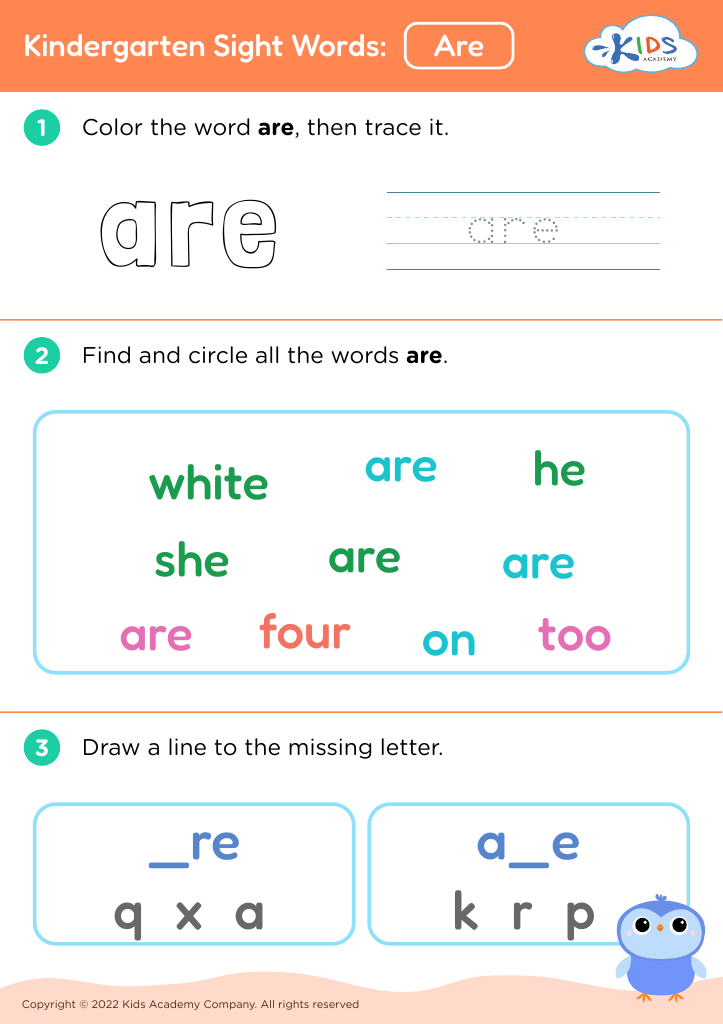
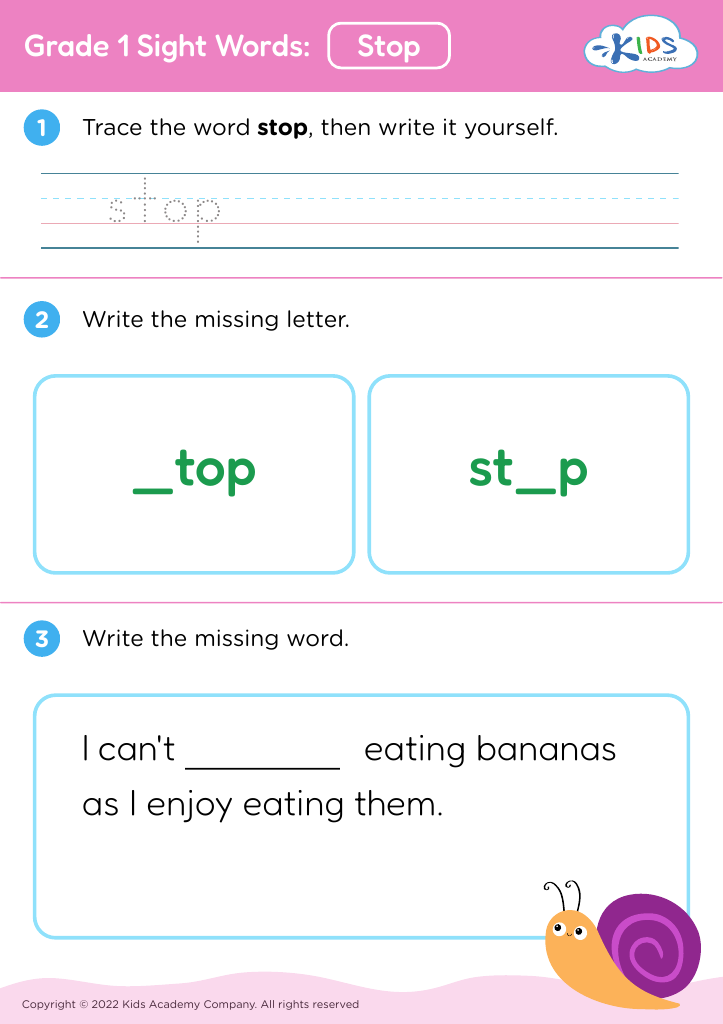
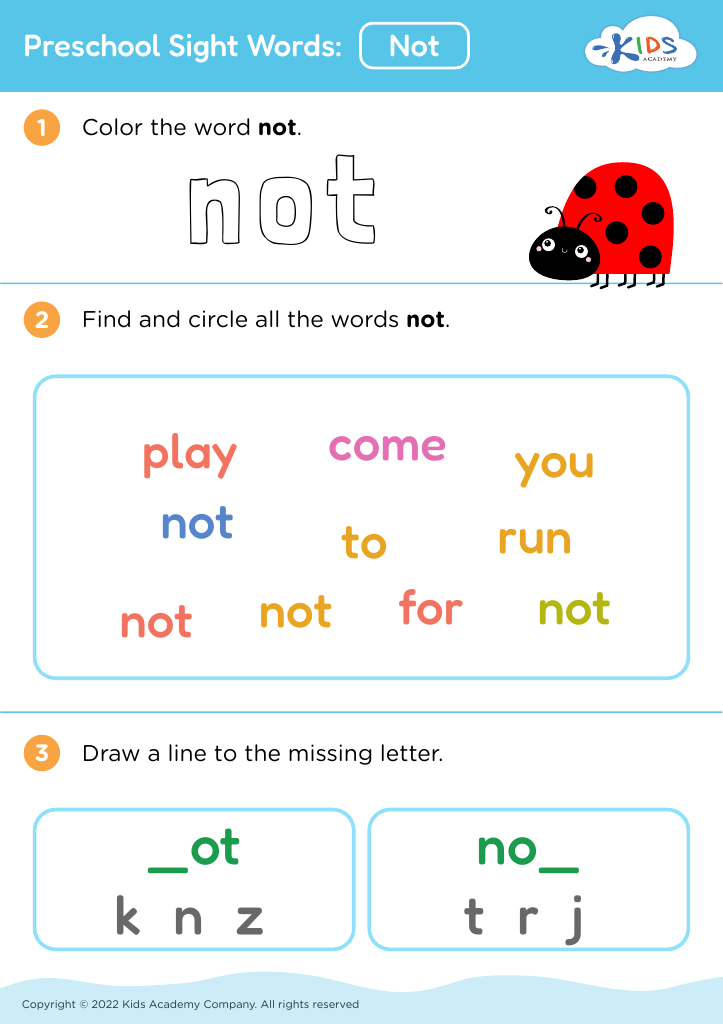
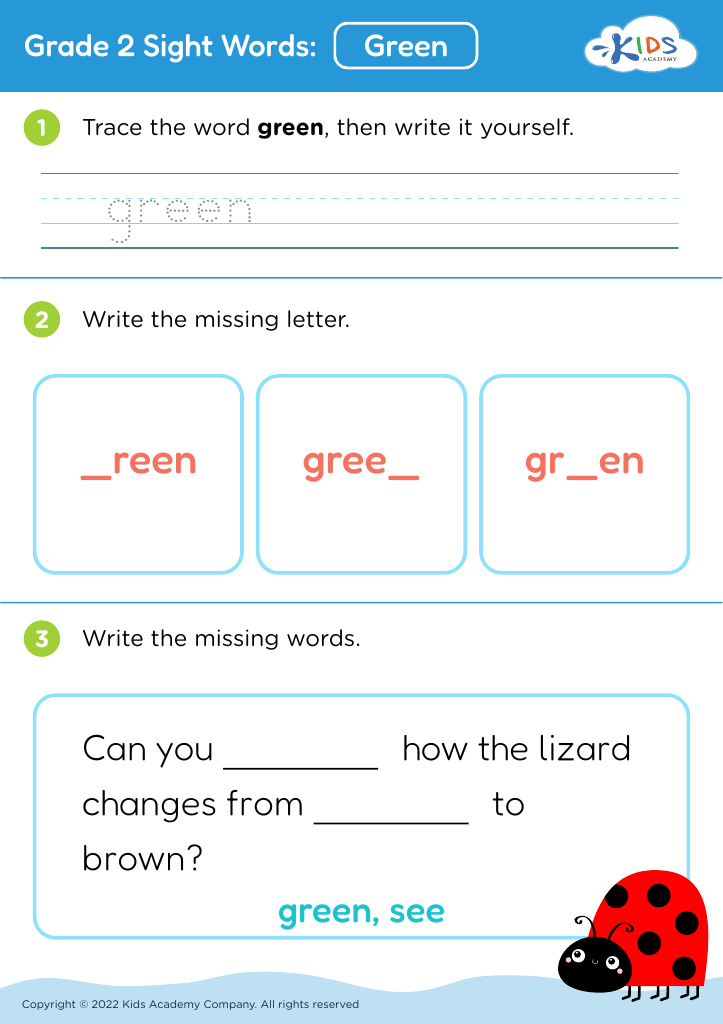
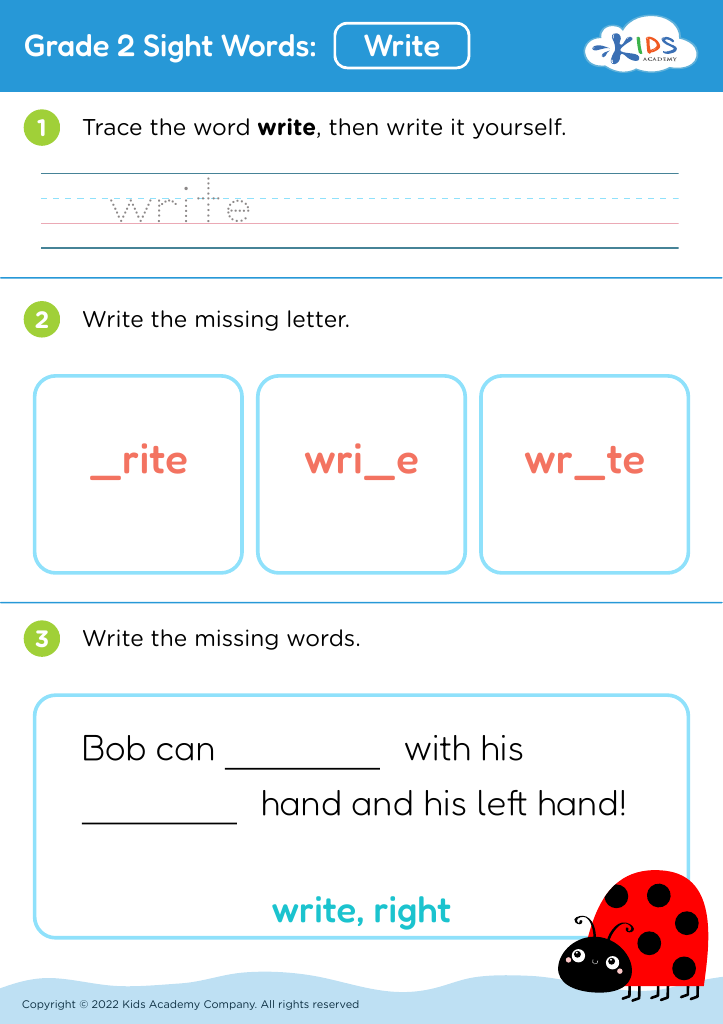
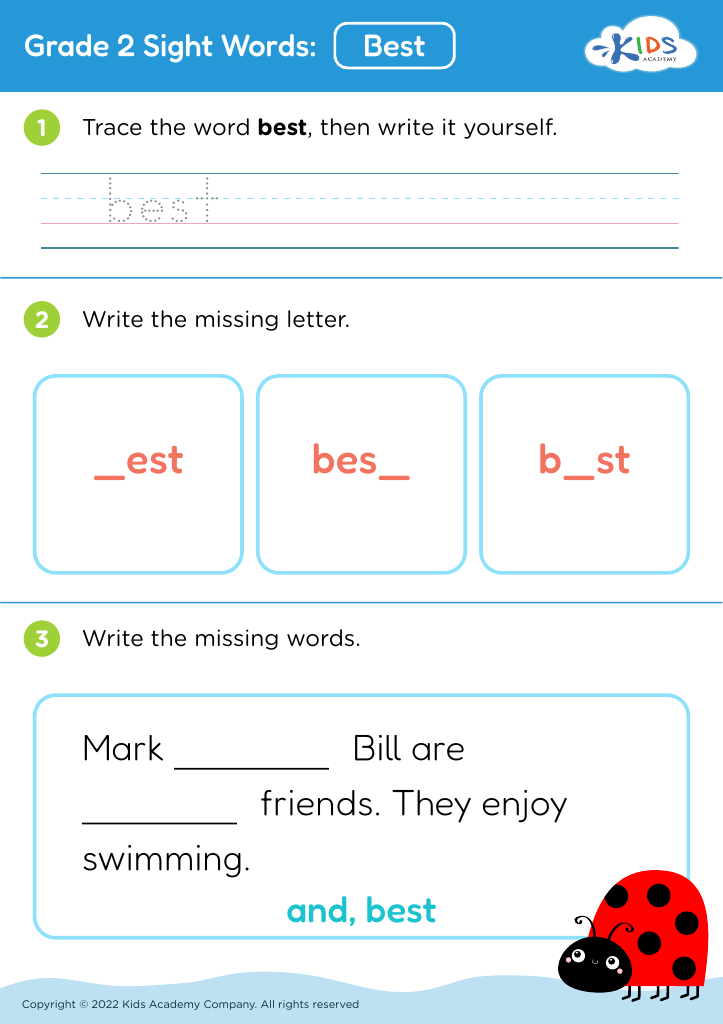
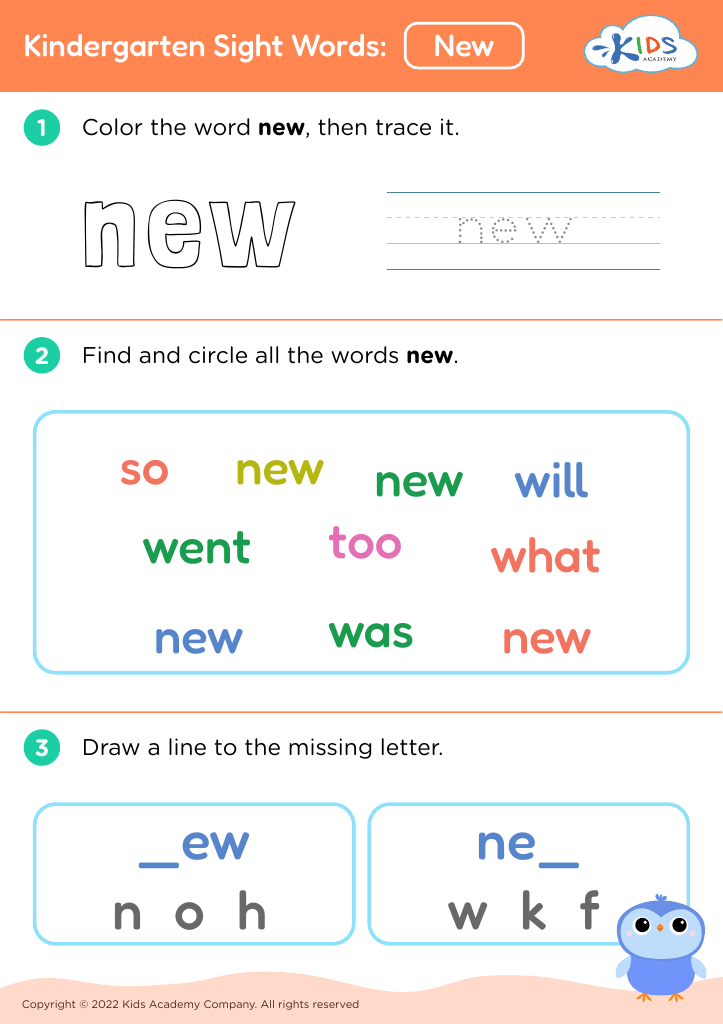
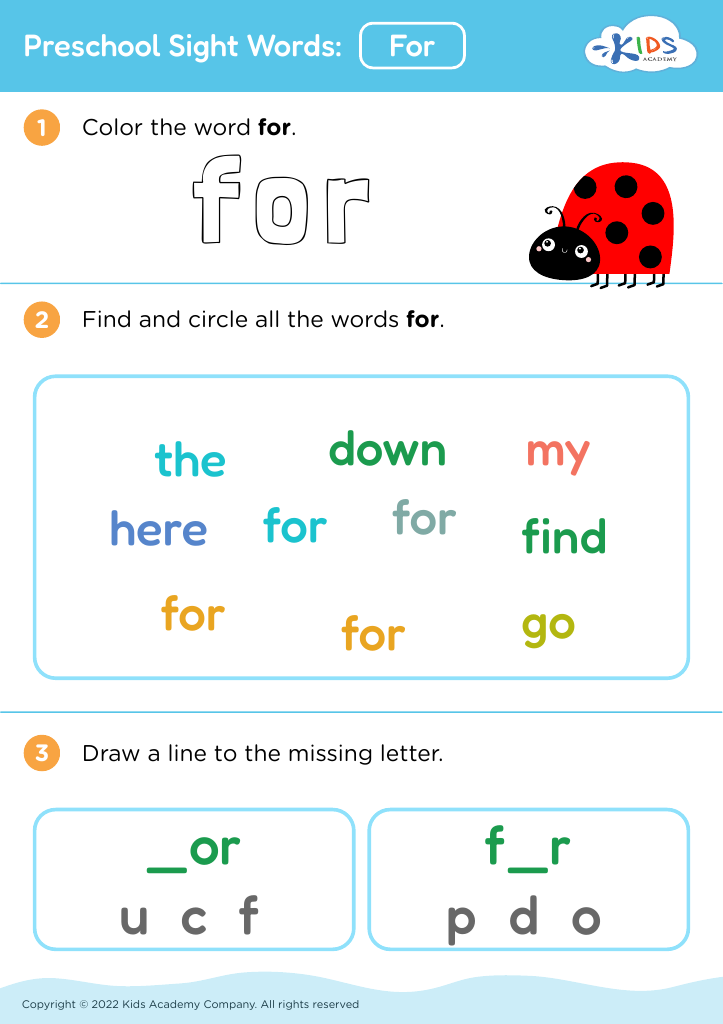
Enhance your child's foundational math skills with our Basic Addition Skills Sight Words worksheets designed for ages 3-8. Our engaging and interactive worksheets combine essential sight words practice with basic addition exercises, creating a fun and educational experience. These expertly crafted resources help young learners develop number recognition, counting skills, and fundamental math principles. Ideal for both classroom and home use, each worksheet is thoughtfully structured to support early reading and math fluency, fostering confidence in young minds. Set your child on the path to academic success with our comprehensive, easy-to-use worksheets today!
Favorites
With answer key
Interactive






Join Kids Academy for Free
Who is primarily going to use this learning content?




.jpg)



Parents and teachers should prioritize Basic Addition Skills and Sight Words for children aged 3-8 because these foundations are integral to early literacy and numeracy, forming the bedrock of more complex academic learning. Mastering basic addition helps children develop logical thinking and problem-solving skills, which are critical in subjects like mathematics and science. Early proficiency in these skills fosters confidence and a sense of accomplishment, encouraging continued interest and success in mathematics.
Similarly, sight words—commonly encountered words that young readers are encouraged to recognize without having to decode them phonetically—provide a significant boost to reading fluency. Being able to quickly recognize these frequent words helps children read more smoothly and comprehend text better, thus contributing to overall literacy development. Enhanced reading fluency allows children to focus on understanding the story or information presented rather than laboriously sounding out each word.
Fostering these essential skills during the early years provides a strong academic foundation, creating a positive feedback loop of skill acquisition, confidence, and enjoyment. Parents and teachers thus giving attention to basic addition skills and sight word recognition equipping children with critical academic tools that support lifelong learning and academic competence.