Number identification Sight Words Worksheets for Ages 3-8
5 filtered results
Difficulty Level
Grade
Age
-
From - To
Subject
Activity
Standards
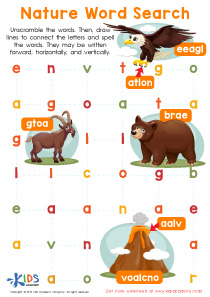
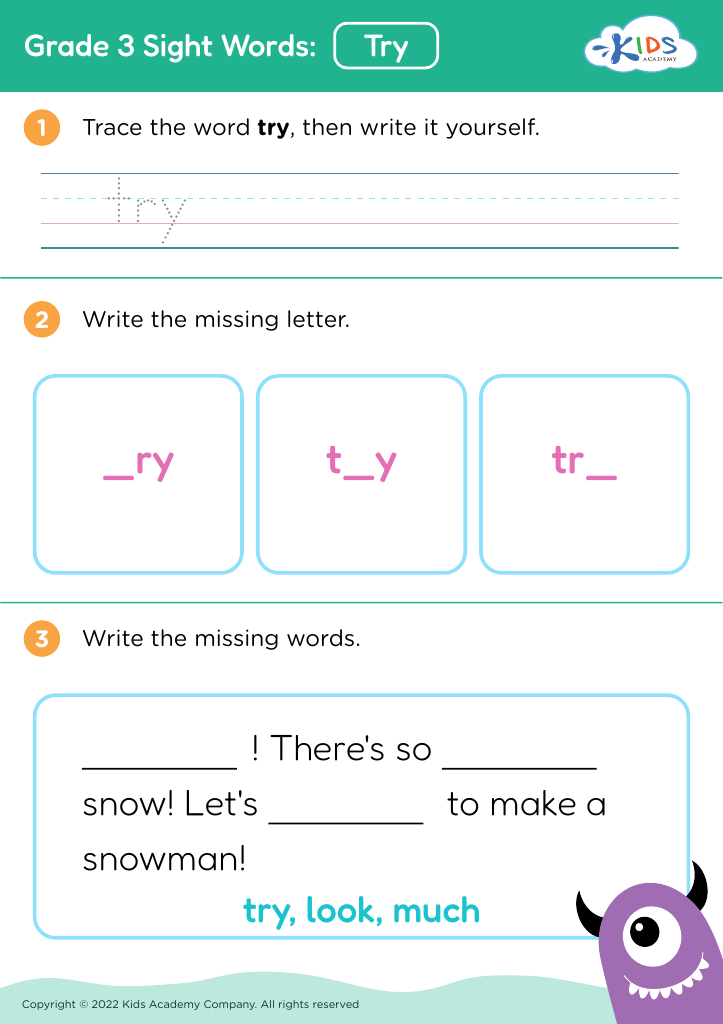
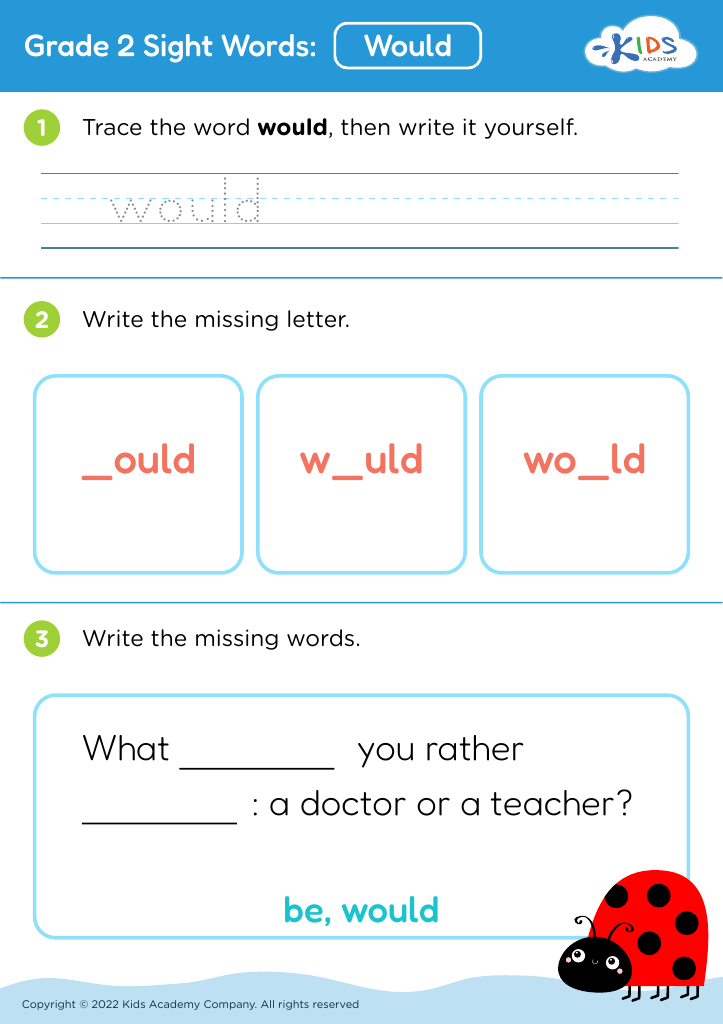
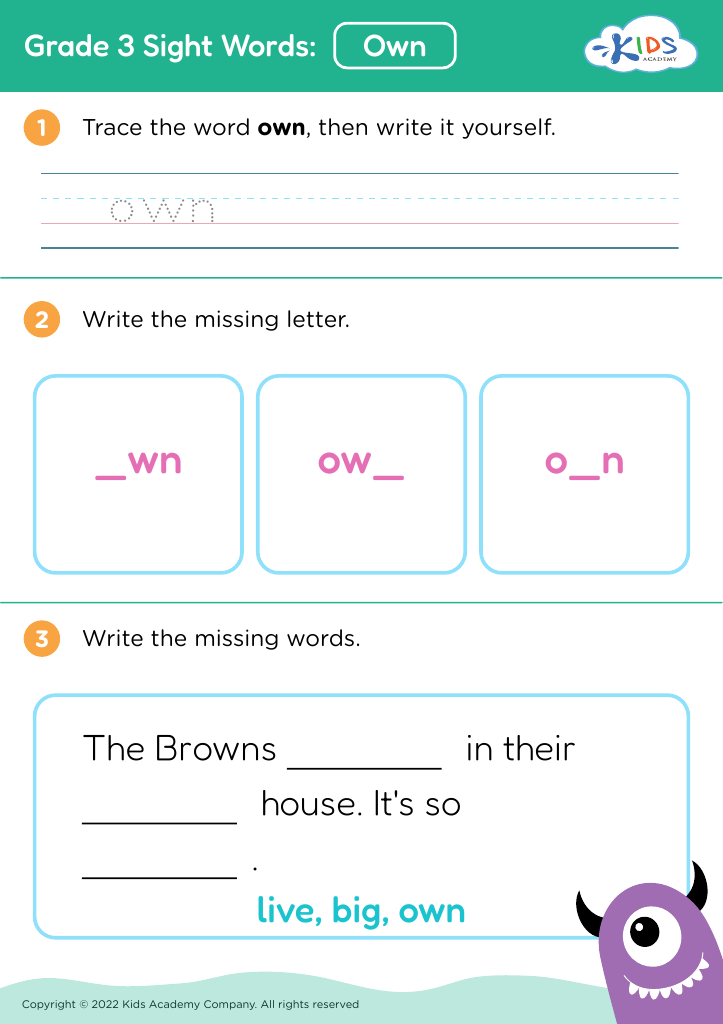
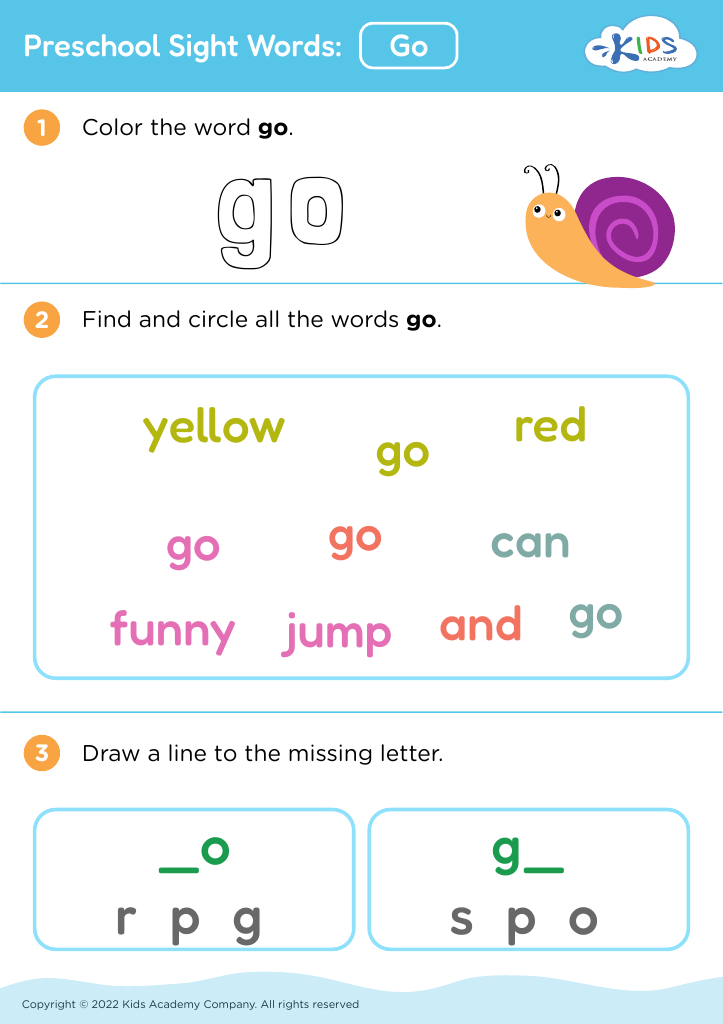
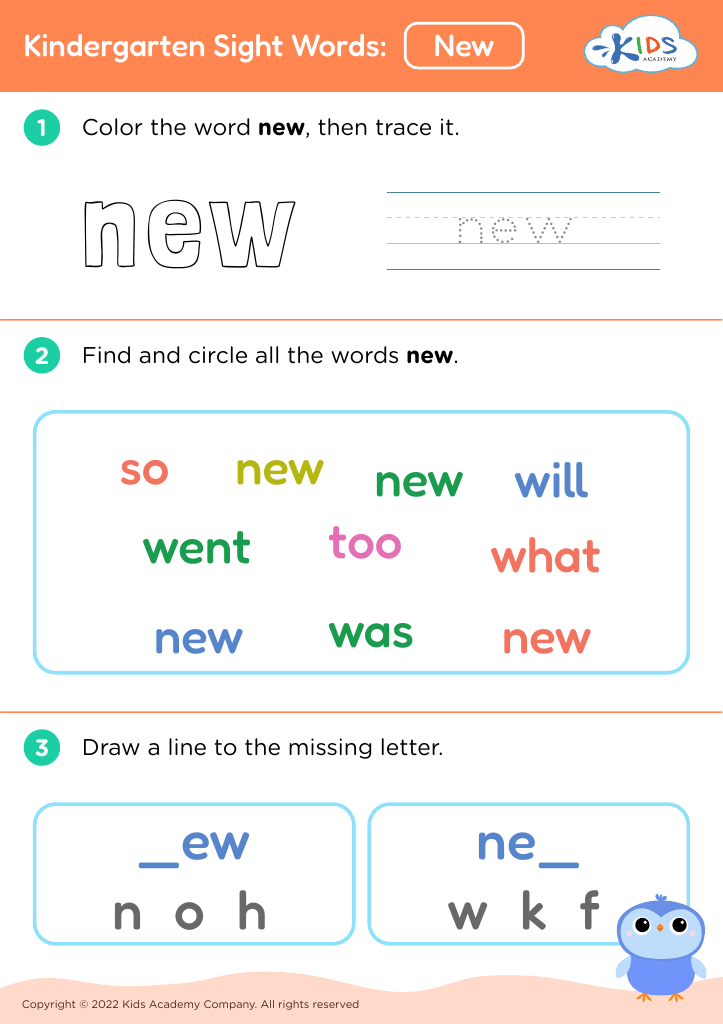
Unlock the joy of learning with our "Number Identification Sight Words Worksheets for Ages 3-8"! These engaging and educational worksheets are designed to develop your child's ability to recognize and identify numbers while enhancing their sight word skills. Ideal for young learners, each worksheet features colorful, interactive activities that blend fun with foundational math and reading concepts. Perfect for both classroom and at-home learning, our resources are tailored to support early childhood educators and parents in cultivating strong number recognition and literacy skills. Set your child on the path to academic success with our expertly crafted worksheets!
Favorites
With answer key
Interactive







Join Kids Academy for Free
Who is primarily going to use this learning content?








Number identification and sight words are fundamental components in early childhood education, crucial for children's cognitive and academic development within the ages of 3-8.
Firstly, number identification lays the foundation for numeracy skills, enabling children to comprehend and manipulate numbers effectively. Recognizing numbers is a vital pre-math skill, empowering children to perform basic arithmetic operations like addition and subtraction. It enhances their confidence in tackling everyday tasks involving numbers, such as counting objects, telling time, and understanding dates.
Similarly, sight words form the building blocks of literacy. These frequently occurring words don't conform to standard decoding rules, so recognizing them by sight accelerates reading fluency. Mastery of sight words helps children read more quickly and effortlessly, fostering comprehension and enjoyment. A broad vocabulary also significantly influences later academic achievement and communication skills.
Parents and teachers play pivotal roles in instilling these skills. Early, engaging exposure to both number identification and sight words through play, reading sessions, and educational games can set a positive trajectory for future learning. Ignoring these crucial areas can lead to struggles with more complex concepts later, potentially hindering academic progress and confidence. Thus, focused attention on these skills is indispensable for fostering a well-rounded, competent early learner.