
Word Recognition Word Scramble Worksheets for Ages 3-8
6 filtered results
Difficulty Level
Grade
Age
-
From - To
Subject
Activity
Standards
Introducing our Word Recognition Word Scramble Worksheets tailored for ages 3-8! These engaging and educational printable worksheets are designed to enhance your child's word recognition skills through fun and interactive word scramble activities. Ideal for preschool and early elementary students, each sheet challenges young learners to unscramble mixed-up letters to form correct words, supporting early reading and cognitive development. Available on Kids Academy, these exercises not only build vocabulary but also sharpen problem-solving abilities. Give your child a head start in their literacy journey with our colorful and exciting word scramble worksheets. Perfect for both classroom and home use!
Favorites
With answer key
Interactive
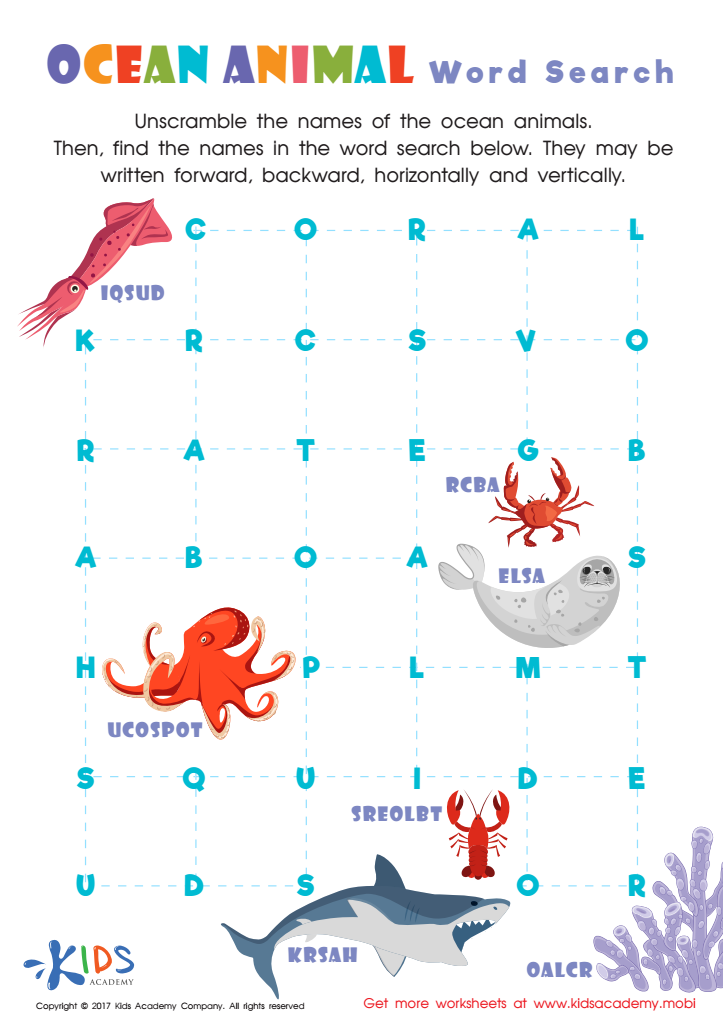
Ocean Animals Word Search Printable
Challenge your child to unscramble the names of ocean animals and find them in the word search. This ocean animals printable is a fun way to teach kids more about these fascinating creatures!
 Assign to My Students
Ocean Animals Word Search Printable
Worksheet
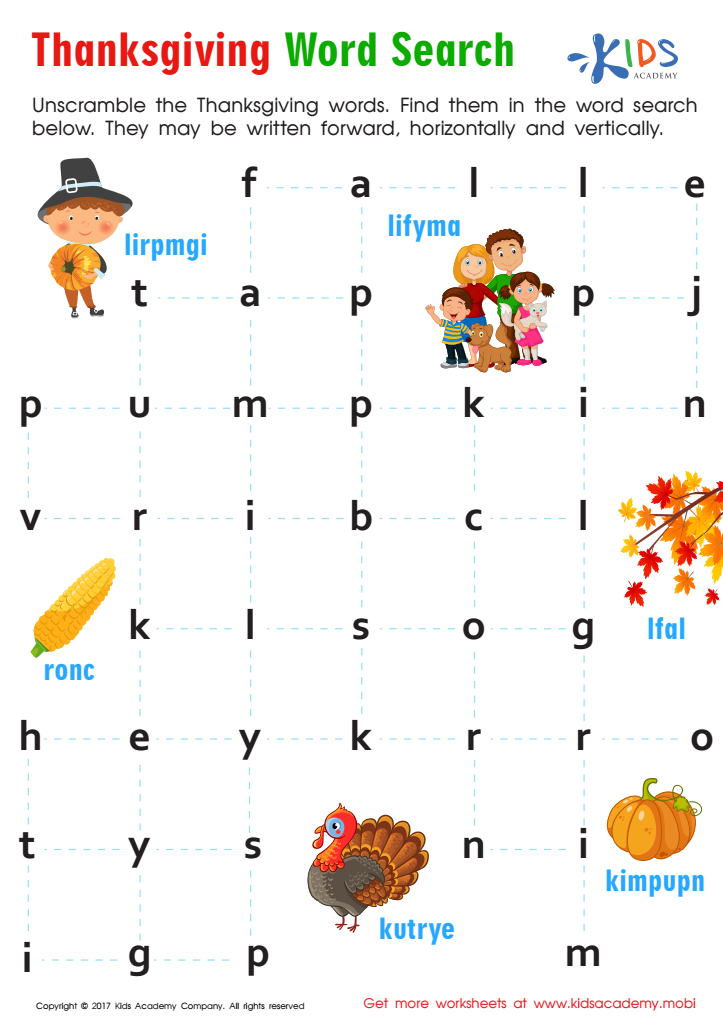
Thanksgiving Word Search Sight Words Worksheet
Unscramble letters to find Thanksgiving-themed sight words with this free worksheet! It's an exciting way to boost your child's reading skills. Download the PDF and enjoy!
Thanksgiving Word Search Sight Words Worksheet
Worksheet
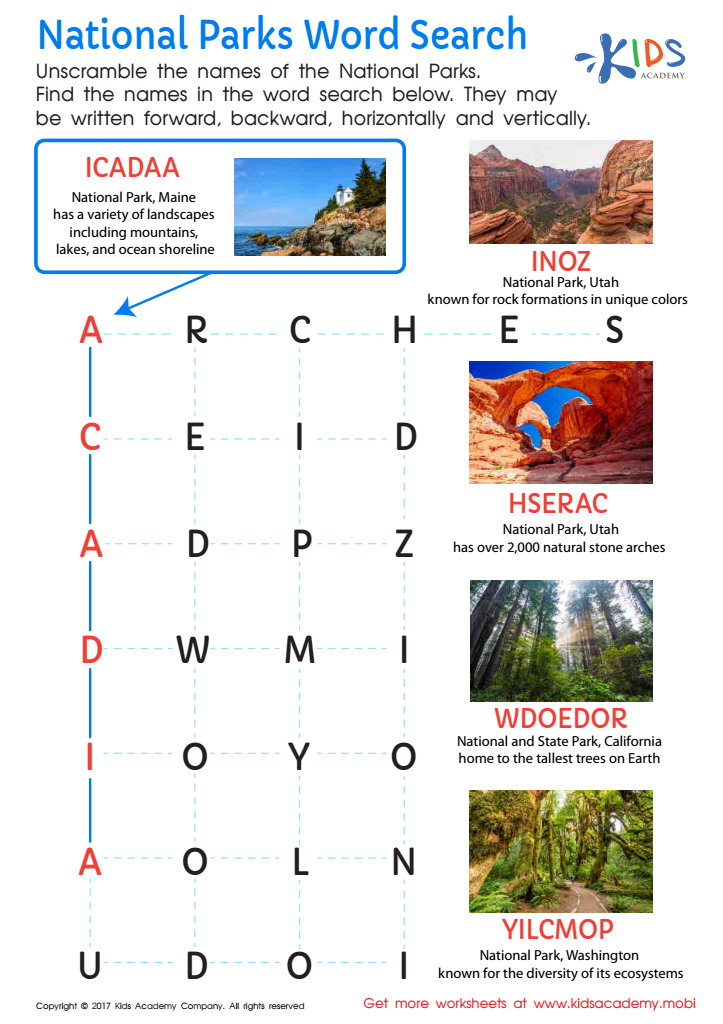
National Parks Word Search Worksheet
Explore the beauty of the USA’s national parks with this fun National Parks word search! Learn more about these majestic sites and boost your knowledge. Take a trip through the sights and sounds of our country with this motivating worksheet.
National Parks Word Search Worksheet
Worksheet
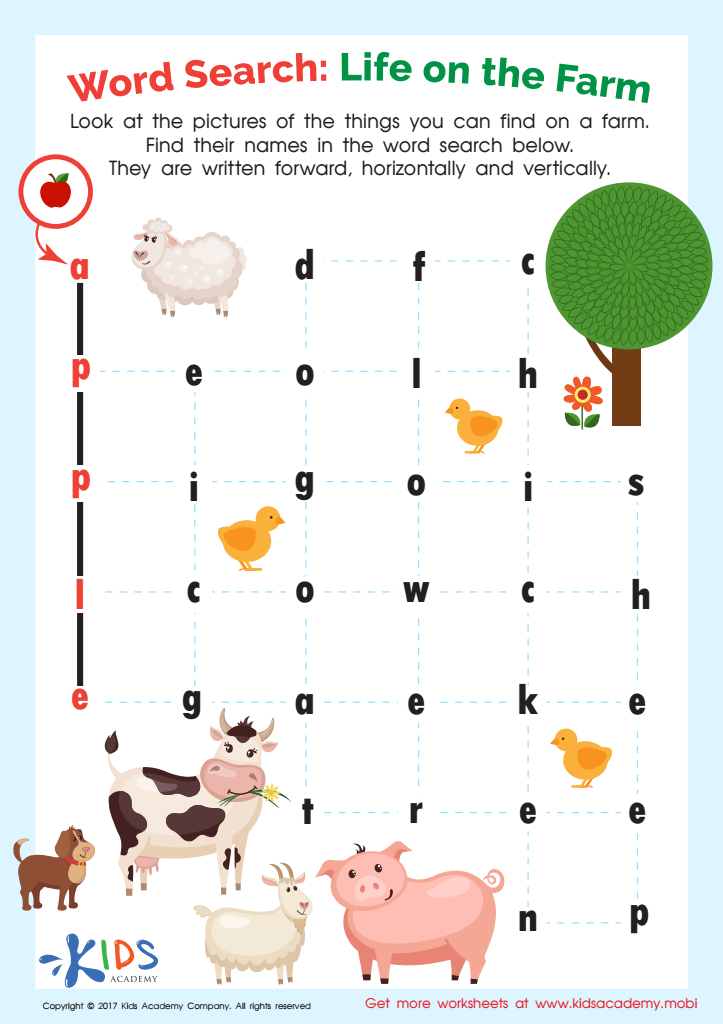
Word Search Puzzles Worksheet
2nd grade word search puzzles are great fun, helping kids flex their knowledge of words and spellings. Kids can use the pictures to find farm-themed words hidden on the page. It's a great way to learn!
Word Search Puzzles Worksheet
Worksheet
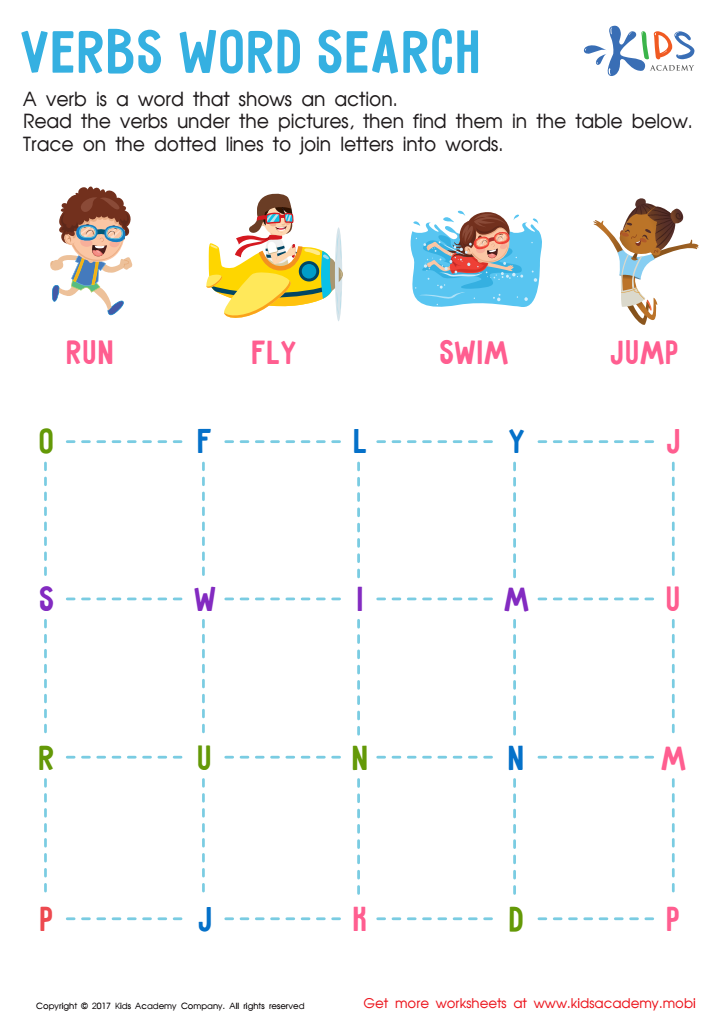
Verbs Word Search Worksheet
Ask your child if they understand the meaning of the word "verb". If not, explain that it's a word that shows an action. Give examples of familiar verbs. Then look at the pictures in the tracing sheet and read the words. Ask your child to follow the dotted lines to find the hidden words. Perfect tool to teach spot and use verbs!
Verbs Word Search Worksheet
Worksheet
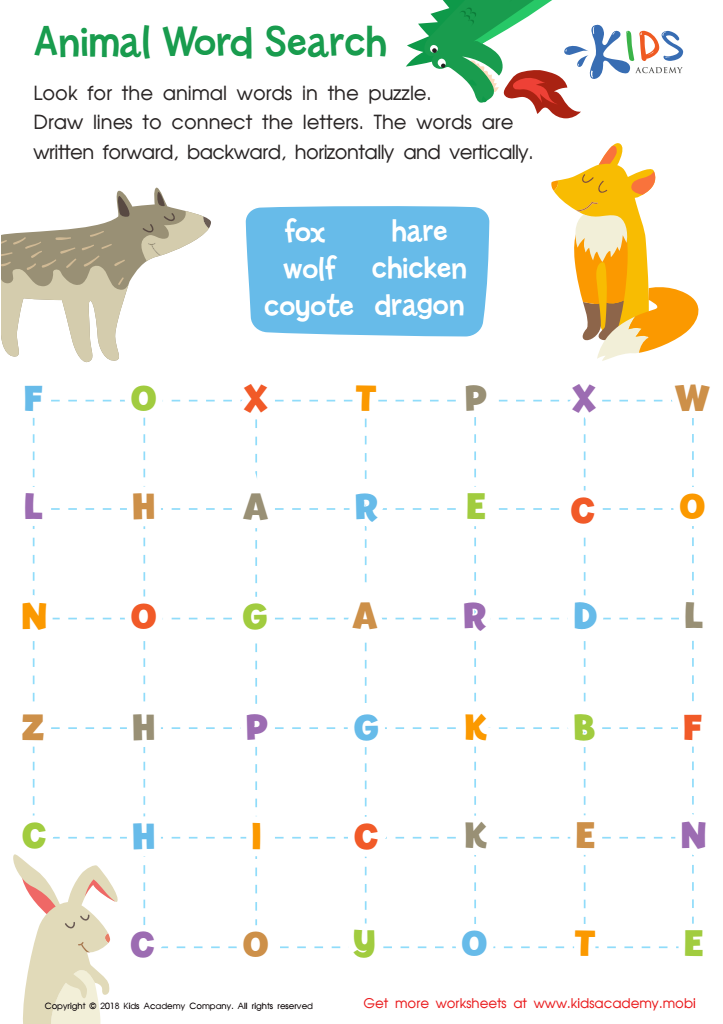
Animal Word Search Worksheet
Students can have fun and strengthen spelling and vocabulary skills with this word search worksheet. Search for animal words and circle the letters in the puzzle. Words can be found forwards, backwards, horizontally or vertically, providing a great challenge to foster critical thinking skills. An enriching activity for all ages!
Animal Word Search Worksheet
Worksheet
Join Kids Academy for Free
Who is primarily going to use this learning content?




Word Recognition Word Scramble activities are essential for children aged 3-8 because they build foundational literacy skills critical for future academic success. At this early development stage, young minds are particularly receptive to learning language, and engaging them with word scrambles can make this process both fun and effective. These activities enhance word recognition skills, allowing children to quickly identify and understand common words, which is essential for fluent reading.
When children participate in word scrambles, they practice recognizing letter patterns and sounds within words, an important aspect of phonemic awareness. This skill helps them decode new words more easily and contributes to stronger spelling abilities. Additionally, word scrambles encourage problem-solving and cognitive flexibility, as children must mentally reorganize letters to form correct words. This stimulates their critical thinking and reasoning abilities.
For parents and teachers, word recognition scramble games can be an enjoyable way to bond with children while supporting their learning journey. Moreover, these activities can be tailored to match a child's current literacy level, offering personalized and targeted practice that meets individual needs.
By incorporating word recognition scramble activities into early education, parents and teachers can provide children with a strong literacy foundation that sets them up for continued academic achievement and a lifelong love of reading.







