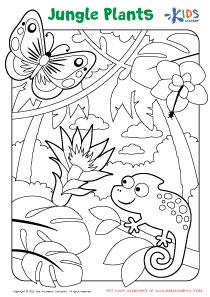
Enhancing observation skills Animals Worksheets for Ages 3-8
3 filtered results
Difficulty Level
Grade
Age
-
From - To
Subject
Activity
Standards
Enhancing observation skills through our Animals Worksheets for Ages 3-8 offers a fun and interactive way for young learners to explore the animal kingdom. Designed by education experts, these worksheets help children improve their ability to notice details and differences while learning about various animals and their habitats. Activities include identifying animal patterns, spotting differences, and matching animals to their environments, enhancing cognitive and fine motor skills. Perfect for early grade teachers and parents, these worksheets make science education engaging and enjoyable, fostering a love of learning and nature in children. Dive into our animal world today!
Favorites
With answer key
Interactive
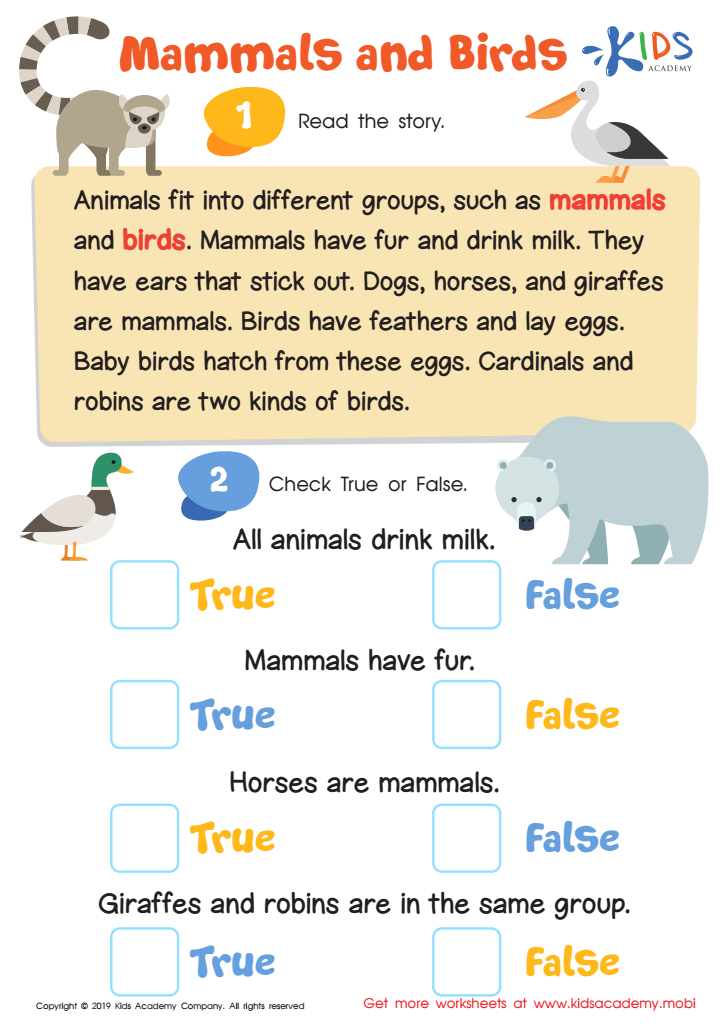
Mammals and Birds Worksheet
This worksheet challenges kids to read an informational text and review science facts about mammals and birds. Have them read the passage then mark statements true or false. Remind them to go back to the text if they get stuck! Get started now and help your child enhance multiple skills in one go!
 Assign to My Students
Mammals and Birds Worksheet
Worksheet
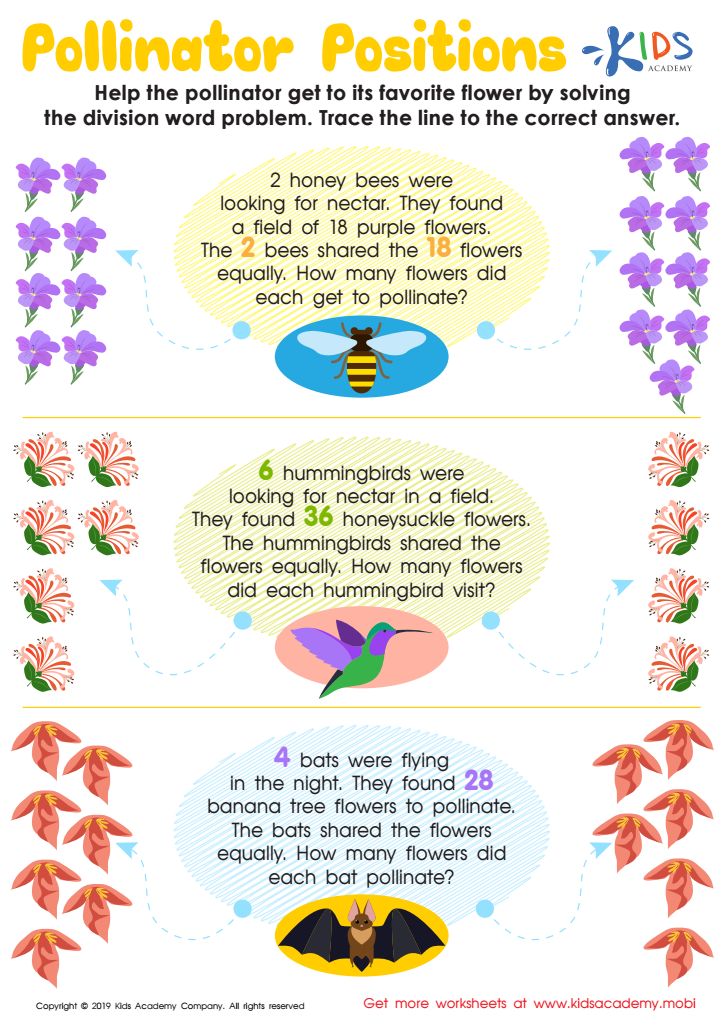
Pollinator Positions Worksheet
Kids will love learning about pollinators and how vital they are. Help their favorite friends get to the right flowers with this fun PDF. Children can solve the problems without even knowing they're doing division; just read the word problems and use the highlighted numbers. Finish by tracing the lines to the correct quotient!
Pollinator Positions Worksheet
Worksheet
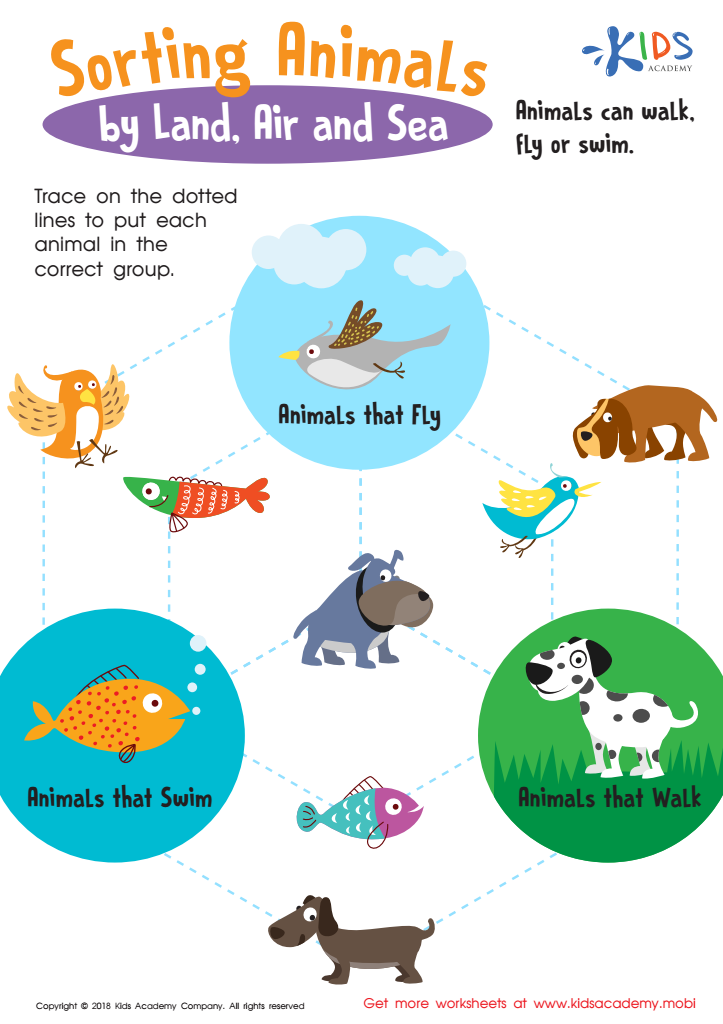
Sorting Animals by Land, Air and Sea Worksheet
Kids will use critical thinking and fine motor skills with this worksheet! They'll analyze animal traits and draw lines to sort them into groups of those that fly, swim, or walk. It's a fun way to hone skills and have a great time!
Sorting Animals by Land, Air and Sea Worksheet
Worksheet
Join Kids Academy for Free
Who is primarily going to use this learning content?





%20(1).jpg)


Parents and teachers should prioritize enhancing observation skills in young children, particularly through studying animals, as it lays a crucial foundation for continued cognitive and emotional development. At ages 3-8, children are naturally curious and impressionable; providing them with opportunities to observe animals enriches their understanding of the natural world, fostering a sense of wonder and responsibility towards other living beings.
First, developing observation skills sharpens children's attention to detail, improving their focus and concentration. As they watch and note animal behavior, children learn to discern subtle differences and patterns, skills that are transferable to academic learning and problem-solving scenarios.
Second, connecting with animals can enhance children's empathy and compassion. Understanding that animals have needs and emotions fosters a caring attitude, which is essential for social-emotional development and forming healthy human relationships.
Third, observation acts as a gateway to broader educational content. Through animals, children can explore basic biological concepts, such as habitats and life cycles, serving as a gentle introduction to scientific methodology. As they ask questions and seek answers about the animals they observe, their critical thinking and language skills also receive a boost.
By nurturing these observation skills early, parents and teachers lay the groundwork for well-rounded development, setting children up for academic success and empathetic citizenship.