Unlock the magic of cursive writing with our Alphabet Recognition Cursive Letters Worksheets, designed specifically for children ages 3-8. These engaging and educational worksheets help young learners recognize and practice cursive letters, enhancing their fine motor skills, handwriting, and alphabet knowledge. Each worksheet offers fun and interactive activities, from tracing to connecting letters, ensuring that children stay engaged while mastering the art of cursive. Perfect for parents and teachers seeking effective learning tools, these printables provide a valuable foundation for future writing success. Start your child's cursive handwriting journey today with our thoughtfully created worksheets!

Check out this FREE Trial Lesson on Cursive Letters for age 3-8!

H

Favorites
With answer key
Interactive
  • 3-8
  • Alphabet Recognition
  • Cursive Letters
Cursive ABCs: Lowercase d

Cursive ABCs: Lowercase d

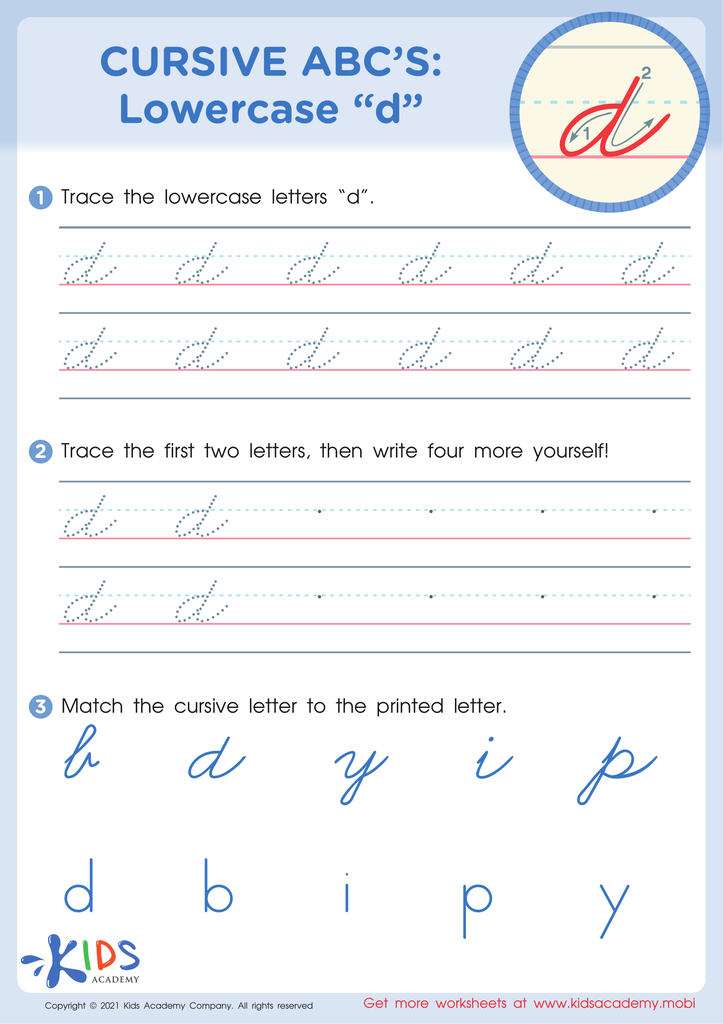
To make learning fun, introduce colorful worksheets! These help young learners perfect their cursive lowercase 'd'. By the end, they'll be better at writing and identifying the letter. It's an easy and enjoyable exercise for kids!
Cursive ABCs: Lowercase d
Worksheet
Cursive ABCs: Uppercase E

Cursive ABCs: Uppercase E

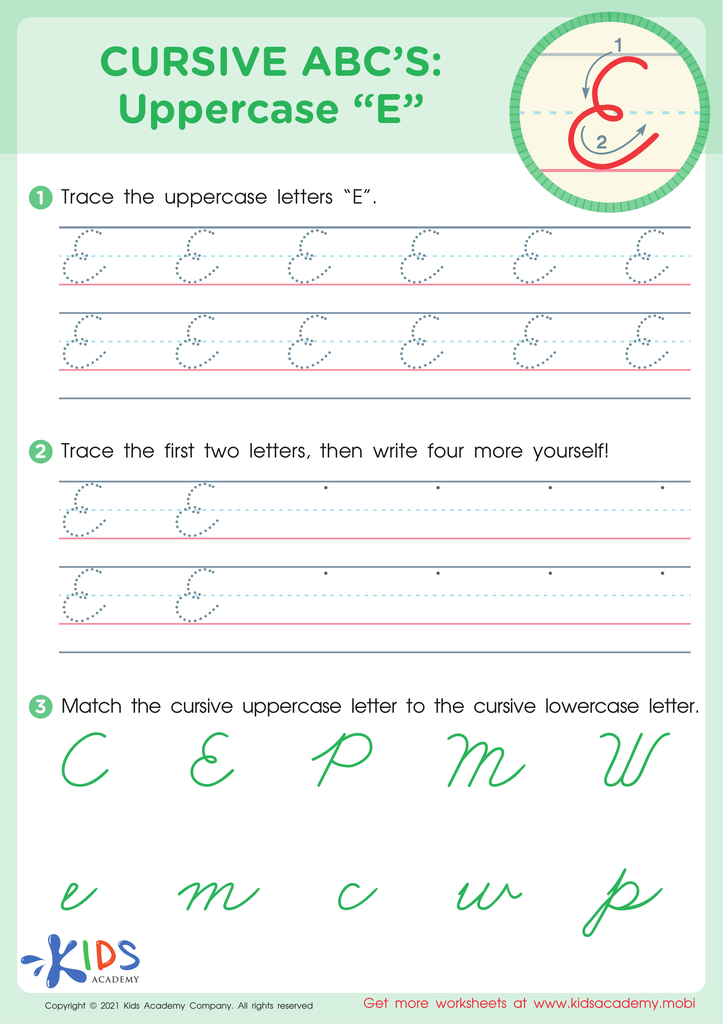
Ask your child if they can identify the letter 'E' and give examples. Each letter is unique, so provide coaching. Have them trace cursive 'E' to become familiar and boost confidence. Then, ask them to write it on their own.
Cursive ABCs: Uppercase E
Worksheet
Cursive ABCs: Uppercase G

Cursive ABCs: Uppercase G

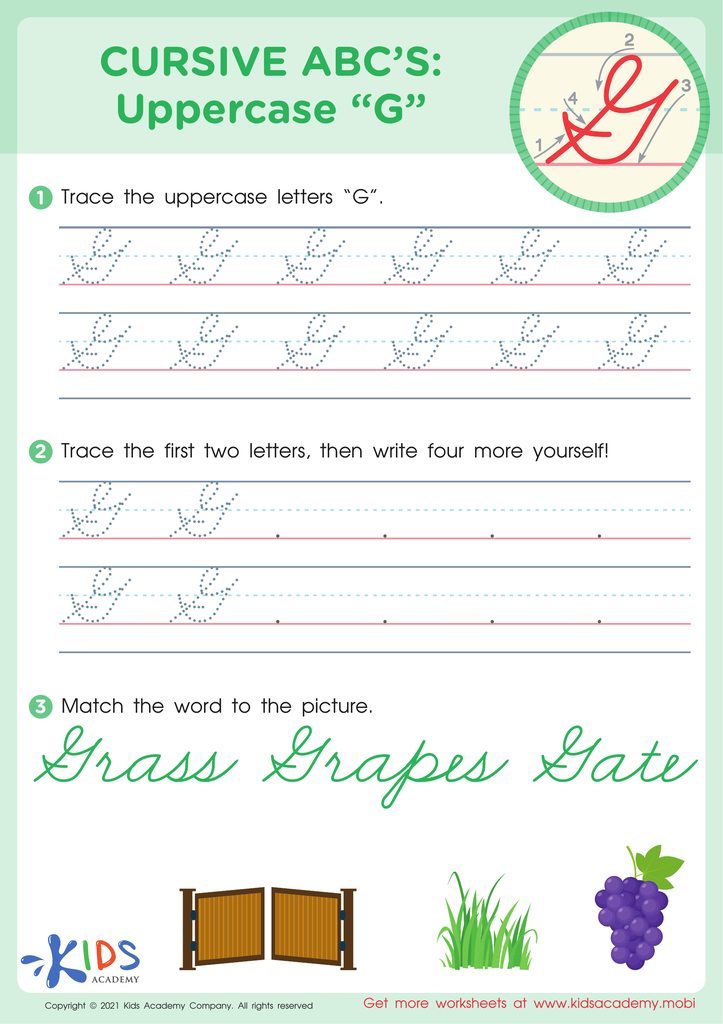
Remind your kids of words beginning with 'G' like 'girl' and 'goat'. Ask them to give examples too. Use this tracing worksheet to help your kids practice writing the cursive uppercase 'G'. It'll help them perfect their motor skills and get better at cursive letters.
Cursive ABCs: Uppercase G
Worksheet
Cursive ABCs: Lowercase c

Cursive ABCs: Lowercase c

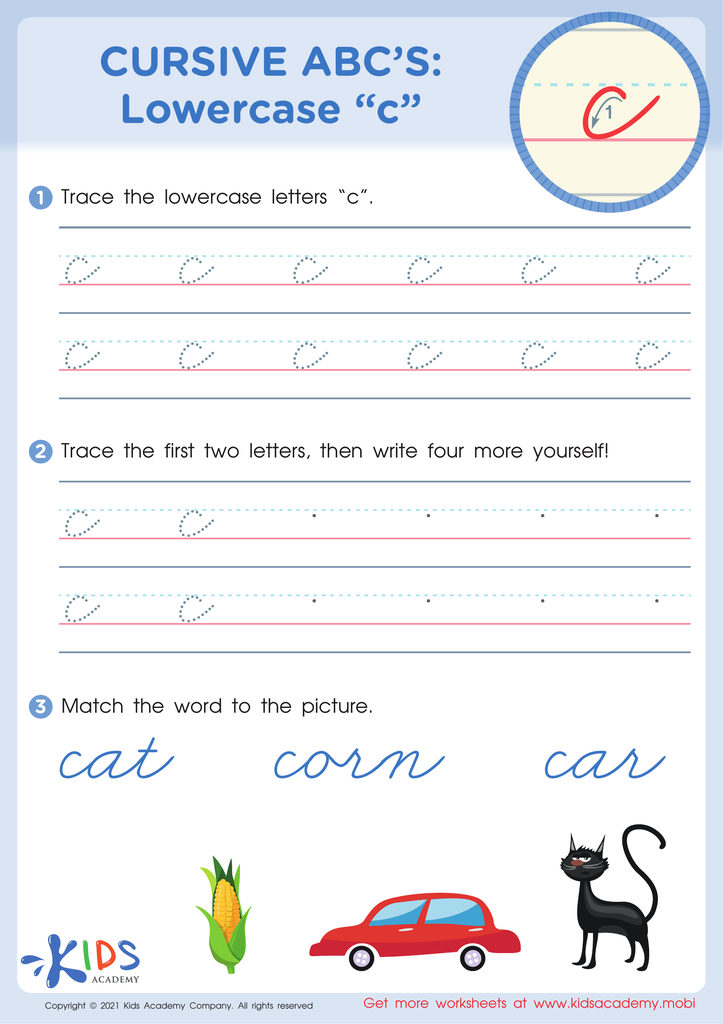
Once your child has successfully printed their letters, help them learn to recognize and write the alphabet in cursive. Struggling? This worksheet is perfect to assist them. Writing is an essential skill for kids to learn, so do all you can to help them. Use these tracing worksheets and guide them as they write the lowercase letter 'c' in cursive.
Cursive ABCs: Lowercase c
Worksheet
Cursive ABCs: Lowercase b

Cursive ABCs: Lowercase b

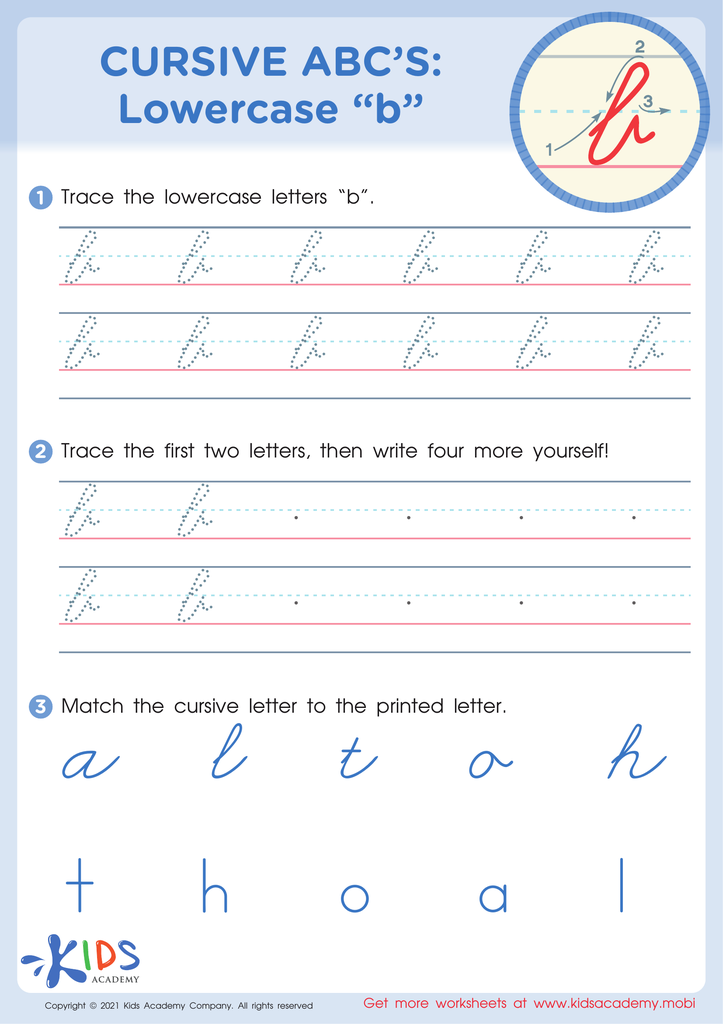
Trace two lines of lowercase b's with your kids. Guide them through the loops and swirls to help them learn cursive handwriting. Then let them practice writing the letter b themselves in the last two lines. With this exercise, your kids should become better at writing and recognizing the lowercase cursive b.
Cursive ABCs: Lowercase b
Worksheet
Cursive ABCs: Uppercase A

Cursive ABCs: Uppercase A

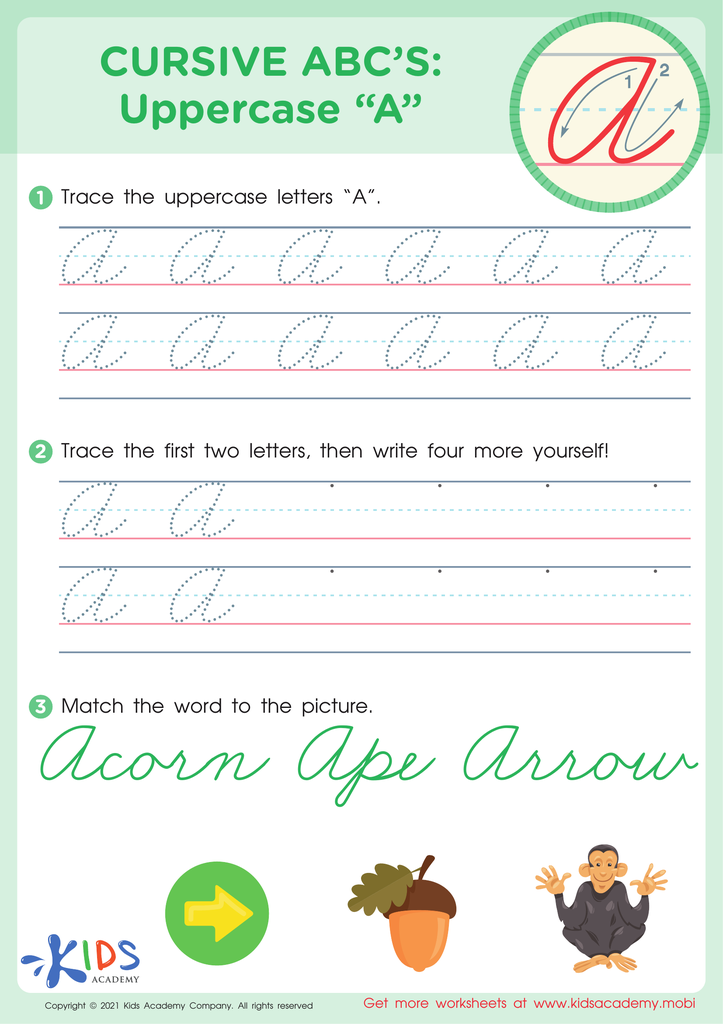
Help your kids develop their writing skills with our great tracing sheets. Improve their motor skills, as well as their vocabulary, by guiding them through tracing the dotted lines for the uppercase letters of the alphabet. When they are ready, let them practice writing the letters on their own for improved confidence.
Cursive ABCs: Uppercase A
Worksheet
Cursive ABCs: Uppercase H

Cursive ABCs: Uppercase H

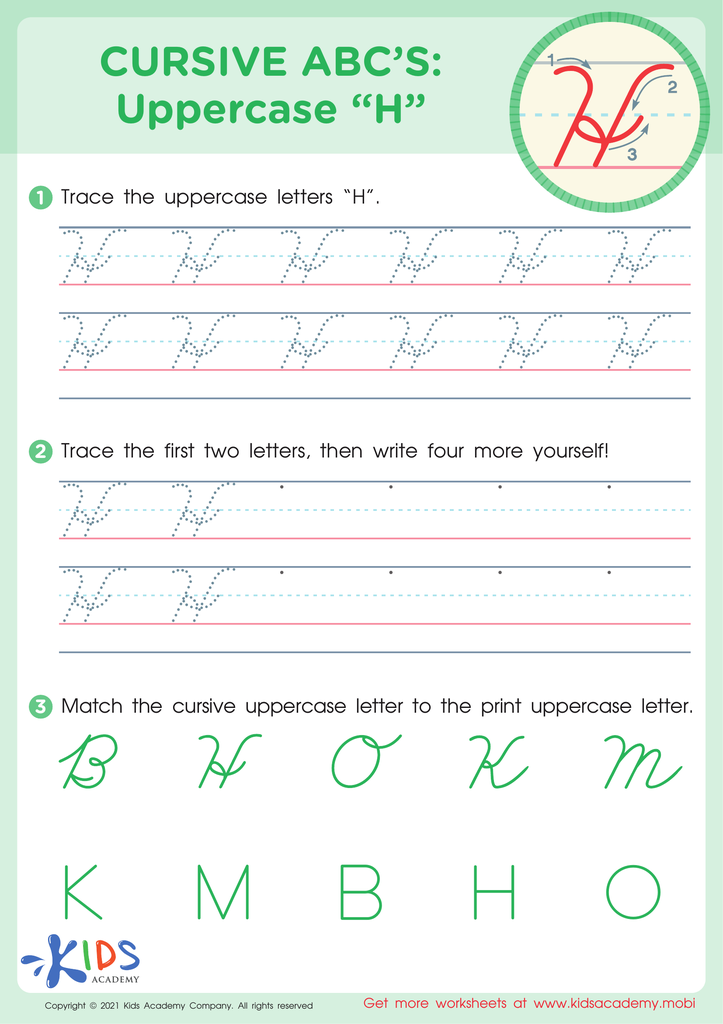
Have your child recite the alphabet and give you words beginning with H. This tracing sheet is perfect to help them improve their handwriting. Guide their hands as they trace the uppercase H, then have them practise writing it alone. At the bottom is an exercise to check their letter recognition.
Cursive ABCs: Uppercase H
Worksheet


Alphabet recognition, including cursive letters, is a foundational skill crucial for young children's early literacy development. For ages 3-8, learning cursive has several cognitive and practical benefits that parents and teachers should note.

Firstly, cursive writing supports fine motor skill development. The continuous flow of cursive letters enhances hand-eye coordination and dexterity, which are vital for various daily tasks.

Secondly, learning cursive can improve letter recognition and phonemic awareness. Mastering cursive alongside print enhances children's understanding of letter formations and sounds, fostering better reading and writing proficiency. This versatility in letter recognition also makes it easier to transition between different types of text they may encounter.

Moreover, cursive writing aids memory retention. The act of writing in cursive involves complex neural tasks, enhancing memory and spelling. This is particularly helpful as children begin to write sentences and stories.

Fostering cursive writing skills also instills a sense of tradition and personal touch in communication. This emotional connection to writing can motivate a child's enthusiasm for learning.

In conclusion, recognizing and practicing cursive letters is not an outdated skill for young learners; it’s a multi-faceted tool that enhances motor skills, cognitive development, and personal growth in fundamental literacy and communication skills.