Handwriting practice Letter Sounds Worksheets for Ages 3-9
4 filtered results
-
From - To
Enhance your child's literacy journey with our Handwriting Practice Letter Sounds Worksheets, designed specifically for ages 3-9. These engaging worksheets combine handwriting practice and phonics fundamentals, making learning fun and effective. Each worksheet features vibrant illustrations and easy-to-follow activities that help young learners associate sounds with their corresponding letters. Improve fine motor skills while fostering confidence in writing and reading. Ideal for home or classroom use, our resources align with educational standards, ensuring that your child develops a strong foundation in language arts. Unlock your child's potential and encourage early literacy with our thoughtfully designed handwriting practice worksheets!
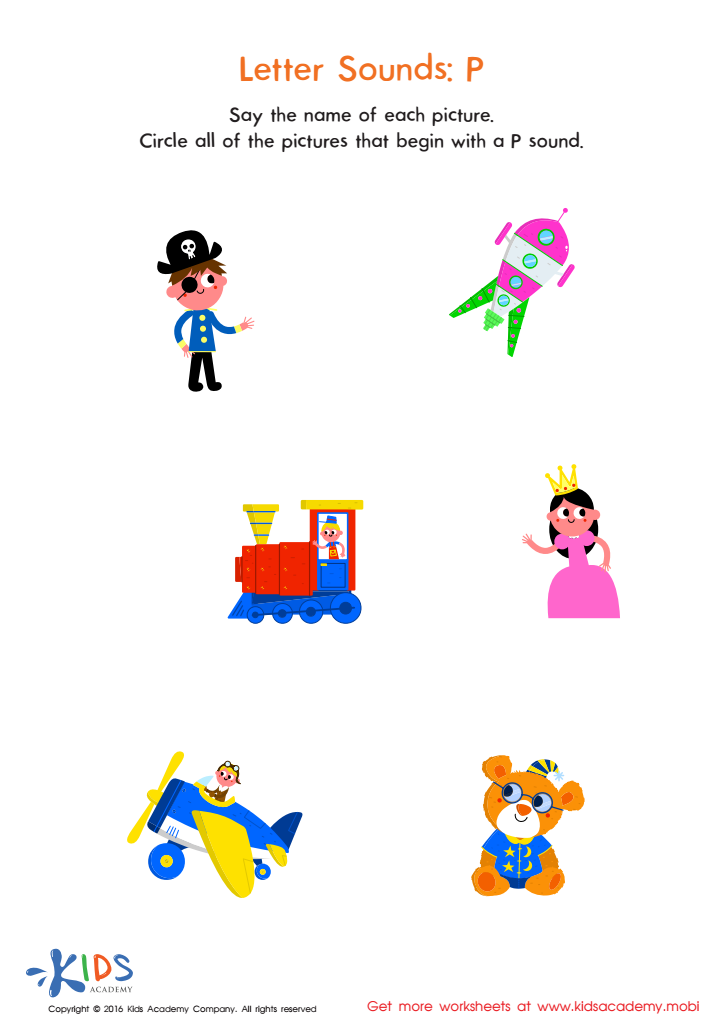
Letter P Sound Worksheet
 Assign to My Students
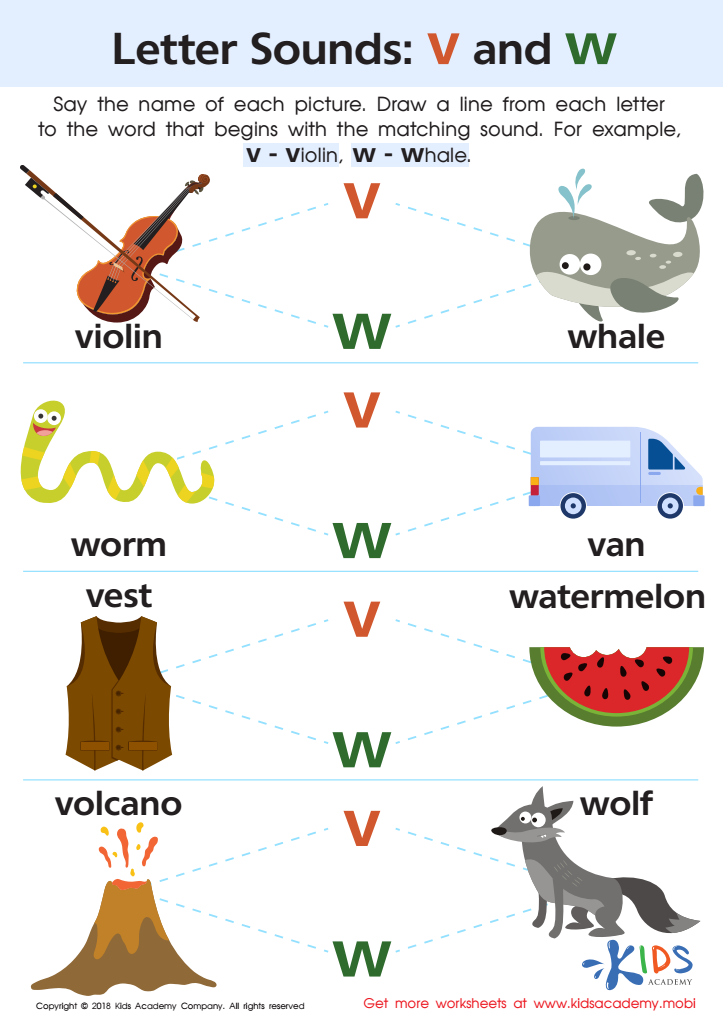
Letter V and W Sounds Worksheet
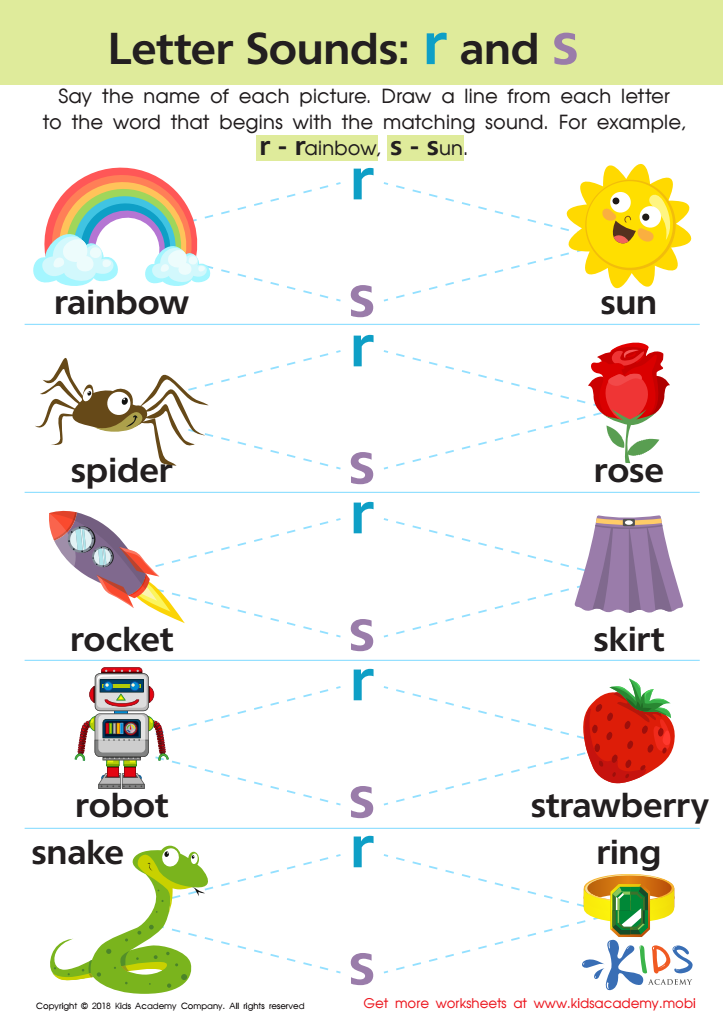
Letter R and S Sounds Worksheet
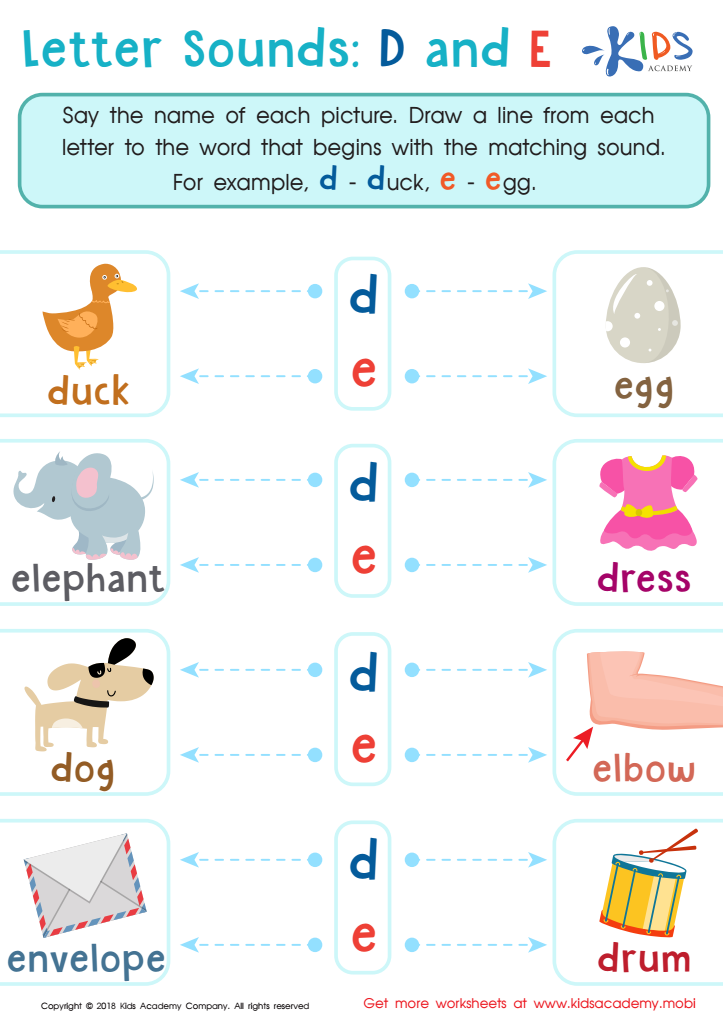
Letter D and E Sounds Worksheet








Handwriting practice and letter sounds are fundamental components of early literacy development for children ages 3-9. Engaging in handwriting helps children develop fine motor skills, which are crucial for writing and overall physical coordination. As young learners trace letters, they reinforce the visual and tactile recognition of shapes, leading to improved letter formation and overall handwriting quality.
Simultaneously, mastering letter sounds enhances phonemic awareness — the ability to hear, identify, and manipulate individual sounds in spoken words. This skill is essential for reading development, as it lays the groundwork for understanding the relationship between spoken language and written text.
Furthermore, combining handwriting practice with letter sounds can create a multisensory learning experience. Children learn best when they engage multiple senses, making learning more enjoyable and effective. Incorporating arts such as drawing or coloring while practicing letters can enhance creativity and strengthen memory retention.
Investing time in these skills not only prepares children for reading and writing but also fosters their confidence and love for learning. Thus, parents and teachers play a critical role in nurturing these foundational skills, ultimately equipping children for academic success and lifelong learning.