Filters

7 filtered results

Clear all filters
Favorites
With answer key
Interactive

7 filtered results

Difficulty Level

Grade


Subject

    Boost your child's vocabulary with our engaging Letter Sounds Worksheets designed for ages 3 to 9! These interactive resources help young learners connect letters with corresponding sounds, enhancing their phonetic understanding. By incorporating fun exercises and colorful visuals, our worksheets encourage phonemic awareness and vocabulary expansion in a playful manner. Perfect for home or classroom use, they provide a valuable tool for early literacy development. With diverse activities tailored for different skill levels, children will enjoy practicing letter sounds while enriching their language skills. Prepare your little ones for reading success with our carefully crafted vocabulary enhancement worksheets today!

    Check out this FREE Trial Lesson on Letter Sounds for age 3-9!

    Letter Sound Relationship N-P

    Favorites
    With answer key
    Interactive
    • 3-9
    • Vocabulary enhancement
    • Letter Sounds
    Letter p sound worksheet
    Letter p sound worksheet

    Letter P Sound Worksheet

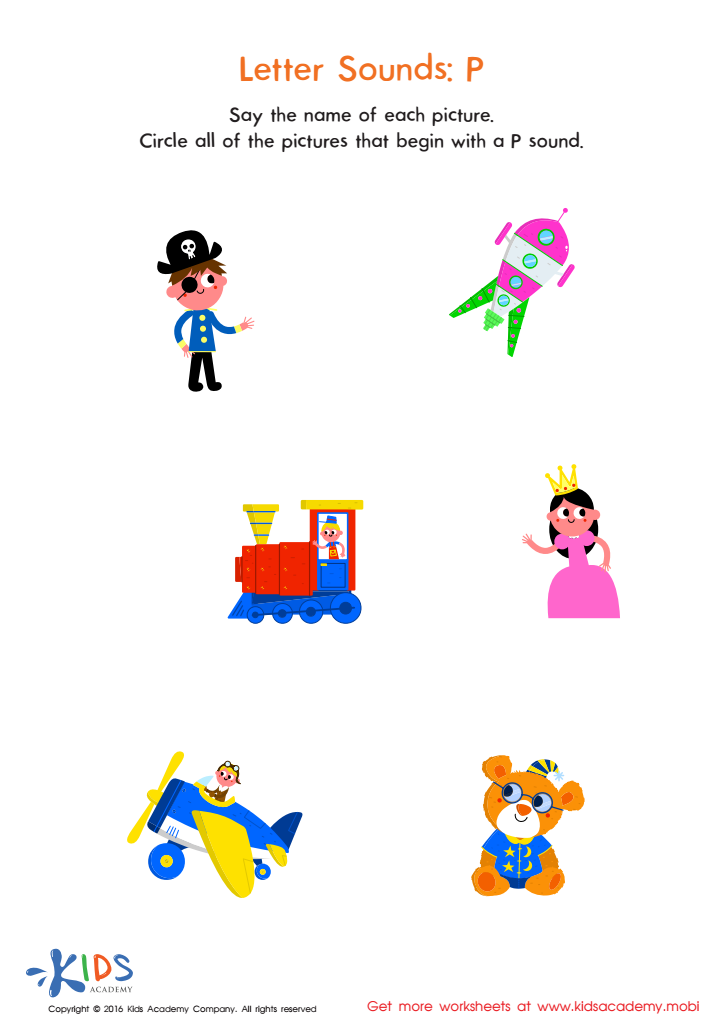
    Think P! Kids practice phonics with this fun letter P worksheet. With delightful illustrations, they'll sound out simple words and get closer to reading.
    Letter P Sound Worksheet
    Worksheet
    Letter A Sounds Worksheet
    Letter A Sounds Worksheet

    Letter A Sounds Worksheet

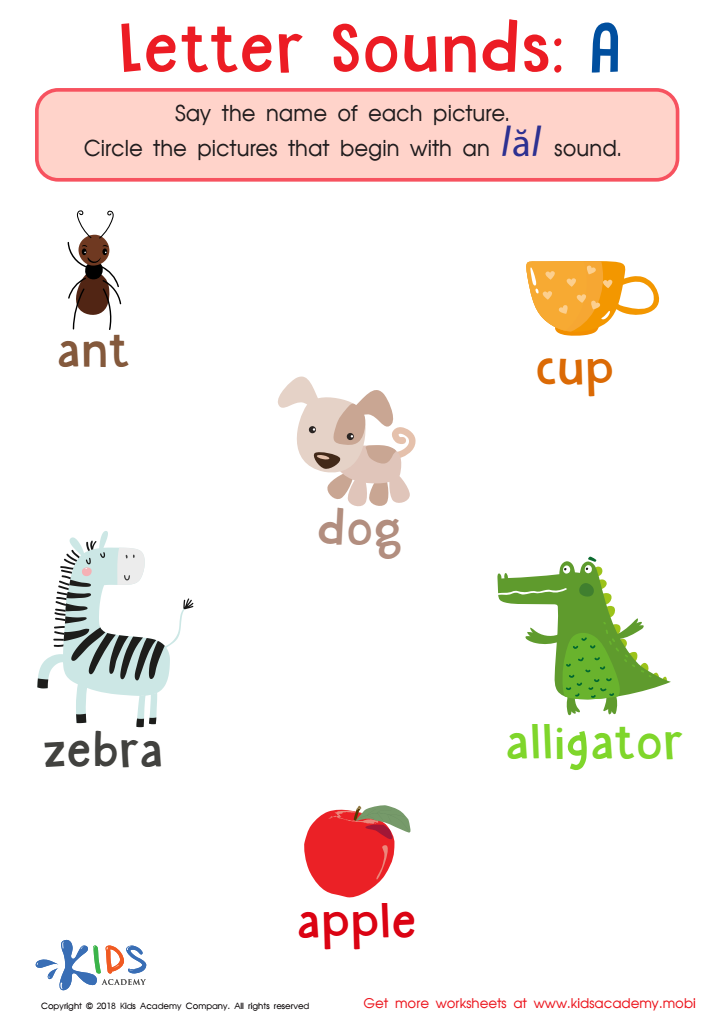
    Encourage your new reader to practice the «ă» sound with this fun, free PDF worksheet. With the help of picture clues, they'll say the name of each word and trace circles around the items that start with «ă». This worksheet is an effective way to boost beginning sound skills while having fun!
    Letter A Sounds Worksheet
    Worksheet
    Choose a Sound Worksheet
    Choose a Sound Worksheet

    Choose a Sound Worksheet

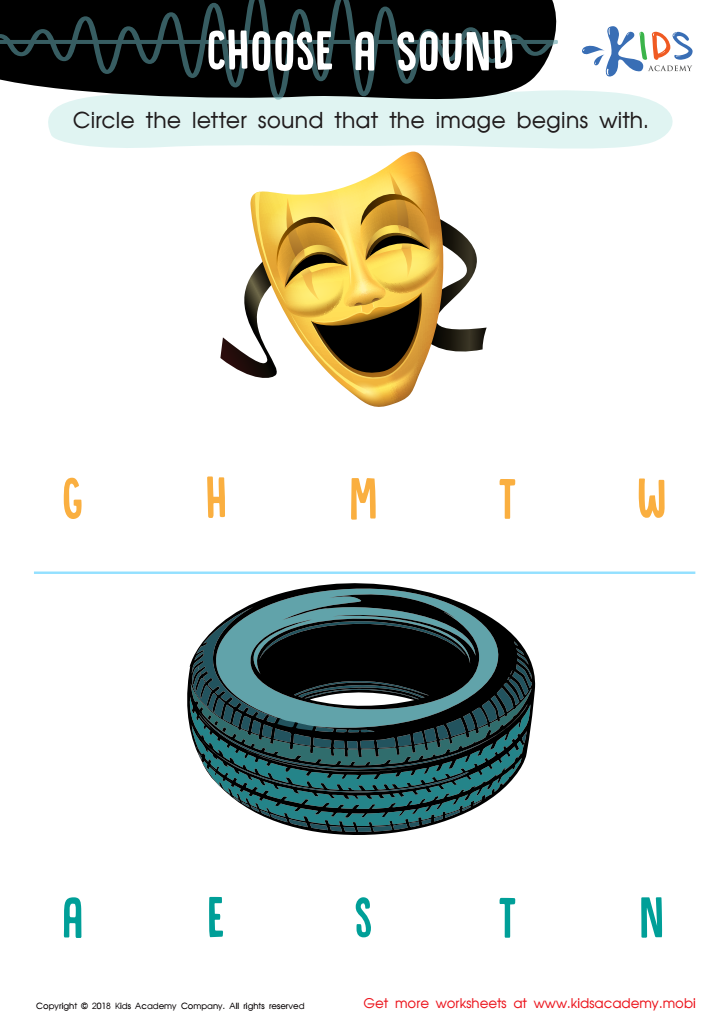
    Help your child hone pre-reading skills with this colorful worksheet! They'll practice tracing letter sounds, develop phoneme awareness, and gain confidence. Plus, it's a fun way to work on their fine motor skills.
    Choose a Sound Worksheet
    Worksheet
    Listen to the Sounds Worksheet
    Listen to the Sounds Worksheet

    Listen to the Sounds Worksheet

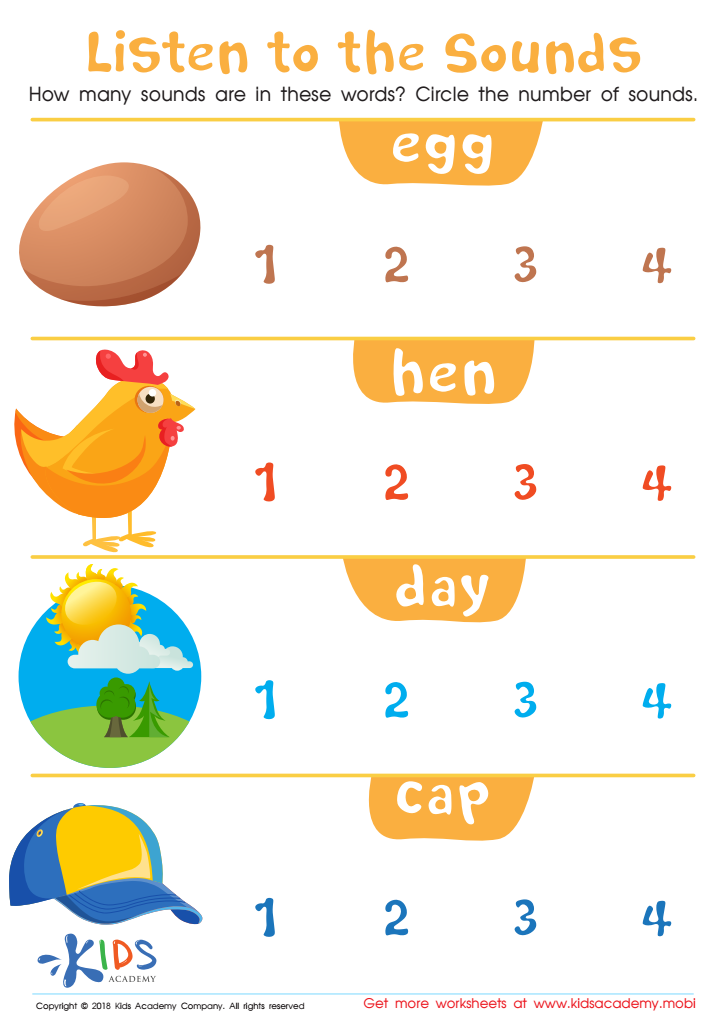
    This worksheet builds emerging readers' skills in using sounds for reading and spelling. It helps strengthen auditory processing by having them count the sounds in each word, then trace the corresponding number. Fun and cheerful!
    Listen to the Sounds Worksheet
    Worksheet
    3 Sounds Worksheet
    3 Sounds Worksheet

    3 Sounds Worksheet

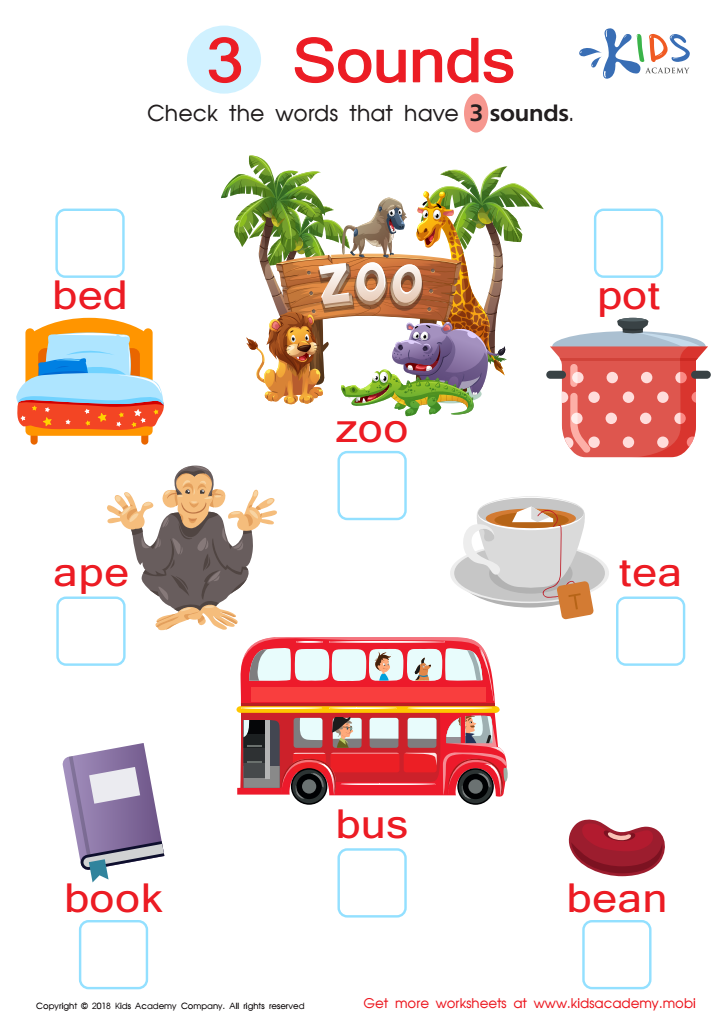
    Kids will love learning with this free, colorful worksheet. It's full of familiar words they can name and sound out with three distinct sounds. This helps build decoding skills, plus they get to check off words they read. It's a fun way to teach children to identify and use sounds.
    3 Sounds Worksheet
    Worksheet
    More than 1 word Worksheet
    More than 1 word Worksheet

    More than 1 word Worksheet

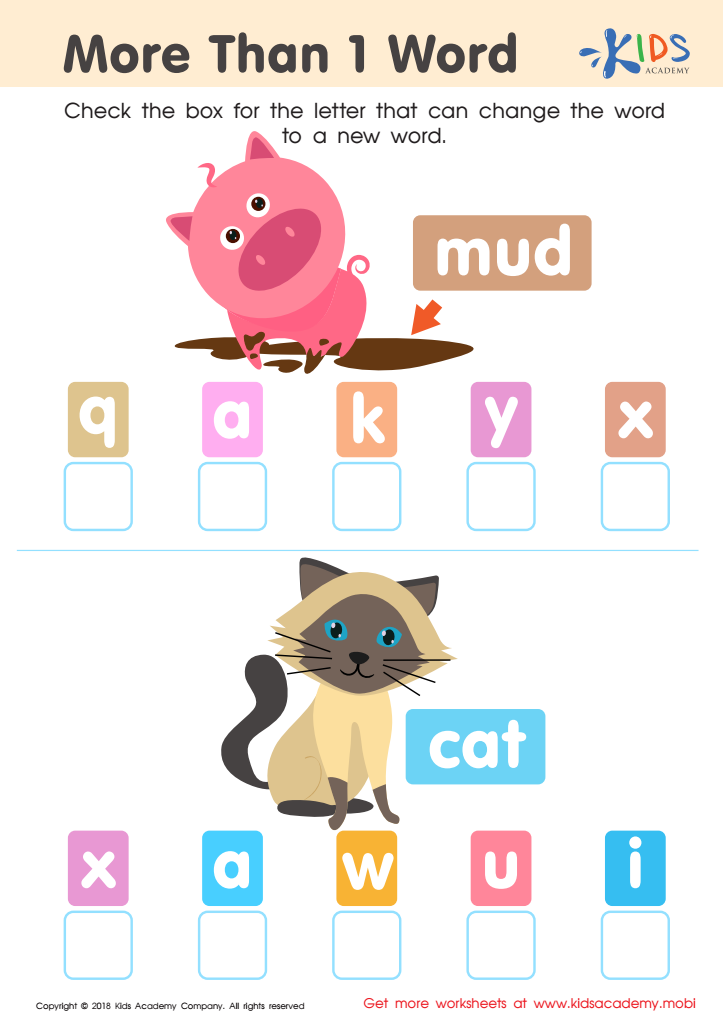
    Test your child's reading skills with this fun worksheet! Point out the word in each picture, then switch the middle letter of each word with one from the list and check the box when you find a new word. It's a great way to develop your child's reading skills!
    More than 1 word Worksheet
    Worksheet
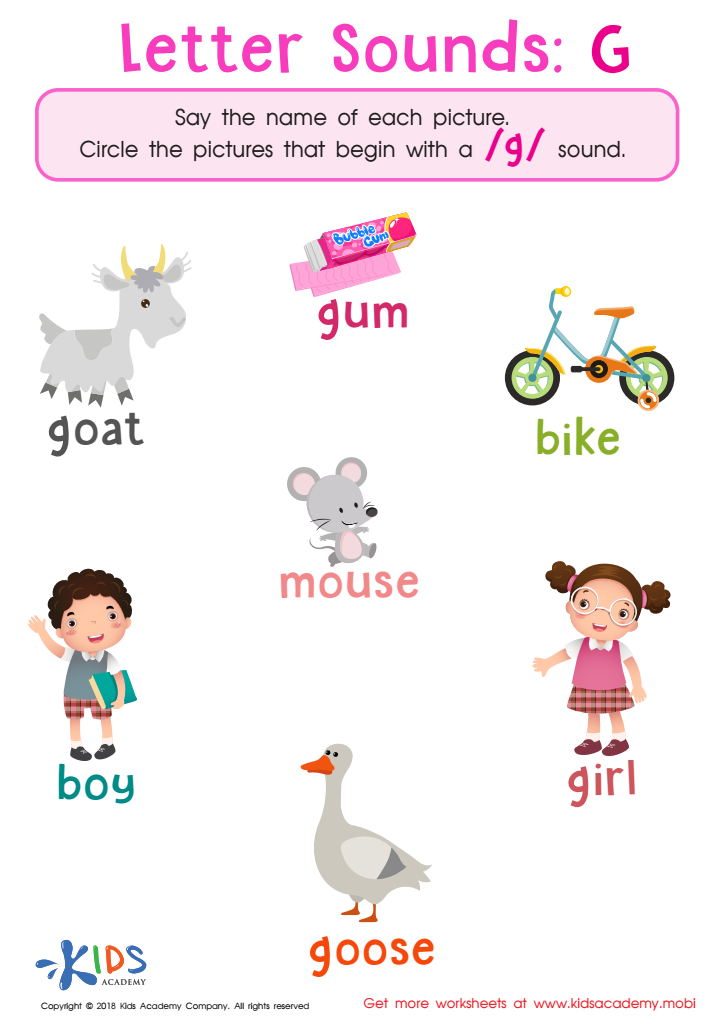
    Letter G Sounds Worksheet

    Letter G Sounds Worksheet

    Letter G Sounds Worksheet

    Help emerging readers build confidence by giving them practice identifying hard "G" with this free PDF worksheet. They'll use picture clues to name the words, and practice fine-motor skills tracing circles around the corresponding pics. It's a great way to introduce or reinforce hard "G" words.
    Letter G Sounds Worksheet
    Worksheet


    Vocabulary enhancement through letter sounds is crucial for children aged 3-9 because it lays the foundation for effective communication and literacy skills. During these formative years, children are developing their language abilities, and a strong vocabulary can significantly impact their academic success and overall cognitive development.

    Firstly, mastering letter sounds is integral to phonics, which helps children decode words and read fluently. As they learn to associate sounds with letters, they can combine sounds to form words, promoting early reading skills and comprehension. This process instills confidence in children and encourages a love for reading.

    Additionally, a robust vocabulary enhances communication skills, enabling children to express their thoughts and ideas more clearly. When children can articulate themselves beyond basic words, they engage more meaningfully in social interactions, both with peers and adults.

    Moreover, vocabulary acquisition supports intellectual growth—children who are exposed to a broader range of words are better equipped to understand complex concepts and participate in thoughtful discussions. By focusing on letter sounds and vocabulary enrichment, parents and teachers not only enhance literacy but also inspire curiosity and critical thinking, which are essential life skills that benefit children beyond the classroom.