Rhyme recognition Rhyming Worksheets for Ages 3-9
4 filtered results
-
From - To
Discover our engaging Rhyme Recognition Worksheets, designed specifically for children aged 3 to 9! These fun and interactive worksheets help young learners develop essential phonemic awareness through rhyme. By identifying and matching rhyming words, children enhance their vocabulary, language skills, and auditory discrimination. Our worksheets feature colorful illustrations and diverse activities that make learning enjoyable. Perfect for classroom or home use, they promote early literacy while encouraging creativity and critical thinking. Whether your child is a budding poet or simply looking to strengthen their language abilities, our Rhyme Recognition Worksheets provide a solid foundation for reading success! Explore them today!
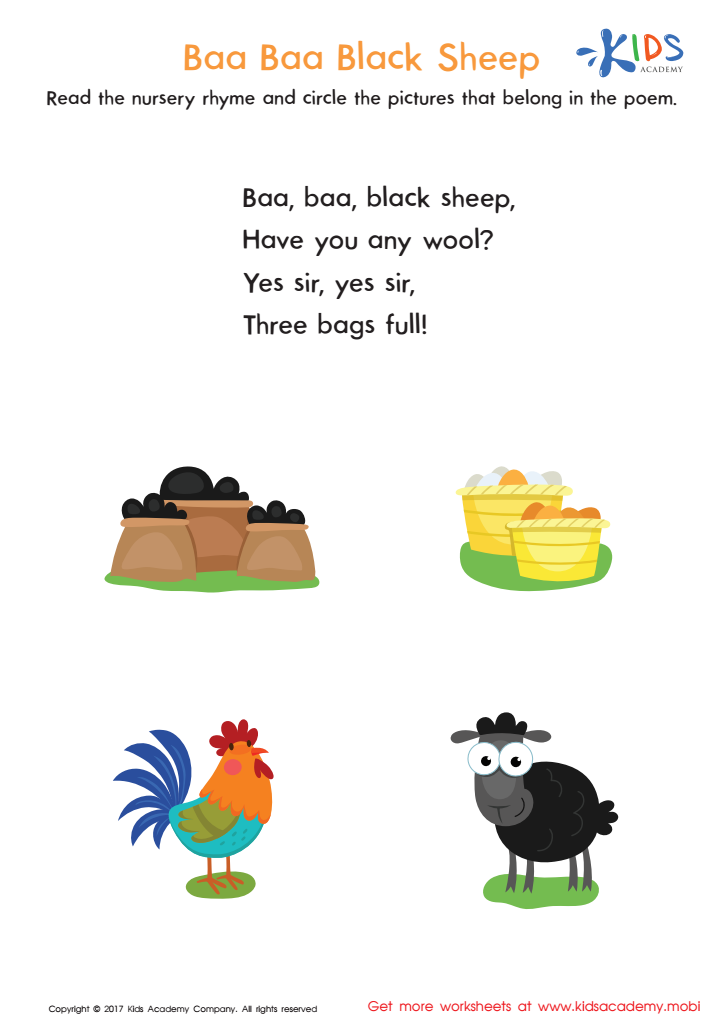
Baa Baa Black Sheep Printable
 Assign to My Students
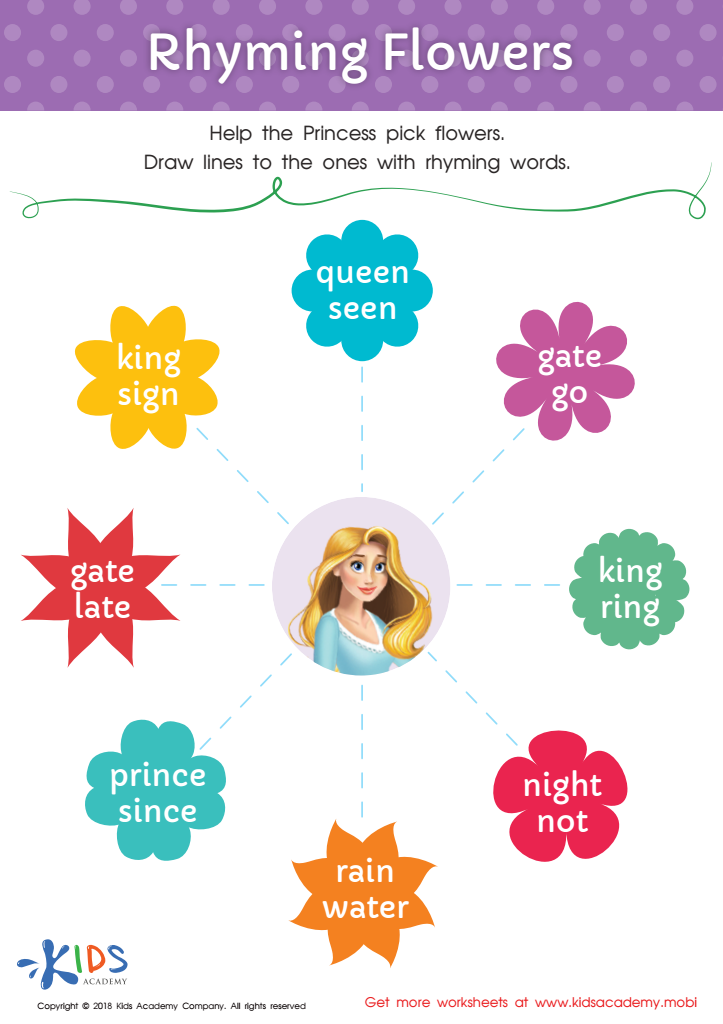
Rhyming Flowers Worksheet
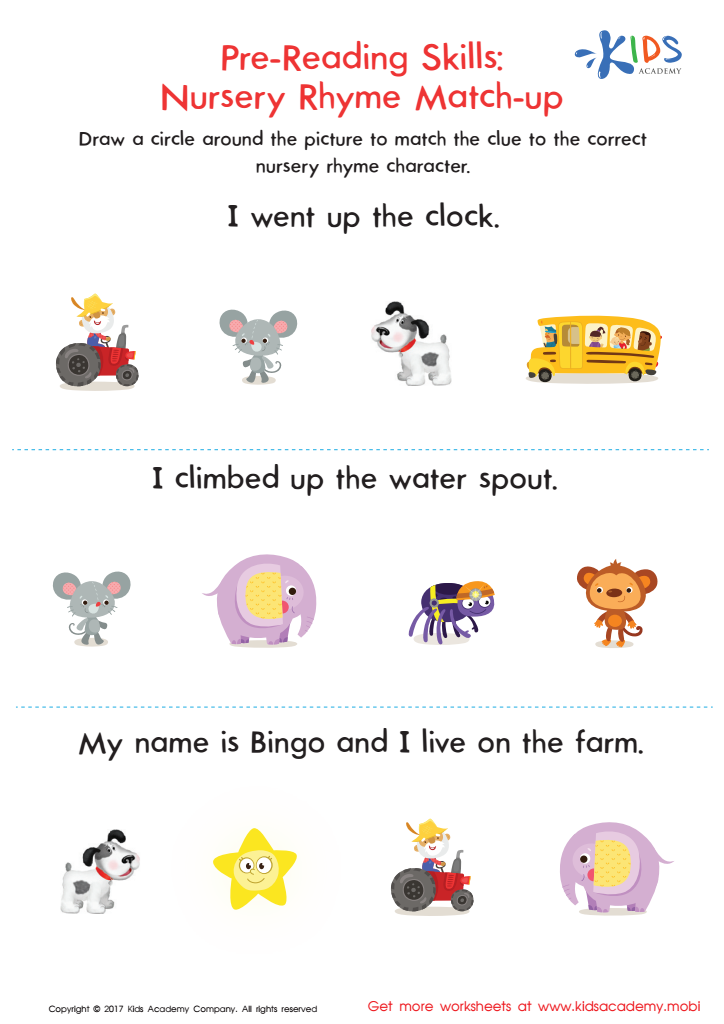
Nursery Rhyme Match–Up Worksheet
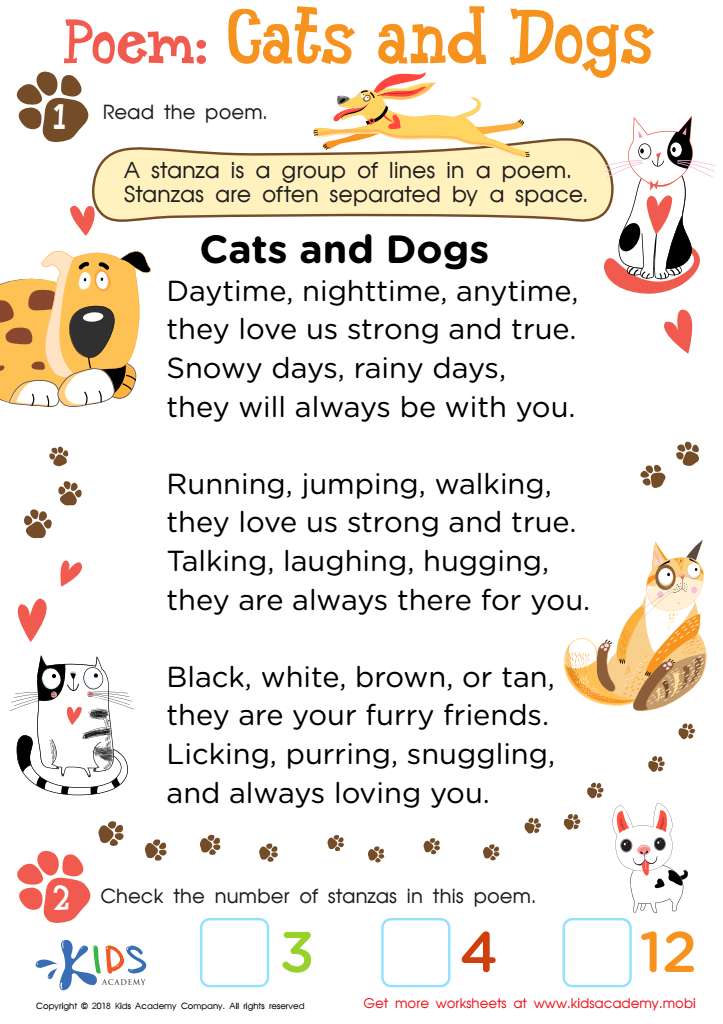
Poem: Cats and Dogs Worksheet








Rhyme recognition is a critical skill for children aged 3-9, as it lays the groundwork for literacy development. When children learn to identify rhyming words, they enhance their phonemic awareness, which is the ability to hear and manipulate sounds in speech. This skill is vital for learning to read and write, as it helps children understand the sound structure of words.
Rhyme recognition also fosters auditory discrimination—the ability to differentiate between similar sounds—which is essential for effective communication. Engaging with rhymes through songs, books, and games can make learning fun and interactive, which aids retention and interest in literacy.
Furthermore, rhyming activities promote vocabulary expansion as children encounter new words and phrases within a context that makes them easy to remember. Socially and emotionally, participating in rhyme-based activities encourages collaboration and builds confidence in language abilities, as children share and explore language together.
For both parents and teachers, nurturing rhyme recognition is a powerful tool to support a child’s early cognitive development and pave the way for future academic success. It’s not just about literacy, but also about developing critical thinking, creativity, and social skills during these formative years.







