Shape Recognition Tracing Lines and Curves Worksheets for Ages 3-9
3 filtered results
-
From - To
Unlock your child's potential with our engaging Shape Recognition Tracing Lines and Curves Worksheets designed for ages 3-9! These printable worksheets focus on enhancing fine motor skills while introducing foundational shape recognition concepts. Children will enjoy tracing fun lines and curves that seamlessly blend learning and play. Each worksheet is thoughtfully crafted to boost confidence and creativity, promoting a love for learning. Perfect for preschool and early-grade environments, our shape tracing activities help children identify a variety of geometric shapes in an interactive way. Explore our collection today and help your little ones develop essential skills they'll build on throughout their education!
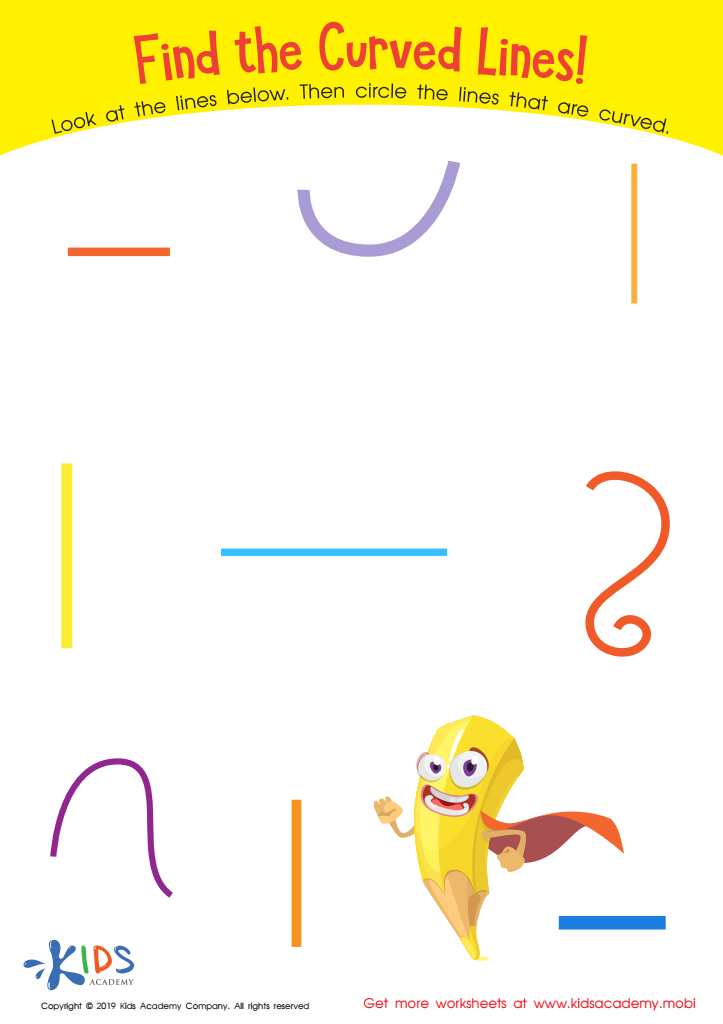
Find the Curved Lines! Worksheet
 Assign to My Students
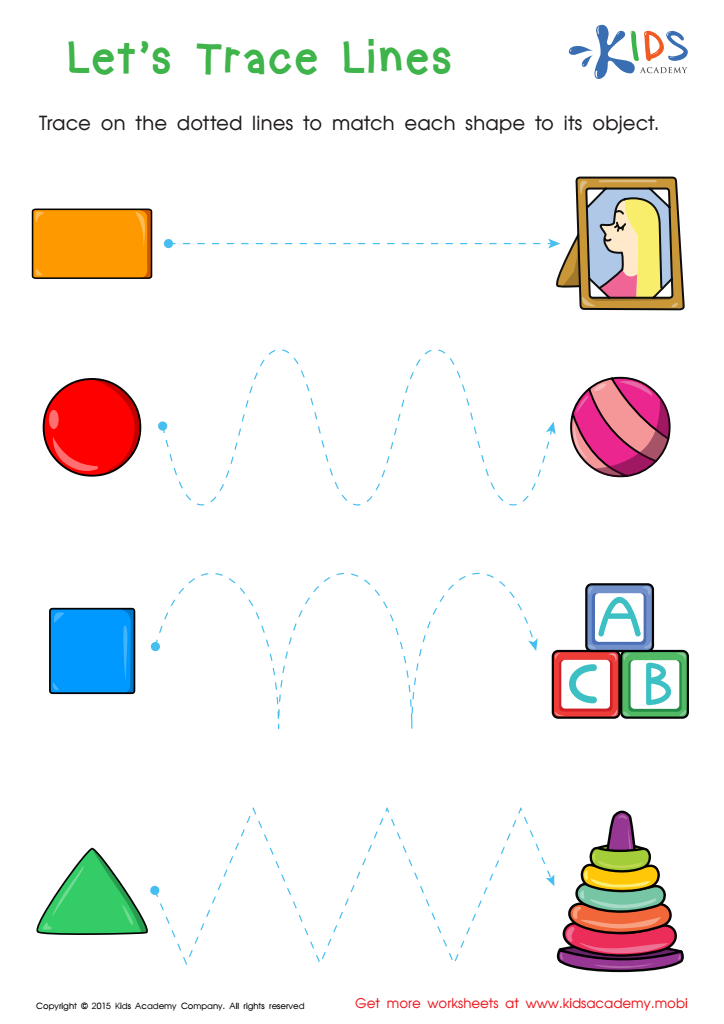
First Words: Let's Trace Lines Worksheet
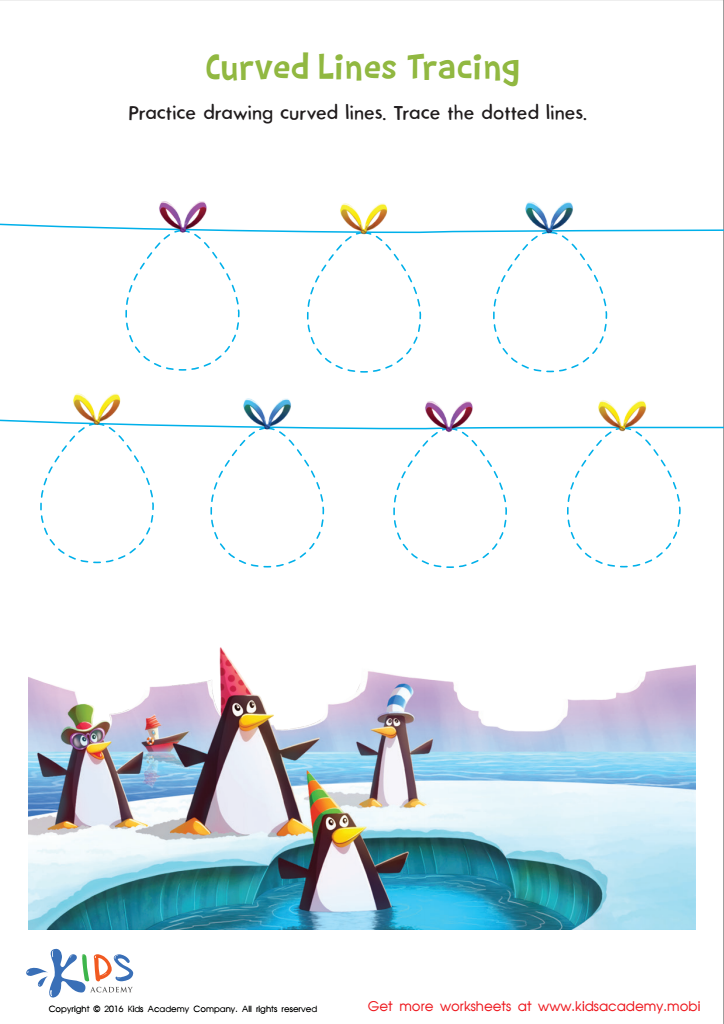
Curved Lines Tracing Worksheet




Shape recognition and tracing lines and curves are vital skills for young learners aged 3-9, laying the groundwork for cognitive and motor development. Understanding shapes enables children to identify and categorize objects in their environment, which enhances their spatial awareness and critical thinking abilities. This recognition is a stepping stone for more advanced mathematical concepts, such as geometry and problem solving.
Tracing lines and curves not only sharpens fine motor skills but also supports hand-eye coordination and promotes the development of accurate pencil grip, crucial for writing later on. Engaging in these activities can also boost children's confidence and focus, essential attributes for academic success.
Furthermore, shape recognition fosters creativity and imaginative play, as children begin to connect shapes with real-world objects, inspiring artistic expression. As they interact with shapes, they develop language skills, learning to articulate their thoughts and observations through descriptions and discussions.
For parents and teachers, prioritizing these skills emphasizes the importance of early childhood education, ensuring children are well-prepared for future learning challenges. Overall, integrating shape recognition and tracing into daily activities contributes significantly to holistic child development, preparing them for academic and social success.








