Counting practice Coloring Pages Worksheets for Ages 3-9
5 filtered results
Difficulty Level
Grade
Age
-
From - To
Subject
Activity
Standards
Discover our engaging Counting Practice Coloring Pages Worksheets designed for children aged 3 to 9! These fun and interactive worksheets not only provide a creative outlet through coloring but also promote essential counting skills. Each page features delightful illustrations that captivate young learners while encouraging number recognition and counting mastery. Ideal for home or classroom use, these worksheets align with educational standards to support early math development. Perfect for preschoolers and early elementary students, our resources are suitable for various learning styles, making math enjoyable for every child. Start nurturing a love for learning with our counting practice coloring pages today!
Favorites
With answer key
Interactive
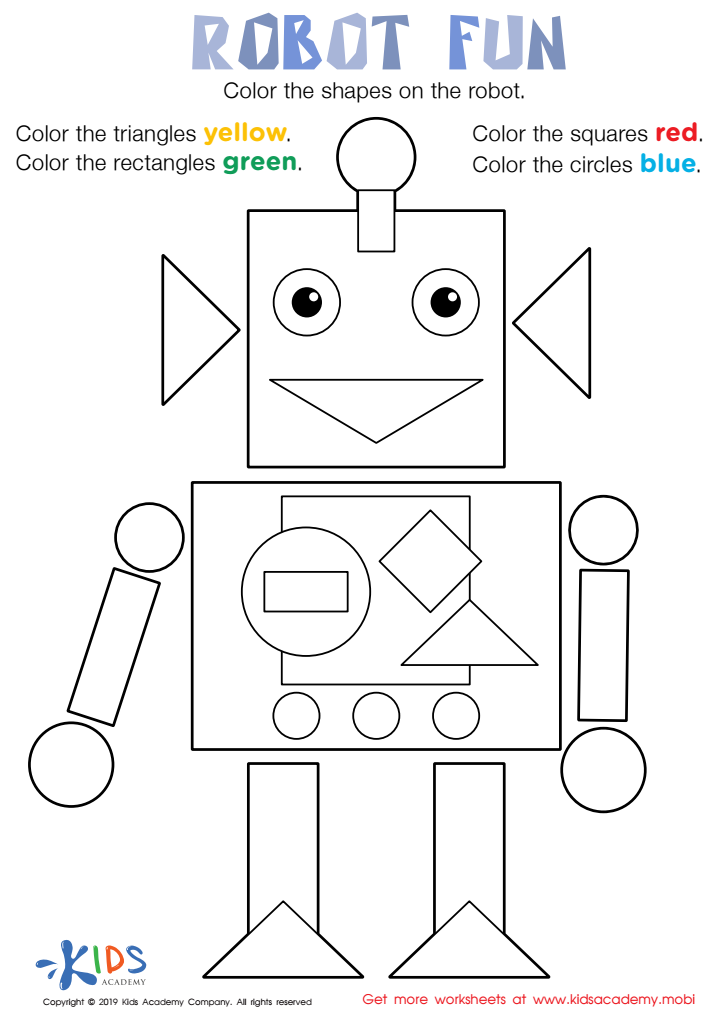
Robot Fun Worksheet
Help your child learn about basic shapes with this fun robot worksheet! Kids practice identifying circles, squares, rectangles and triangles, then color each shape according to directions. Make math practice enjoyable with this coloring page that teaches all four basic shapes - it's an important math skill!
Download (PDF)
 Assign to My Students
Assign to My Students
Robot Fun Worksheet
Worksheet
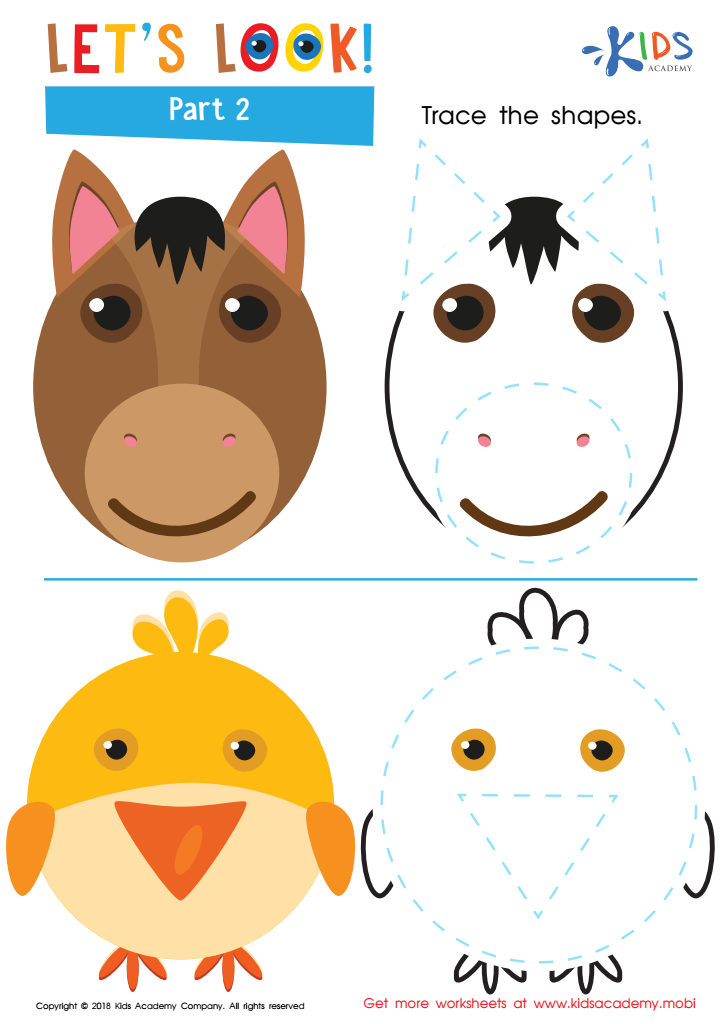
Let's Look! Part 2 Worksheet
This tracing sheet helps your little ones develop their skills. Ask them to identify the animals, then trace the shapes in the space provided, following the dotted lines. It's a simple task that can help them grow and have fun!
Let's Look! Part 2 Worksheet
Worksheet
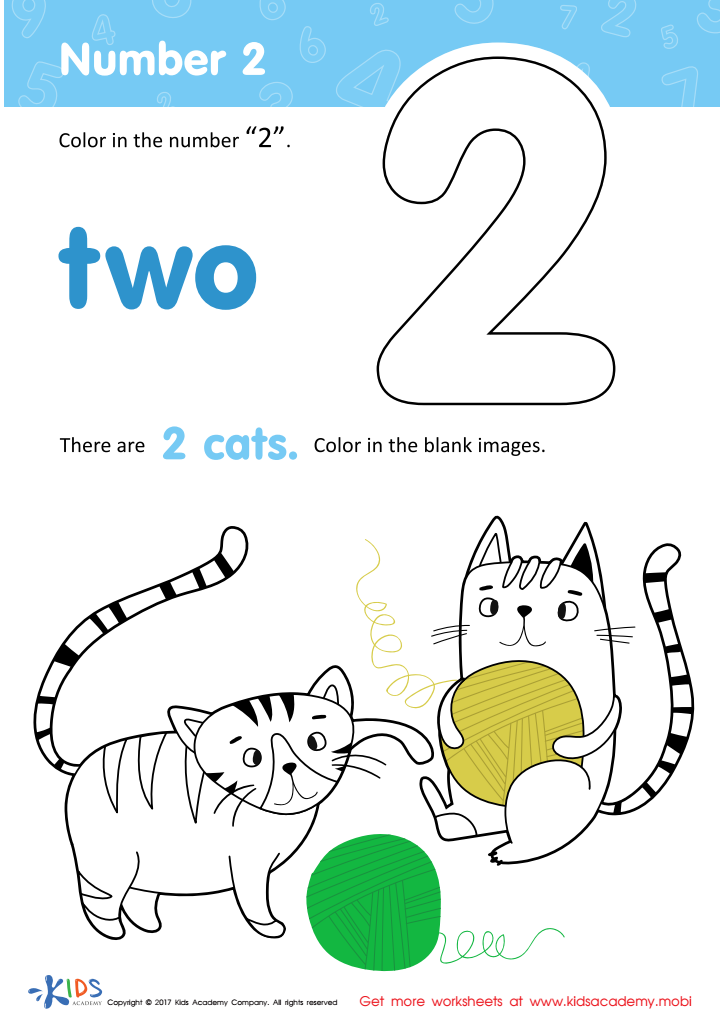
Number 2 Printable
Help your child learn to recognize the number two with these cats and their yarn balls. Print this coloring page – it's great for counting and coloring fun! Your child will develop basic numeracy skills as they visually see numbers in action.
Download (PDF)
Assign to My Students
Assign to My Students
Number 2 Printable
Worksheet
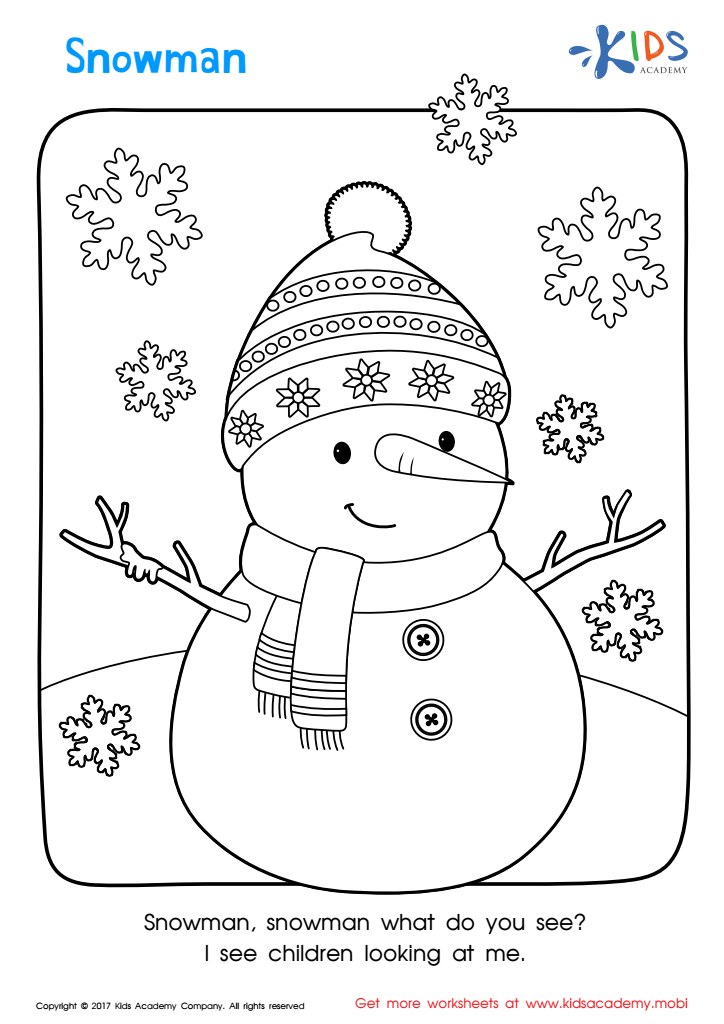
Christmas: Snowman Printable
Brighten your child's winter with a snowman coloring page. Let them have fun decorating the snowman with their favorite colors while waiting for the perfect weather to go build a real snowman. If they're feeling under the weather, keep them entertained and distracted with a festive snowman. Let their imaginations run wild and inspire them to create something magical!
Download (PDF)
Assign to My Students
Assign to My Students
Christmas: Snowman Printable
Worksheet
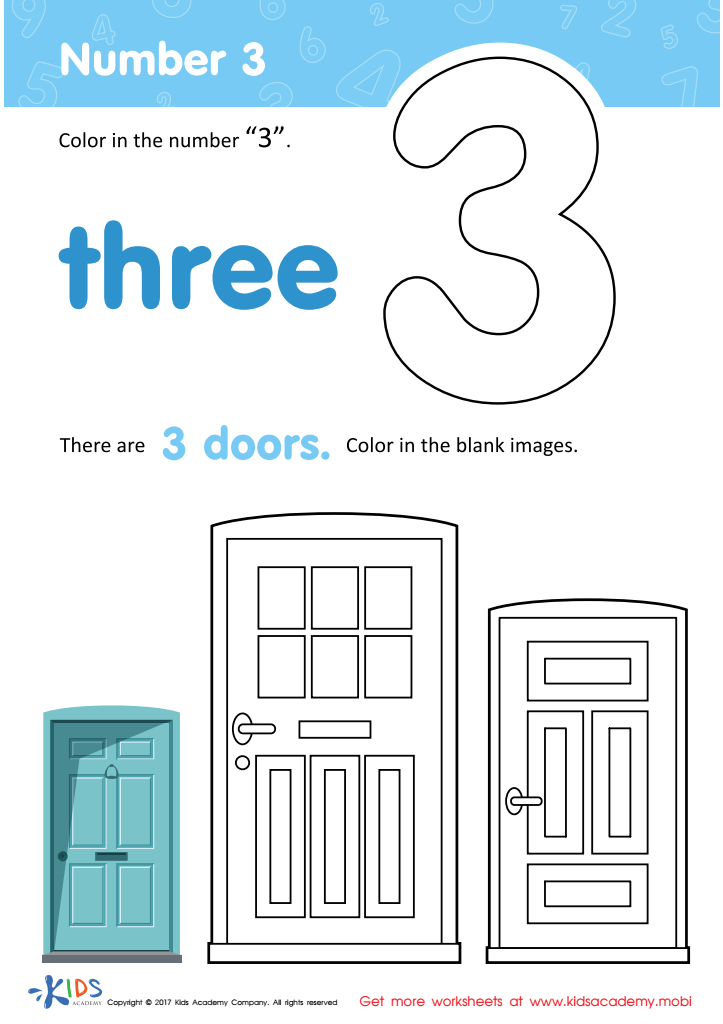
Number 3 Worksheet
Open the door to learning numbers! This counting coloring page helps kids recognize and count to 3, while using imagination and creativity to design lovely doors. It's a fun way to learn numbers!
Download (PDF)
Assign to My Students
Assign to My Students
Number 3 Worksheet
Worksheet
Join Kids Academy for Free
Who is primarily going to use this learning content?



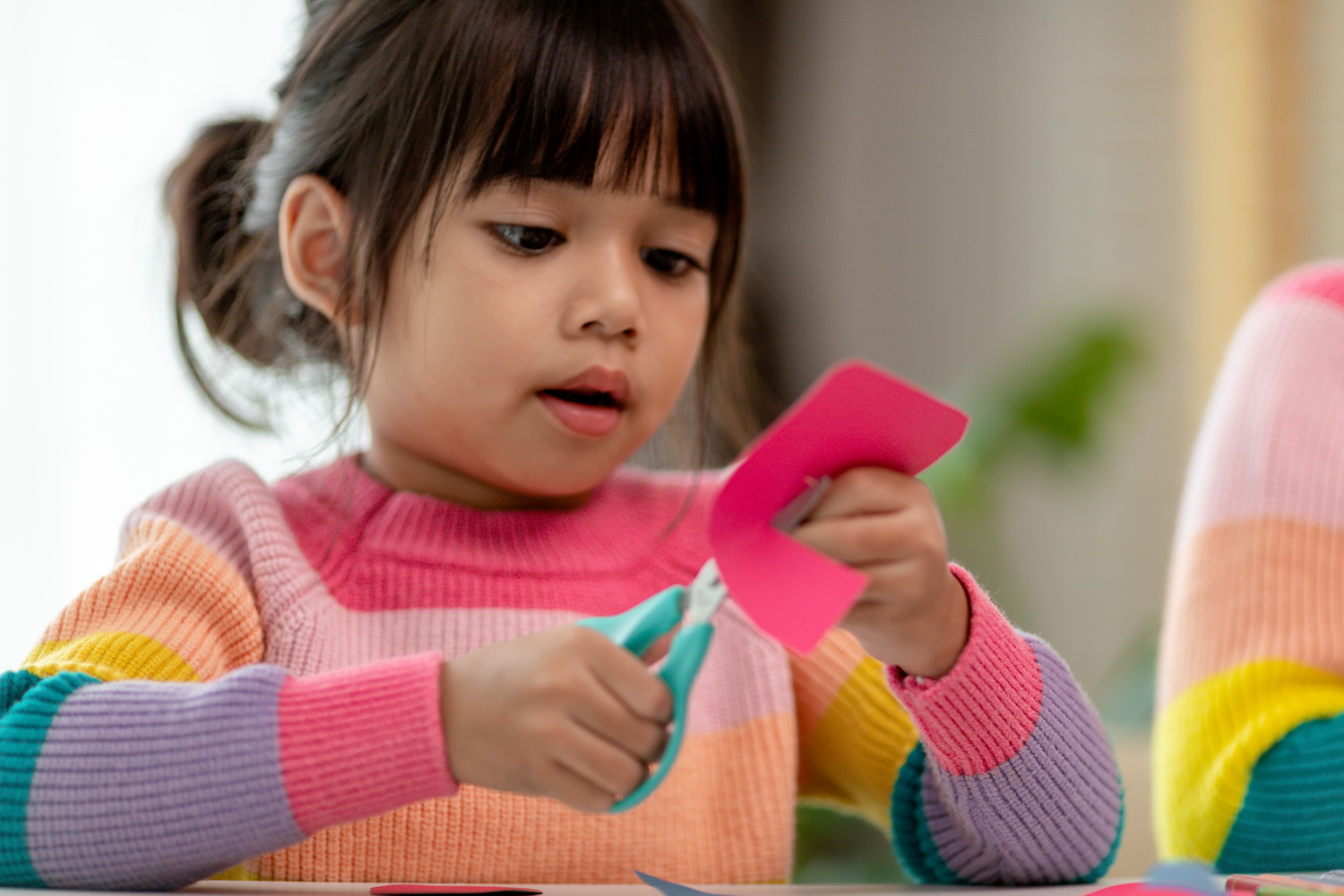




Parents and teachers should care about counting practice coloring pages for ages 3-9 for several reasons. Firstly, these activities provide a fun and engaging way for children to develop foundational math skills. By combining art and numeracy, coloring pages transform abstract concepts of counting into a hands-on experience. Kids are more likely to remain engaged when they associate learning with creativity and play.
Moreover, coloring can improve fine motor skills and hand-eye coordination. As children color in numbers or counting-themed images, they practice grasping and controlling coloring tools, building essential skills needed for later writing and drawing.
Counting pages also enhance cognitive development by introducing early mathematical concepts such as one-to-one correspondence and number recognition. These skills are crucial for future math learning and overall academic success. Additionally, coloring provides an opportunity for parents and teachers to bond with children, allowing for collaborative learning experiences. Finally, these pages can foster a sense of achievement as children complete their artwork, boosting their confidence and decision-making as they choose colors and patterns. In sum, counting practice coloring pages are versatile tools that develop math skills, enhance motor abilities, and encourage adult-child interaction, making them a valuable resource in early childhood education.