Reading comprehension Weather and Seasons Coloring Pages Worksheets for Ages 3-9
3 filtered results
-
From - To
Enhance your child's reading comprehension skills while they enjoy coloring with our engaging Weather and Seasons Coloring Pages Worksheets, designed specifically for ages 3-9. These fun, printable worksheets blend learning and creativity by offering vibrant illustrations paired with simple reading exercises. Children will explore different weather conditions and seasons through age-appropriate texts that bolster vocabulary and understanding. Ideal for both classroom and home use, these pages provide a delightful way for young learners to develop essential reading skills while expressing their artistic side. Tailored for early education, these resources make learning about the weather and seasons an entertaining adventure!
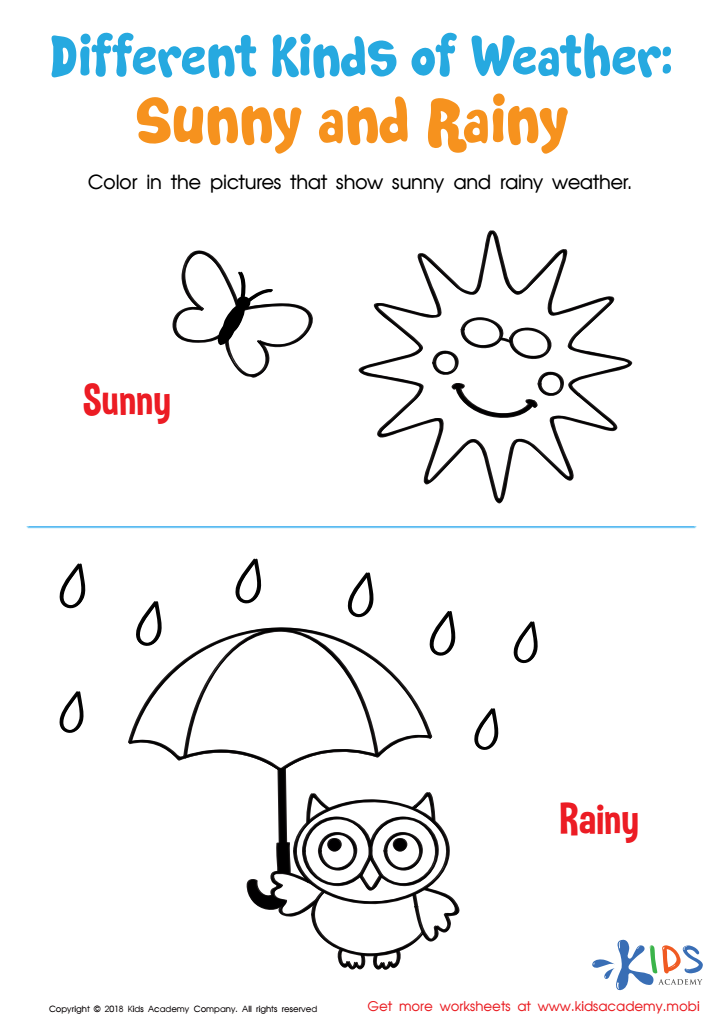
Different Kinds of Weather: Sunny and Rainy Worksheet
 Assign to My Students
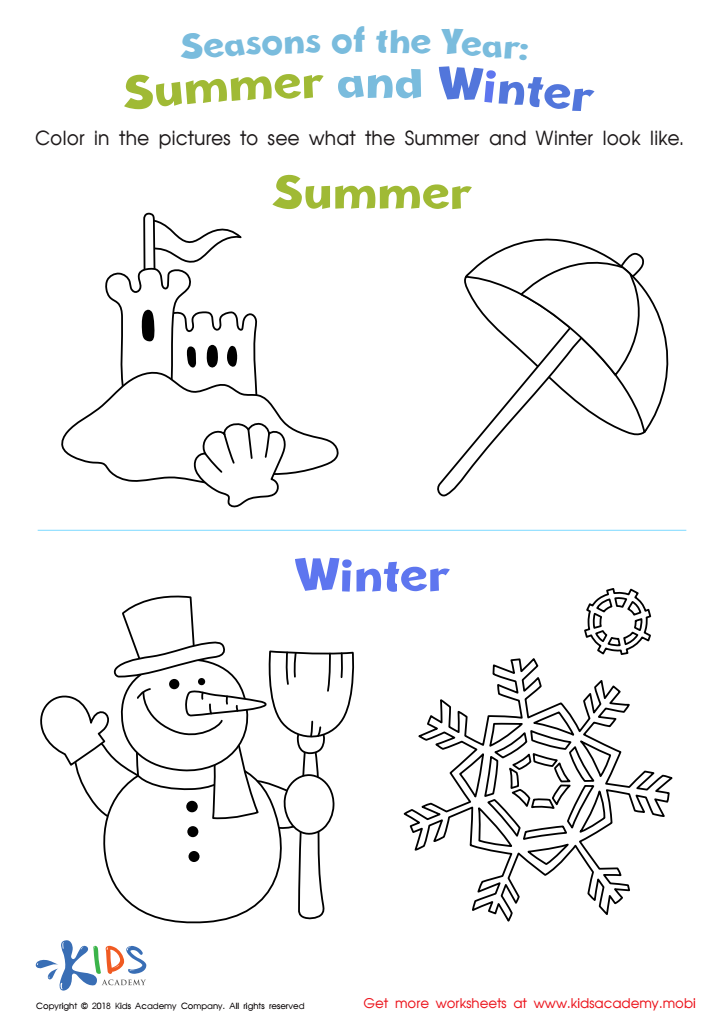
Summer and Winter Worksheet
Assign to My Students
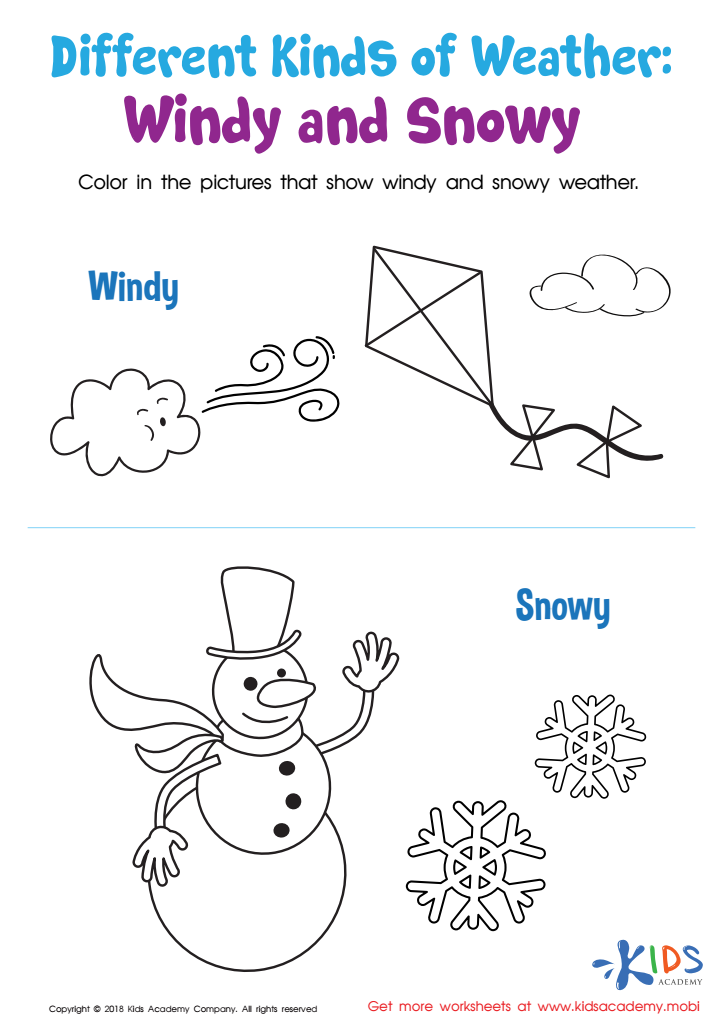
Different Kinds of Weather: Windy and Snowy Worksheet
Assign to My Students



Reading comprehension and coloring pages themed around weather and seasons are valuable educational tools for young children aged 3-9 for several reasons. Firstly, these pages enhance vocabulary development by introducing weather-related words, such as "cloudy," "sunny," "rainy," and "snowy," in a fun, engaging manner. When children color and talk about these themes, they practice using new vocabulary in context, which reinforces language acquisition.
Secondly, understanding weather and seasonal changes fosters environmental awareness. Through interactive coloring and reading activities, children learn to recognize patterns, the characteristics of each season, and how these elements influence daily life. This foundational knowledge of the natural world can spark curiosity and critical thinking skills, as children begin to ask questions and make observations about their surroundings.
Additionally, coloring within lines enhances fine motor skills, important for writing development, while reading comprehension exercises improve listening skills and the ability to follow instructions. Collaborative coloring tasks or story discussions also promote social skills, such as sharing and teamwork.
Ultimately, integrating reading comprehension with coloring pages creates a multifaceted learning experience. It not only makes learning fun but also builds essential cognitive, linguistic, and social skills. Thus, parents and teachers should value these activities as integral components of early childhood education.