
Basic Math knowledge Worksheets for Ages 3-9
3 filtered results
Difficulty Level
Grade
Age
-
From - To
Subject
Activity
Standards
Discover our engaging Basic Math Knowledge Worksheets designed for children ages 3-9! These worksheets are crafted to build a strong foundation in essential math skills through fun and interactive activities. From simple counting and number recognition to basic addition and subtraction, kids will enjoy hands-on learning while developing crucial mathematical concepts. Our colorful designs and child-friendly layouts make math enjoyable and accessible for young learners. Whether used in the classroom or at home, these worksheets provide valuable practice that helps children gain confidence and proficiency in math. Start your child's math journey today and watch them thrive!
Favorites
With answer key
Interactive
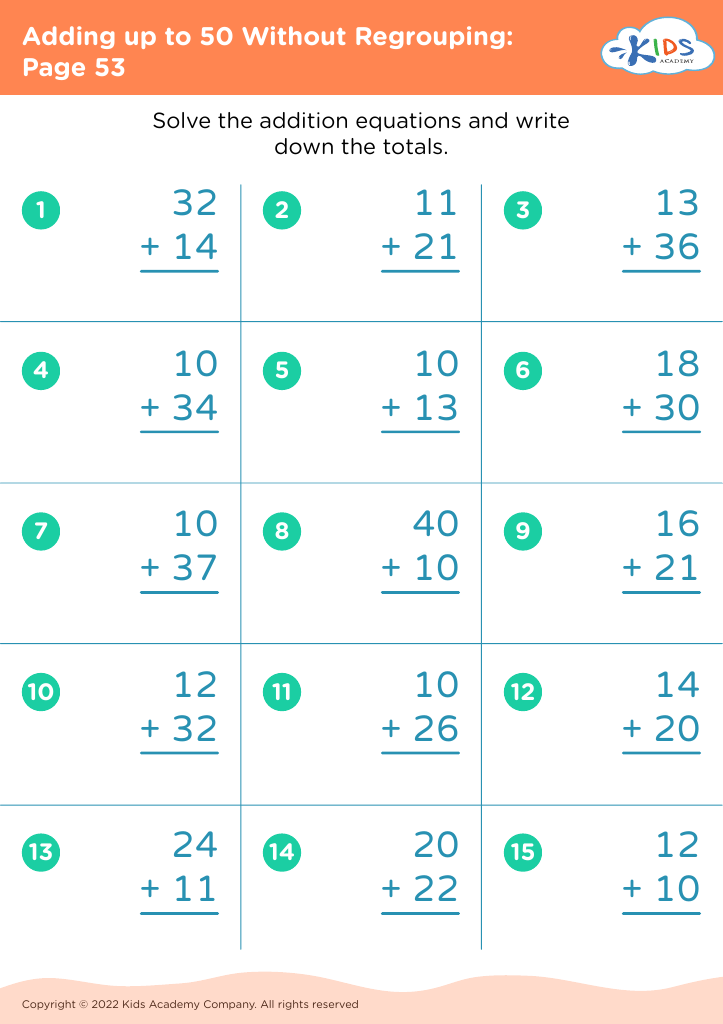
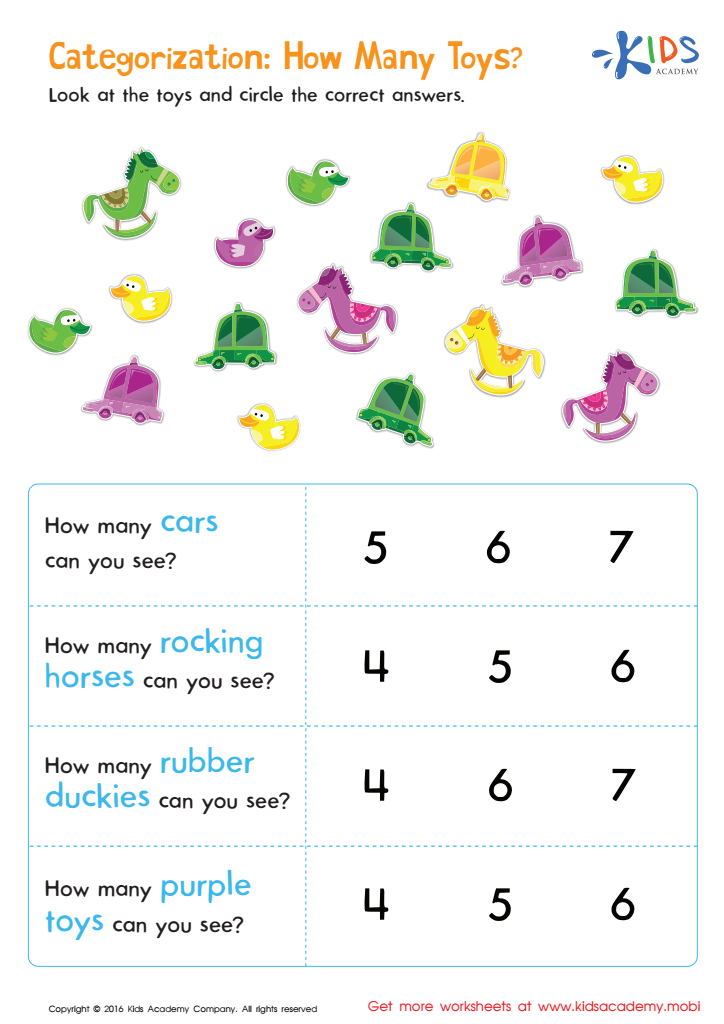
Classifying Toys by Type and Color Sorting Worksheet
Kids Academy offers free math worksheets to help practice counting, categorization & recognition skills. Kids will enjoy counting by color & type while strengthening problem-solving & literacy skills.
 Assign to My Students
Classifying Toys by Type and Color Sorting Worksheet
Worksheet
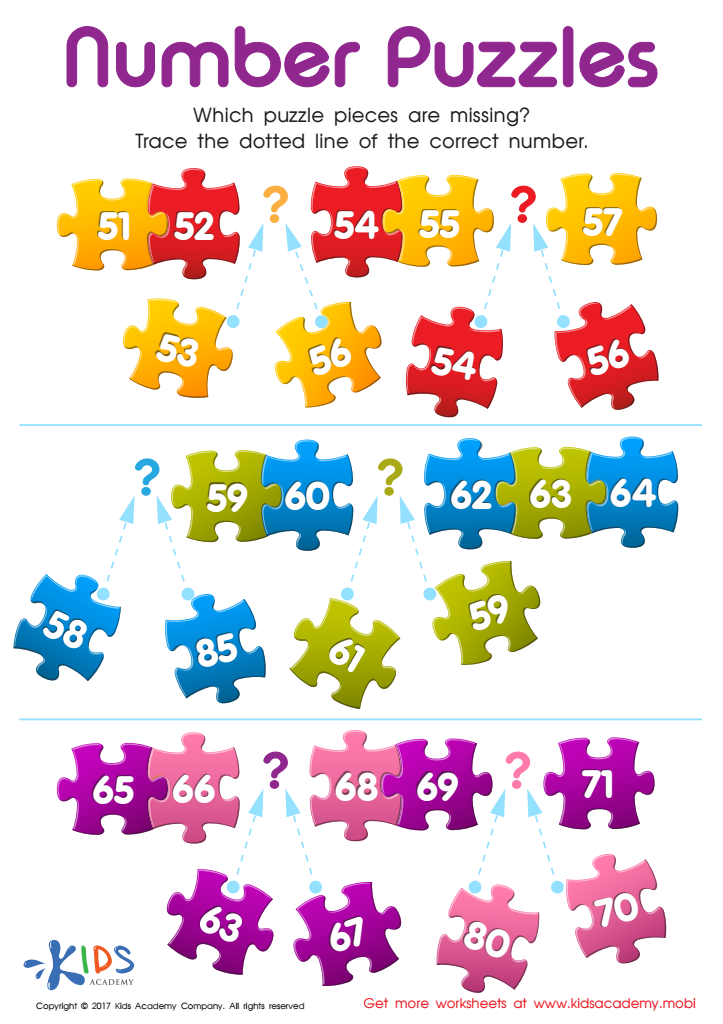
Number Puzzles Worksheet
In this tracing paper, your child must identify the missing numbers in the puzzle. Guide them as they trace the line for the correct number to complete the worksheet. This activity will help boost their problem-solving skills.
Number Puzzles Worksheet
Worksheet
Join Kids Academy for Free
Who is primarily going to use this learning content?








Basic math knowledge is crucial for children aged 3-9 as it lays the foundation for future learning and everyday problem-solving. At this age, kids are naturally curious and engaged in activities that involve counting, sorting, and recognizing patterns. When parents and teachers nurture these early math skills, they help children develop critical thinking and analytical abilities that are essential throughout life.
Understanding basic math concepts also supports cognitive development, encouraging children to make connections between numbers and real-world situations. This groundwork not only prepares students for formal math education but also fosters confidence in their abilities. For instance, children who grasp fundamental concepts, such as addition and subtraction, will find advanced topics like multiplication and fractions easier to tackle later on.
Moreover, early math proficiency is linked to improved academic performance and better opportunities as they progress through their education. Engaging mathematical activities can also reinforce social skills, promoting teamwork and communication when children play math games or work on projects together.
Therefore, it’s essential for parents and teachers to prioritize basic math learning during these formative years, as it impacts children's overall learning trajectory and equips them with lifelong skills in reasoning and problem-solving.








