
Develop subtraction skills Worksheets for Ages 3-9
3 filtered results
Difficulty Level
Grade
Age
-
From - To
Subject
Activity
Standards
Enhance your child's early math abilities with our engaging subtraction skills worksheets designed specifically for ages 3-9. These printable resources offer a fun and interactive way to develop essential subtraction concepts through colorful illustrations and age-appropriate exercises. From simple visual representations to more complex problems, these worksheets cater to various skill levels, ensuring every child progresses at their own pace. Encourage confidence in math as your child practices subtraction in a playful and supportive environment. Perfect for both classroom use and home learning, our worksheets provide an excellent foundation for lifelong mathematical skills. Dive into the world of subtraction today!
Favorites
With answer key
Interactive
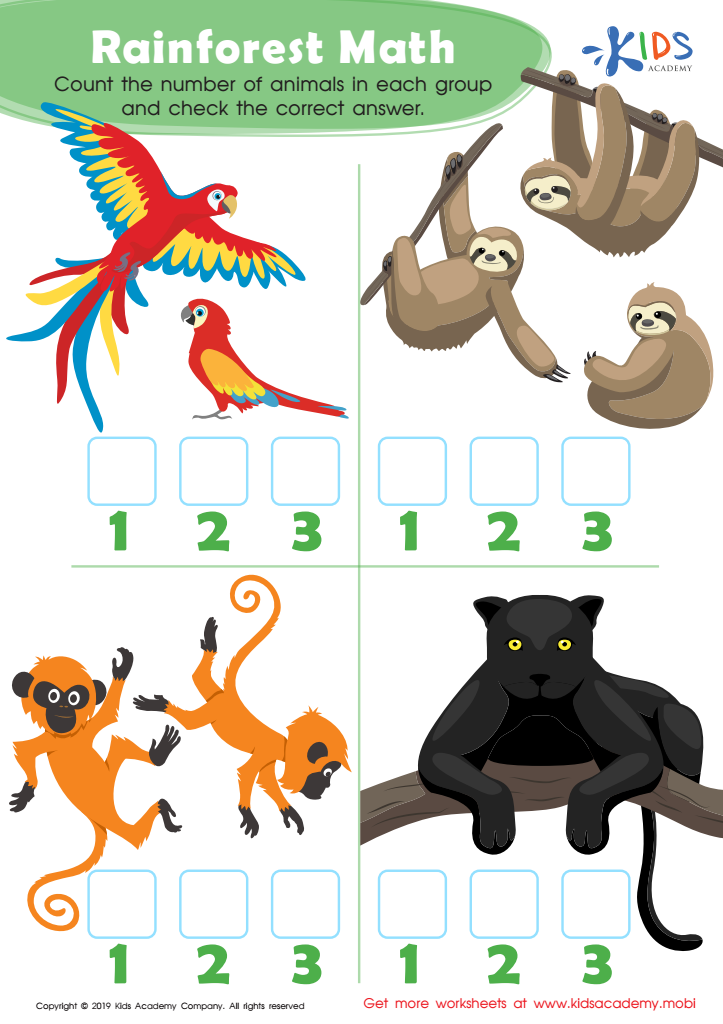
Rainforest Math Worksheet
Kids love learning about rainforest animals! This worksheet helps them with counting and number sense. It features recognizable rainforest animals and asks children to choose the correct number from the answer choices. It's a fun way for children to build their skills - without even knowing it!
 Assign to My Students
Rainforest Math Worksheet
Worksheet
Join Kids Academy for Free
Who is primarily going to use this learning content?







Developing subtraction skills for children aged 3-9 is crucial for several reasons. First, fundamental arithmetic skills form the foundation for more complex mathematical concepts later in education. Subtraction, specifically, helps children understand the concept of "taking away," which is essential in everyday situations, from sharing toys to tracking time until an event.
Moreover, mastering subtraction boosts a child's confidence in their numeracy abilities. As children successfully learn to subtract, they strengthen their problem-solving skills and cognitive thinking, which transfers beyond math to other academic areas. This kind of early numeracy training builds a positive attitude towards math, making future learning less intimidating.
Socially and emotionally, developing subtraction skills can enhance a child's ability to engage in collaborative activities with peers, as they learn to take turns and share resources. Furthermore, practice in subtraction promotes patience and perseverance when tackling challenges, essential traits for lifelong learning.
In essence, by prioritizing subtraction skills during these formative years, parents and teachers lay the groundwork for a well-rounded education, equipped children for academic success, and cultivate vital interpersonal skills that benefit them in various aspects of life.








