
Identifying objects Worksheets for Ages 3-9
5 filtered results
Difficulty Level
Grade
Age
-
From - To
Subject
Activity
Standards
Our "Identifying Objects Worksheets for Ages 3-9" provide a fun and engaging way for young learners to develop observation and cognitive skills. These carefully designed worksheets feature vibrant images and interactive tasks that help children recognize, differentiate, and categorize various objects. Ideal for preschool to early elementary students, each activity encourages critical thinking and enhances visual perception. These printables support foundational learning in a playful, educational manner, making them perfect for classroom use or at-home practice. Foster your child’s curiosity and boost their confidence with our enriching, age-appropriate materials at Kids Academy.
Favorites
With answer key
Interactive
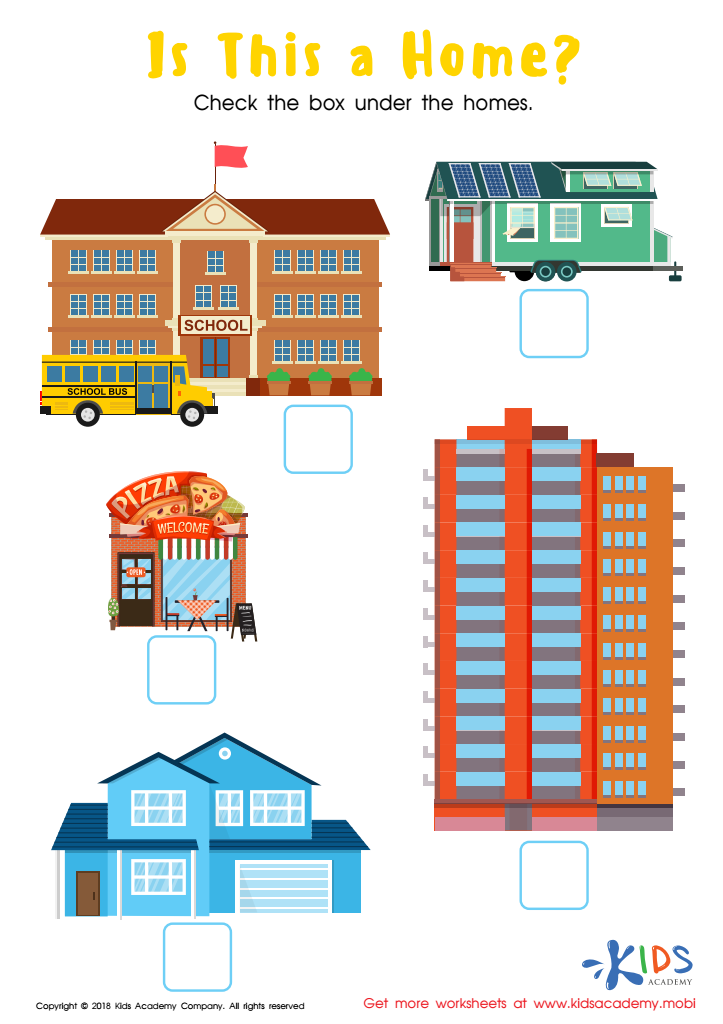
Is this a Home? Worksheet
Ask your child what the building you live in is called. Is it a home, restaurant or hospital? Then look at the pictures in the worksheet and ask them to identify which are homes - even if they don't look like yours. Check the box next to the homes in the pictures.
 Assign to My Students
Is this a Home? Worksheet
Worksheet
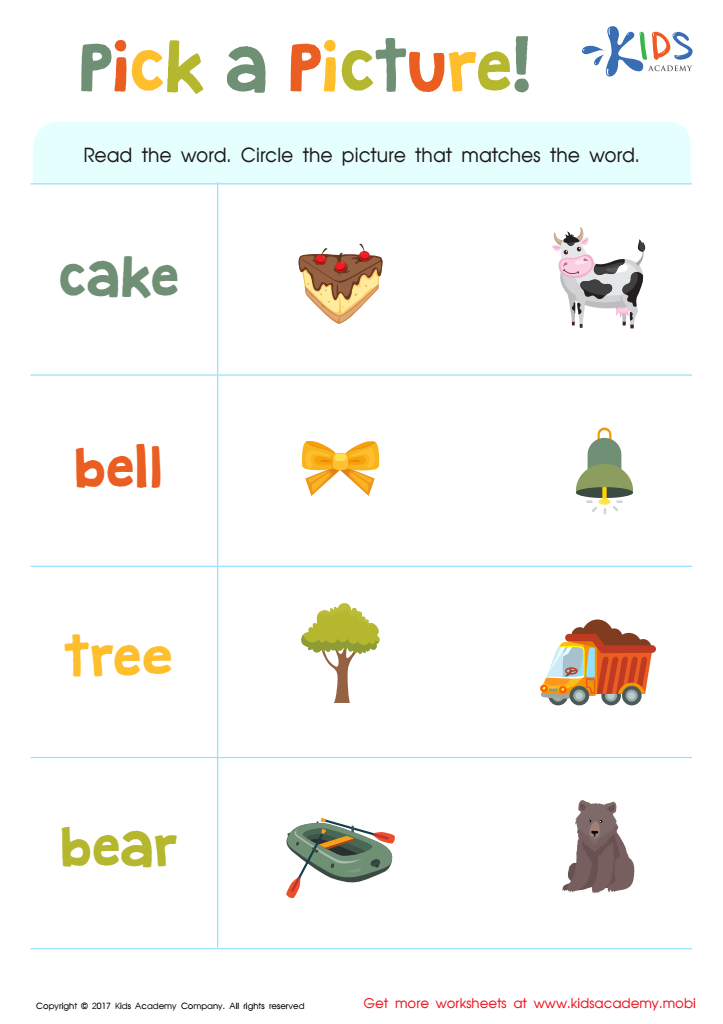
Pick a Picture Word Recognition Worksheet
With our Pick a Picture worksheet, your child's success is within reach. Vivid pictures and words help them learn to read and distinguish initial sounds. Plus, it's a great way to strengthen sight word banks and fine motor skills. Circling practice also helps them form letters properly for writing.
Pick a Picture Word Recognition Worksheet
Worksheet
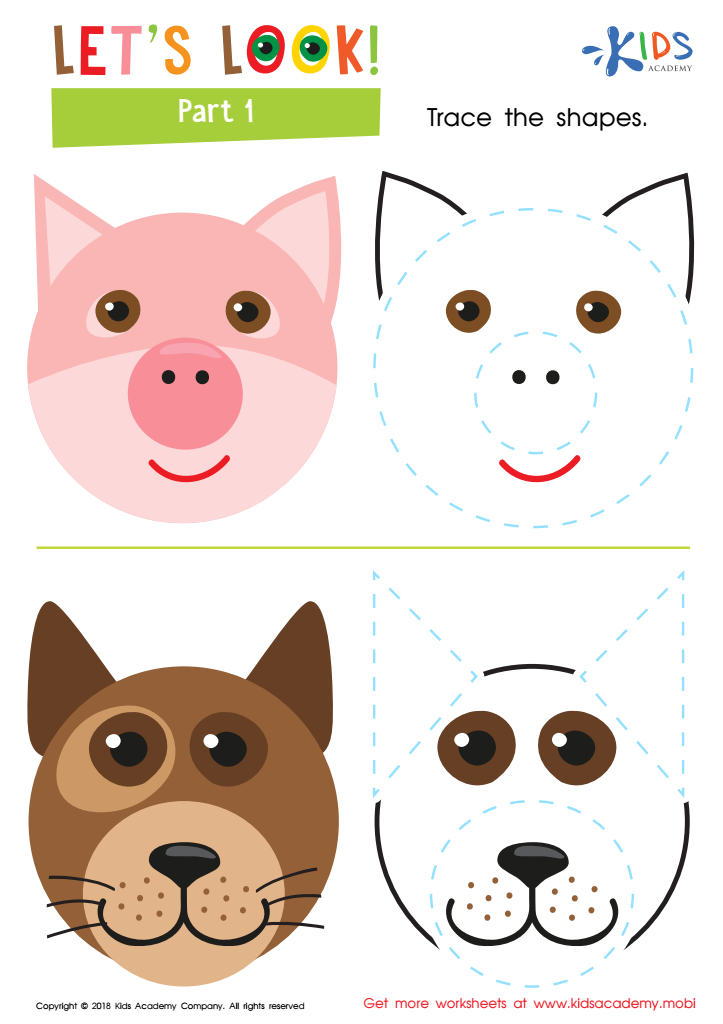
Let's Look! Part 1 Worksheet
If your kids love animals or have a pet at home, they'll get a kick out of this tracing worksheet. It tests their ability to imitate shapes, starting with a pig and followed by a dog. Beside each of these pictures is a space for tracing the shapes. Unleash your child's creativity and see what they come up with!
Let's Look! Part 1 Worksheet
Worksheet
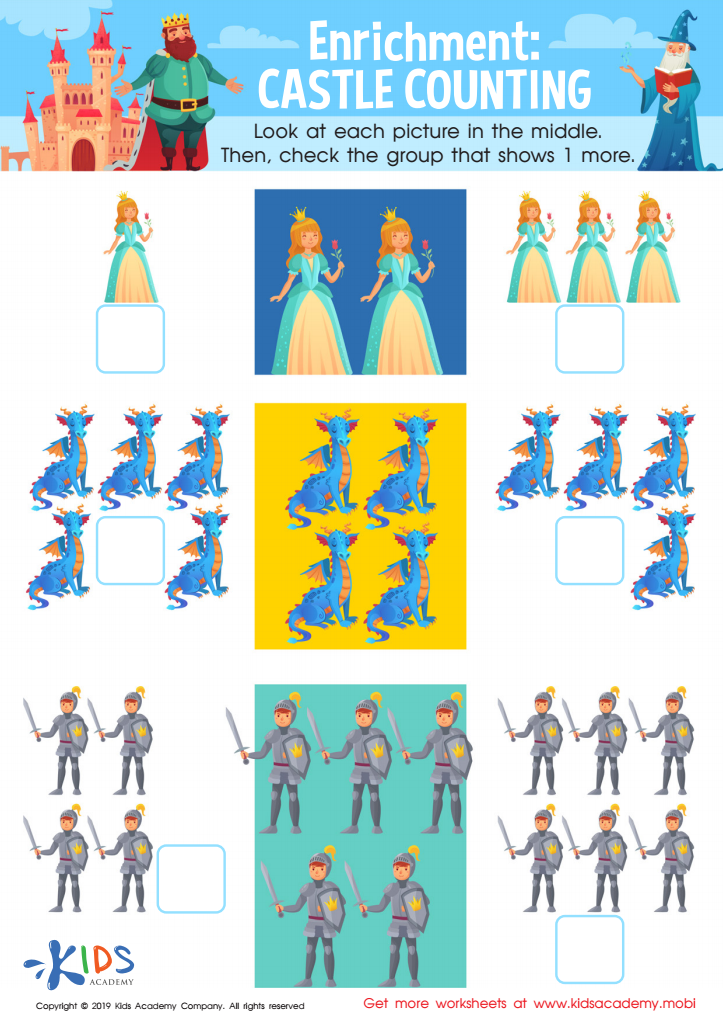
Enrichment: Castle Counting Worksheet
Help your kids learn to count. Start with easy counting of numbers as high as possible. Use the pictures in this printout. Point to the middle one, help them identify it and then count one more than it. Do this to help them get ready for more difficult math concepts like addition, subtraction and multiplication.
Enrichment: Castle Counting Worksheet
Worksheet
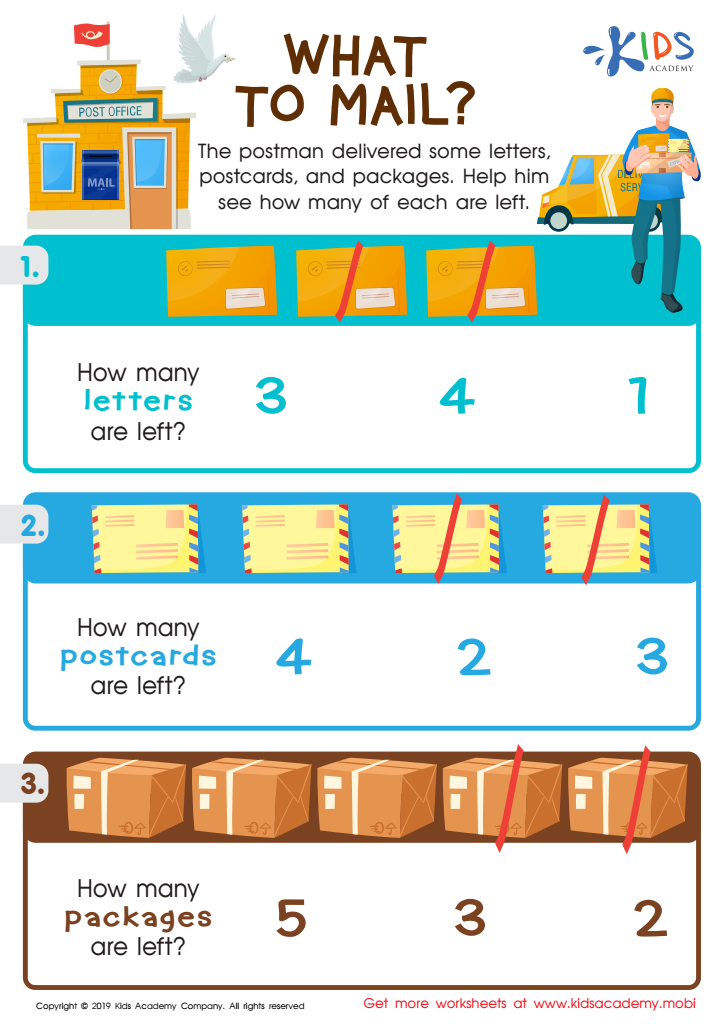
What to Mail? Worksheet
Do your kids know what postmen do? They deliver mail from the post office to the intended recipient. Word problems are math questions written in sentence form. Here, kids must examine the image, read the problem, and find the correct answer. This worksheet offers practice in that skill.
What to Mail? Worksheet
Worksheet
Join Kids Academy for Free
Who is primarily going to use this learning content?







Parents and teachers play a crucial role in early childhood development, and helping children identify objects is a foundational skill with far-reaching benefits, particularly for ages 3-9. This period is marked by rapid cognitive, language, and social development. By learning to identify objects, children enhance their vocabulary, enabling more effective communication and better reading skills as they grow. Object identification exercises foster categorization and critical thinking, helping children distinguish between different shapes, sizes, and uses, which is fundamental for problem-solving and logical reasoning.
Additionally, interacting with various objects boosts fine motor skills and hand-eye coordination, essential for tasks like writing, dressing, and other daily activities. Furthermore, identifying objects can also be tied to emotional development; for instance, recognizing a favorite toy or book can provide comfort and security. Socially, sharing knowledge about objects with peers encourages cooperative play, conversation, and the pooling of ideas, which strengthens interpersonal bonds and teamwork skills.
In educational contexts, reinforced by both parents and teachers, object identification aligns with developmentally appropriate practices and curriculums. By focusing on interactive, hands-on learning experiences related to identifying objects, we are setting a solid foundation for lifelong learning, curiosity, and academic success.








