Number pattern recognition Worksheets for Ages 3-9
3 filtered results
-
From - To
Discover our engaging Number Pattern Recognition Worksheets designed for children ages 3-9! These worksheets help young learners develop essential math skills by identifying and completing number patterns. With colorful illustrations and age-appropriate activities, kids can explore sequences, enhance their counting abilities, and boost their problem-solving skills. Our thoughtfully crafted resources cater to various learning styles, making math fun and interactive. Great for both classroom and home learning, these worksheets encourage early numeracy and critical thinking. Start your child’s math journey today with our comprehensive collection of number pattern recognition worksheets, ensuring they build a solid foundation for future success!
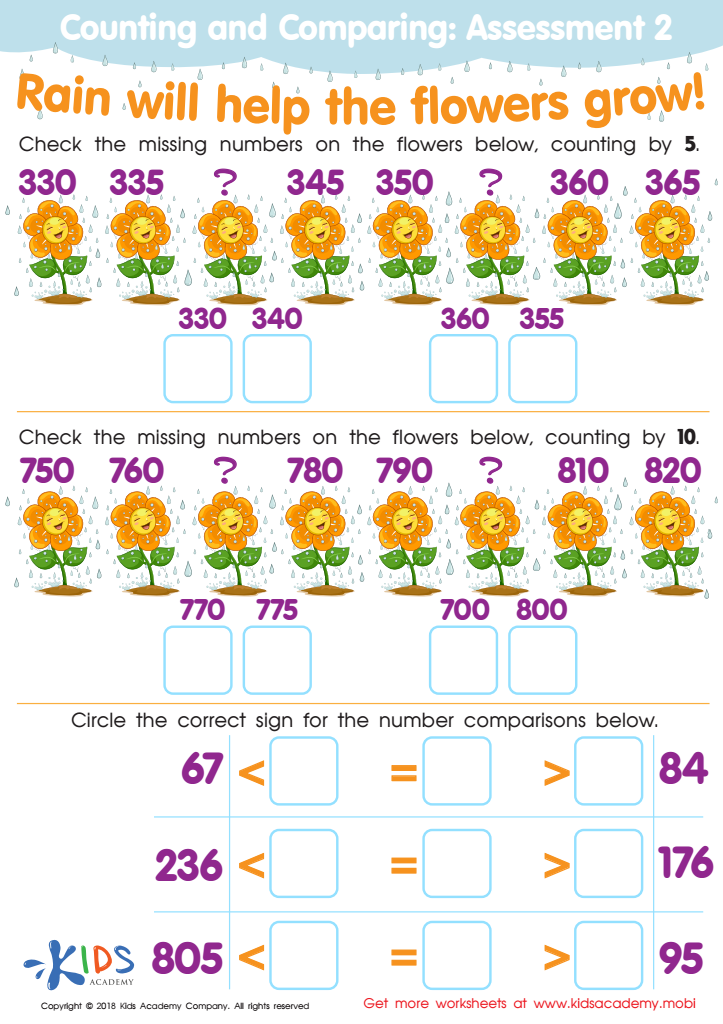
Counting and Comparing: Assessment 2 Worksheet
 Assign to My Students
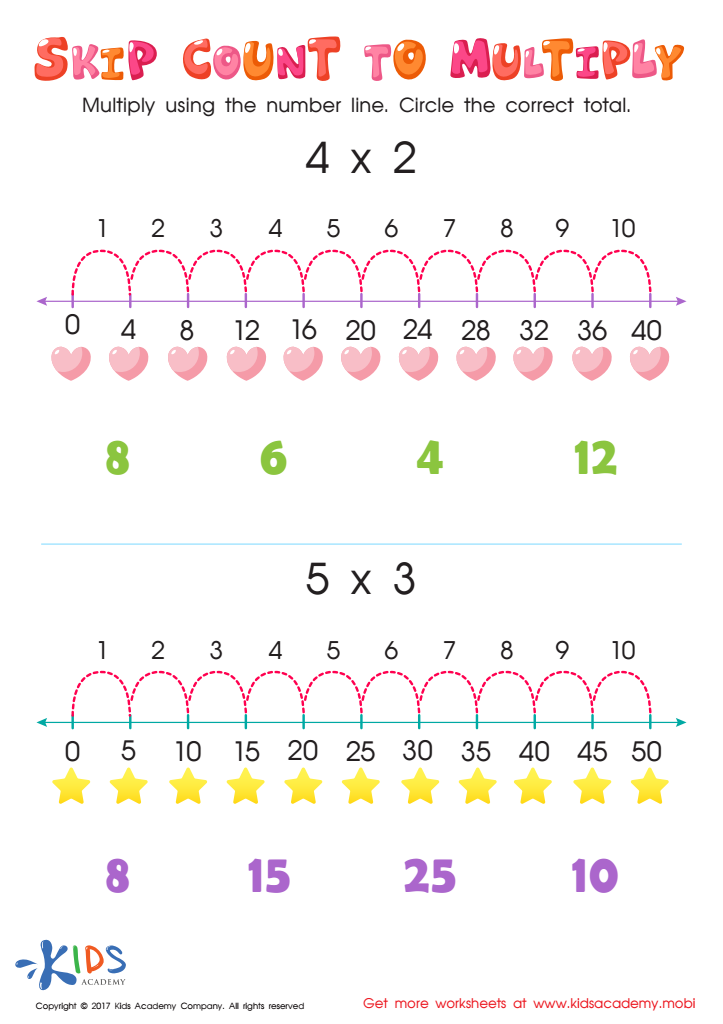
Skip Count Multiplication Worksheet
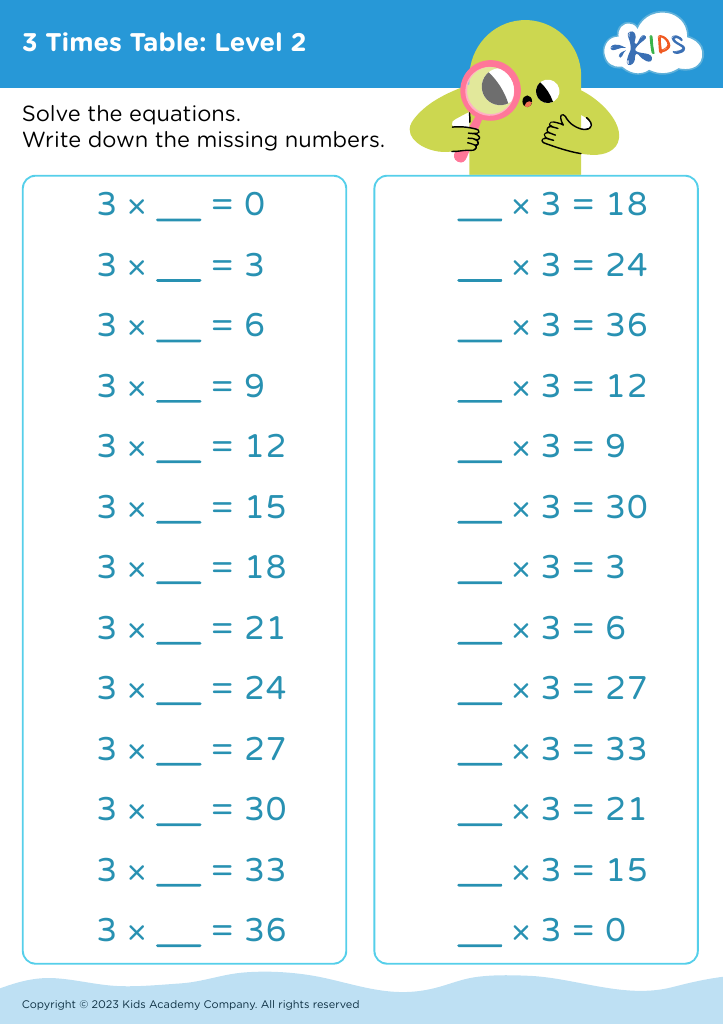








Number pattern recognition is a crucial skill for young children, particularly those aged 3-9. It lays the foundation for essential mathematical concepts such as addition, subtraction, multiplication, and division, which are vital for everyday problem-solving and decision-making.
Understanding number patterns helps children develop logical reasoning and critical thinking skills. By recognizing and predicting sequences, children enhance their ability to generalize concepts, making it easier for them to tackle more complex mathematical ideas later on.
Additionally, number pattern recognition fosters confidence in young learners. As they successfully identify and complete patterns, they gain a sense of accomplishment, motivating them to engage further with mathematics. This process can reduce math anxiety in the long run, making kids more comfortable with numbers as they progress through their education.
Moreover, skills in pattern recognition can benefit interdisciplinary learning. For instance, patterns appear in music, art, and nature, allowing for cross-curricular connections that enrich a child’s overall learning experience.
In summary, nurturing number pattern recognition equips children not only with essential skills for academic growth but also with the confidence to embrace and enjoy math in everyday life. Parents and teachers play a critical role in guiding this essential development process.








