
Prefix understanding Worksheets for Ages 3-9
3 filtered results
Difficulty Level
Grade
Age
-
From - To
Subject
Activity
Standards
Unlock your child's language potential with our engaging Prefix Understanding Worksheets for ages 3-9. These expertly designed worksheets introduce young learners to the world of prefixes, enhancing vocabulary, reading comprehension, and spelling skills. With fun exercises and vibrant illustrations, kids can grasp the concept of prefixes in a playful manner. Perfect for preschool to early elementary students, our printable activities make learning enjoyable and effective. Watch as your child gains confidence and a love for words while building a strong foundation for their educational journey. Download now and start the prefix adventure today!
Favorites
With answer key
Interactive
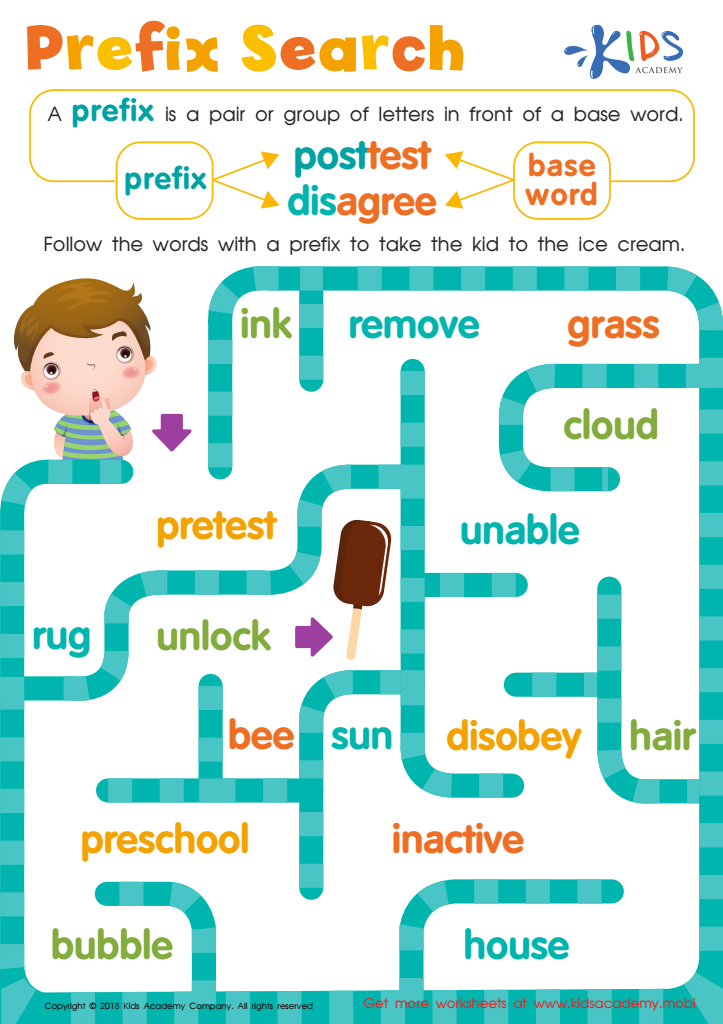
Reading: Prefix Search Worksheet
Maze your way through prefixes! This worksheet helps students practice reading new words with a prefix and figuring out the base word. An understanding of prefixes gives students the skills to comprehend new words. A fun and useful activity for the reading classroom!
 Assign to My Students
Reading: Prefix Search Worksheet
Worksheet
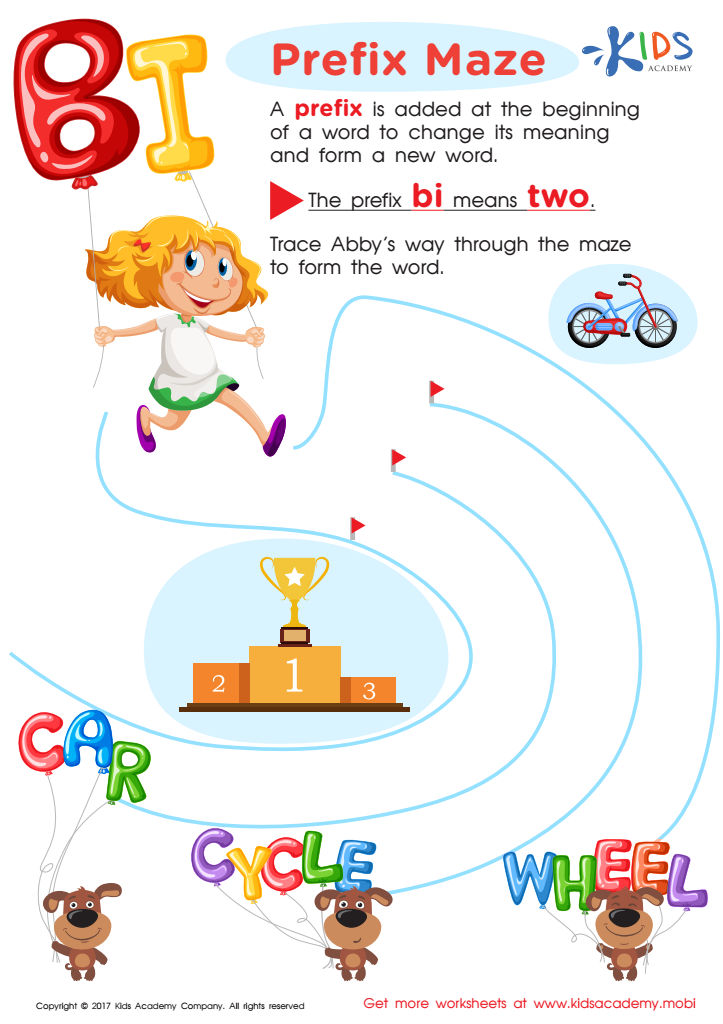
Prefix Bi Words Worksheet
Help "bi" find its root word in this fun and colorful prefix worksheet! Your child will learn how words are built while having a great time!
Prefix Bi Words Worksheet
Worksheet
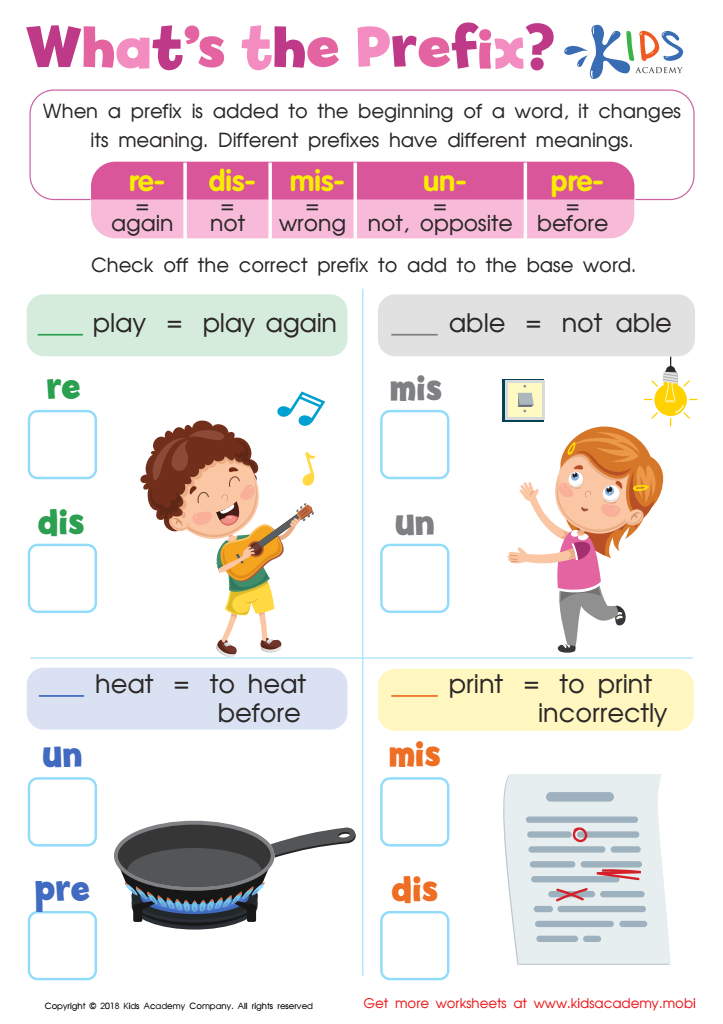
Reading: What Is the Prefix Worksheet
This worksheet helps children learn about prefixes by matching pictures and base words with the correct prefix. Learning these prefixes and their meanings is essential for reading and vocabulary comprehension. Use this free download to check your students' understanding.
Reading: What Is the Prefix Worksheet
Worksheet
Join Kids Academy for Free
Who is primarily going to use this learning content?







Understanding prefixes is an essential foundational skill for children ages 3-9 as it lays the groundwork for literacy and vocabulary development. During these formative years, young minds are highly receptive to language acquisition. By familiarizing children with common prefixes, parents and teachers can significantly enhance their ability to decode words, ultimately boosting their reading comprehension and communication skills.
Prefixes, such as "un-" meaning "not," or "re-" meaning "again," help children grasp the meaning of new words without having to memorize each one individually. This knowledge promotes greater reading efficiency and enriches their vocabulary, enabling them to better understand content in various subjects. Additionally, enjoying success in language-related tasks can foster a love of reading and learning, contributing to a child's overall intellectual growth.
Building a strong vocabulary also positively impacts children's writing abilities, as they become more capable of expressing complex ideas clearly and confidently. In a classroom setting, such knowledge supports collaborative learning and peer activities, helping children enhance their social and academic skills alike. Therefore, integrating prefix education into early learning experiences helps set a solid foundation for lifelong academic and personal success.








