Understanding arrays Worksheets for Ages 3-9
3 filtered results
-
From - To
Discover engaging "Understanding Arrays" worksheets for children ages 3-9, intricately designed to build foundational math skills. Our vibrant, age-appropriate learning materials help young learners grasp the concept of arrays through fun and interactive exercises. These printable worksheets, rich with colorful illustrations and easy-to-follow instructions, are perfect for teachers and parents alike. Start fostering an early love for math by exploring arrays and patterns with our creative educational resources, aiding children in recognizing and organizing objects in rows and columns, enhancing their problem-solving skills, and preparing them for more advanced mathematical concepts.
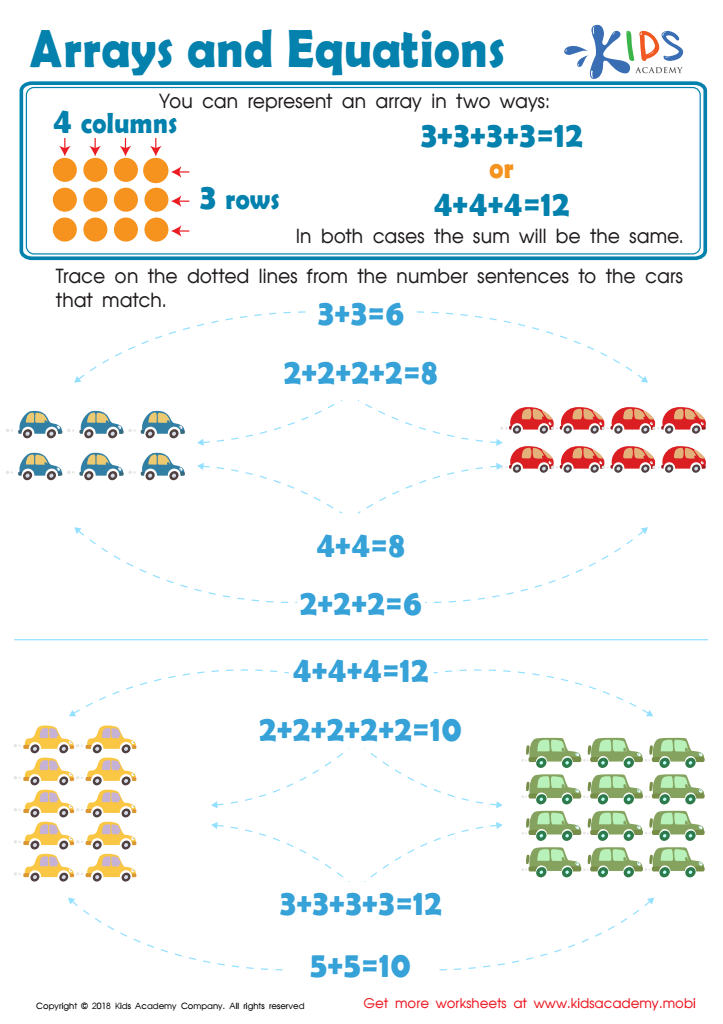
Arrays and Equations Worksheet
 Assign to My Students
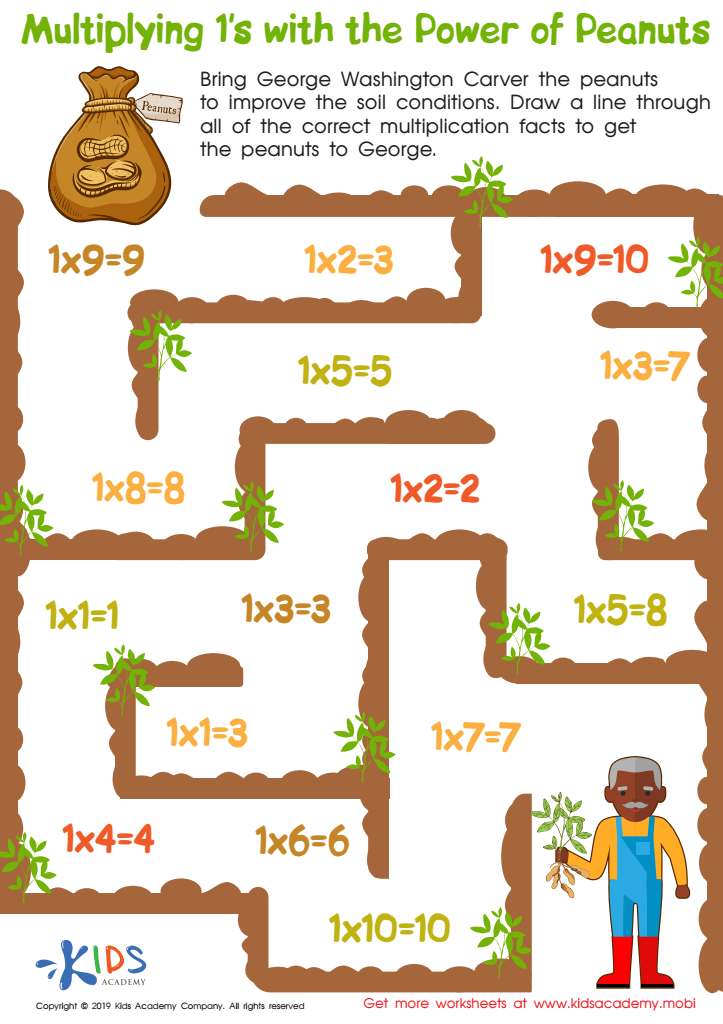
Multiplying 1’s With the Power of Peanuts Worksheet







Understanding arrays is crucial for young children as it builds a strong foundation for mathematical thinking and problem-solving skills. Arrays are visual representations of objects arranged in rows and columns, which simplify complex concepts like addition, multiplication, and division. For children aged 3-9, grasping these basic mathematical principles early can lead to better comprehension in later years.
Parents and teachers should prioritize this because early familiarity with arrays nurtures a positive attitude towards math, reducing anxiety around the subject as children grow. Arrays help children understand the concept of grouping and repeated addition, providing a stepping stone to multiplication. This visualization aids in recognizing patterns, an essential skill in logical reasoning and critical thinking.
Moreover, hands-on activities with arrays, such as using manipulatives like blocks or counters, make learning engaging and tangible for young learners. This interaction not only reinforces mathematical concepts but also enhances fine motor skills and hand-eye coordination.
Supporting a child’s understanding of arrays also aligns with educational curriculums that focus on visual learning and practical application. By learning to see numbers as manageable groups, children develop strategies that will assist them in various subjects, promoting overall academic success. Parents and teachers, together, can encourage this foundational block of early childhood education, leading to long-term benefits.








