Understanding force Worksheets for Ages 3-9
3 filtered results
-
From - To
Explore our "Understanding Force Worksheets" designed for children aged 3-9! These engaging resources introduce young learners to the fundamental concepts of force through fun activities and interactive exercises. Perfect for home or classroom use, our worksheets encourage exploration and critical thinking. Kids will learn to identify and manipulate forces, grasp the principles of push and pull, and discover how force affects movement in the world around them. Enhance your child's understanding of science while fostering creativity and problem-solving skills. Download our free worksheets today and watch your little ones gain confidence in their knowledge of forces!
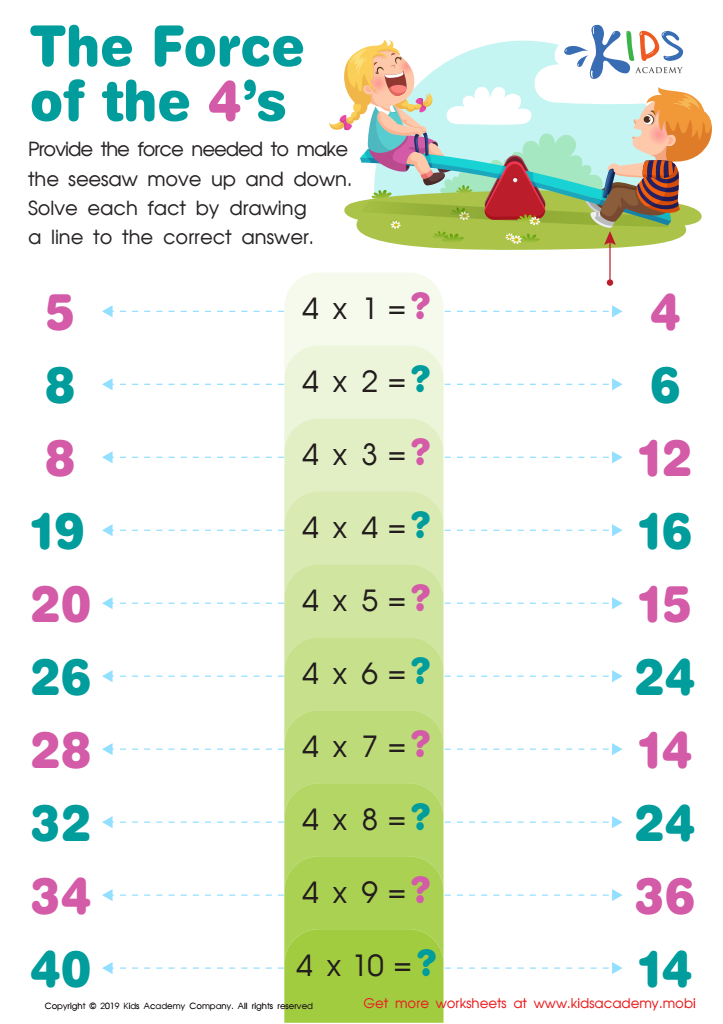
The Force of the 4's Worksheet
 Assign to My Students
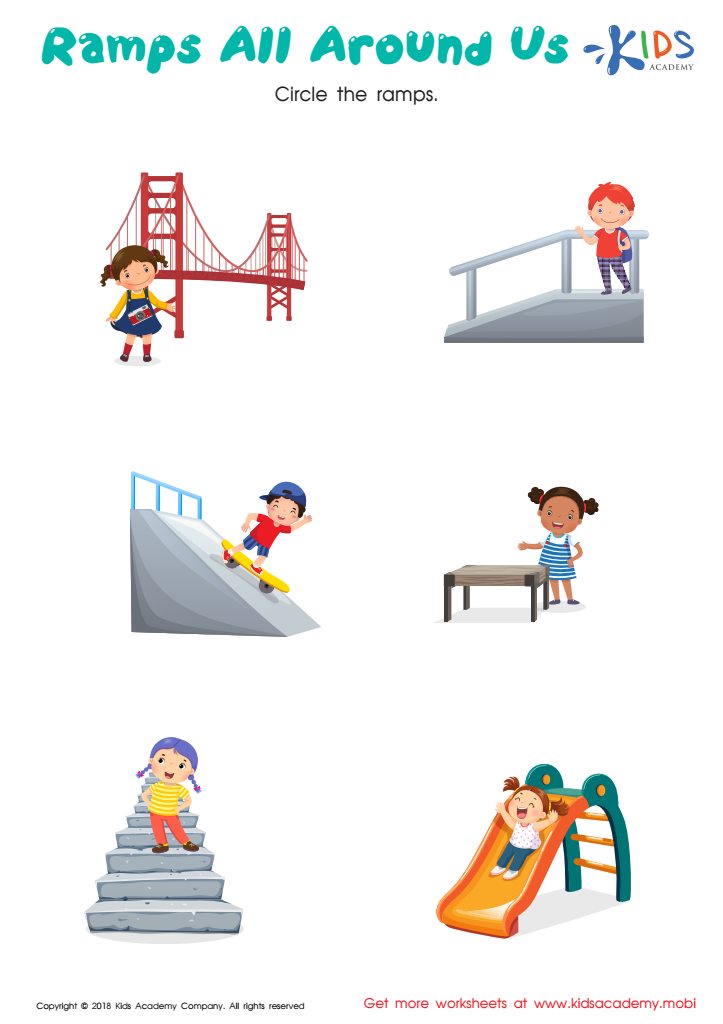
Ramps All Around us Worksheet
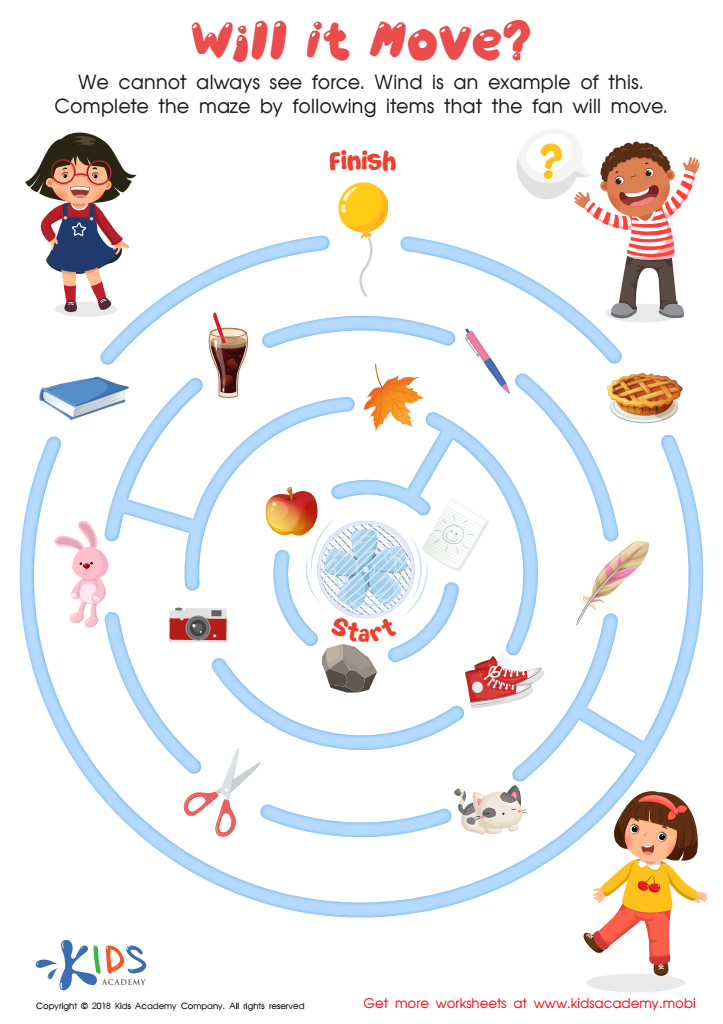
Will it Move? Worksheet




.jpg)


Understanding force is essential for children aged 3-9 as it lays the foundation for their scientific knowledge and critical thinking skills. At a young age, children are naturally curious and engaged in hands-on exploration. Teaching them about force—such as push and pull—helps them make sense of their surroundings. This is when they begin to interact with everyday concepts like gravity, motion, and basic physical science.
Moreover, grasping the principles of force encourages problem-solving and inquiry. For example, when children experiment with moving objects, they learn about friction, speed, and balance while enhancing their cognitive abilities. This understanding can be integrated into play activities or practical tasks, making learning enjoyable and relatable.
Additionally, nurturing a child's inquiry about force fosters creativity and innovation, skills necessary for STEM fields. Engaged learners develop a curious mindset that encourages them to ask questions, seek answers, and apply their knowledge imaginatively.
By showing children how force influences their daily experiences, educators and parents inspire a lifelong love for learning and scientific exploration, making it vital to prioritize this aspect of early education. Understanding force not only enriches a child's formative years but also equips them with skills that transcend the classroom.








