Understanding regrouping Worksheets for Ages 3-9
5 filtered results
-
From - To
Explore our "Understanding Regrouping Worksheets" designed for children aged 3-9! These engaging resources make learning regrouping concepts fun and effective, building essential math skills. Our worksheets cater to varying abilities, allowing young learners to grasp complex ideas through visual aids and hands-on activities. Perfect for reinforcing classroom learning or homeschooling, these worksheets include colorful examples and interactive challenges that stimulate critical thinking. Foster a strong foundation in mathematics, enhance problem-solving abilities, and encourage a love for learning through these thoughtfully crafted materials. Ideal for teachers and parents alike, help your child succeed in math with our comprehensive regrouping worksheets today!
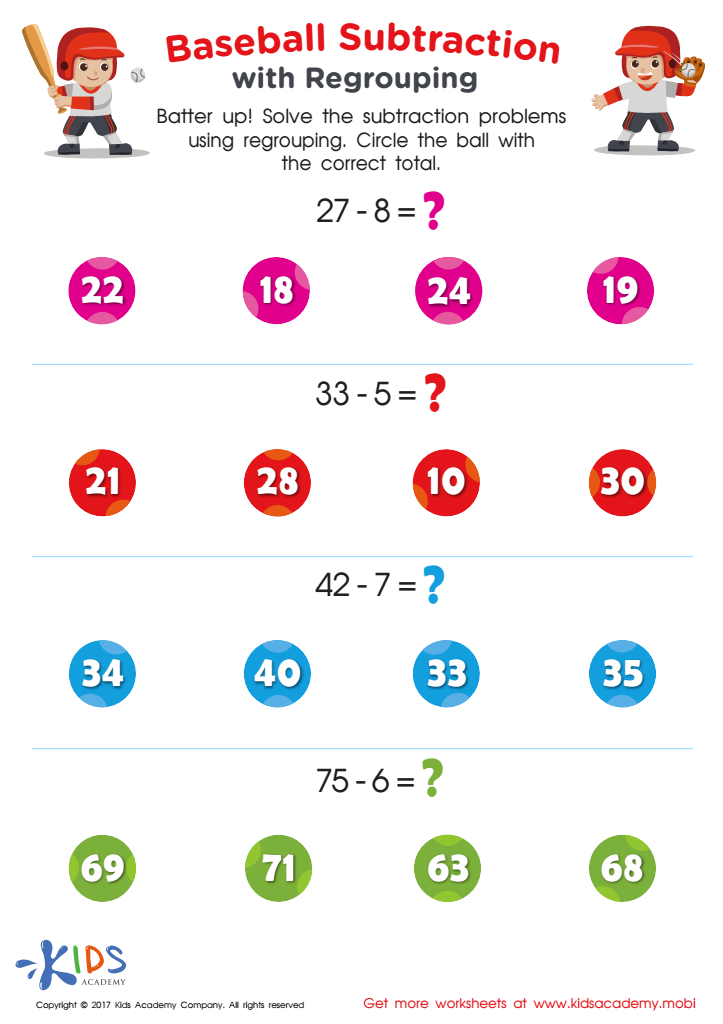
Subtraction With Regrouping for 2nd Grade Worksheet
 Assign to My Students
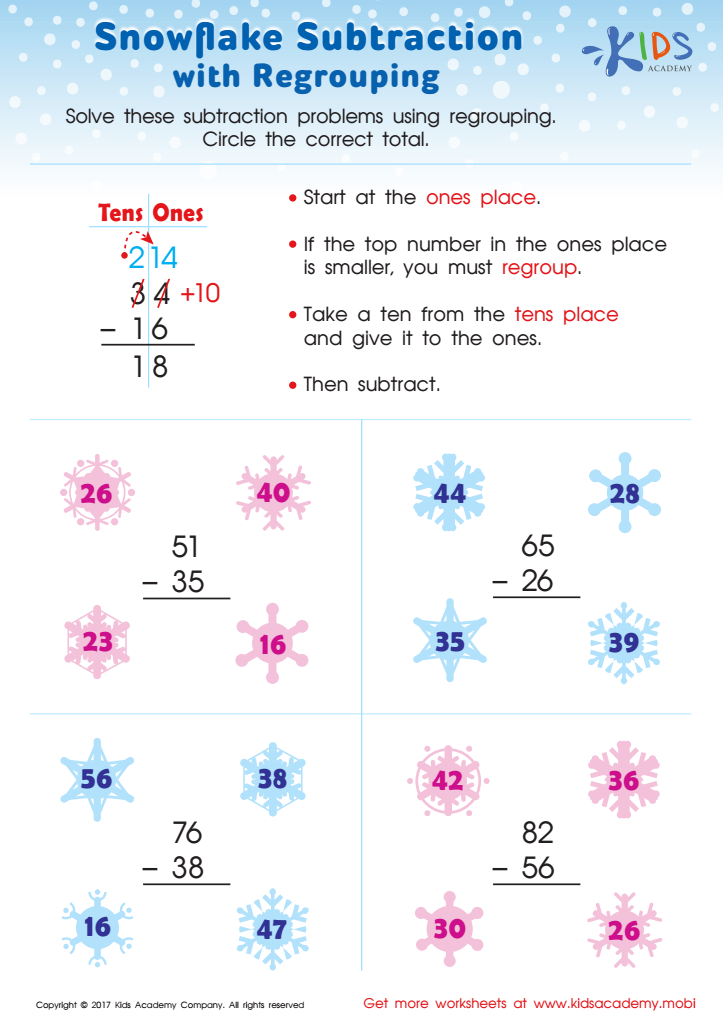
Subtraction With Regrouping Worksheet: Snowflake
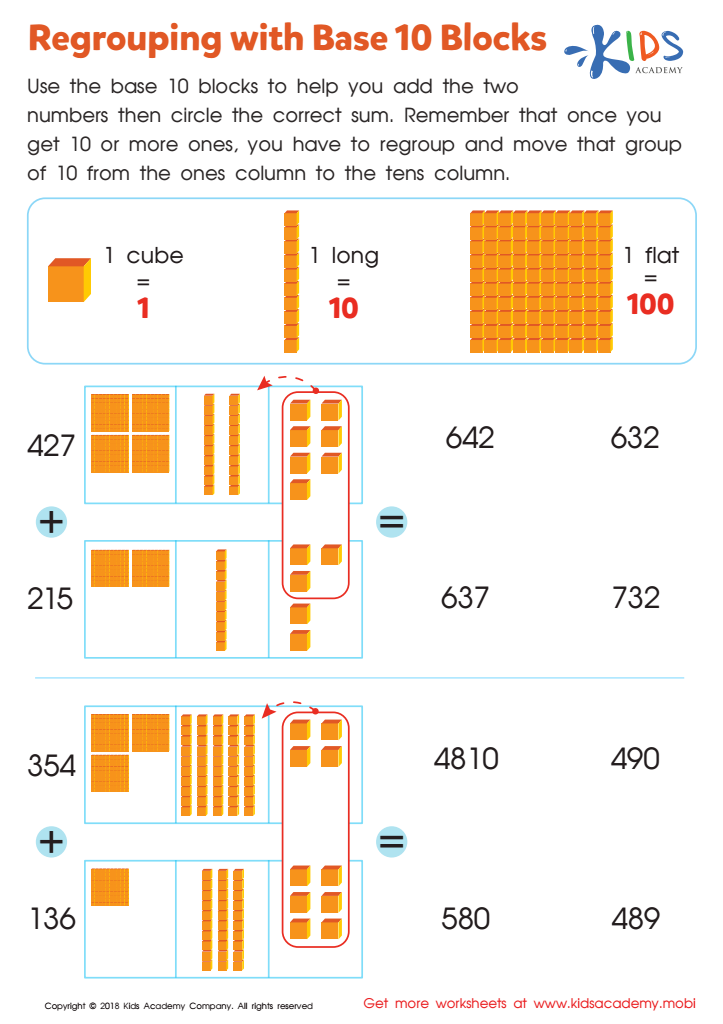
Regrouping with Base 10 Blocks Worksheet
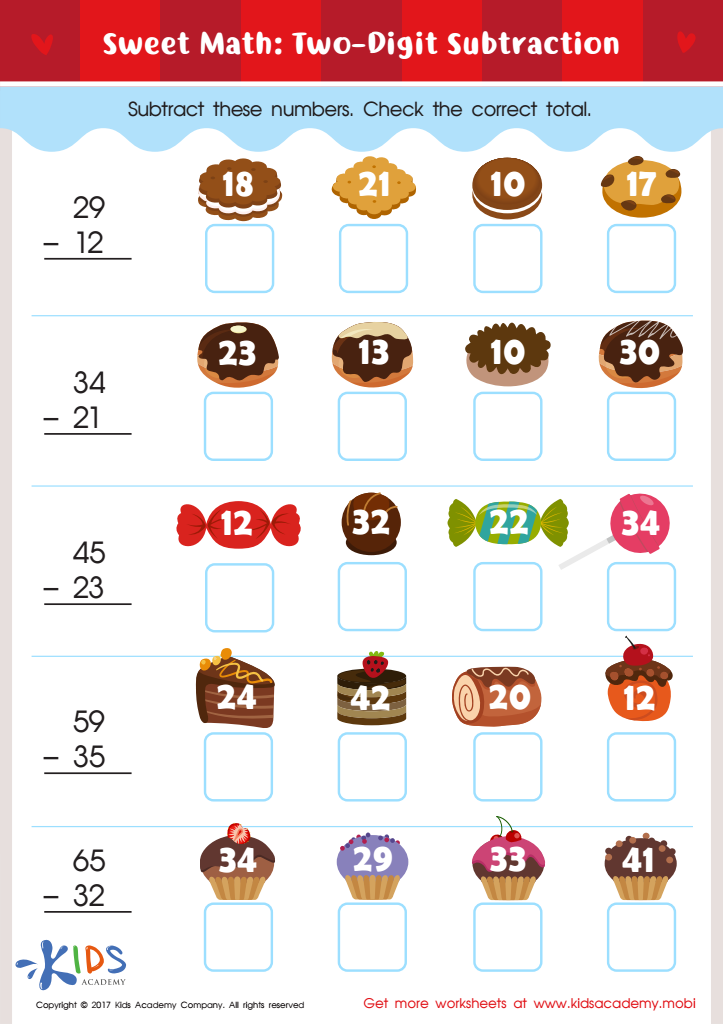
Two Digit Subtraction Worksheet







Understanding regrouping is essential for parents and teachers working with children ages 3-9 as it forms a foundational skill in mathematics. This concept, often introduced through activities involving addition and subtraction, is crucial for grasping how numbers work beyond basic counting. Regrouping allows children to perform calculations effectively, enhancing their ability to manipulate larger numbers and encouraging critical thinking.
At younger ages, children develop cognitive skills through hands-on experiences. Teaching regrouping encourages number sense, where they learn to visualize quantities and understand their relationships. This understanding not only aids in arithmetic but also supports problem-solving skills they will need in everyday life.
Moreover, recognizing the significance of regrouping can empower educators and parents to foster a growth mindset. By encouraging exploration, modeling strategies, and providing supportive feedback, adults can help children overcome challenges related to mathematics.
Ultimately, caring about and emphasizing regrouping in math education not only equips children with essential mathematical tools but also nurtures confidence and enthusiasm for learning. This foundational skill prepares them for more advanced mathematical concepts, setting them up for academic success in future grades. Encouraging students early on promotes a positive experience with math that can last a lifetime.








