Understanding timelines Worksheets for Ages 3-9
7 filtered results
-
From - To
Our "Understanding Timelines Worksheets for Ages 3-9" offer engaging activities designed to help young learners grasp the concept of chronological order. Perfectly tailored for children in preschool to 3rd grade, these worksheets combine colorful visuals with fun exercises to aid comprehension. Each worksheet focuses on different aspects of timelines, making historical and daily events easier to understand. Watch as your child enhances their learning skills, memory, and ability to sequence events correctly with enjoyable tasks that foster curiosity and critical thinking. Equip your little one with essential tools for cognitive development with our interactive and educational timeline worksheets!
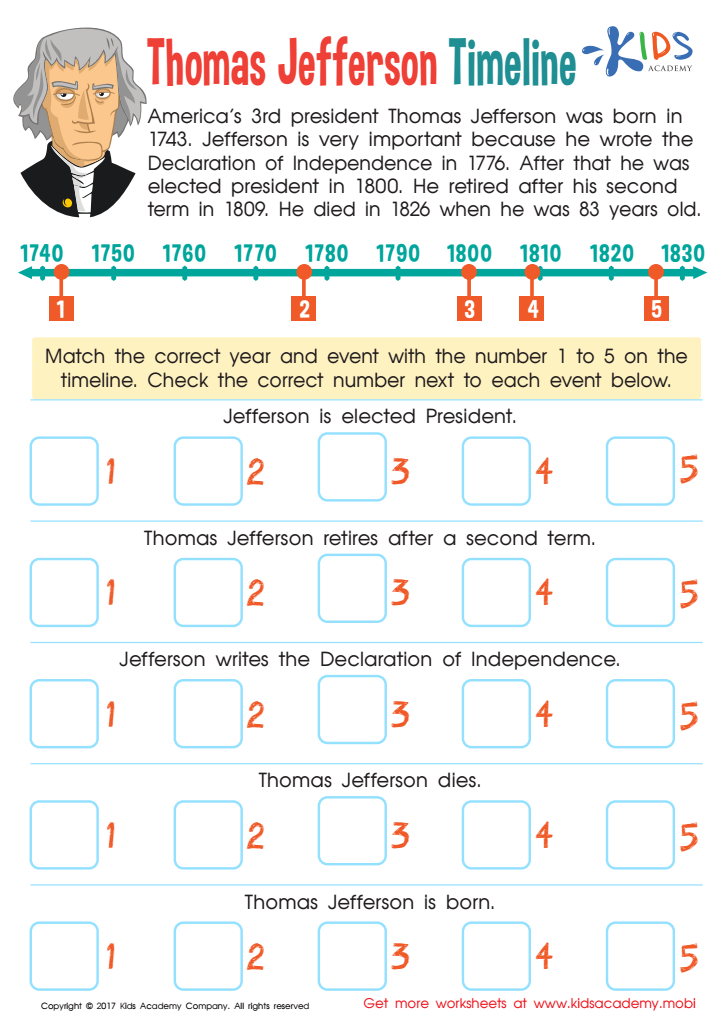
Thomas Jefferson Timeline Worksheet
 Assign to My Students
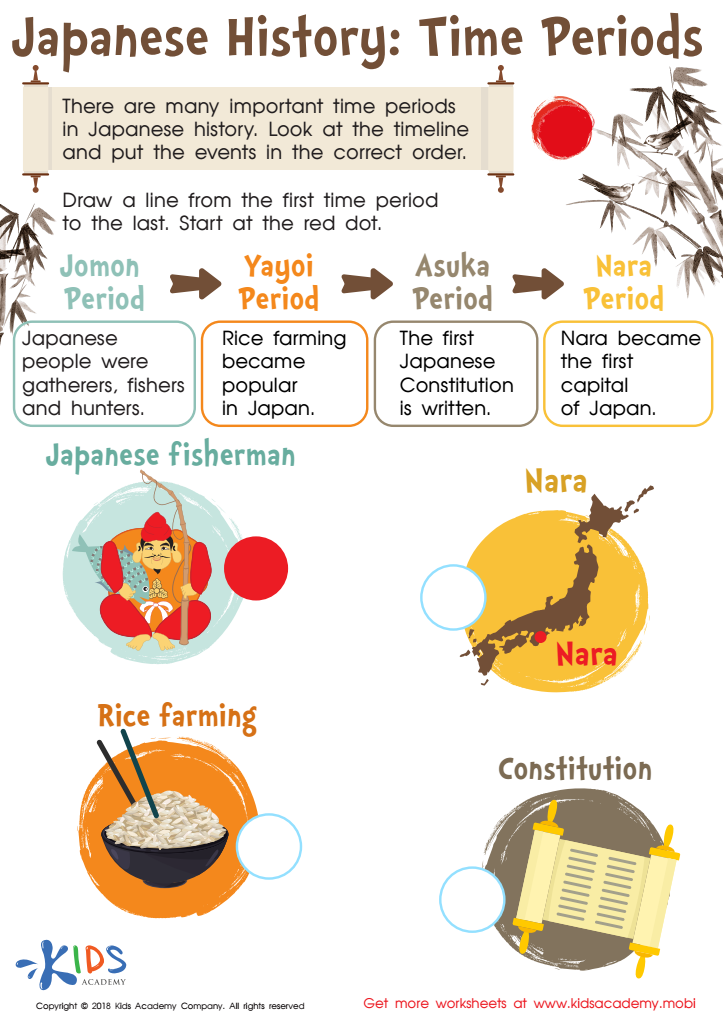
Japanese History: Time Periods Worksheet
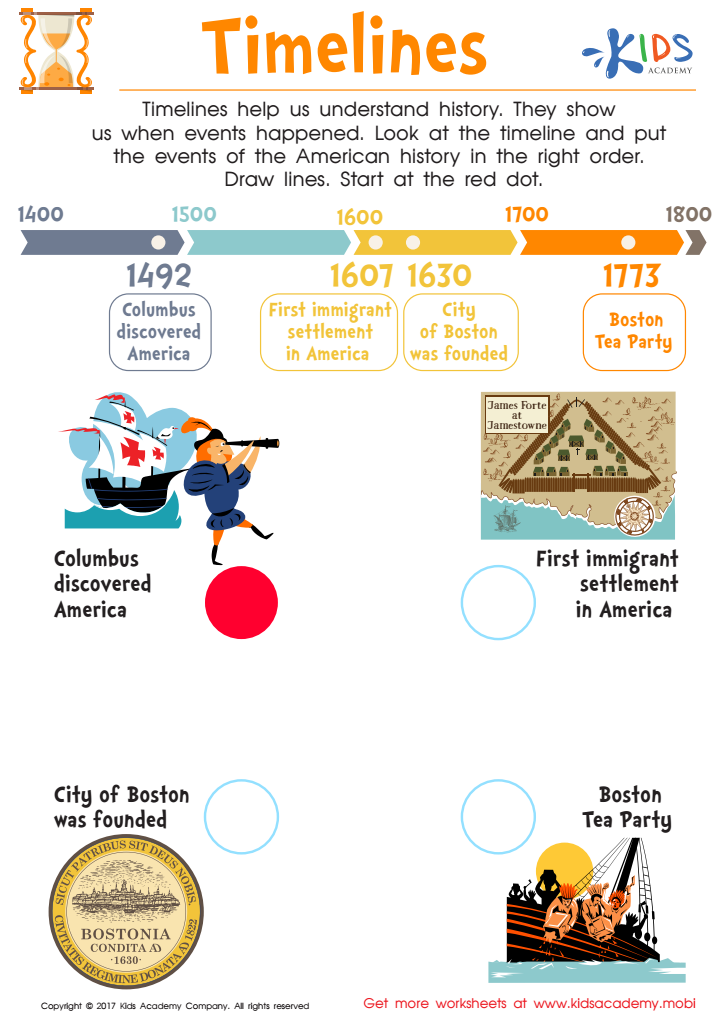
American History Timeline Worksheet
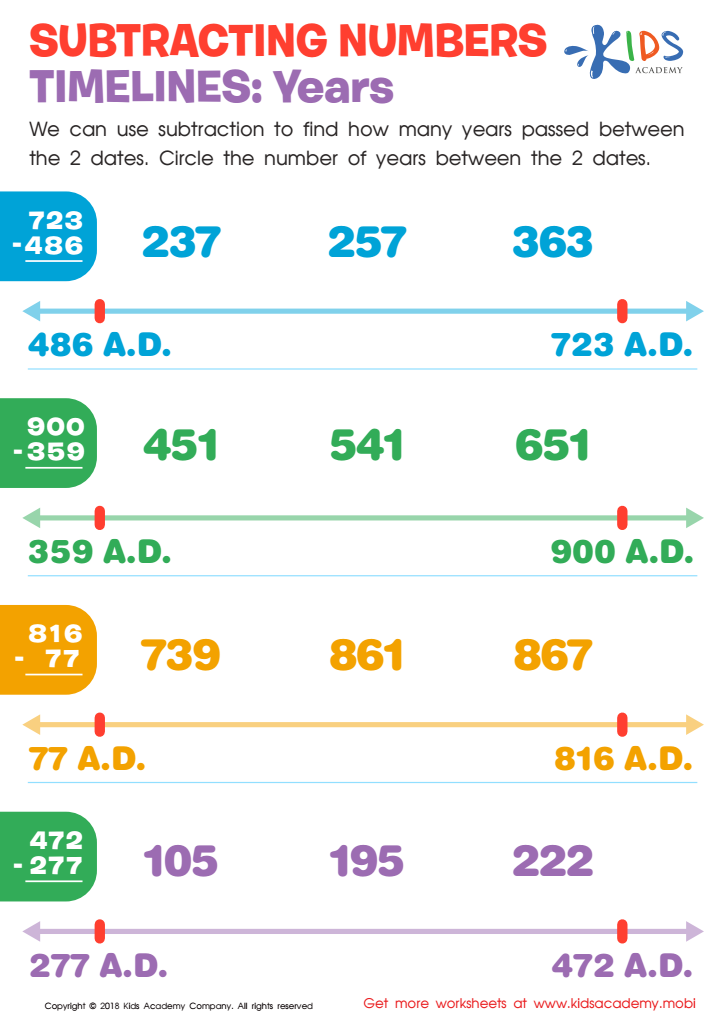
Subtracting Numbers Timelines: Years Worksheet
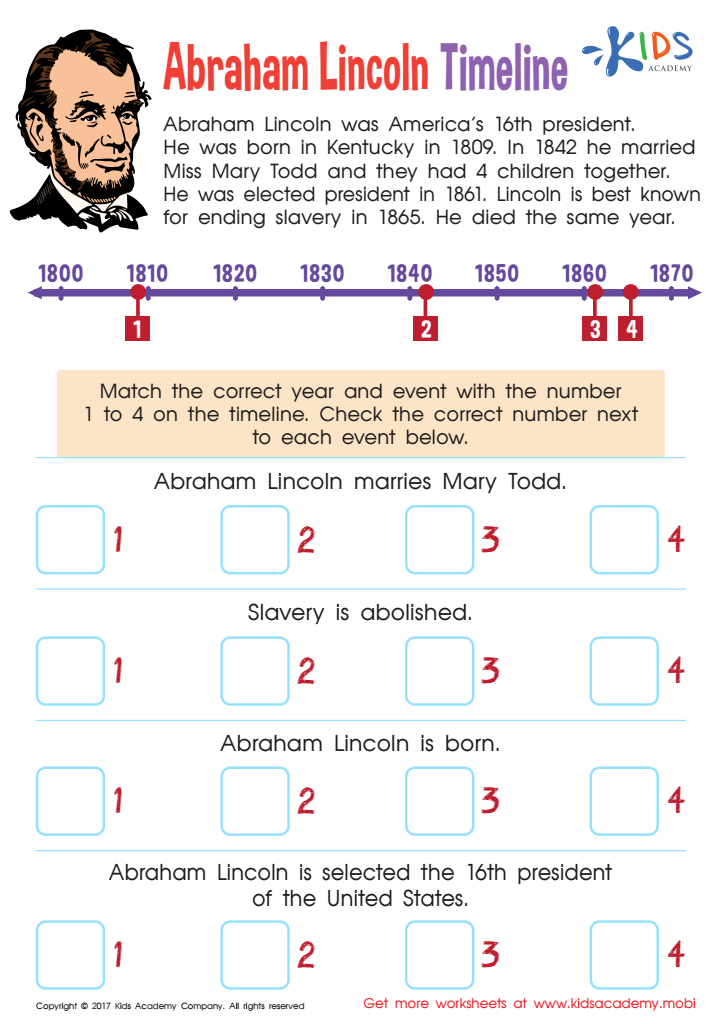
Abraham Lincoln Timeline Worksheet
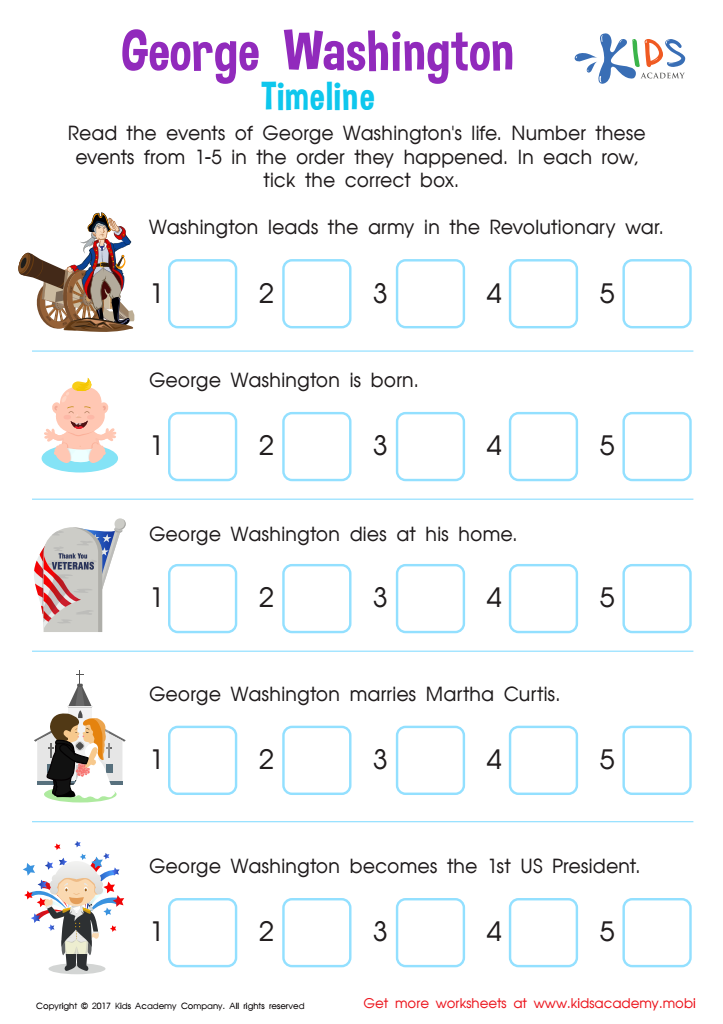
George Washington Timeline Worksheet




Understanding timelines for children ages 3 to 9 is crucial for both parents and teachers as it profoundly impacts a child's development and future success. During these formative years, children's brains are incredibly receptive and undergo rapid growth. Knowledge of key developmental milestones allows caregivers and educators to identify any delays or issues promptly, thus enabling early interventions that can significantly improve outcomes.
Parents who are aware of expected developments in language, motor skills, emotional regulation, and social interactions can provide enriched environments that foster growth. Activities such as reading together, engaging in imaginative play, and facilitating social opportunities are easier to plan when parents understand what is age-appropriate.
Teachers, on the other hand, use these timelines to tailor their instruction methods to meet children’s cognitive and emotional needs. Recognizing that a 4-year-old might struggle with tasks that a 6-year-old can easily complete helps educators design manageable yet challenging activities. This individualized approach promotes a positive learning experience, fostering a lifelong love for learning.
In both home and school settings, alignment with developmental timelines ensures that children receive the optimal support they need to thrive, ensuring a solid foundation for their overall well-being and academic success in later years.








