Addition skills Adding in the Forest Worksheets for Ages 3-9
14 filtered results
-
From - To
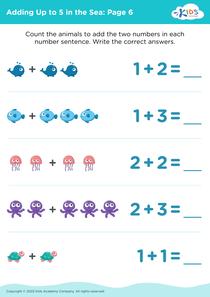
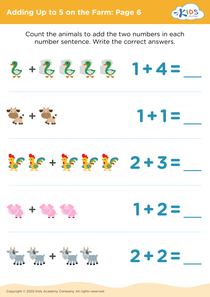
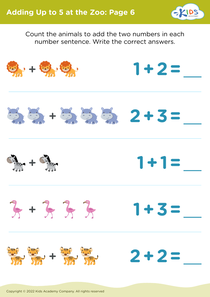
Discover the enchanting world of math with our "Addition skills Adding in the Forest Worksheets for Ages 3-9". These interactive worksheets are designed to make learning addition a fun and engaging adventure for young learners. Each worksheet features charming forest-themed illustrations and activities that help children practice and master their addition skills. Perfect for kids aged 3-9, these educational resources support skill development and build a strong foundation for future math success. Boost your child's confidence and joy in learning with our delightful and effective forest-themed addition worksheets. Download now and bring the forest fun to math time!
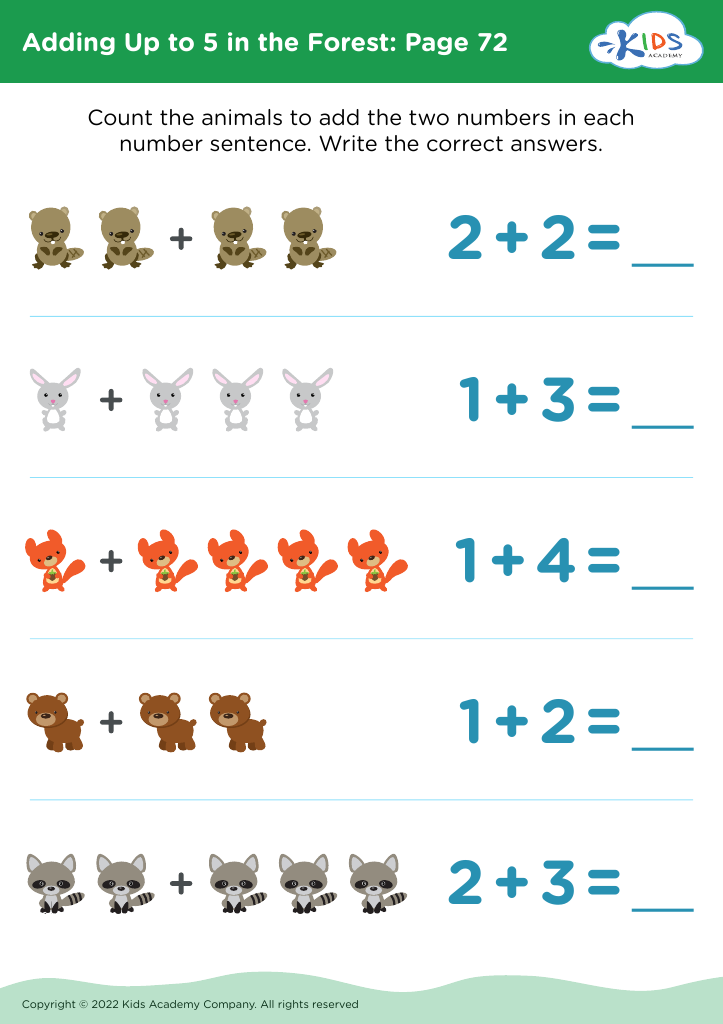
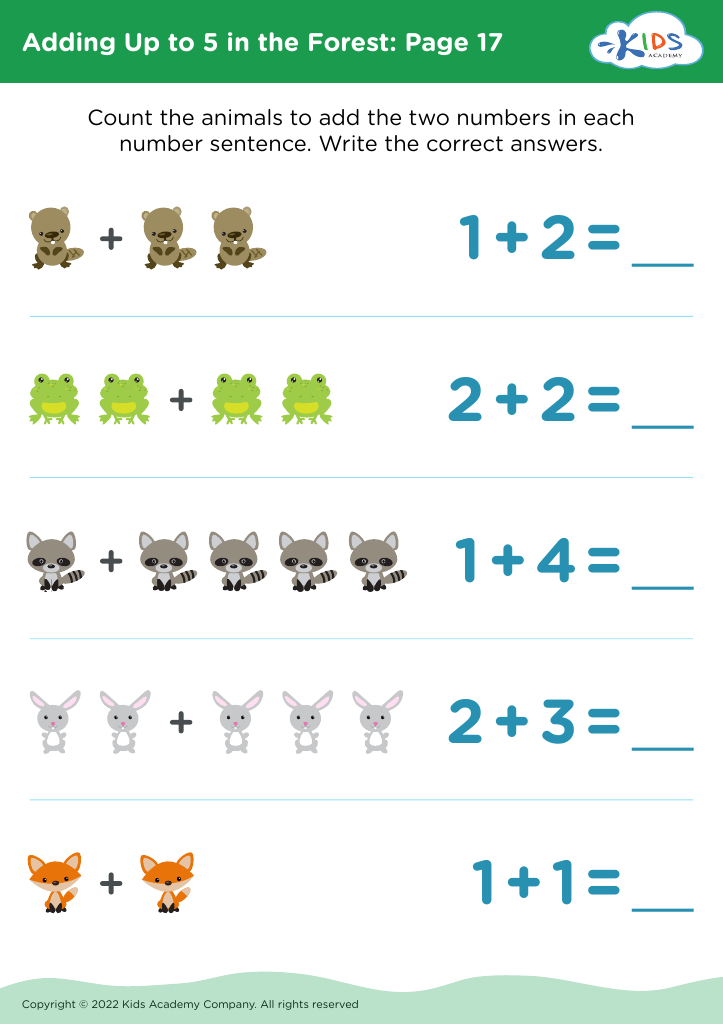
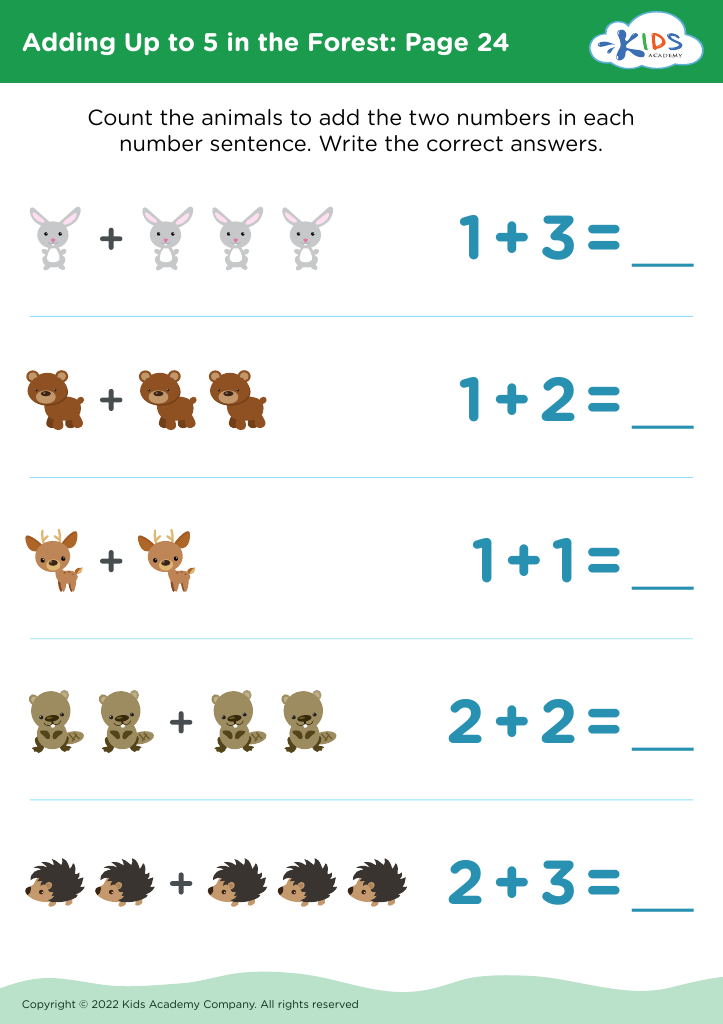
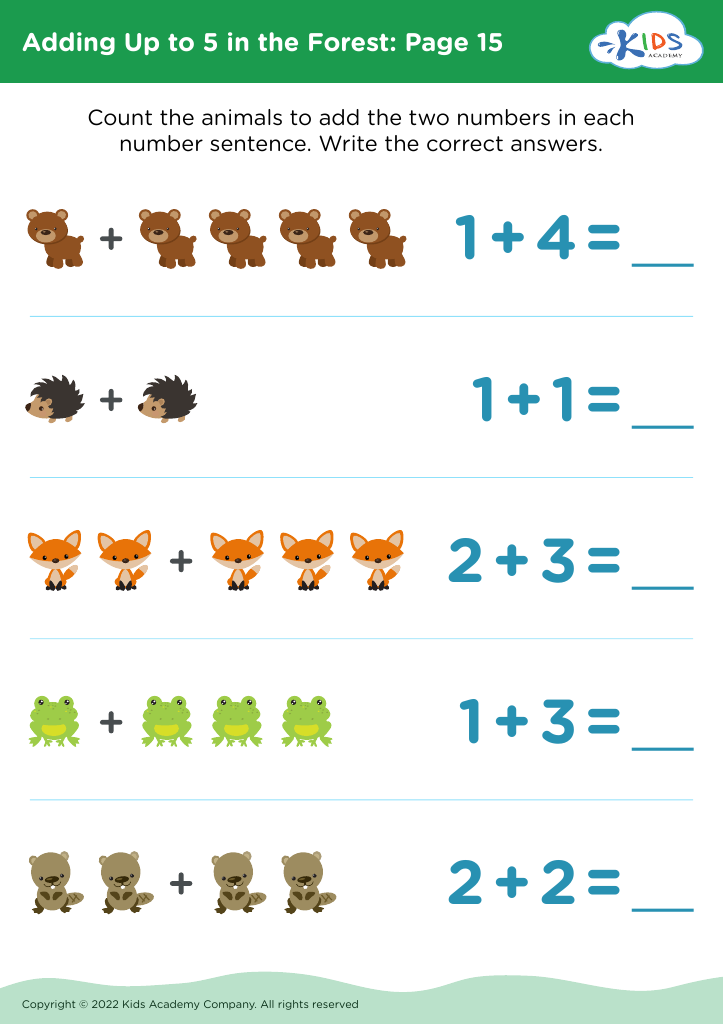
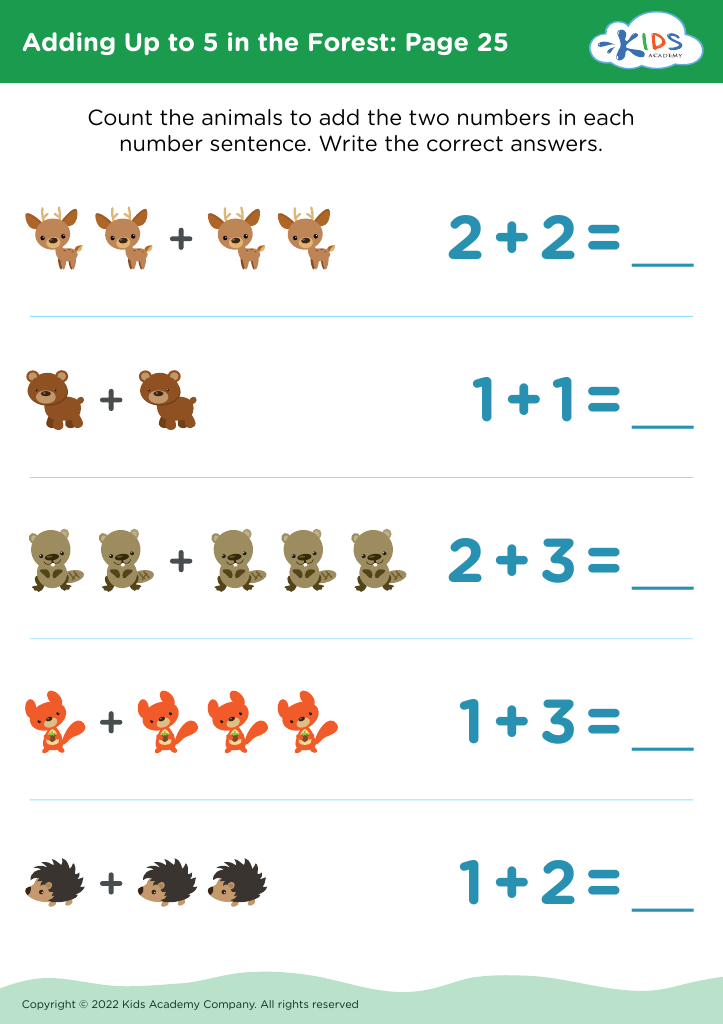
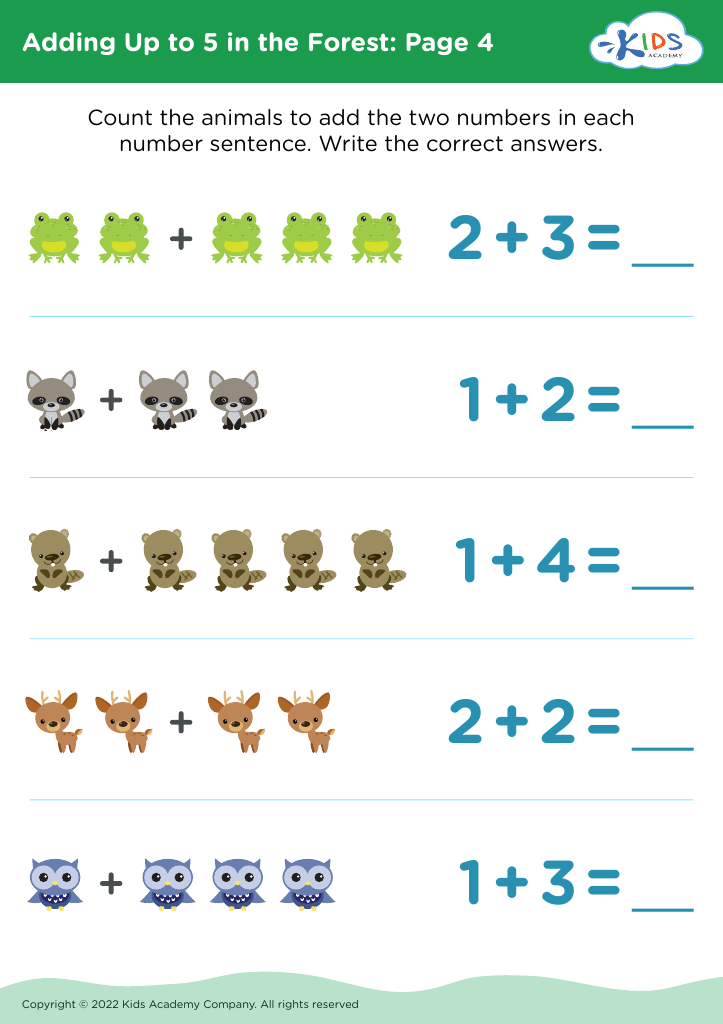
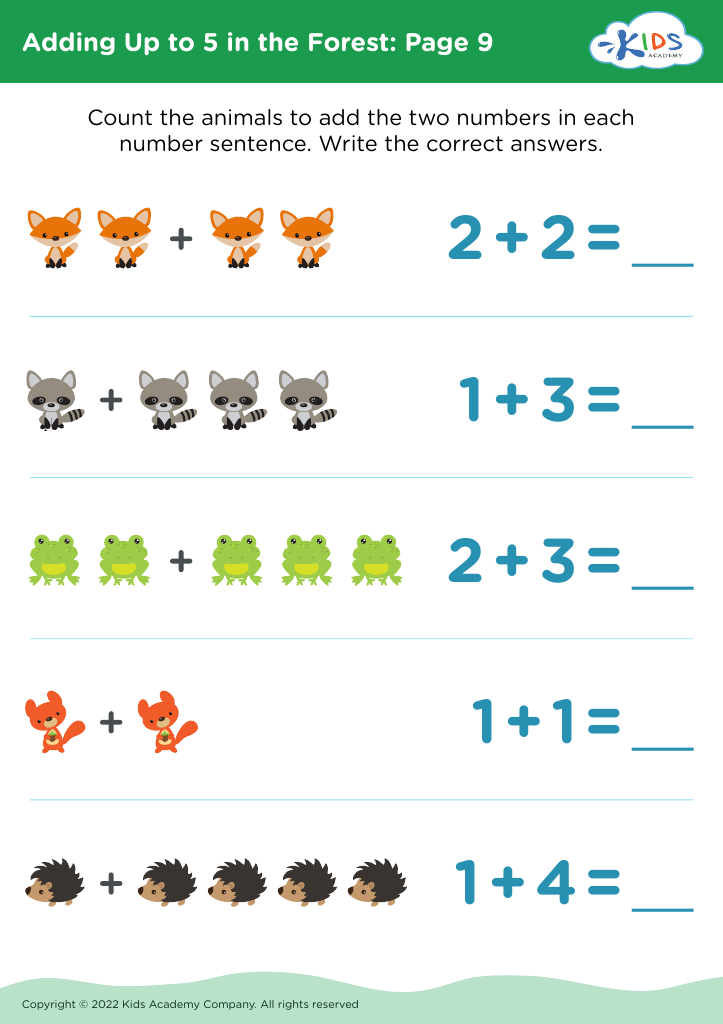
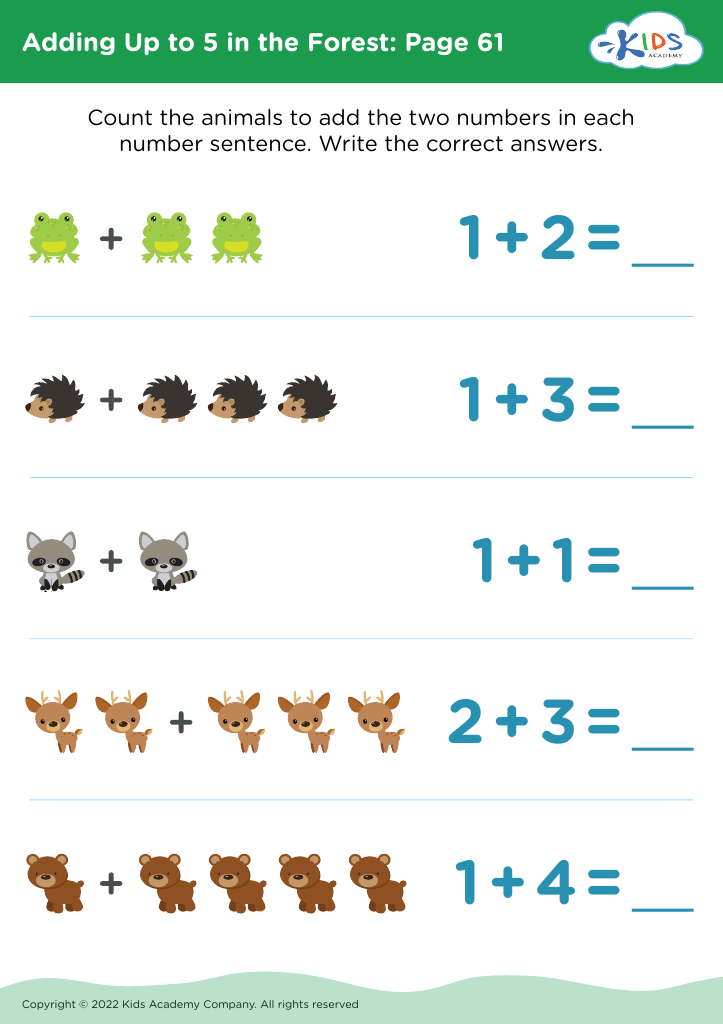
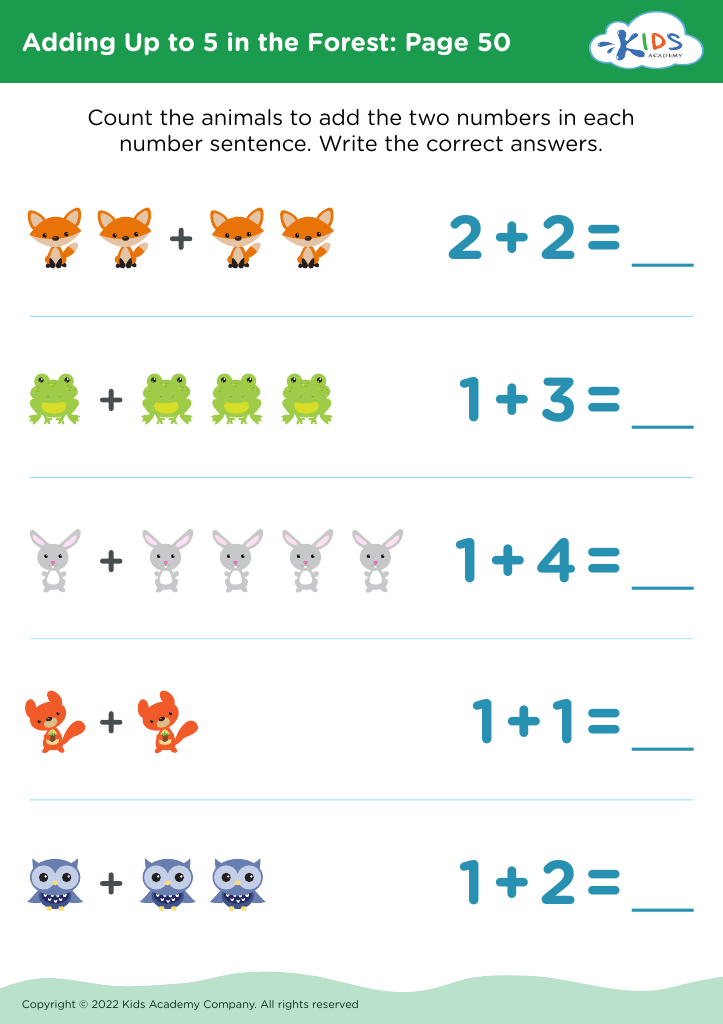
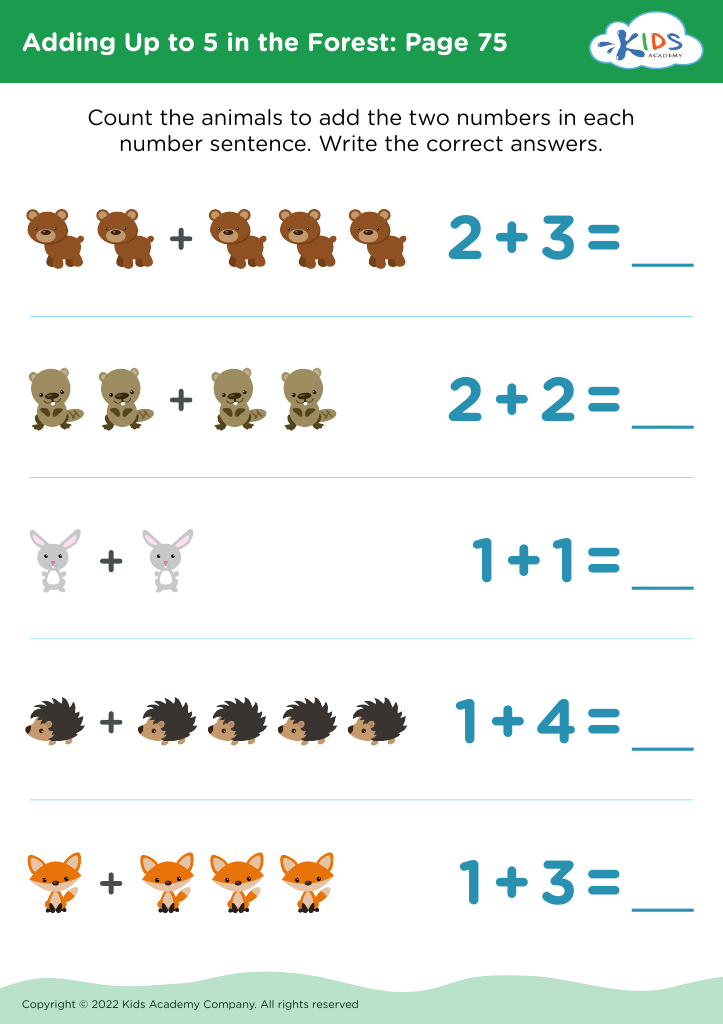
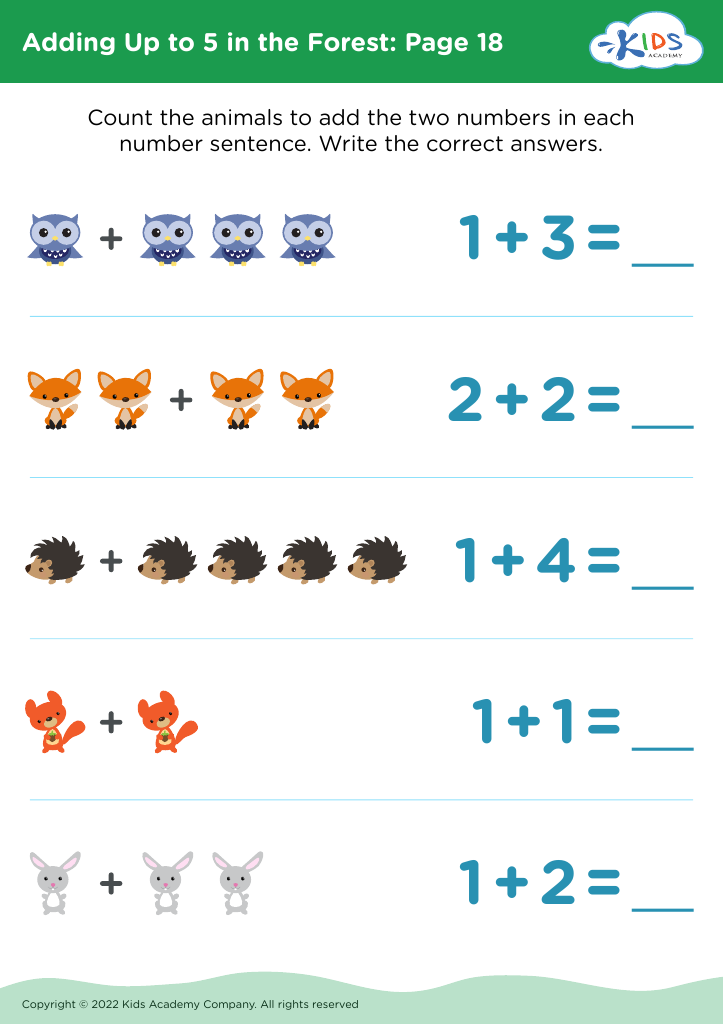
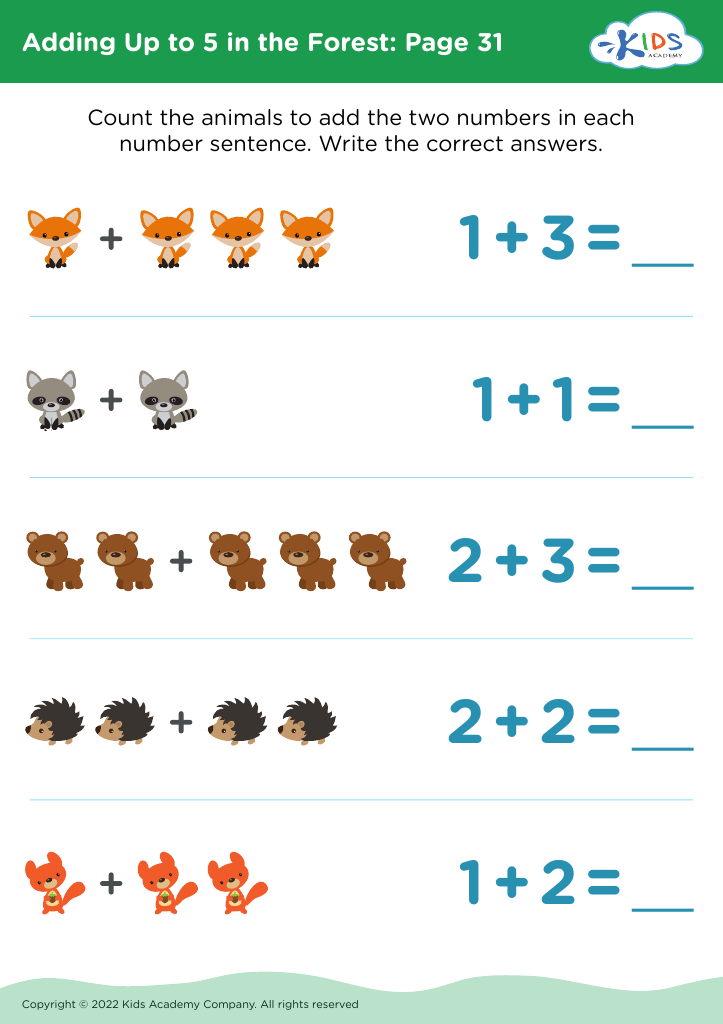
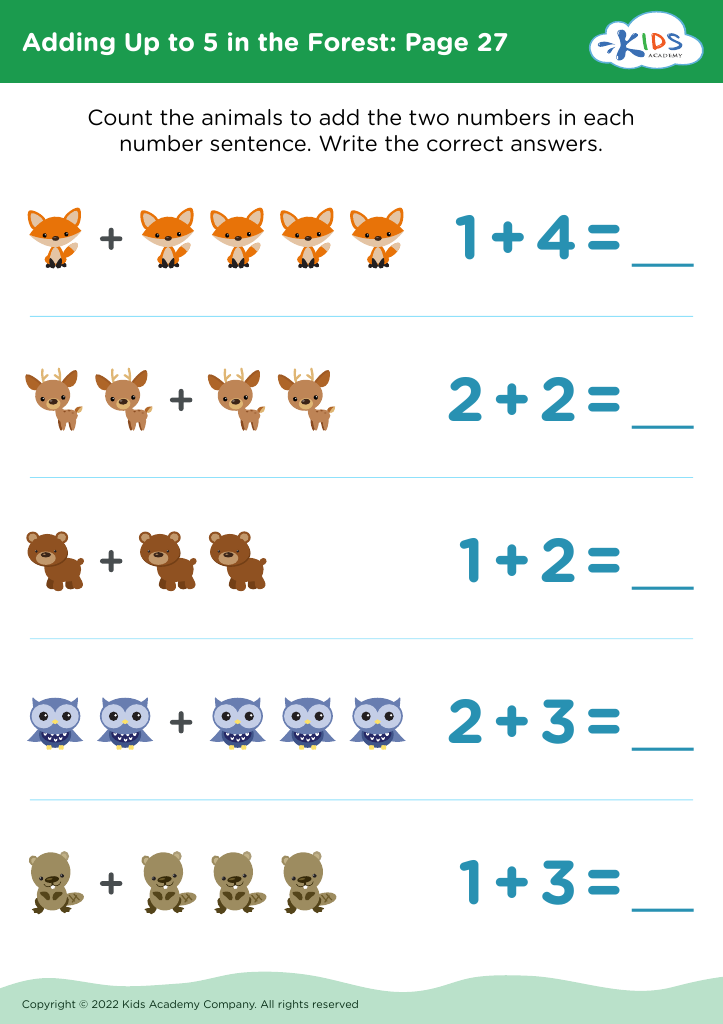
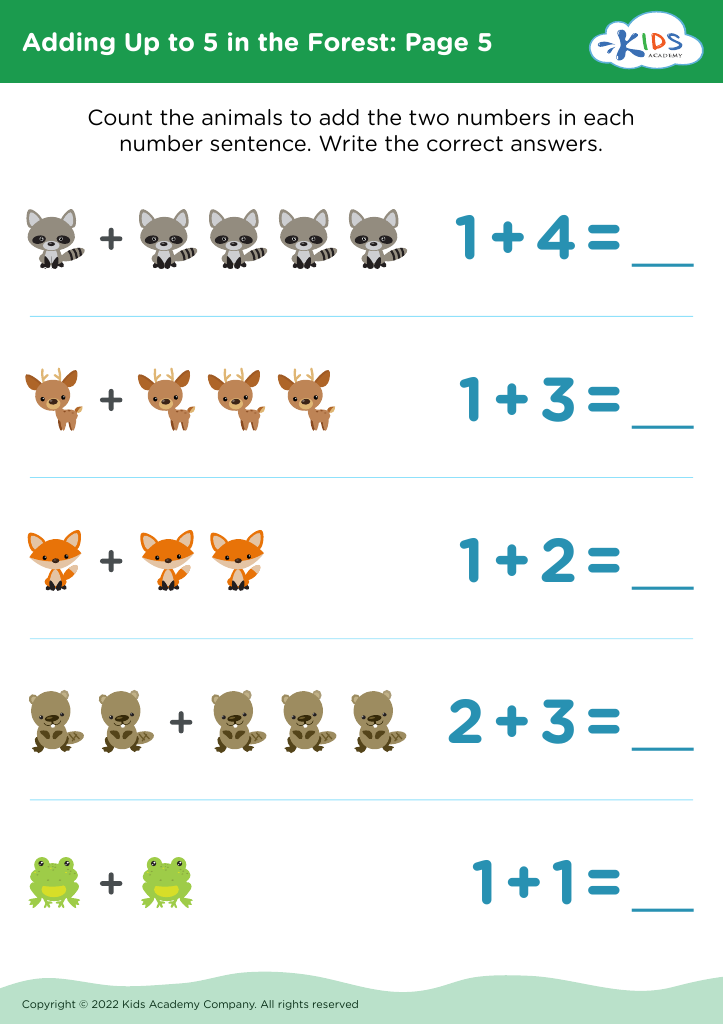



Developing addition skills through activities like "Adding in the Forest" is crucial for young children aged 3-9 as it sets the foundation for their numerical and cognitive development. These early math skills are not just about learning to count or add; they represent a child's ability to recognize patterns, follow sequences, and understand the concept of quantity.
Addition activities embedded in engaging contexts, such as a forest-themed game, make learning enjoyable and relatable. When children add groups of forest animals or collect berries, they are more likely to engage actively, fostering a positive attitude towards math. This enjoyment helps in cultivating an intrinsic motivation for learning, which is crucial for academic success.
Moreover, math skills are essential for a child's everyday life. Proficiency in addition lays the groundwork for future math concepts, including subtraction, multiplication, and division. It also enhances problem-solving abilities and critical thinking, skills that are valuable beyond the classroom.
Parents and teachers should care about these addition skills because they are foundational. A strong start in math can lead to improved self-confidence, better performance in school, and a greater likelihood of pursuing STEM-related subjects and careers. By using fun and thematic approaches, like "Adding in the Forest," we help children build the necessary skills in a warm, supportive, and effective way.