Animal recognition Adding in the Forest Worksheets for Ages 3-9
15 filtered results
-
From - To
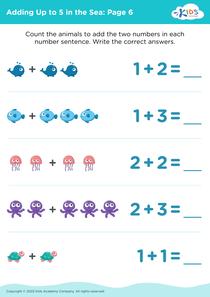
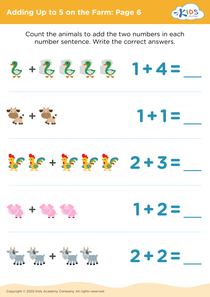
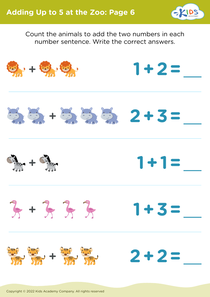
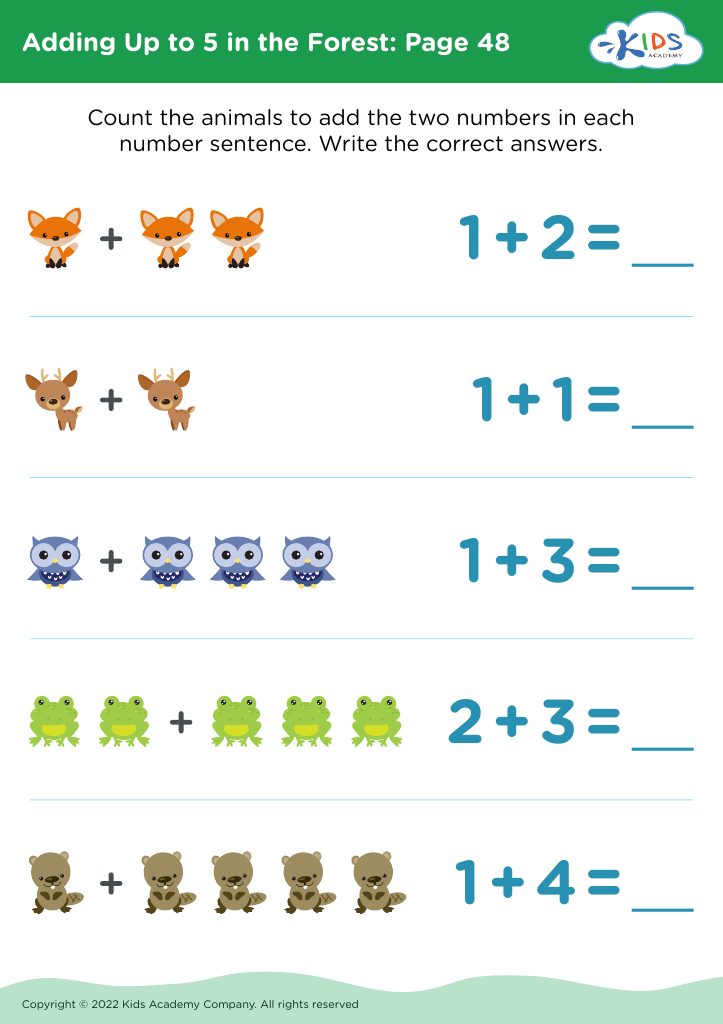
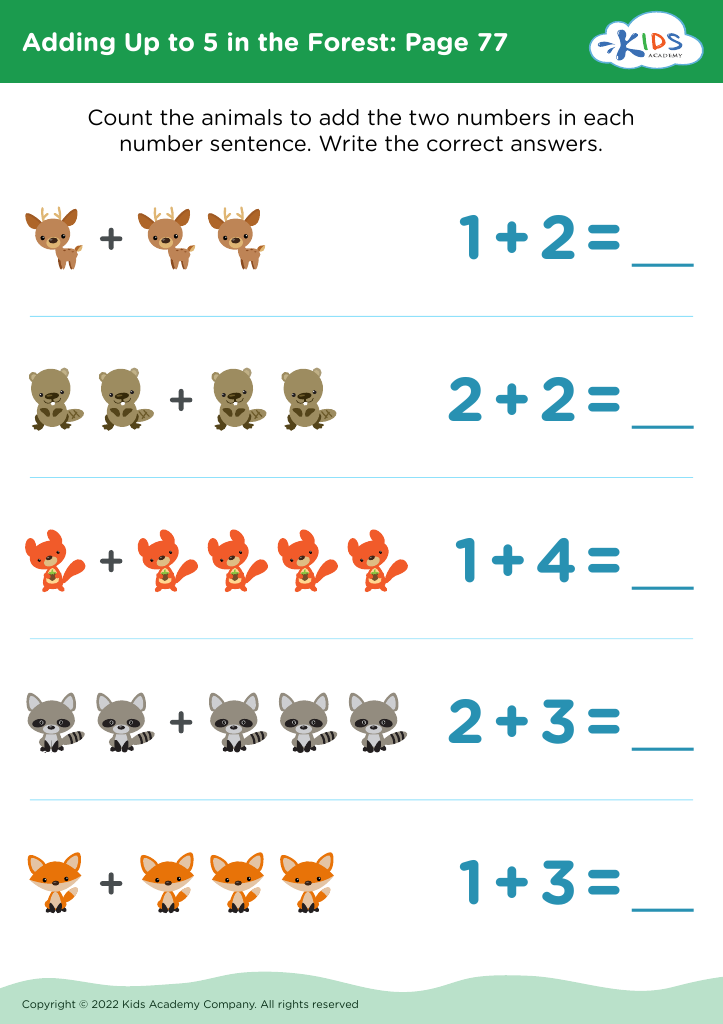
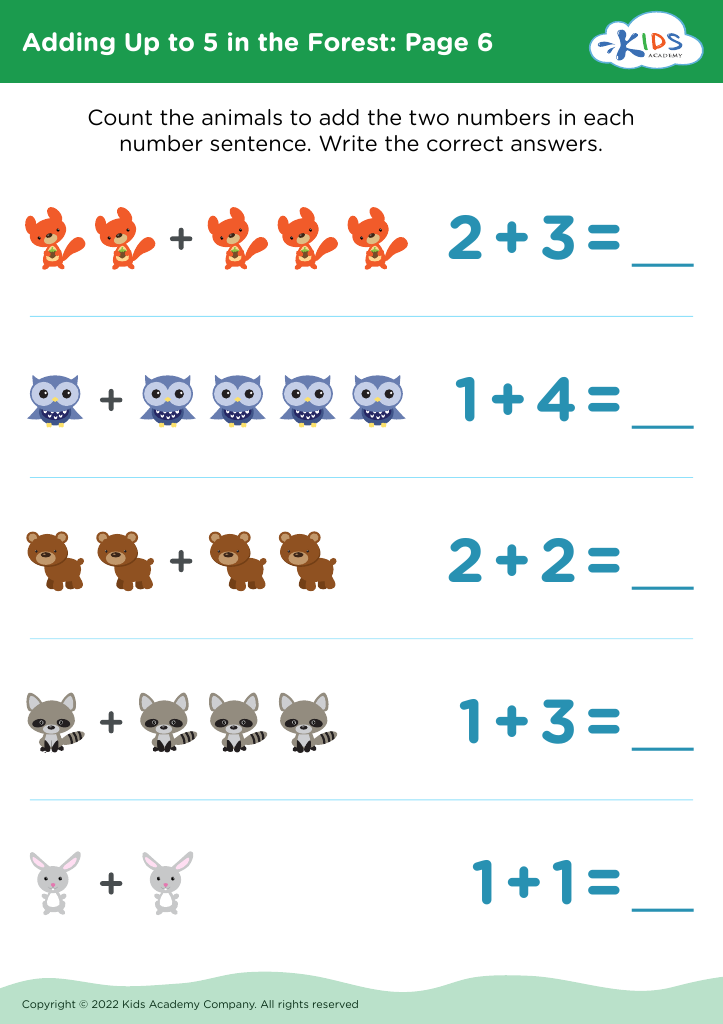
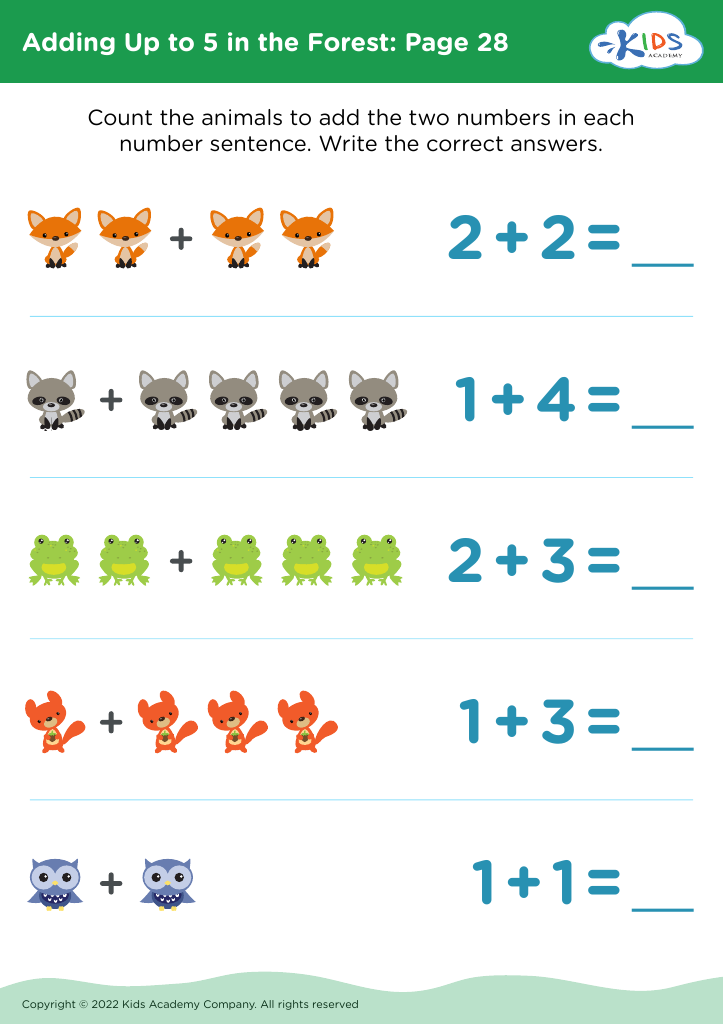
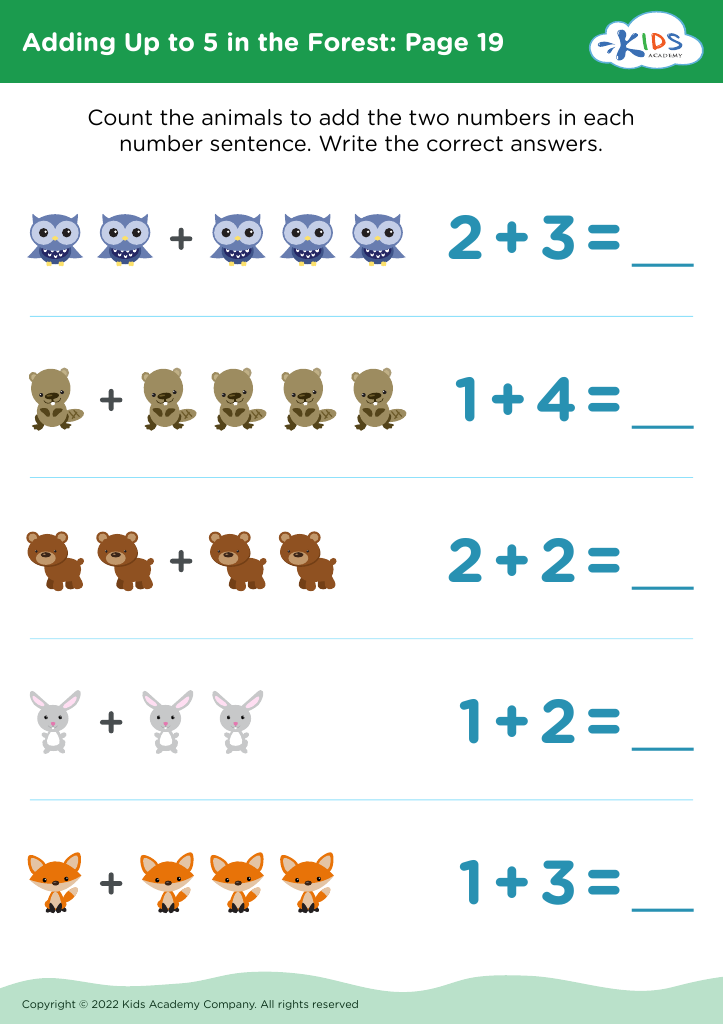
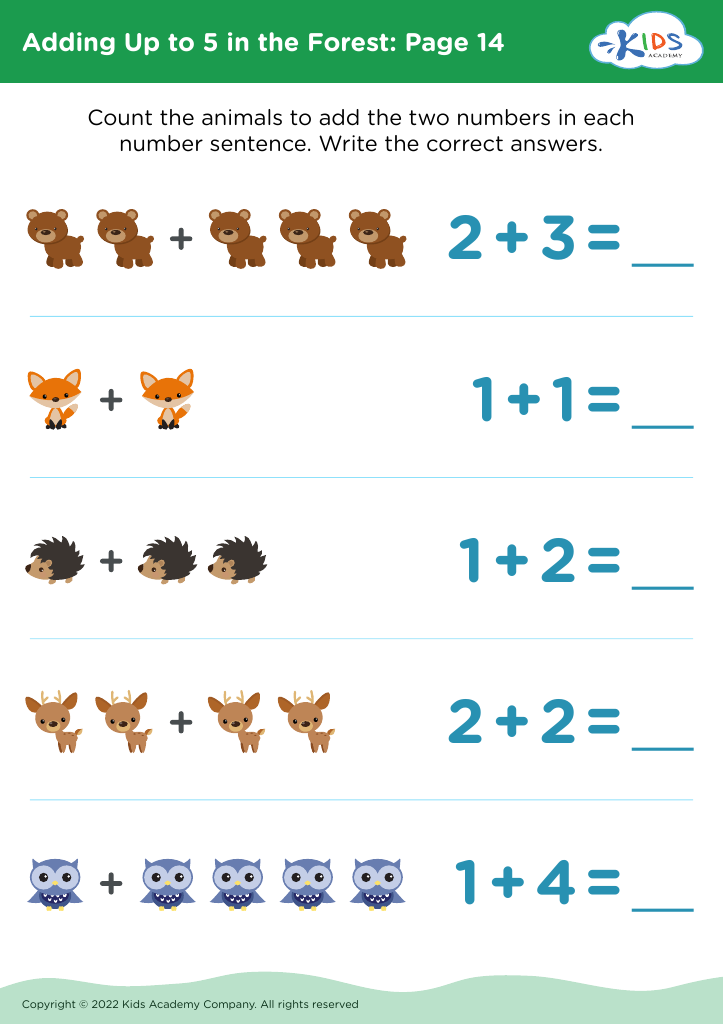
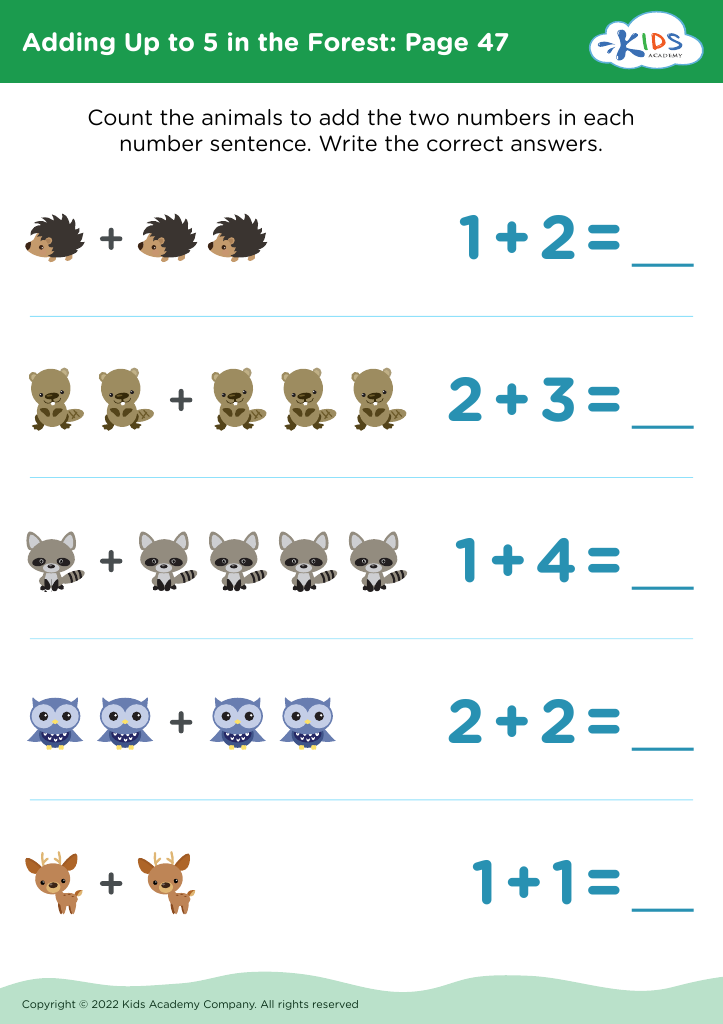
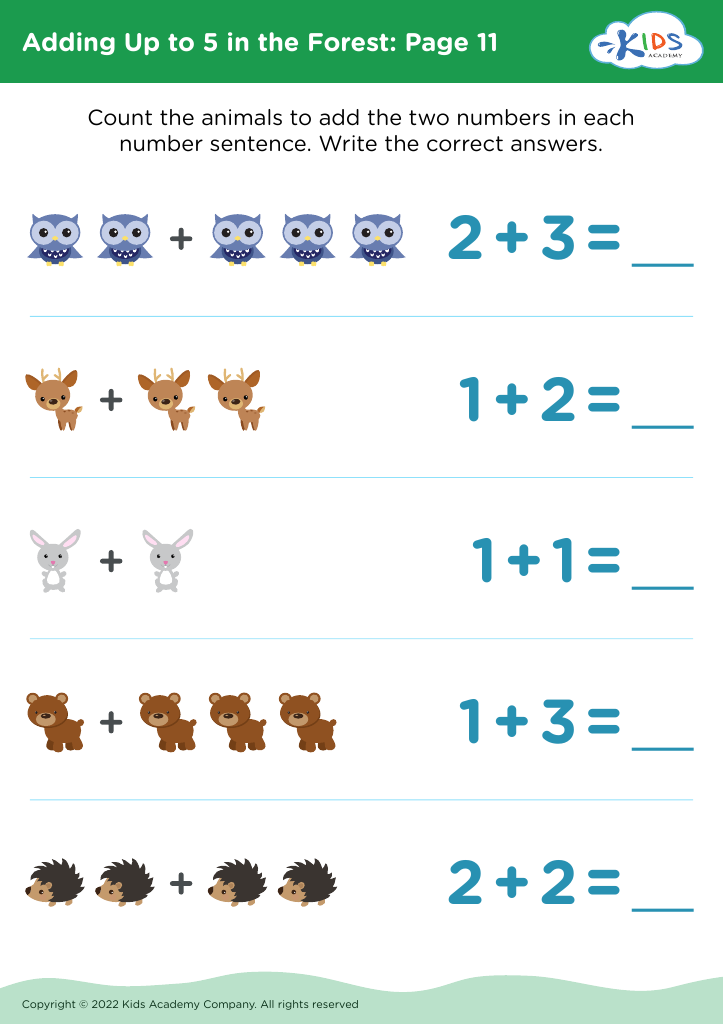
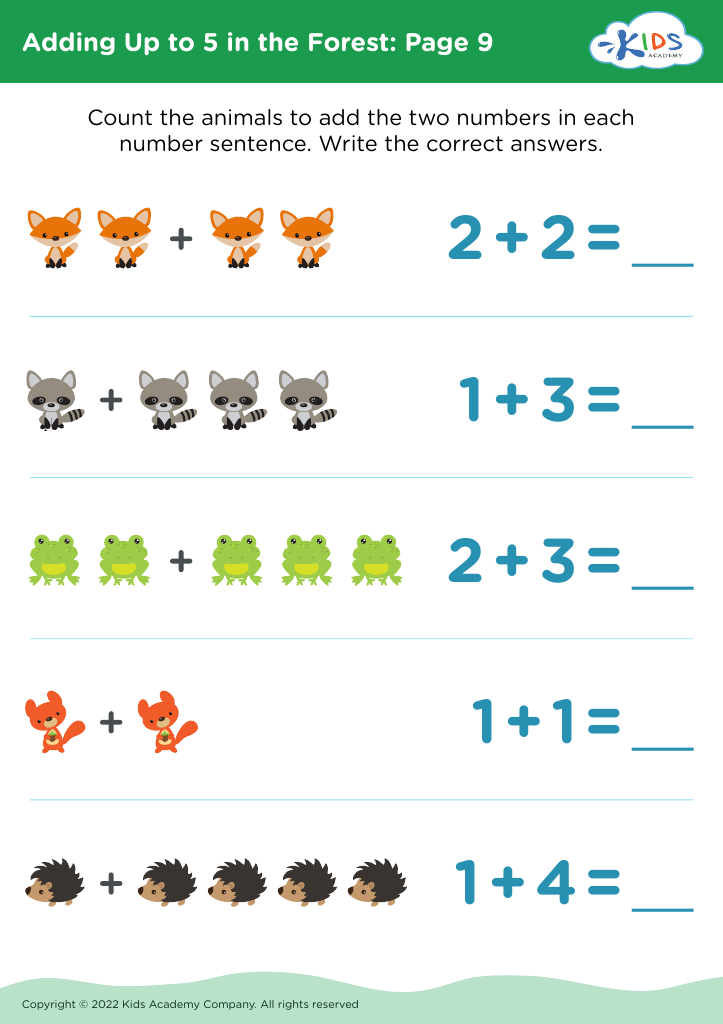
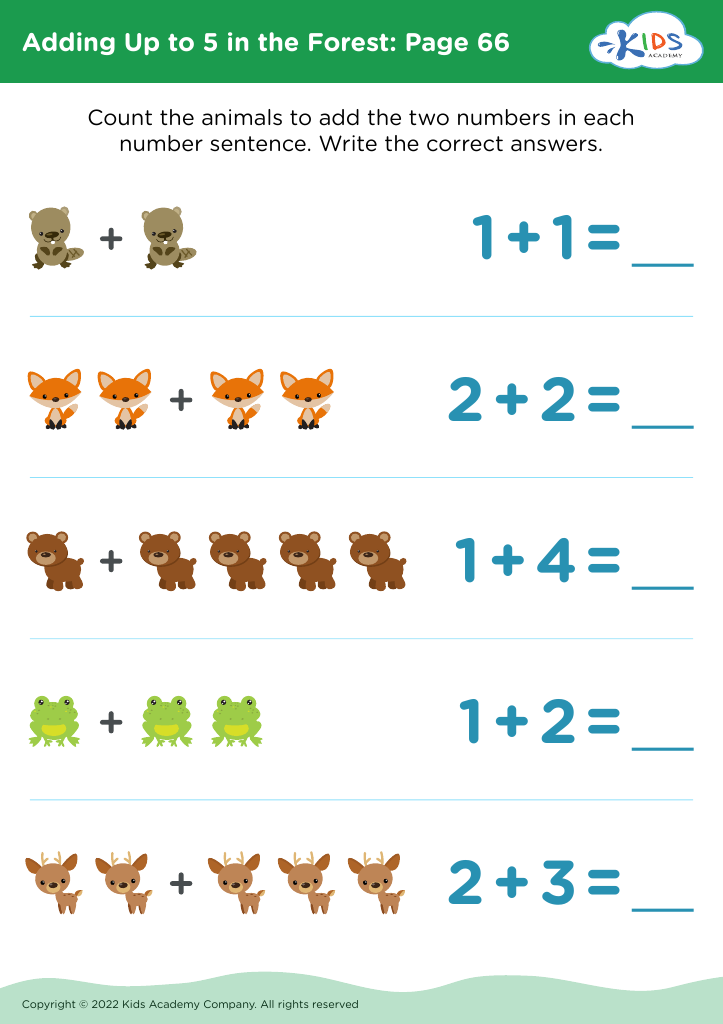
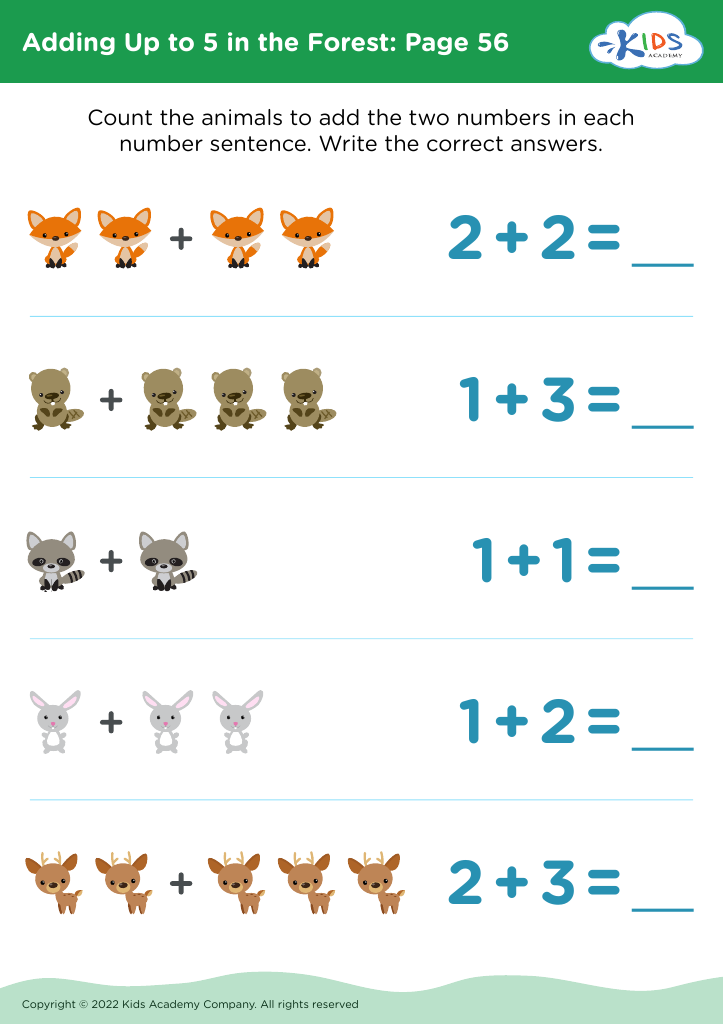
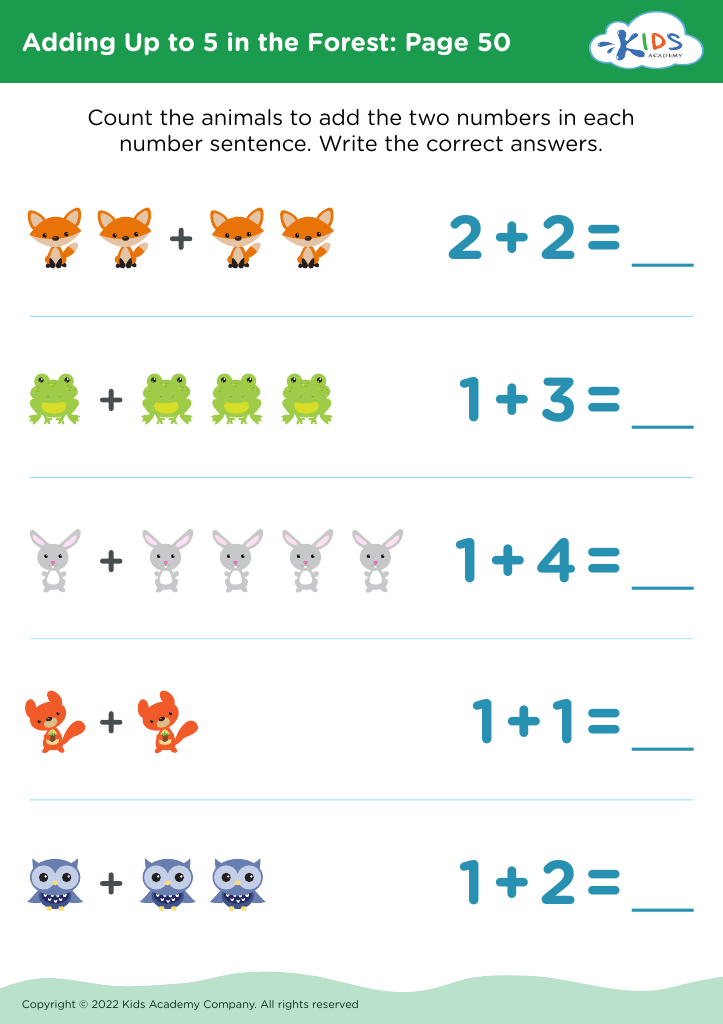
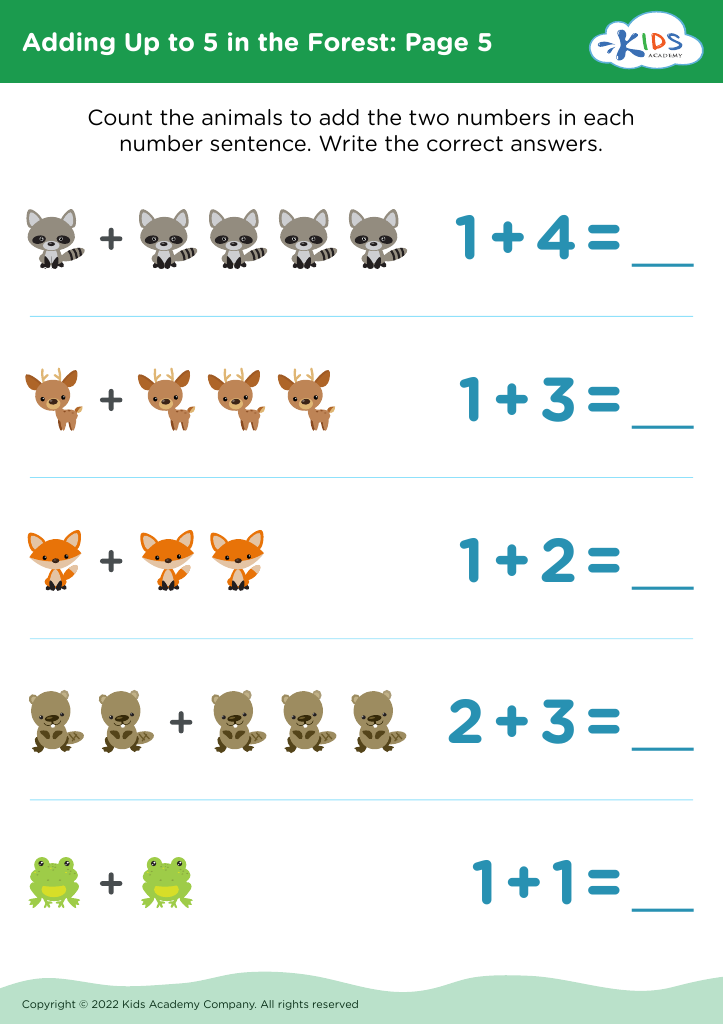
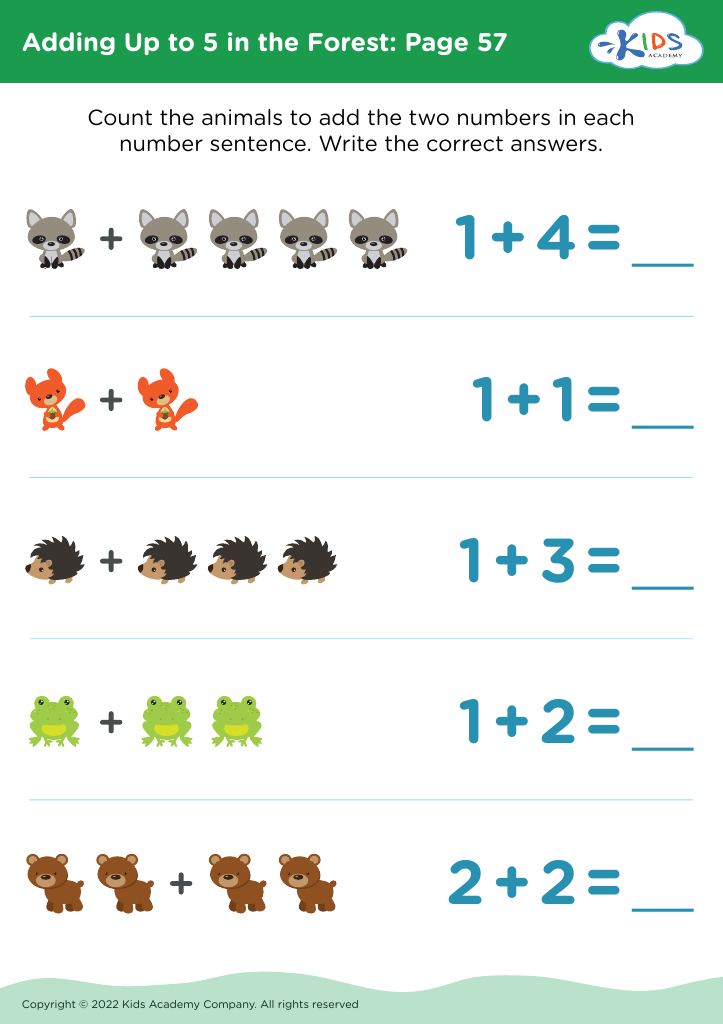
Discover the joy of learning with our "Animal Recognition Adding in the Forest Worksheets" designed for children ages 3-9. These engaging, interactive worksheets combine math practice with fun animal themes, helping young learners develop essential addition skills while recognizing various woodland creatures. Each activity fosters creativity and cognitive growth, encouraging kids to explore numbers in an exciting, nature-inspired context. Perfect for home or classroom use, our worksheets are aligned with early educational standards, ensuring a holistic approach to learning. Watch your child flourish in both math and wildlife knowledge with these delightful resources tailored for young minds.
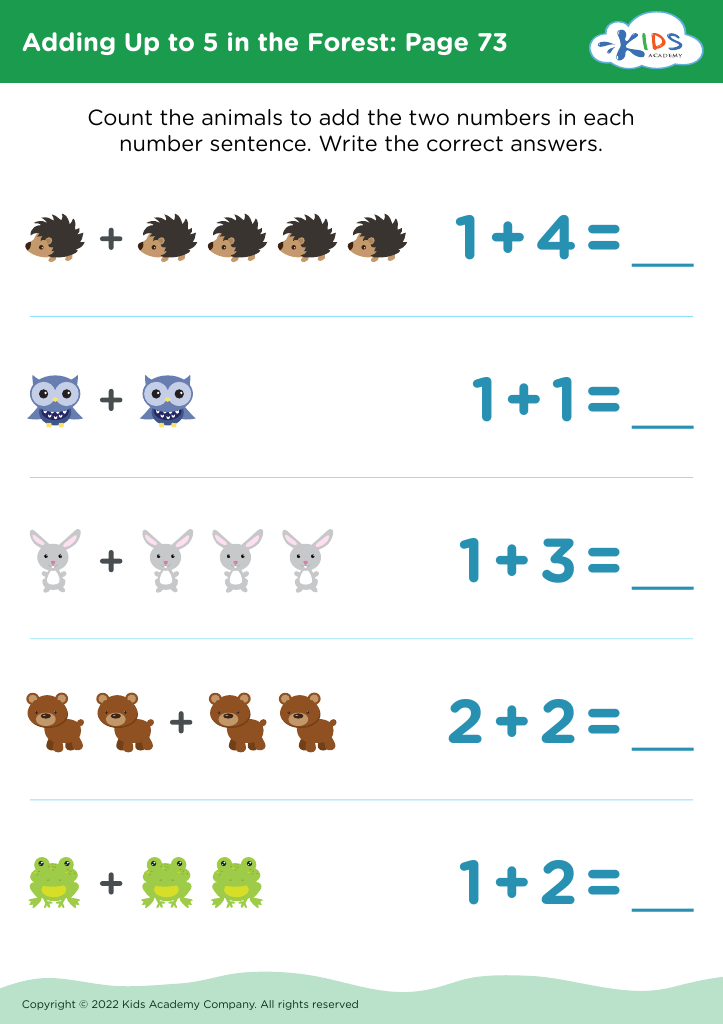



Animal recognition, particularly in a forest setting, is vital for young children aged 3-9 for several reasons. First and foremost, it fosters a sense of wonder and curiosity about nature, instilling an early appreciation for living things. Through recognizing animals, children develop observational skills, enhancing their ability to notice details in their surroundings. This improves their cognitive development and critical thinking.
Learning about animal habitats and behaviors also promotes empathy and respect for wildlife. Children learn the importance of biodiversity and the roles different creatures play in the ecosystem, which cultivates future stewards of the environment. Furthermore, engaging with nature through guided activities can improve children's physical health, providing opportunities for outdoor play and exercise.
Teachers and parents can integrate animal recognition into fun, hands-on projects—such as identifying animal tracks, creating artwork inspired by forest creatures, or participating in nature scavenger hunts. This not only enriches educational experiences but also builds teamwork and communication skills. Involving children in the exploration of forest animals creates lasting memories and deeper connections to the natural world, leading to informed and environmentally conscious adults. Prioritizing animal recognition in early childhood education is foundational for developing a love for nature.