Basic Addition Skills Adding in the Forest Worksheets for Ages 3-9 - Page 3
55 filtered results
-
From - To
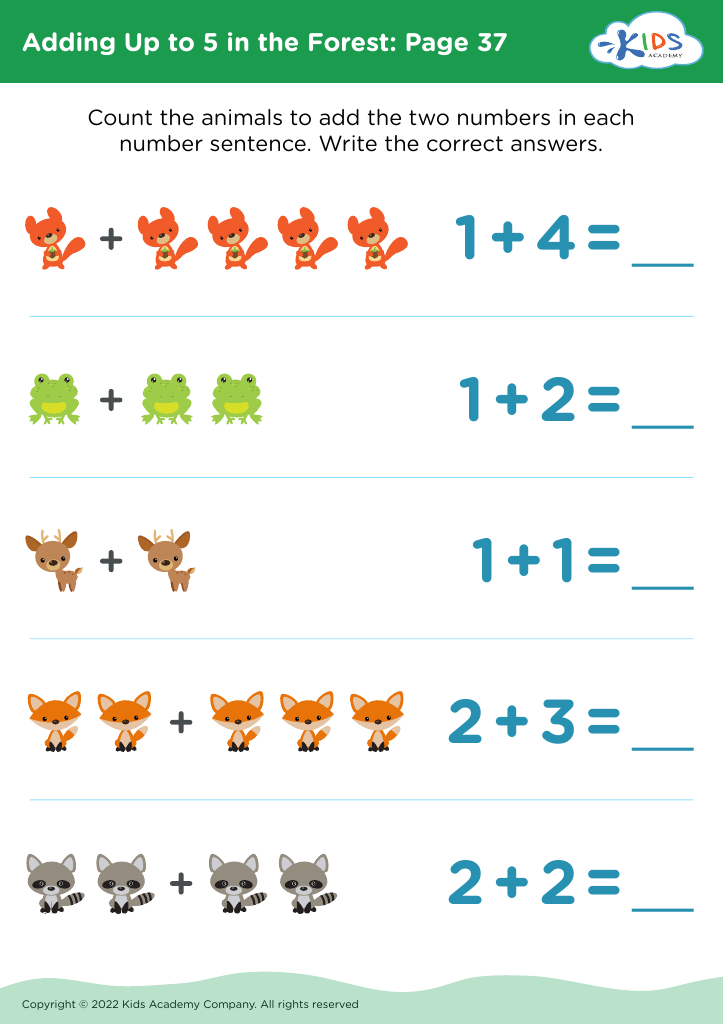
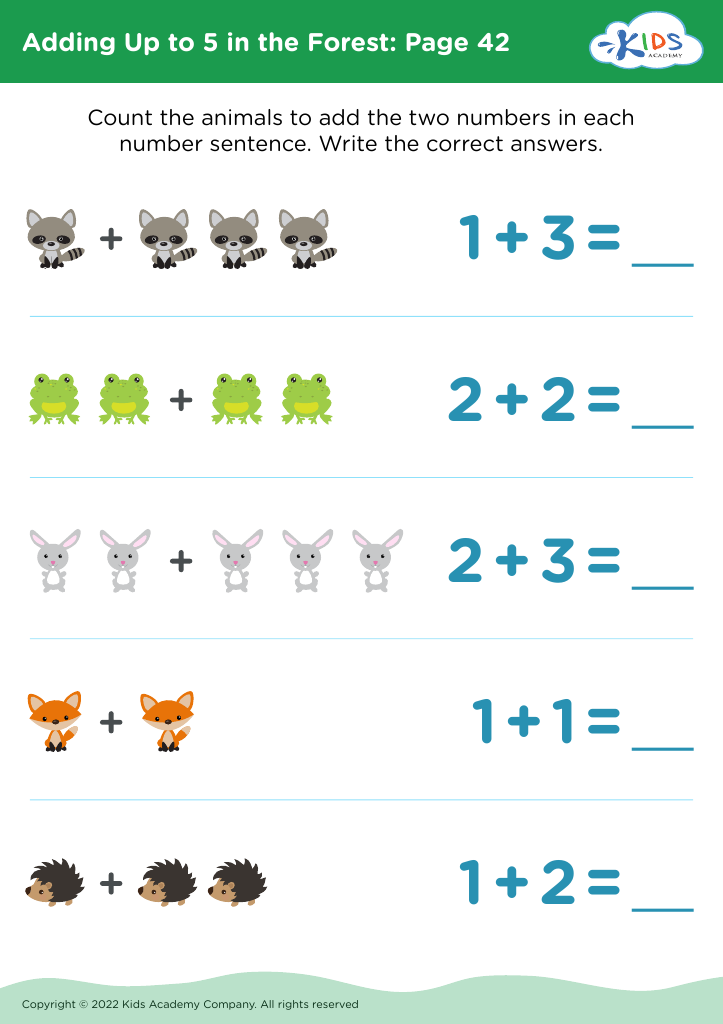
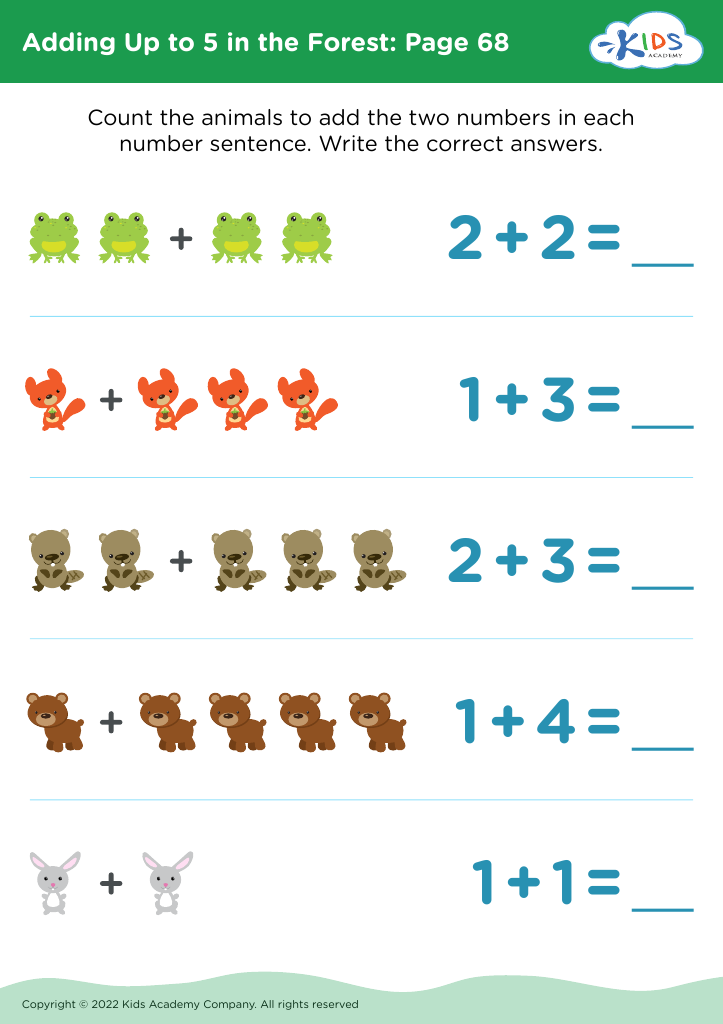
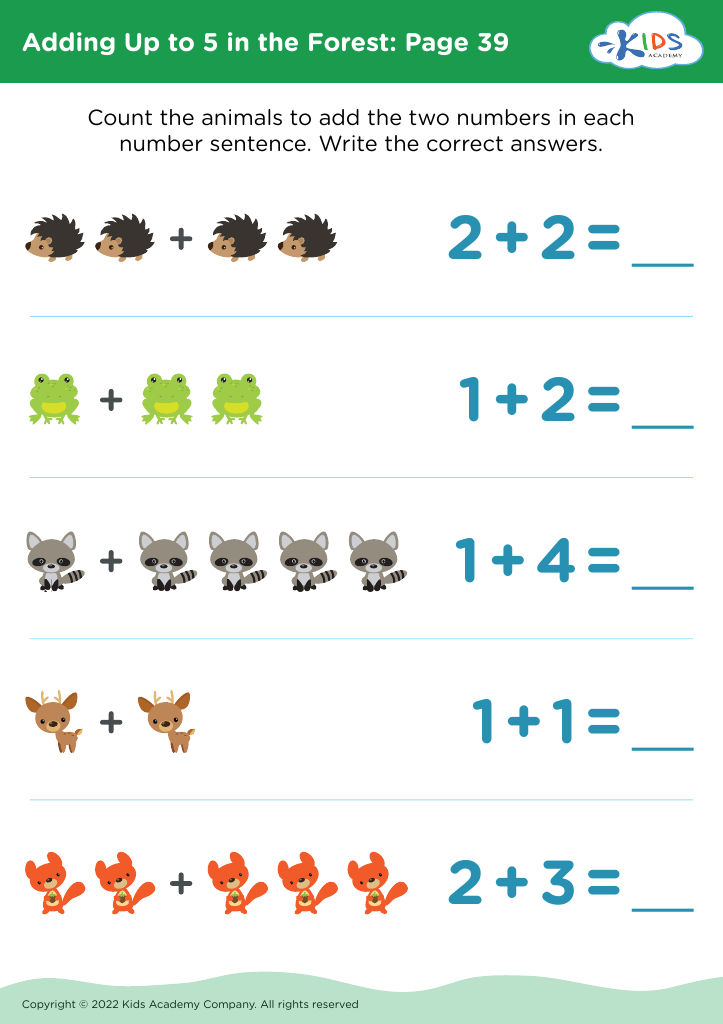
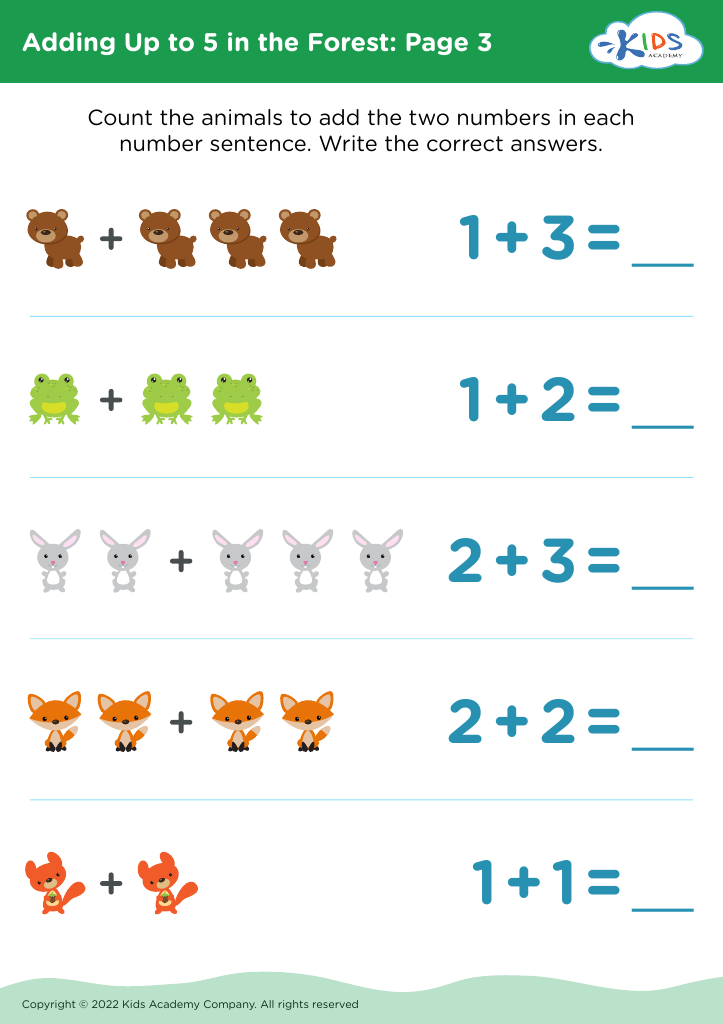
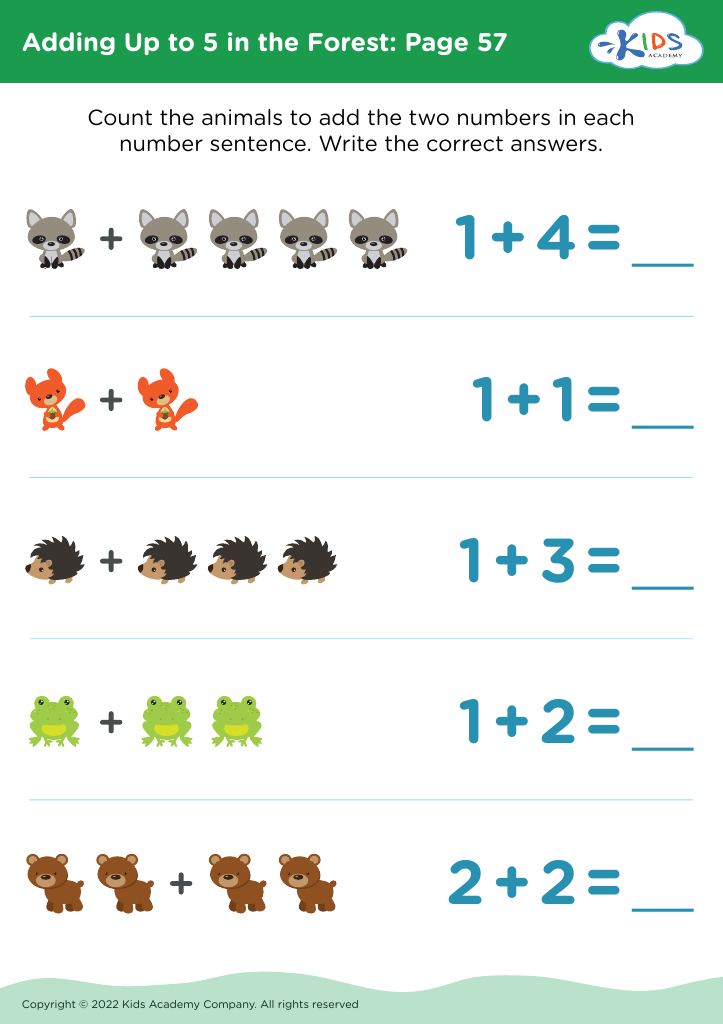
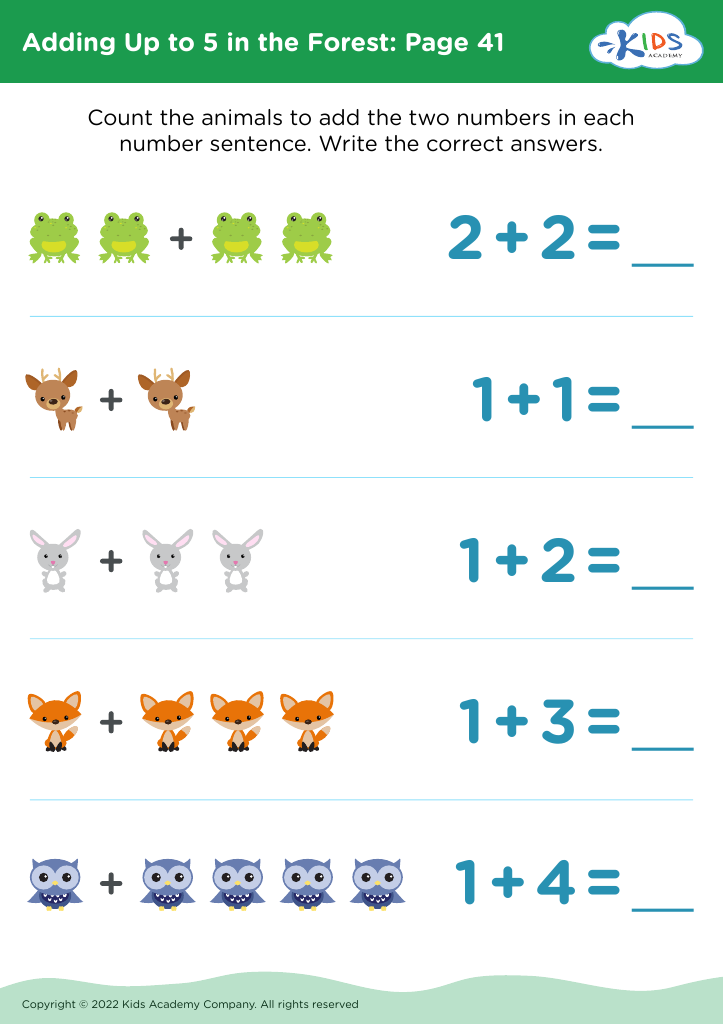




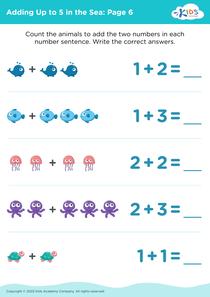
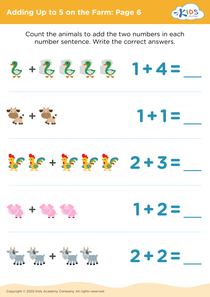
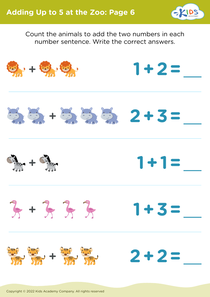
Basic addition skills are fundamental building blocks for a child’s mathematical journey and overall cognitive development. "Adding in the Forest," designed for ages 3-9, not only introduces these essential skills in an engaging and relatable way but also intertwines mathematics with an appreciation for nature.
For parents and teachers, it's crucial to prioritize such resources because children develop foundational math skills at an early age, which impacts their future academic success. By learning to add through stories or thematic environments like a forest, children associate positive feelings with learning. This approach fosters curiosity and encourages a lifelong interest in mathematics.
Furthermore, young children are naturally inclined to explore and question. Utilizing a story set in the forest captivates their imagination while subtly reinforcing addition skills through practical scenarios, such as counting animals or plants. This form of contextual learning improves their ability to grasp and retain information.
Lastly, fostering competency in basic addition at an early stage builds confidence. Children experience a sense of achievement when they correctly solve problems, which can germinate a positive mindset towards learning and problem-solving in general. Support from parents and teachers in nurturing these skills through appealing methods like "Adding in the Forest" thus positions children for long-term educational success.