Filters

43 filtered results

Clear all filters
Favorites
With answer key
Interactive

43 filtered results

Difficulty Level

Grade


Check out this FREE Trial Lesson on Adding in the Forest for age 3-9!

L

Favorites
With answer key
Interactive
  • 3-9
  • Counting practice
  • Adding in the Forest
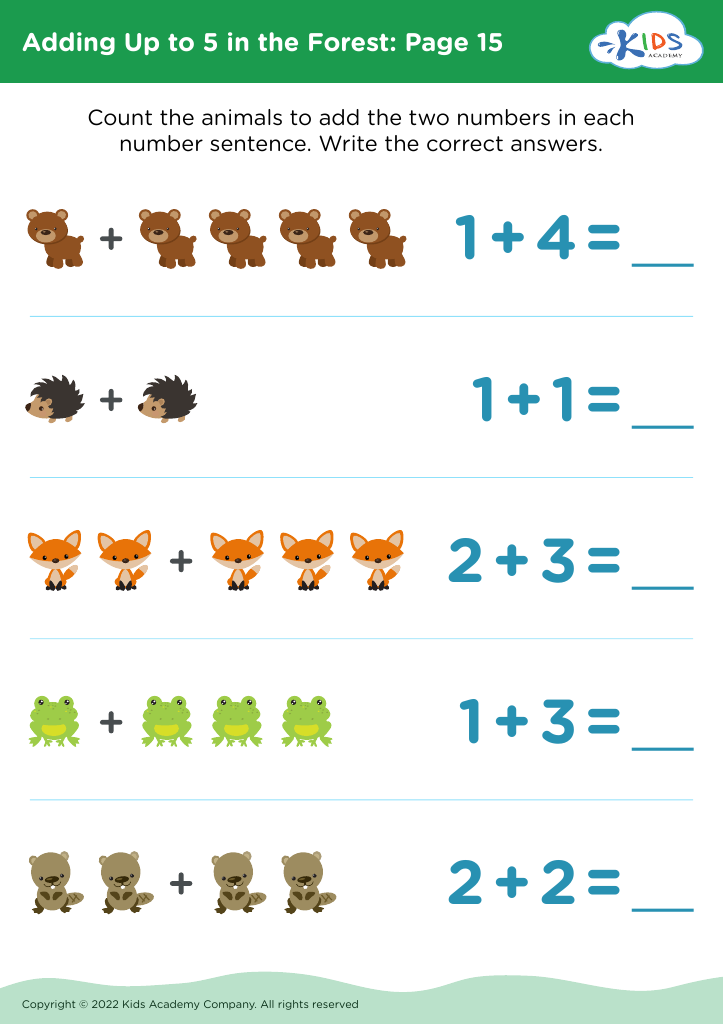
Adding Up to 5 in the Forest: Page 15
Worksheet
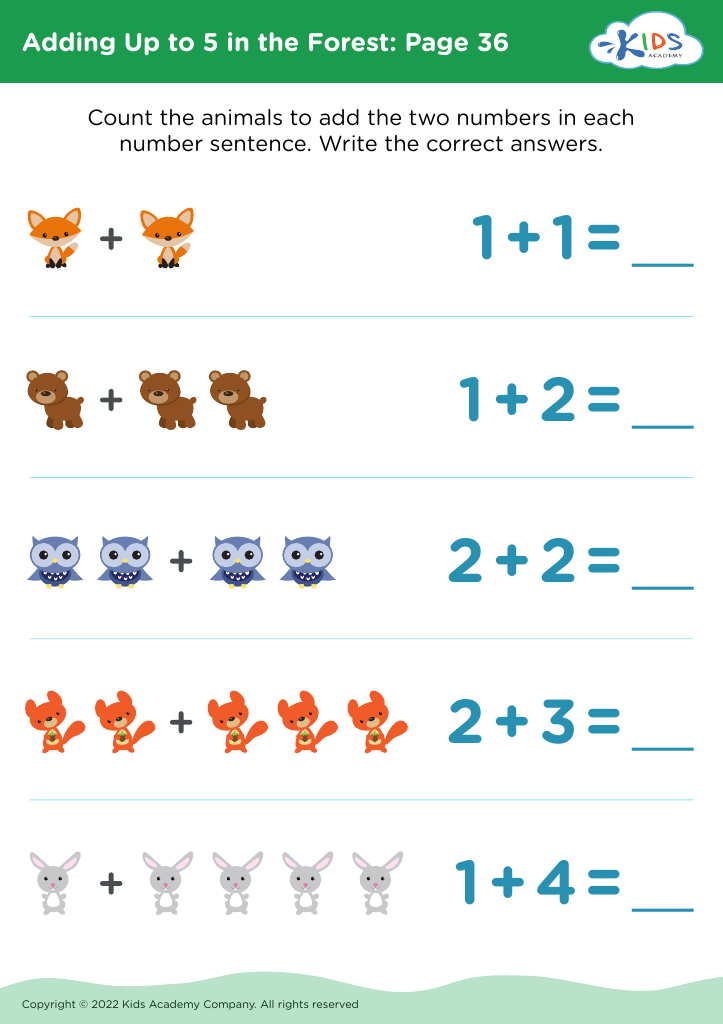
Adding Up to 5 in the Forest: Page 36
Worksheet
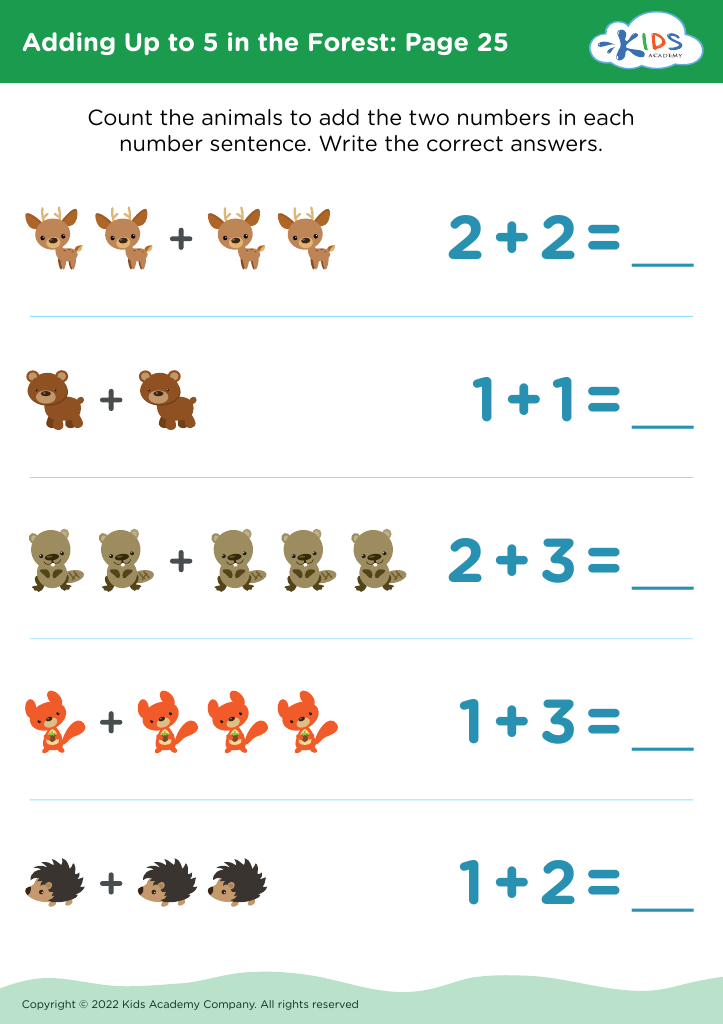
Adding Up to 5 in the Forest: Page 25
Worksheet
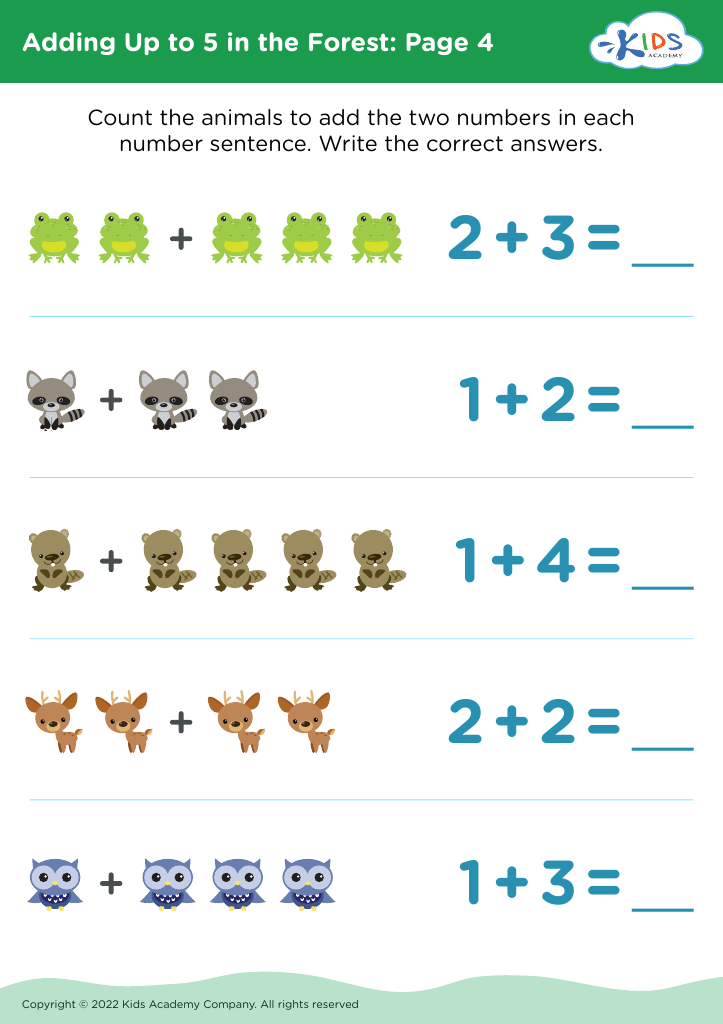
Adding Up to 5 in the Forest: Page 4
Worksheet
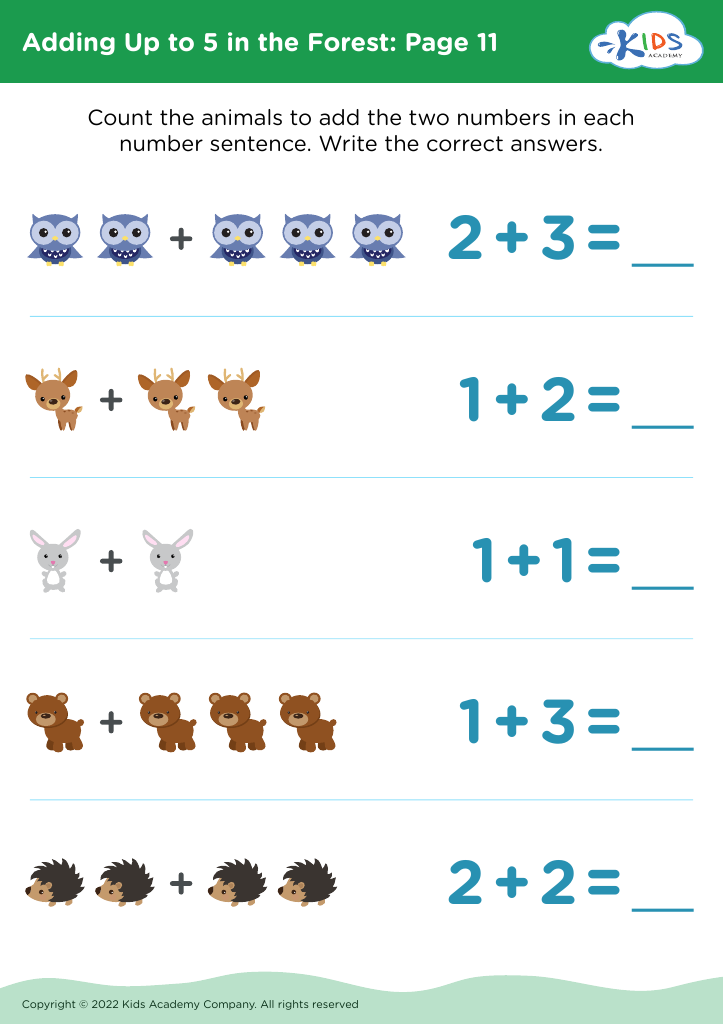
Adding Up to 5 in the Forest: Page 11
Worksheet
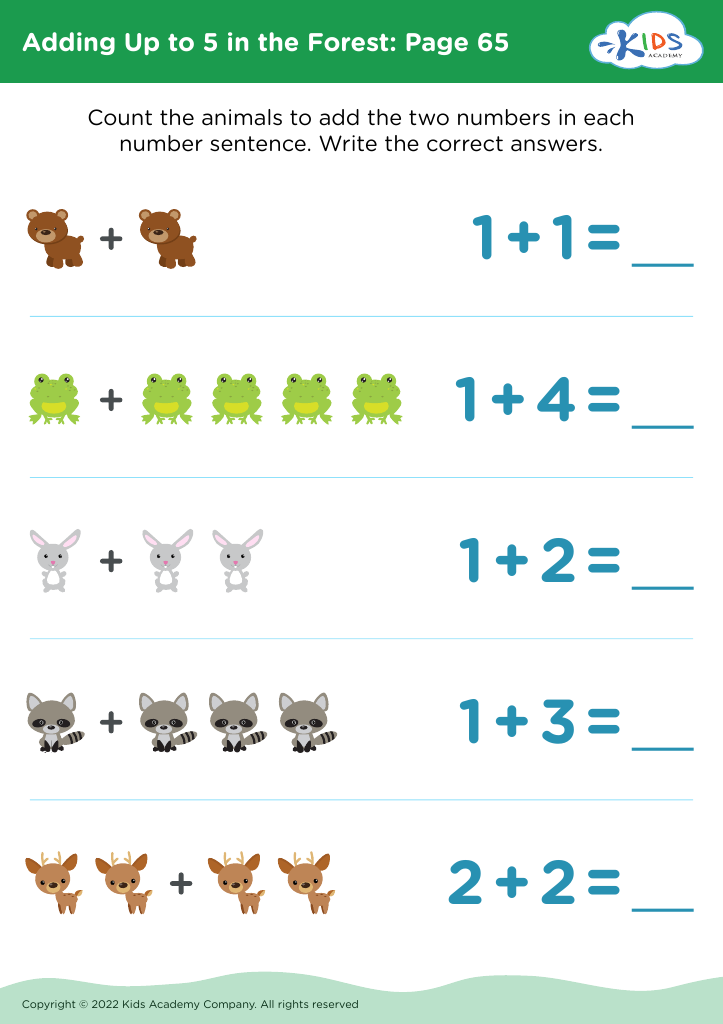
Adding Up to 5 in the Forest: Page 65
Worksheet
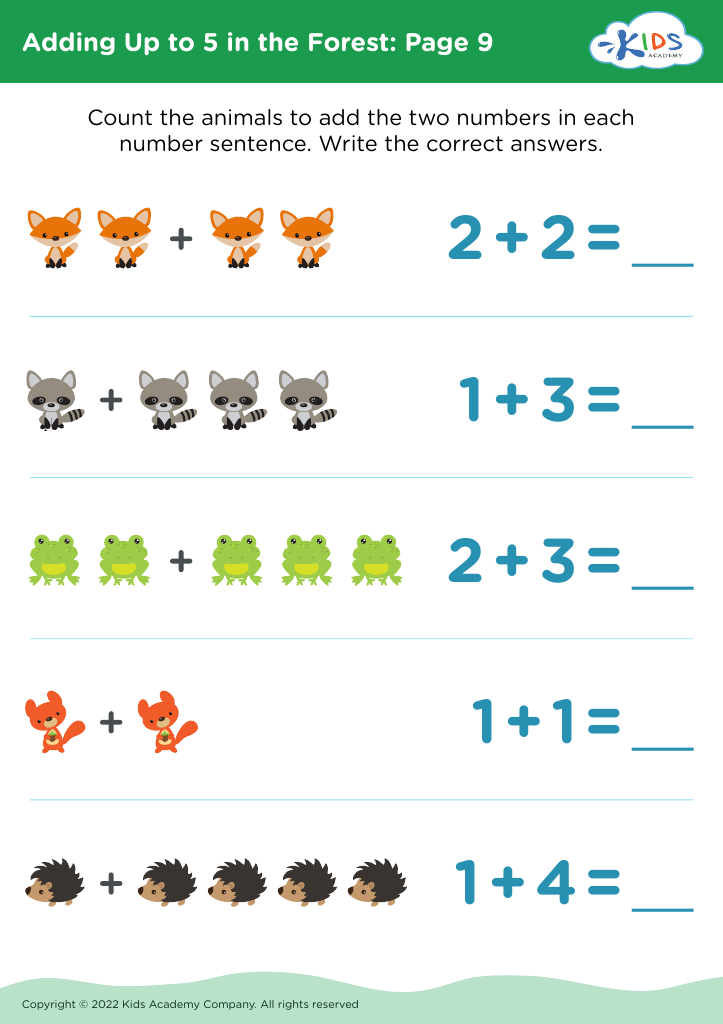
Adding Up to 5 in the Forest: Page 9
Worksheet
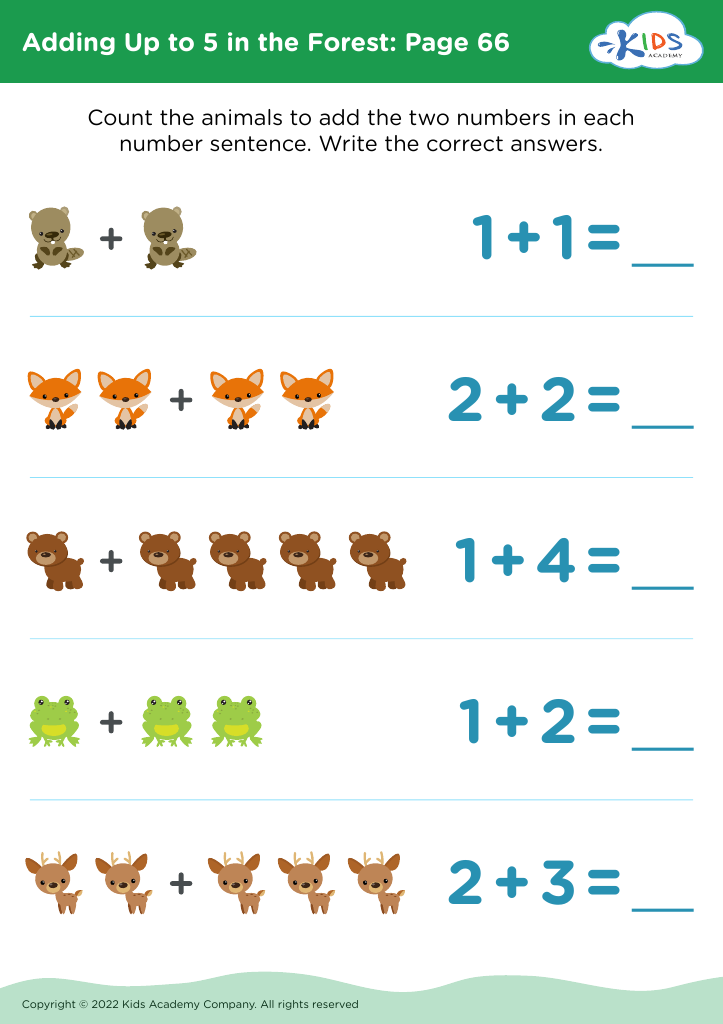
Adding Up to 5 in the Forest: Page 66
Worksheet
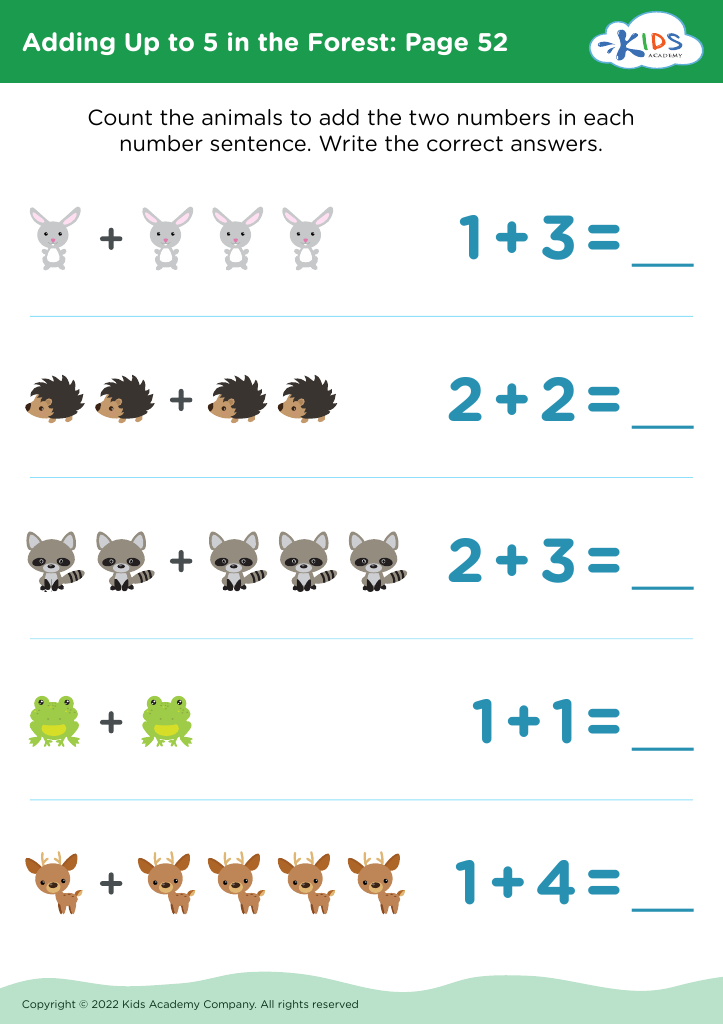
Adding Up to 5 in the Forest: Page 52
Worksheet
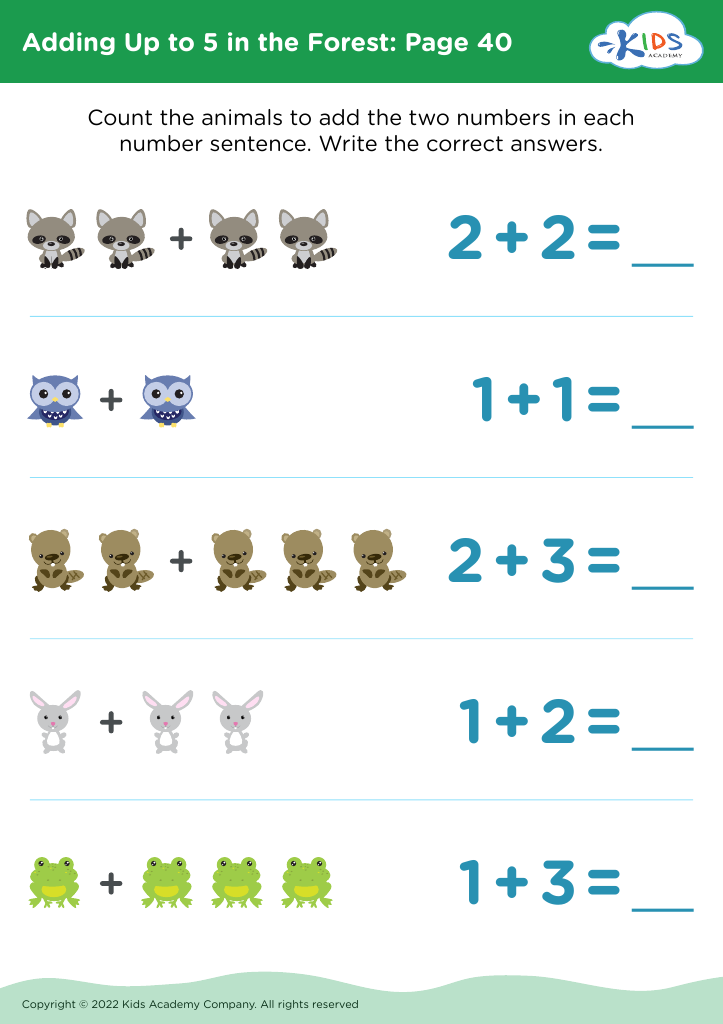
Adding Up to 5 in the Forest: Page 40
Worksheet
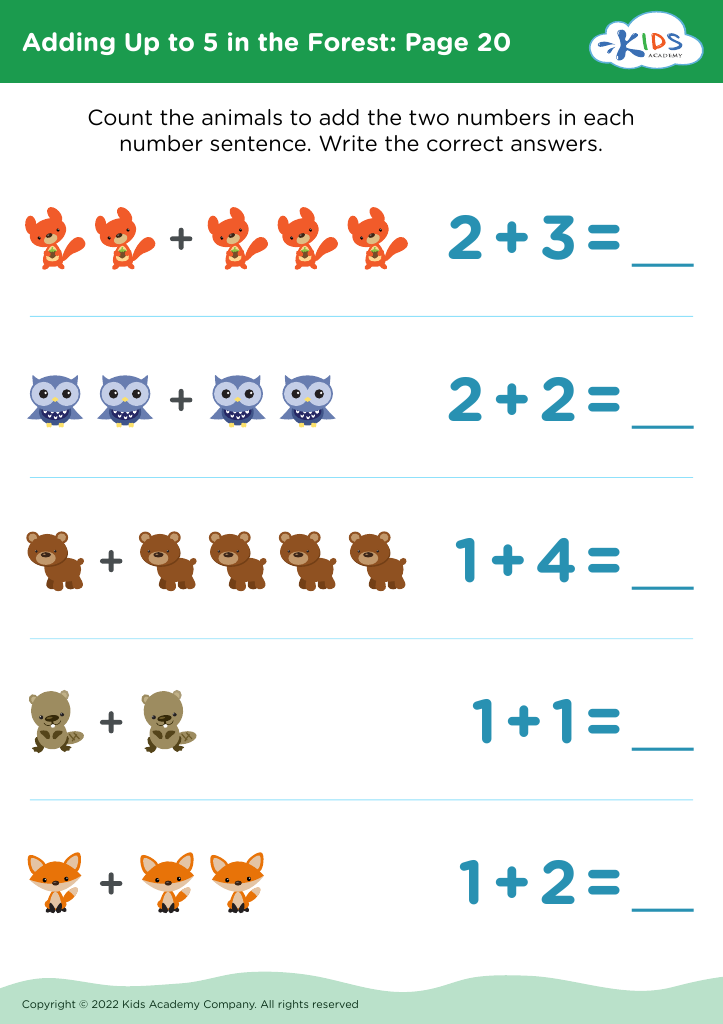
Adding Up to 5 in the Forest: Page 20
Worksheet
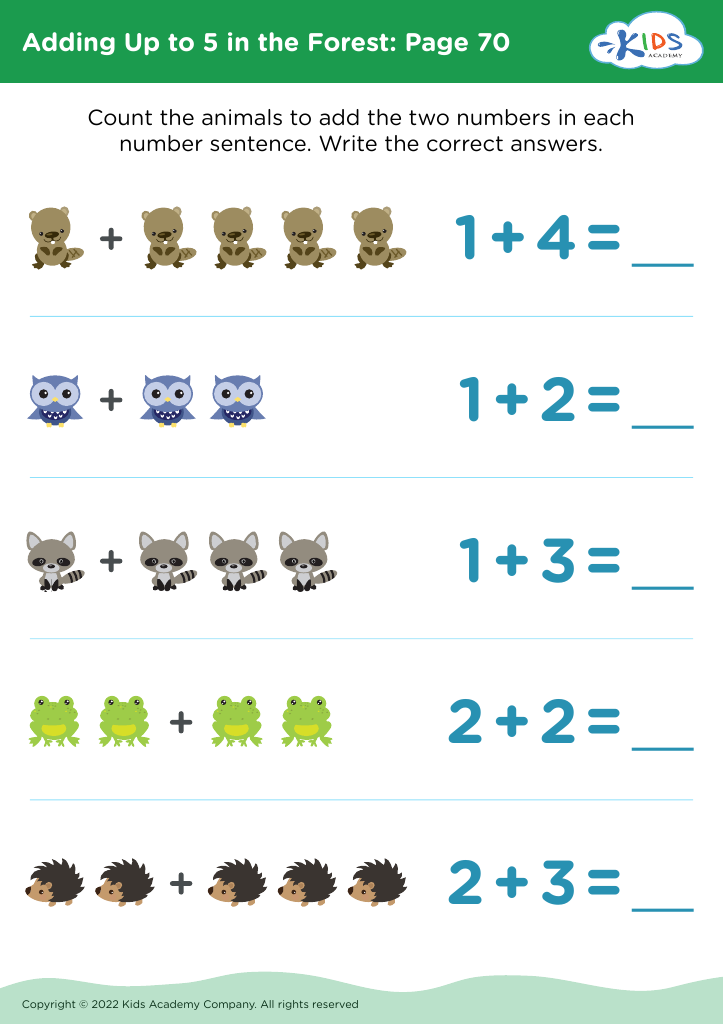
Adding Up to 5 in the Forest: Page 70
Worksheet
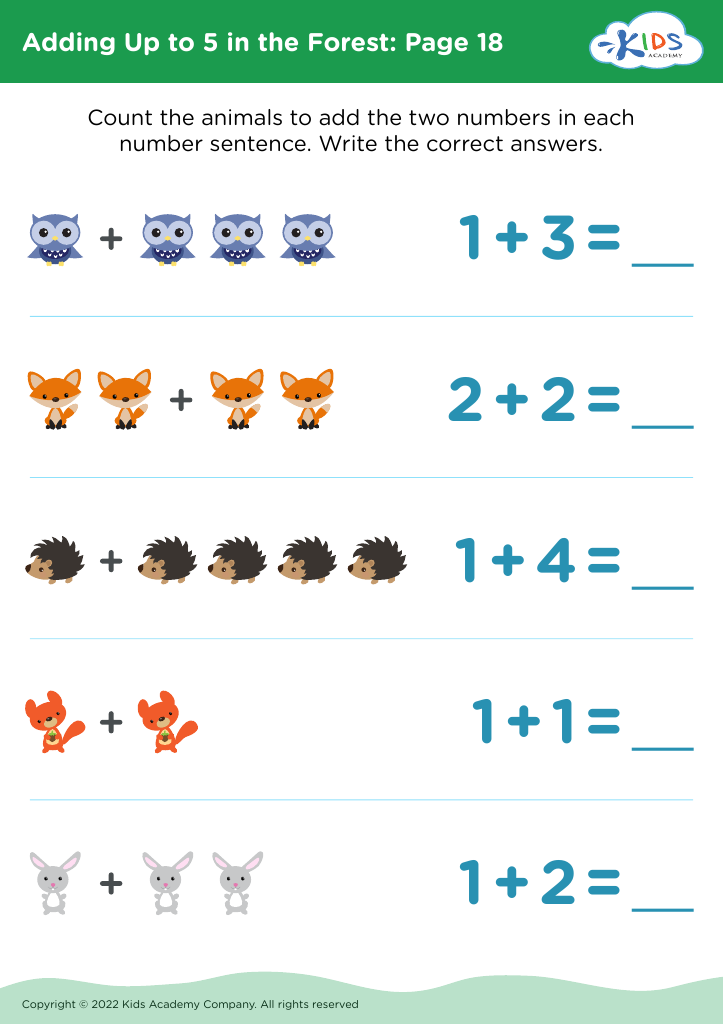
Adding Up to 5 in the Forest: Page 18
Worksheet
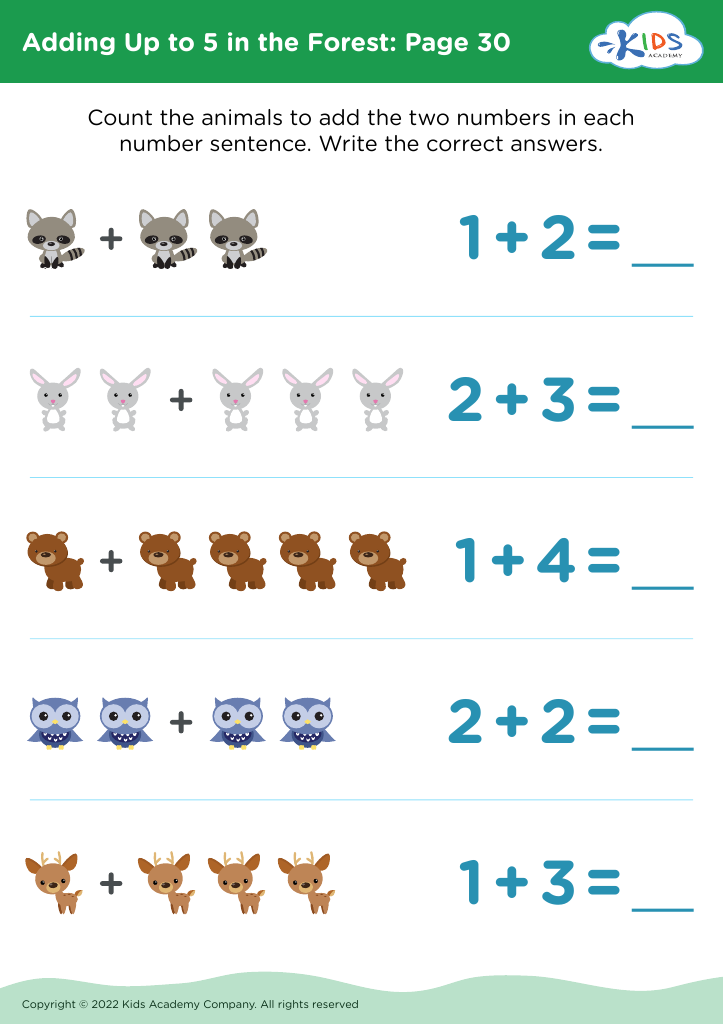
Adding Up to 5 in the Forest: Page 30
Worksheet
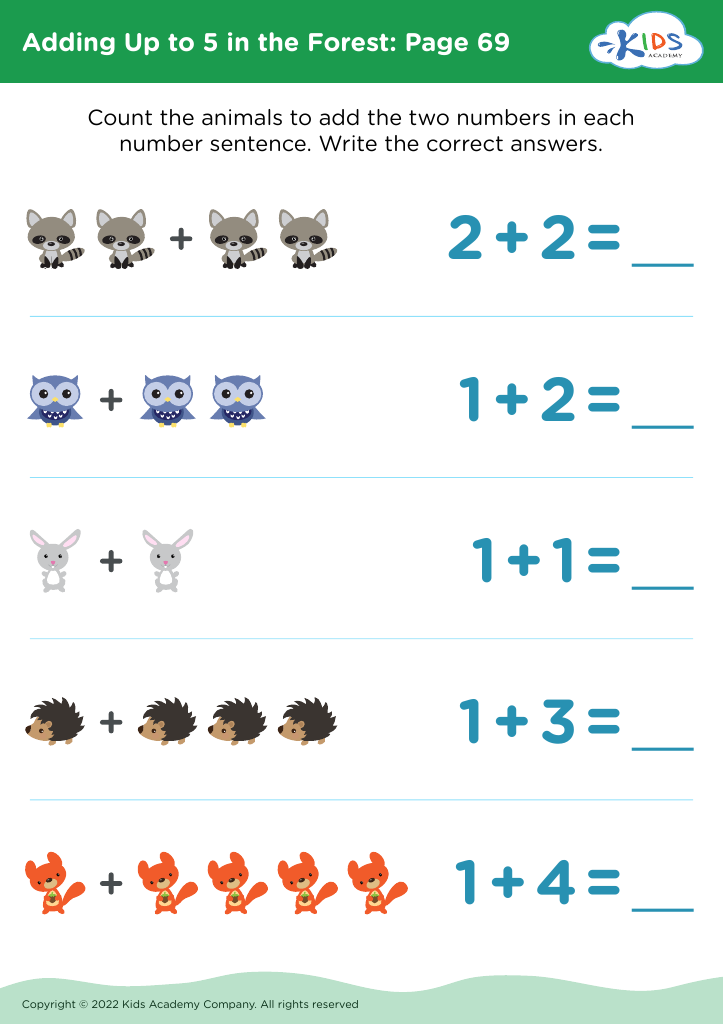
Adding Up to 5 in the Forest: Page 69
Worksheet
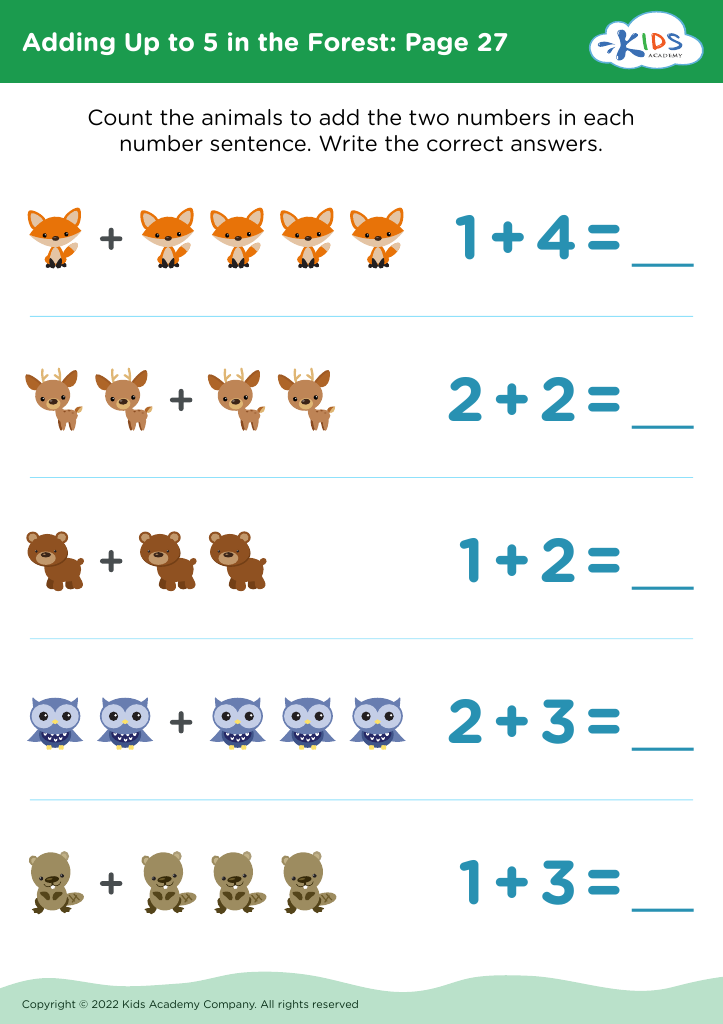
Adding Up to 5 in the Forest: Page 27
Worksheet
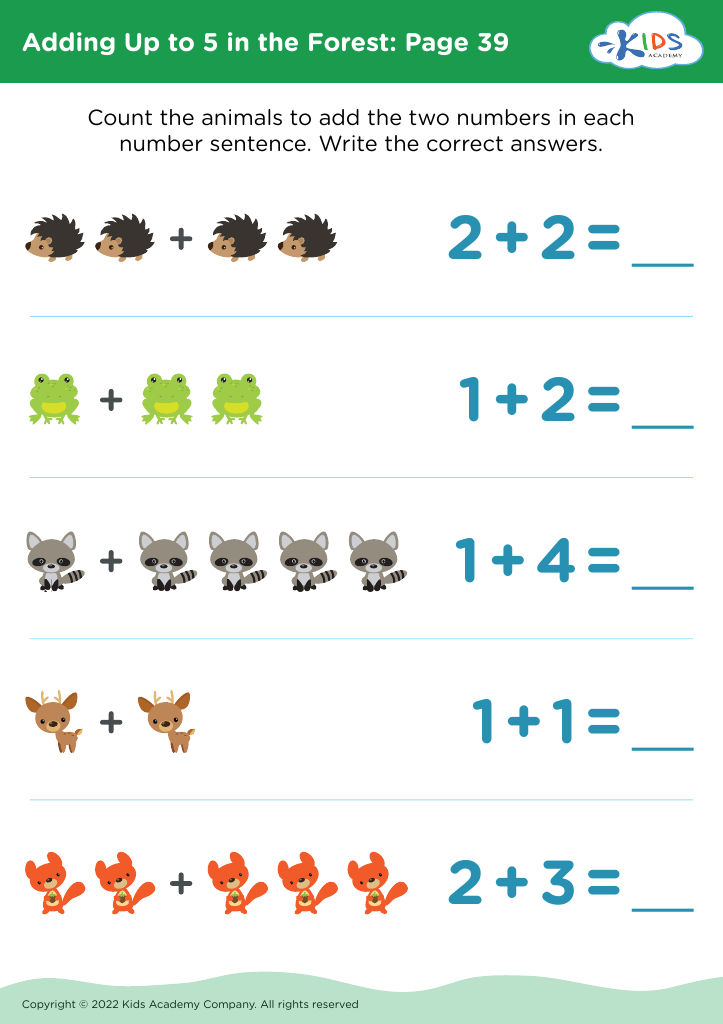
Adding Up to 5 in the Forest: Page 39
Worksheet
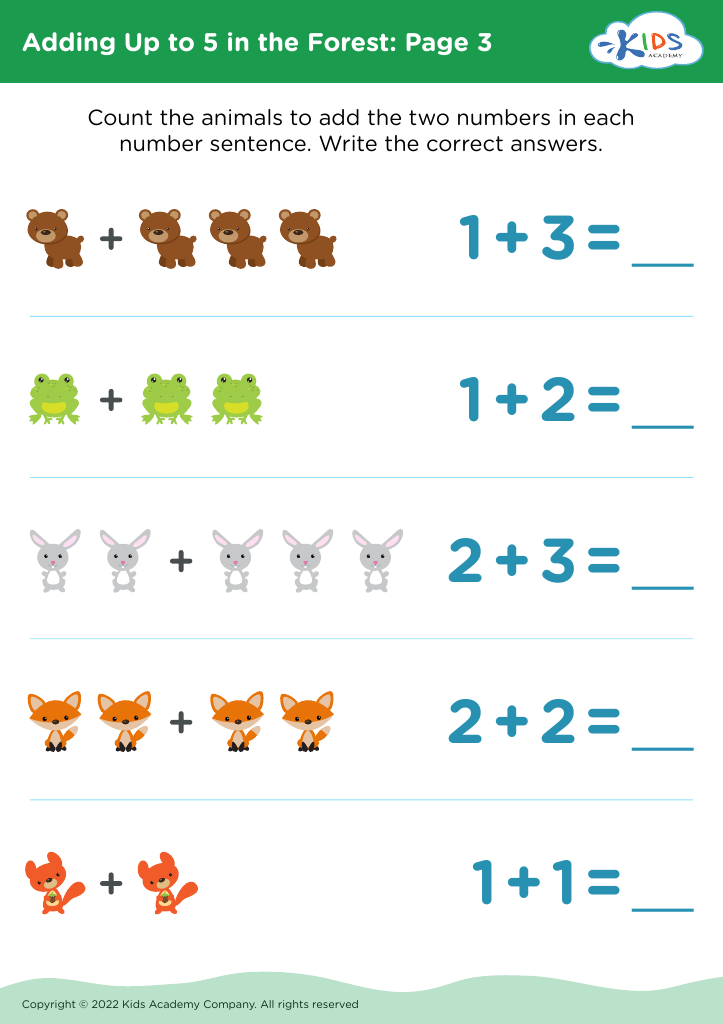
Adding Up to 5 in the Forest: Page 3
Worksheet
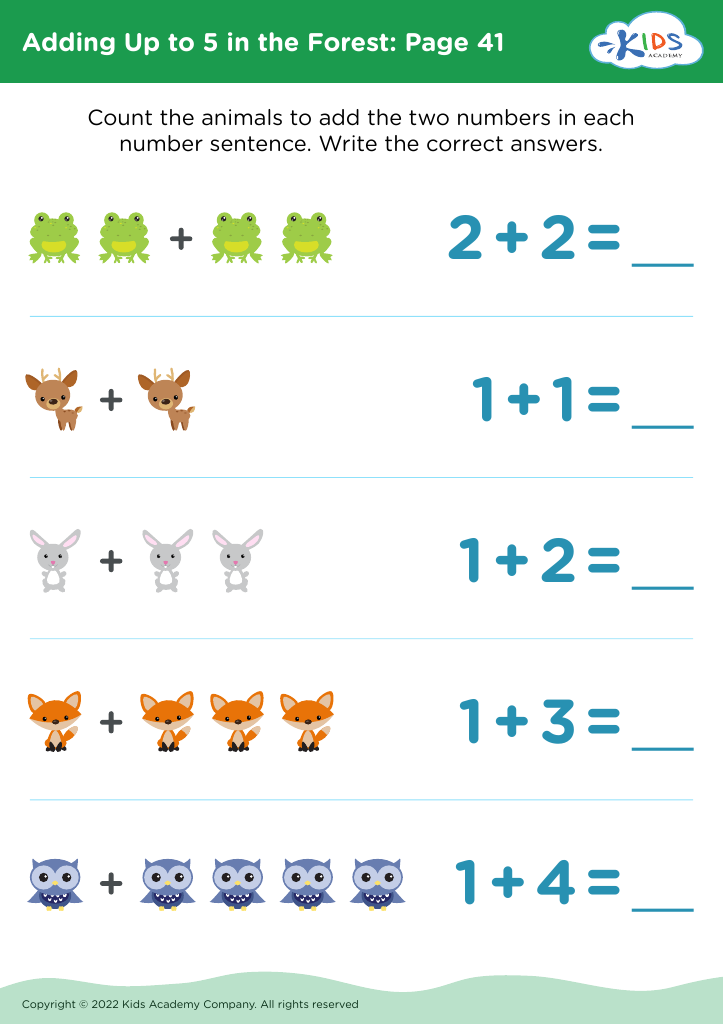
Adding Up to 5 in the Forest: Page 41
Worksheet


Counting practice, particularly through engaging and themed activities like "Adding in the Forest" for children ages 3-9, is vital for early childhood development. This formative period is when foundational arithmetic skills are most effectively developed, and integrating counting within a playful, story-driven context can significantly boost a child's learning experience.

Firstly, such educational activities make learning enjoyable, thus fostering a positive attitude towards math. When children see math as fun, they are more likely to engage actively and persist in solving problems, which is crucial for building confidence and competence. "Adding in the Forest," for instance, could feature familiar forest creatures and scenarios that captivate children's imaginations, making abstract concepts tangible and easier to understand.

Secondly, practical counting exercises enhance cognitive development. They help children develop number sense, a fundamental building block for all subsequent math learning. By manipulating objects within a story, children practice one-to-one correspondence, which is counting each object once. This builds the understanding of quantities and number relationships.

Lastly, these activities often involve fine motor skills—like moving tokens or writing numbers—which are crucial for physical development. They also provide opportunities for parent-child or teacher-student interaction, strengthening relationships and facilitating social learning.

In essence, counting practice embedded in creative, thematic activities supports holistic child development—intellectually, emotionally, and socially.