Filters

19 filtered results

Clear all filters
Favorites
With answer key
Interactive

19 filtered results

Difficulty Level

Grade


Subject

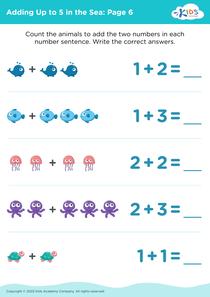
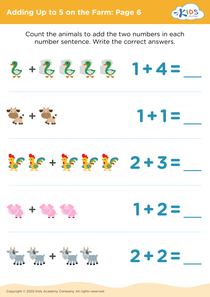
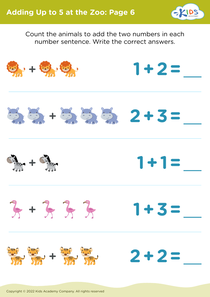
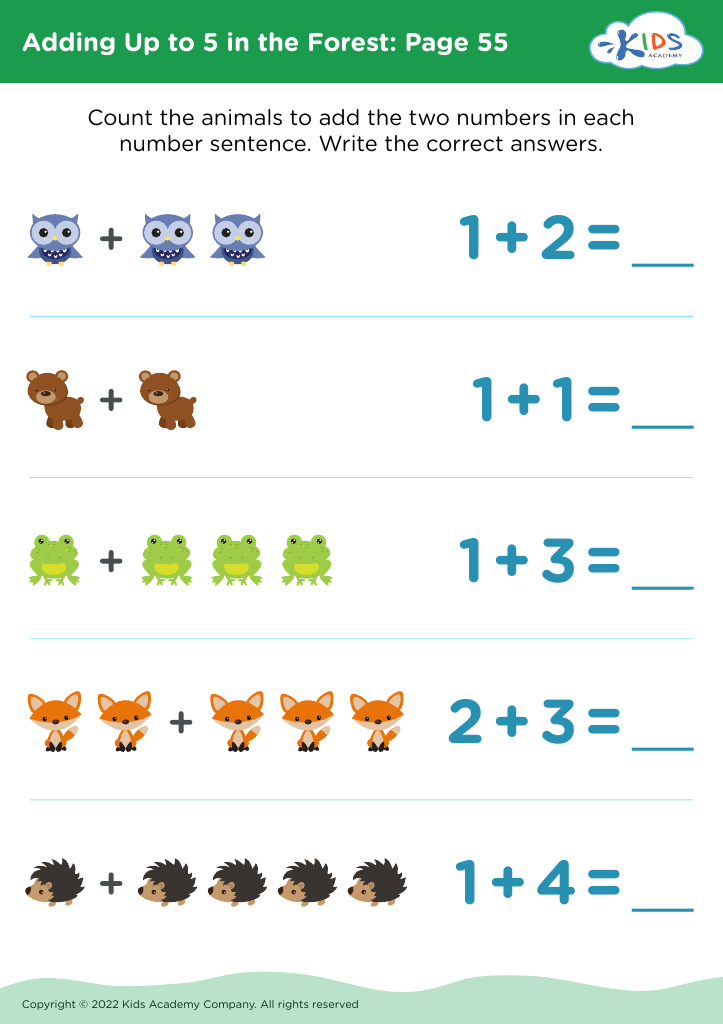
    Explore our engaging "Counting Skills: Adding in the Forest" worksheets, designed specifically for children ages 3 to 9! These interactive resources make learning math fun by combining nature themes with foundational counting and addition skills. Each worksheet features vibrant illustrations and age-appropriate exercises to help young learners practice their counting abilities while exploring the forest and its delightful inhabitants. Our worksheets promote hands-on learning and encourage critical thinking as kids develop essential math skills. Perfect for both classroom and home use, these educational tools foster a love for learning and help build confidence in young mathematicians. Get started today!
    Check out this FREE Trial Lesson on Adding in the Forest for age 3-9!

    D

    Favorites
    With answer key
    Interactive
    • 3-9
    • Counting skills
    • Adding in the Forest
    Adding Up to 5 in the Forest: Page 55
    Adding Up to 5 in the Forest: Page 55
    Adding Up to 5 in the Forest: Page 55
    Worksheet
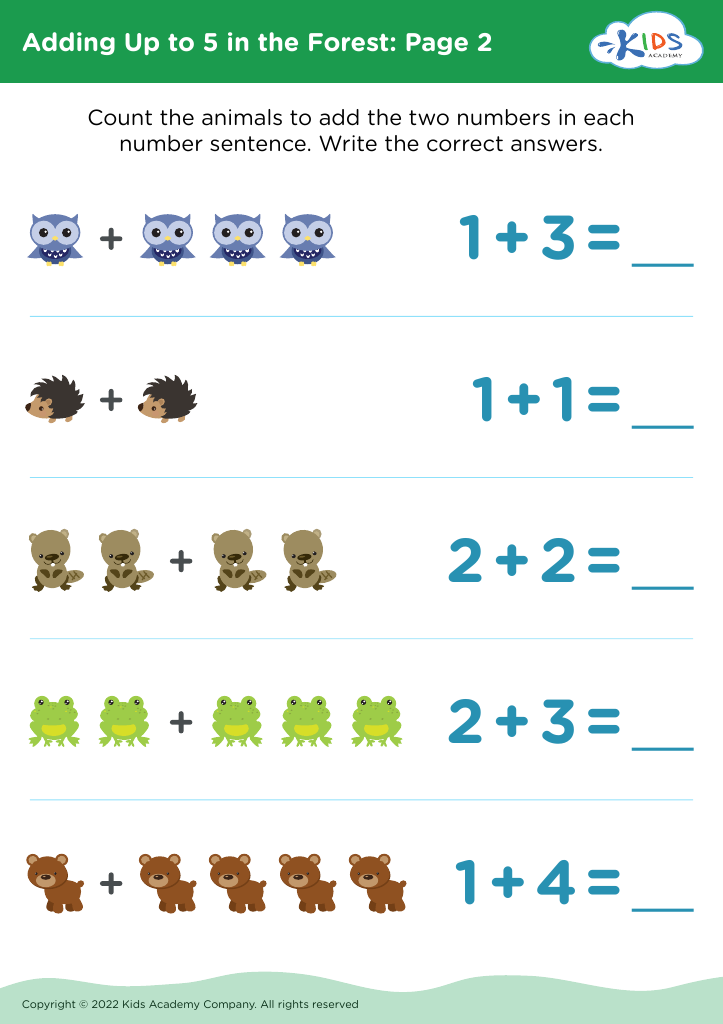
    Adding Up to 5 in the Forest: Page 2
    Adding Up to 5 in the Forest: Page 2
    Adding Up to 5 in the Forest: Page 2
    Worksheet
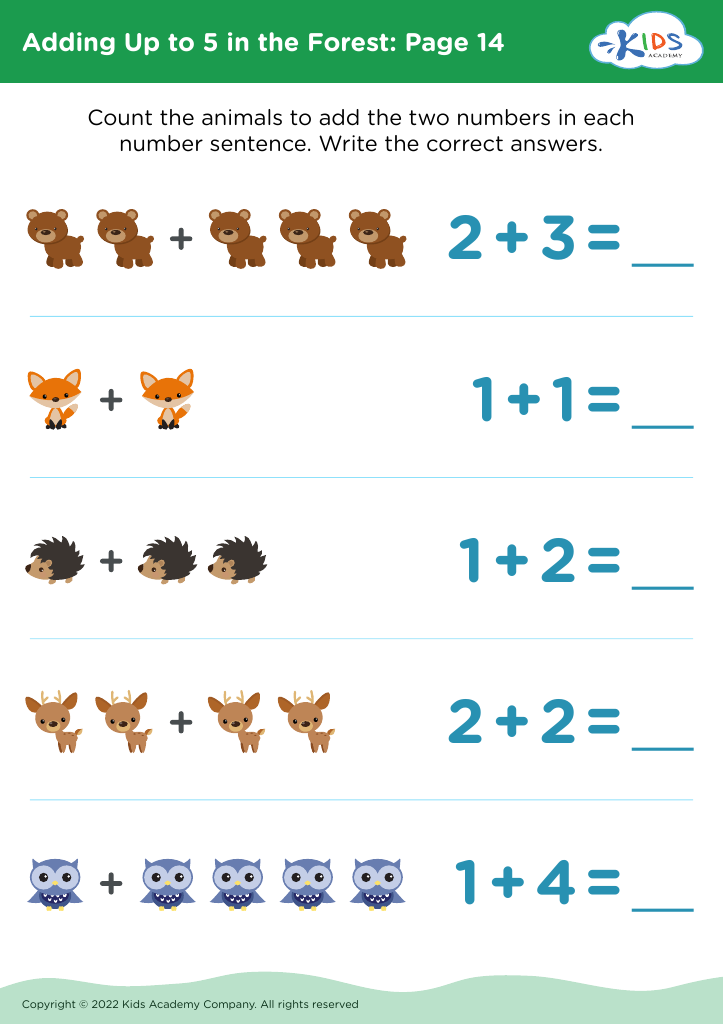
    Adding Up to 5 in the Forest: Page 14
    Adding Up to 5 in the Forest: Page 14
    Adding Up to 5 in the Forest: Page 14
    Worksheet
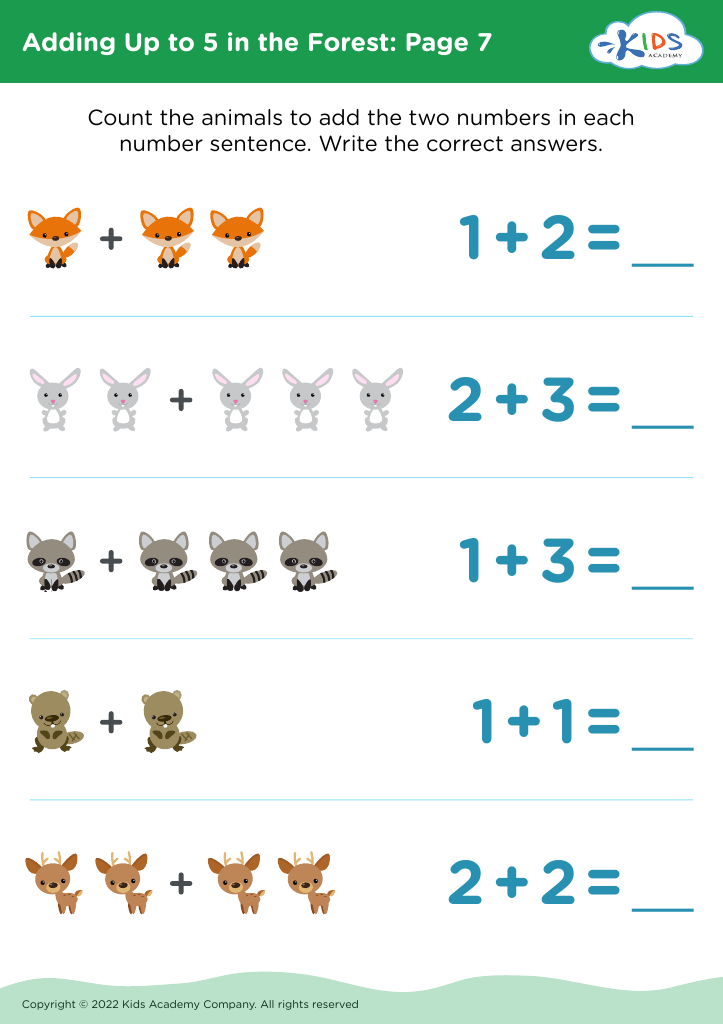
    Adding Up to 5 in the Forest: Page 7
    Adding Up to 5 in the Forest: Page 7
    Adding Up to 5 in the Forest: Page 7
    Worksheet
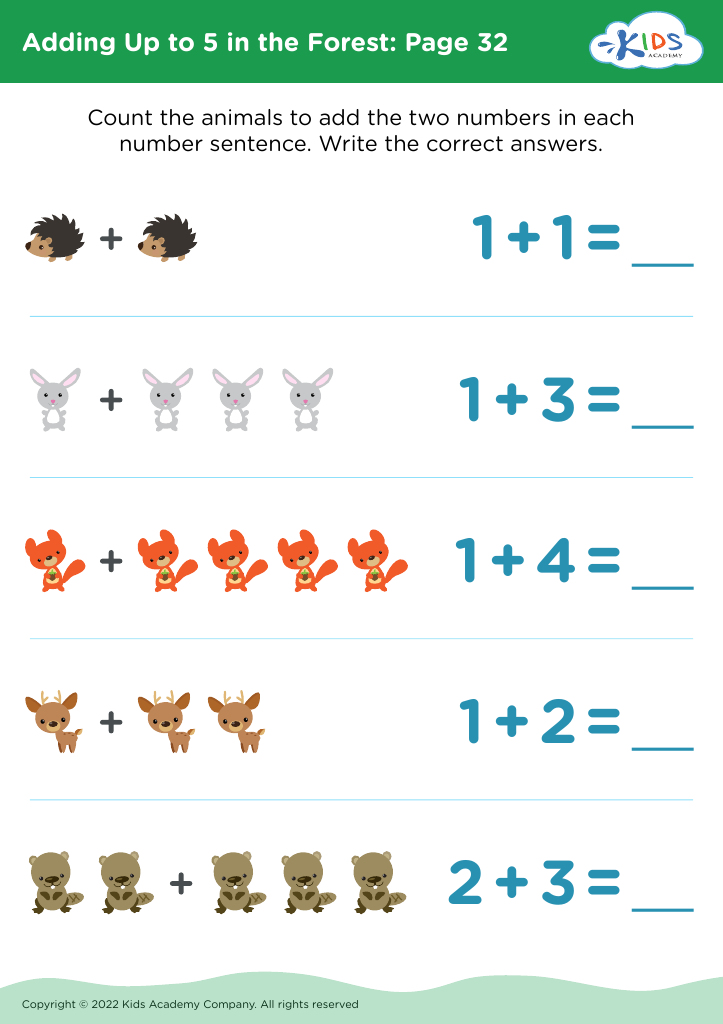
    Adding Up to 5 in the Forest: Page 32
    Adding Up to 5 in the Forest: Page 32
    Adding Up to 5 in the Forest: Page 32
    Worksheet
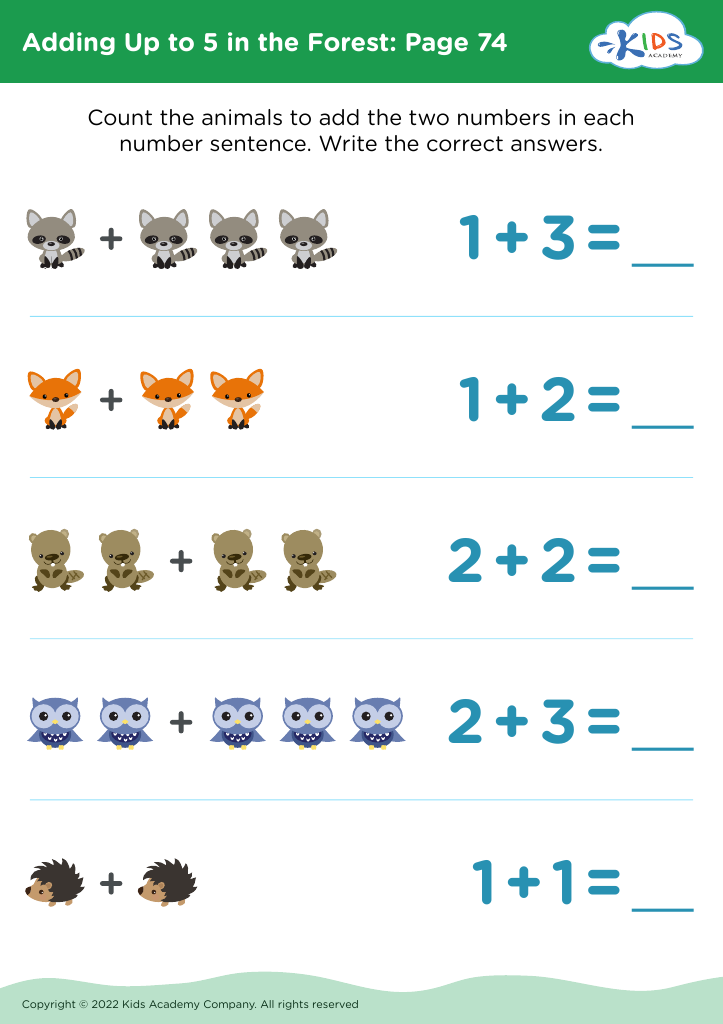
    Adding Up to 5 in the Forest: Page 74
    Adding Up to 5 in the Forest: Page 74
    Adding Up to 5 in the Forest: Page 74
    Worksheet
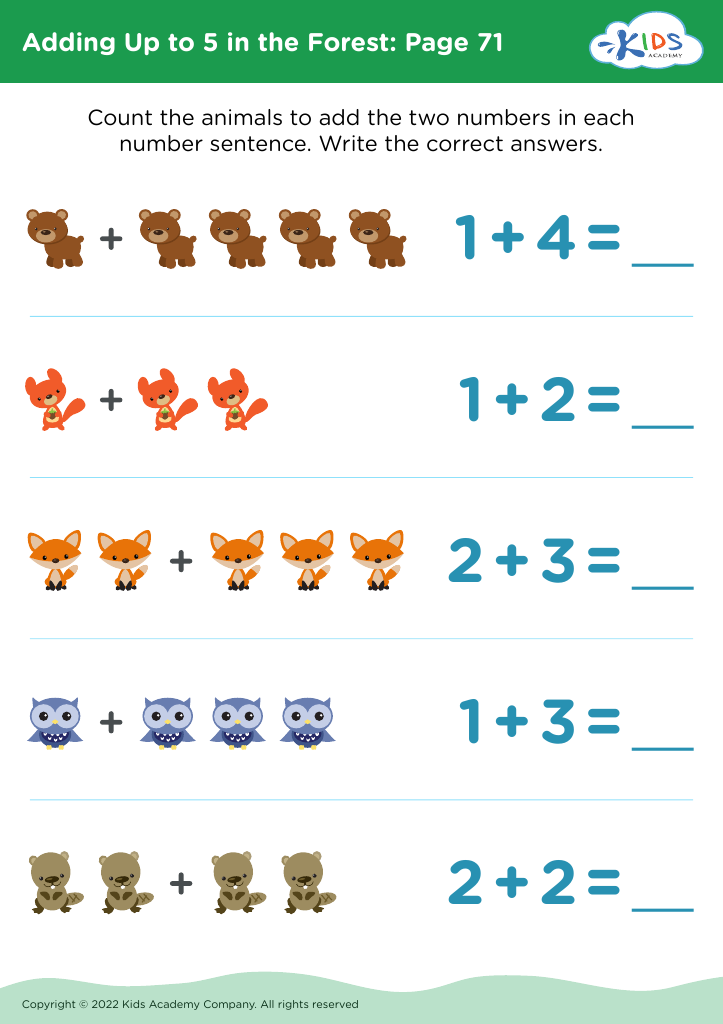
    Adding Up to 5 in the Forest: Page 71
    Adding Up to 5 in the Forest: Page 71
    Adding Up to 5 in the Forest: Page 71
    Worksheet
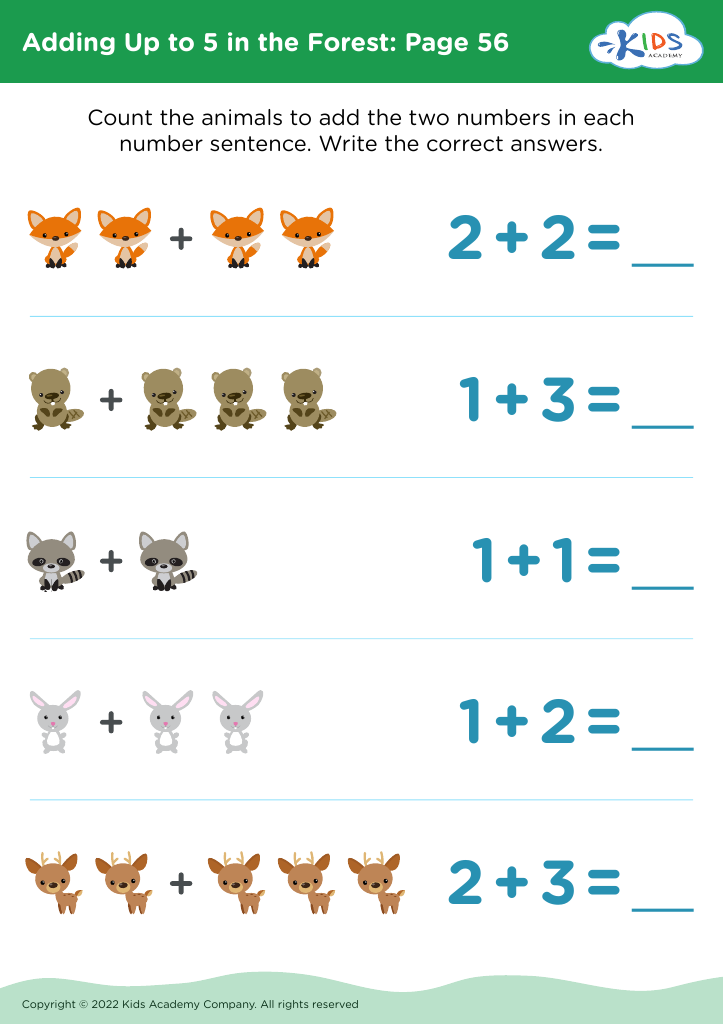
    Adding Up to 5 in the Forest: Page 56
    Adding Up to 5 in the Forest: Page 56
    Adding Up to 5 in the Forest: Page 56
    Worksheet
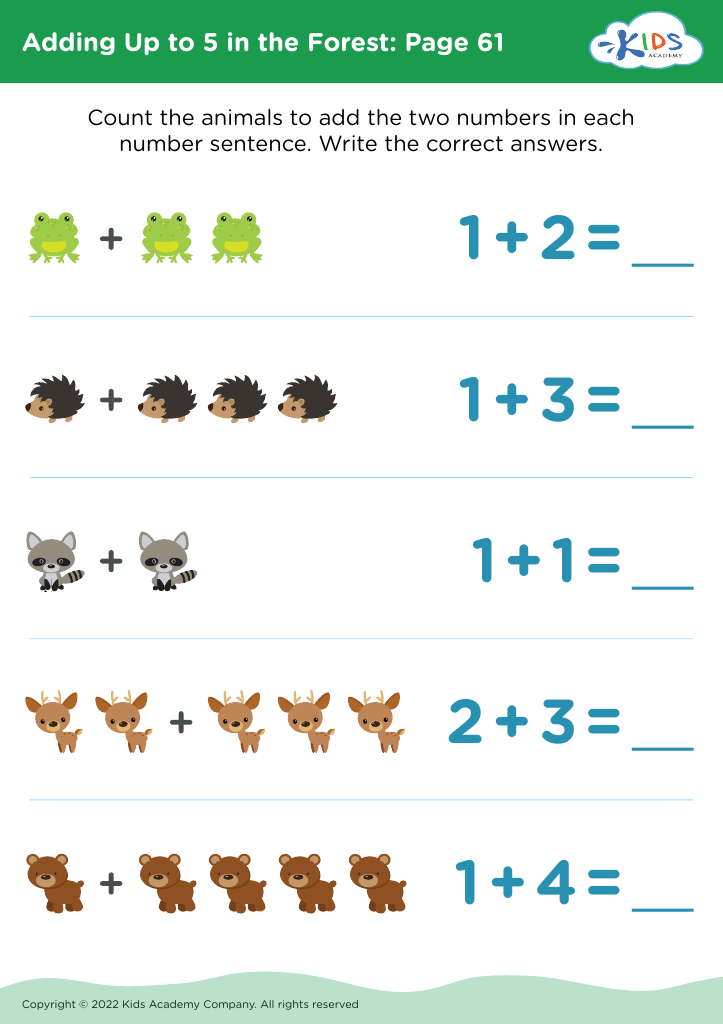
    Adding Up to 5 in the Forest: Page 61
    Adding Up to 5 in the Forest: Page 61
    Adding Up to 5 in the Forest: Page 61
    Worksheet
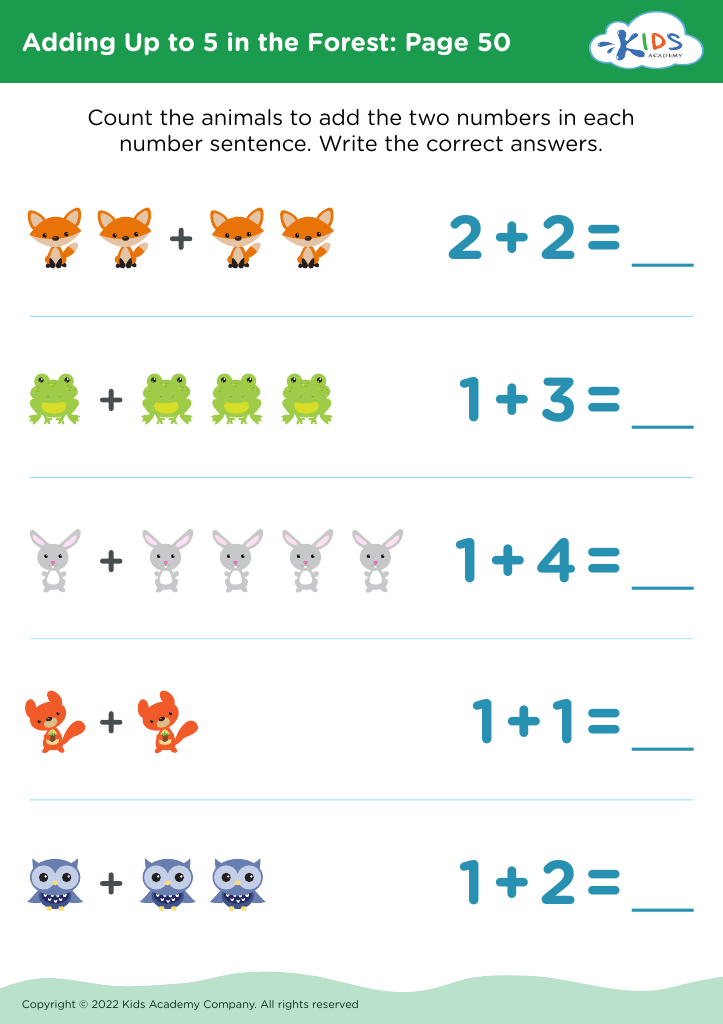
    Adding Up to 5 in the Forest: Page 50
    Adding Up to 5 in the Forest: Page 50
    Adding Up to 5 in the Forest: Page 50
    Worksheet
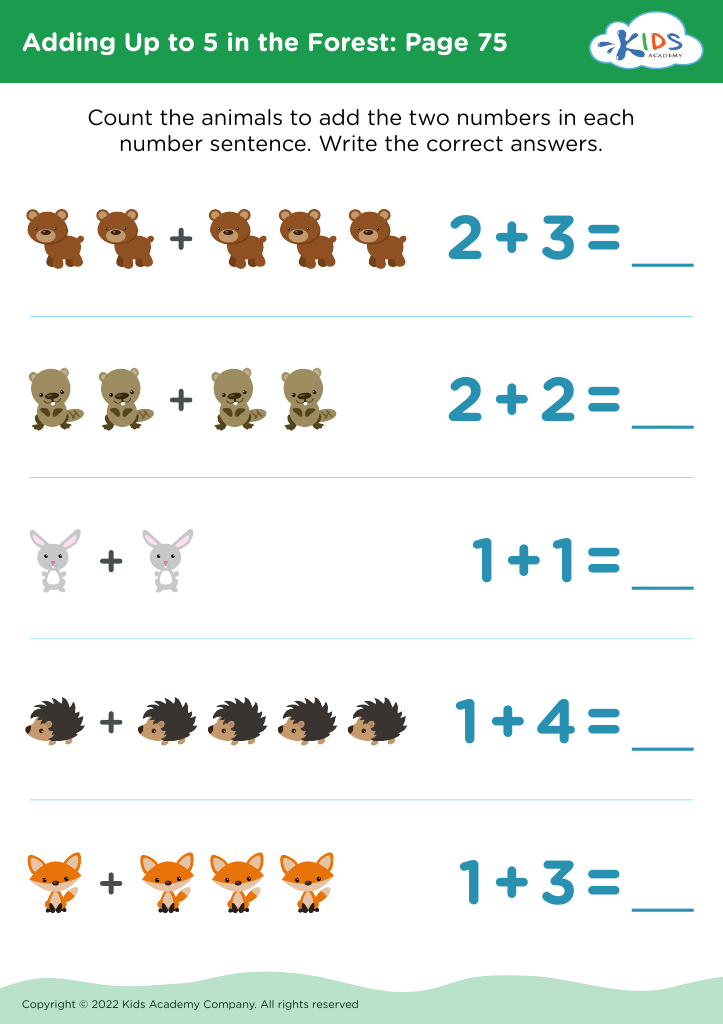
    Adding Up to 5 in the Forest: Page 75
    Adding Up to 5 in the Forest: Page 75
    Adding Up to 5 in the Forest: Page 75
    Worksheet
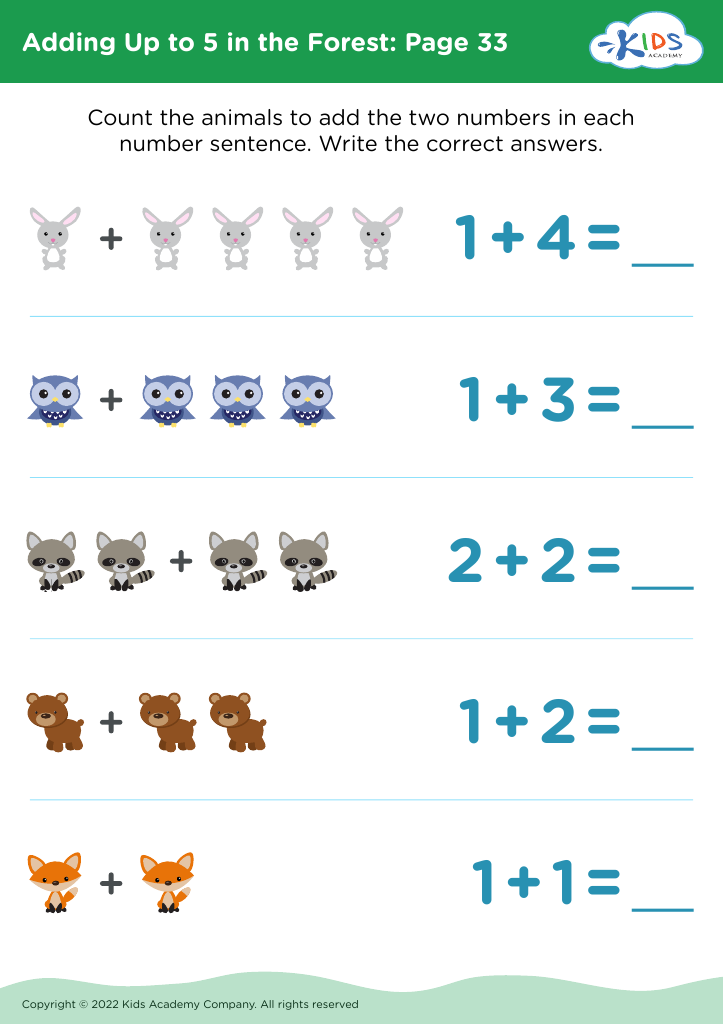
    Adding Up to 5 in the Forest: Page 33
    Adding Up to 5 in the Forest: Page 33
    Adding Up to 5 in the Forest: Page 33
    Worksheet
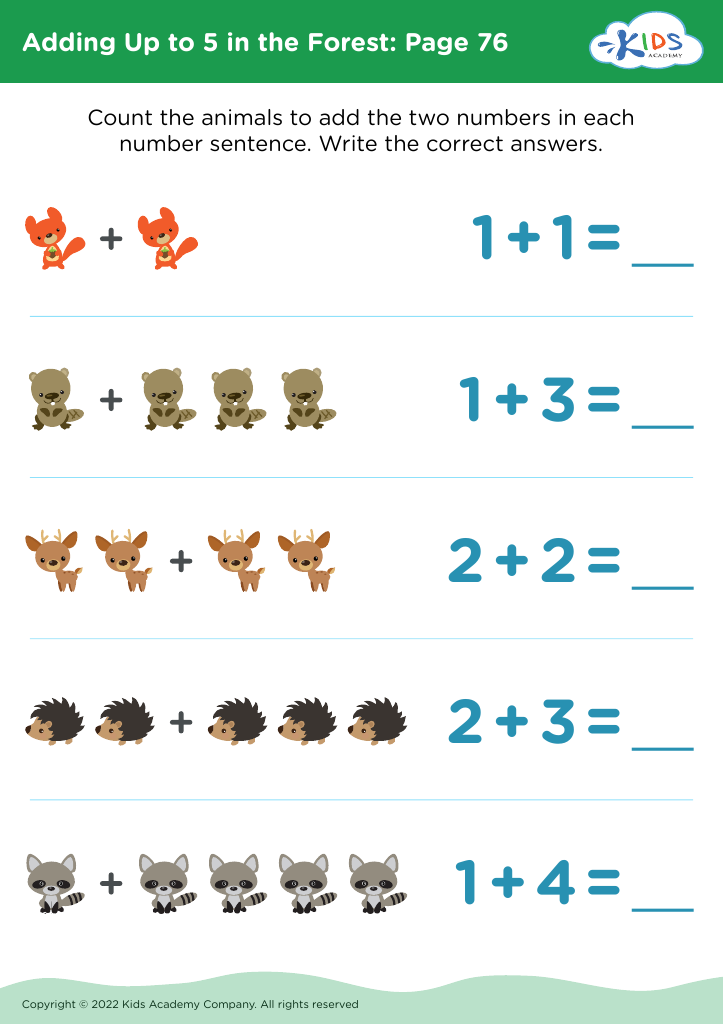
    Adding Up to 5 in the Forest: Page 76
    Adding Up to 5 in the Forest: Page 76
    Adding Up to 5 in the Forest: Page 76
    Worksheet
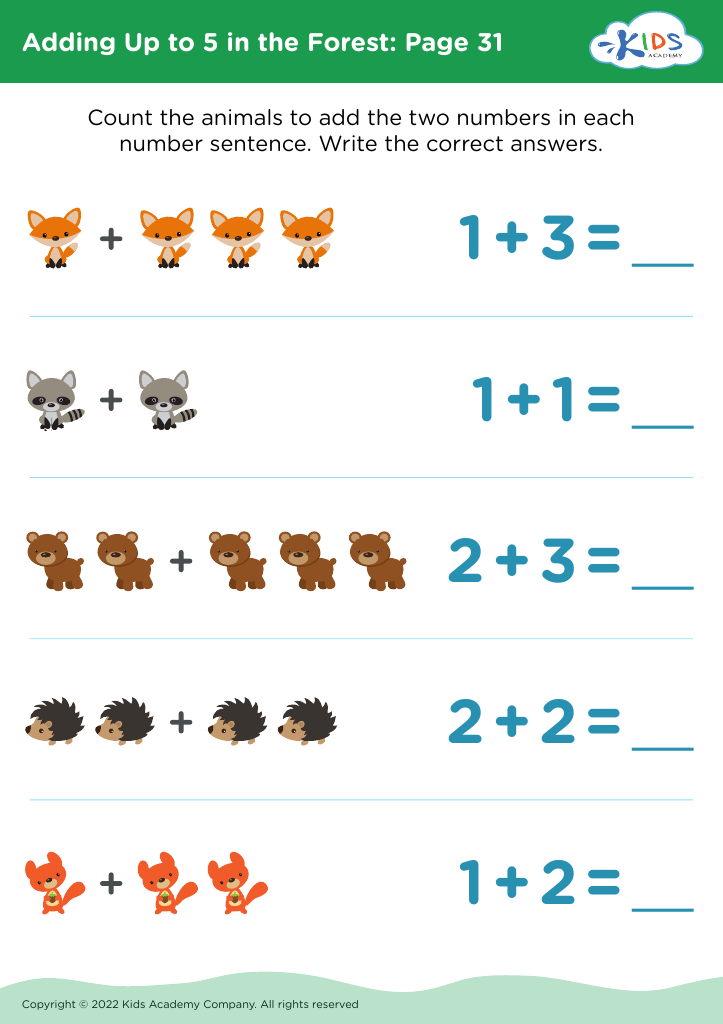
    Adding Up to 5 in the Forest: Page 31
    Adding Up to 5 in the Forest: Page 31
    Adding Up to 5 in the Forest: Page 31
    Worksheet
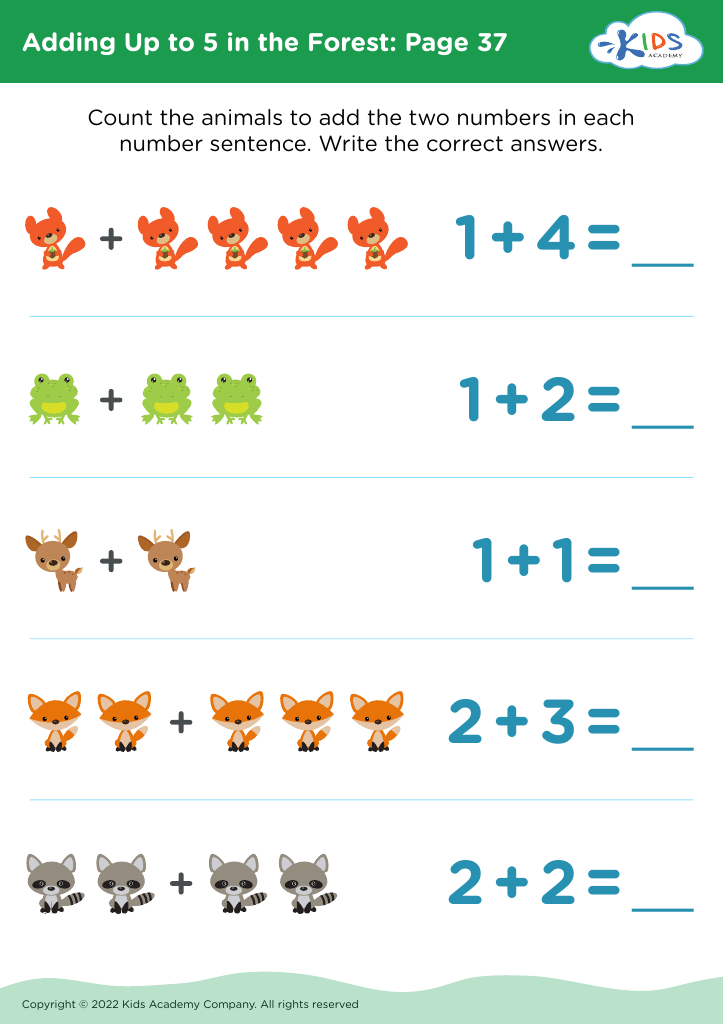
    Adding Up to 5 in the Forest: Page 37
    Adding Up to 5 in the Forest: Page 37
    Adding Up to 5 in the Forest: Page 37
    Worksheet
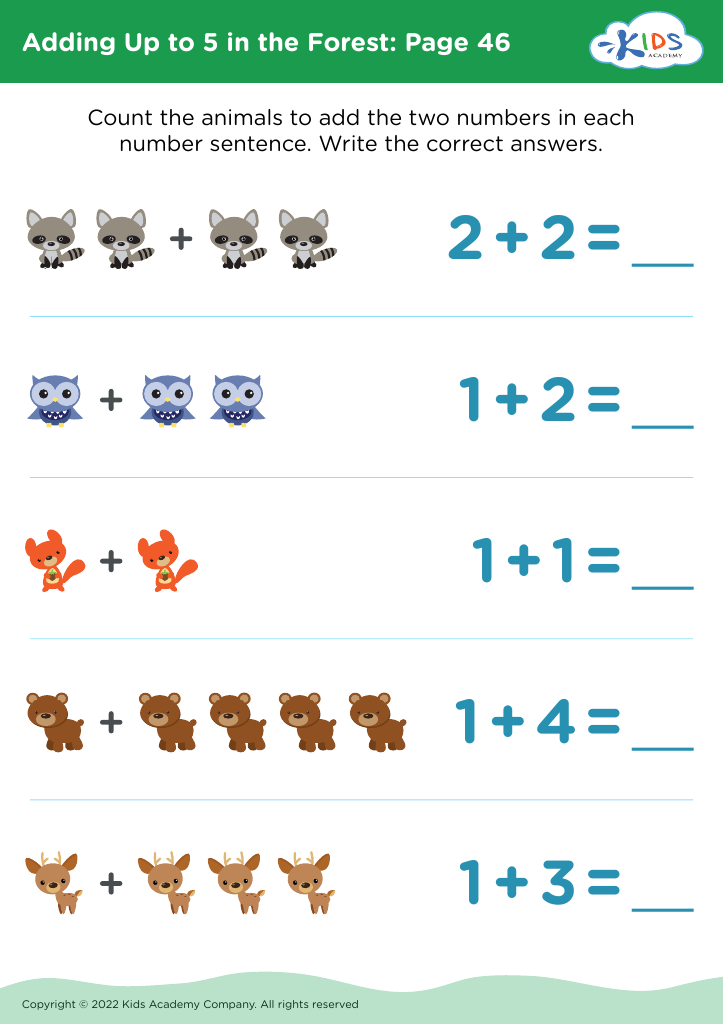
    Adding Up to 5 in the Forest: Page 46
    Adding Up to 5 in the Forest: Page 46
    Adding Up to 5 in the Forest: Page 46
    Worksheet
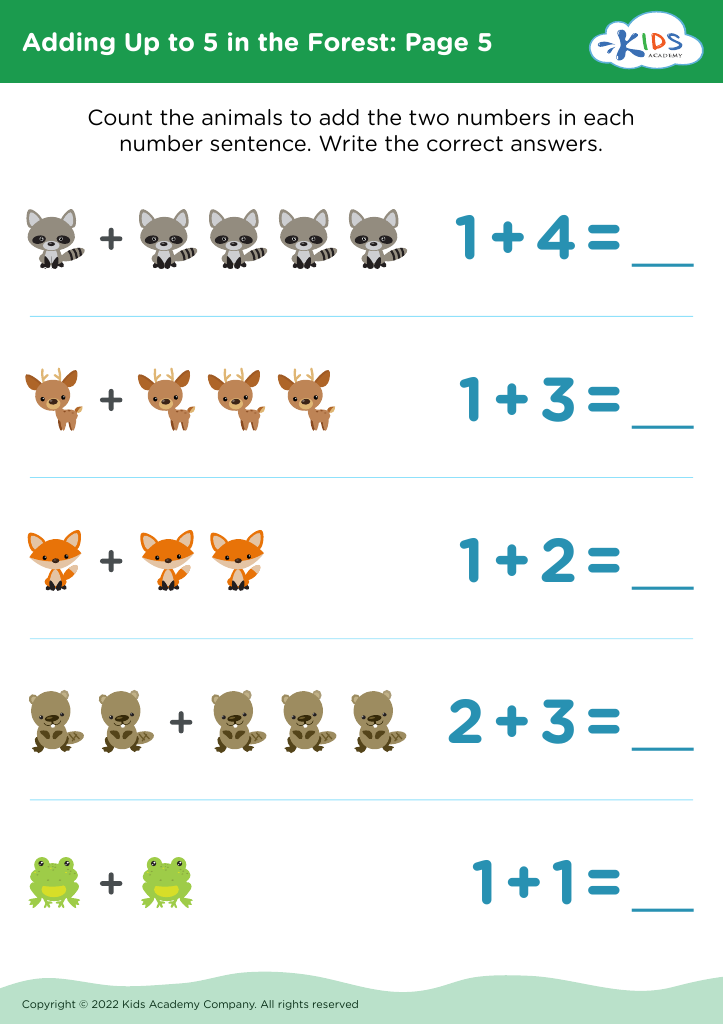
    Adding Up to 5 in the Forest: Page 5
    Adding Up to 5 in the Forest: Page 5
    Adding Up to 5 in the Forest: Page 5
    Worksheet
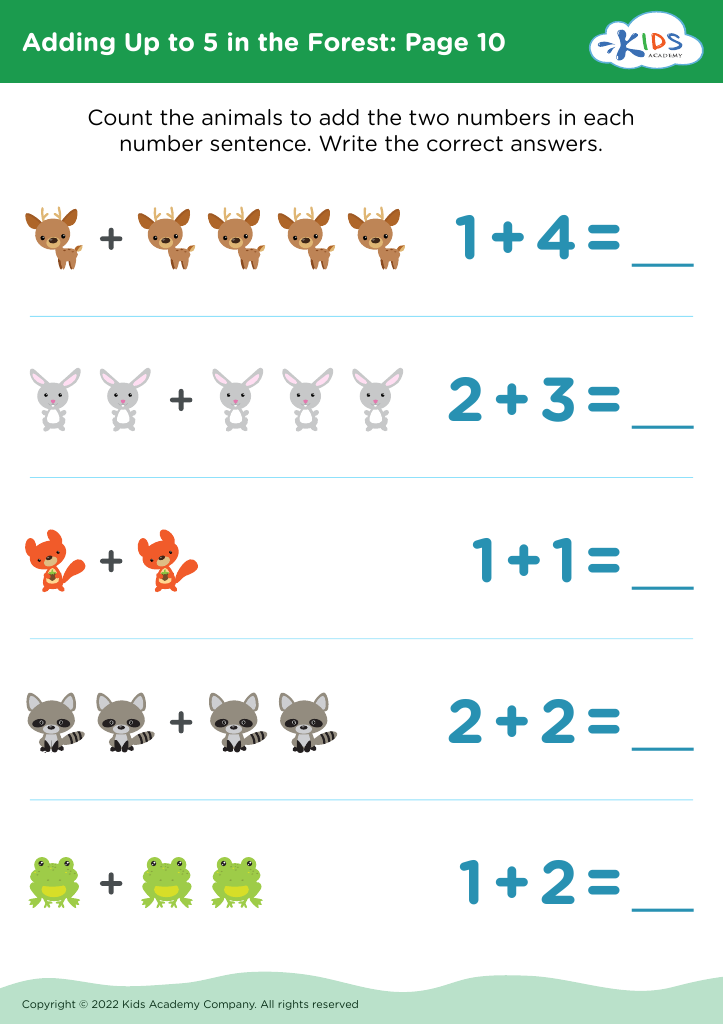
    Adding Up to 5 in the Forest: Page 10
    Adding Up to 5 in the Forest: Page 10
    Adding Up to 5 in the Forest: Page 10
    Worksheet
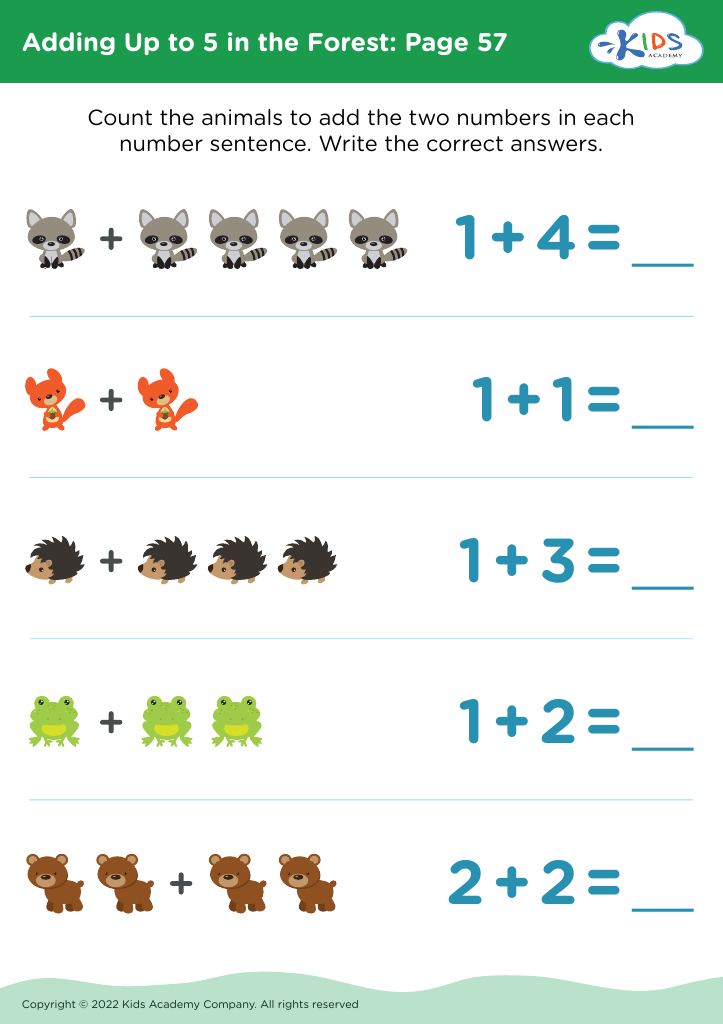
    Adding Up to 5 in the Forest: Page 57
    Adding Up to 5 in the Forest: Page 57
    Adding Up to 5 in the Forest: Page 57
    Worksheet


    Counting skills, particularly in the context of "Adding in the Forest" for children ages 3-9, are essential for several reasons. First, strong counting abilities provide a foundation for future mathematical understanding. As children learn to count, they develop number sense, which helps them grasp more complex concepts such as addition, subtraction, and ultimately, problem-solving.

    Moreover, incorporating themes like the forest into counting activities makes learning more engaging. Children are naturally curious about their environment, and by connecting numbers to familiar settings, educators can enhance interest and retention. This approach encourages active participation and allows children to relate math to real-life scenarios, such as counting animals or trees in the forest, thereby enriching their learning experience.

    Additionally, developing counting skills at an early age fosters cognitive and social development. Children learn to work together, share ideas, and communicate mathematical concepts with peers. Lastly, early numeracy skills have been linked to long-term academic success. By nurturing these skills through imaginative play, thematic activities, and hands-on experiences, parents and teachers can help children build confidence in their abilities and enthusiasm for learning—qualities that will benefit them throughout their education.