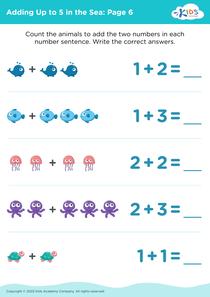
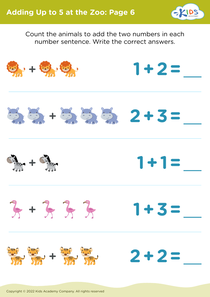
Fine Motor Skills Adding in the Forest Worksheets for Ages 3-9
5 filtered results
-
From - To
Explore our "Fine Motor Skills Adding in the Forest Worksheets" designed for children ages 3-9! These engaging worksheets combine enchanting forest themes with fun math challenges, making learning addition exciting and interactive. Young learners will enhance their fine motor skills through activities like tracing, cutting, and pasting, while practicing basic addition sets. Ideal for use at home or in the classroom, these worksheets support early math development in a playful environment. Help your child develop essential skills through imaginative, hands-on learning experiences that inspire creativity and confidence in their mathematical abilities! Download your worksheets today and watch learning come to life!
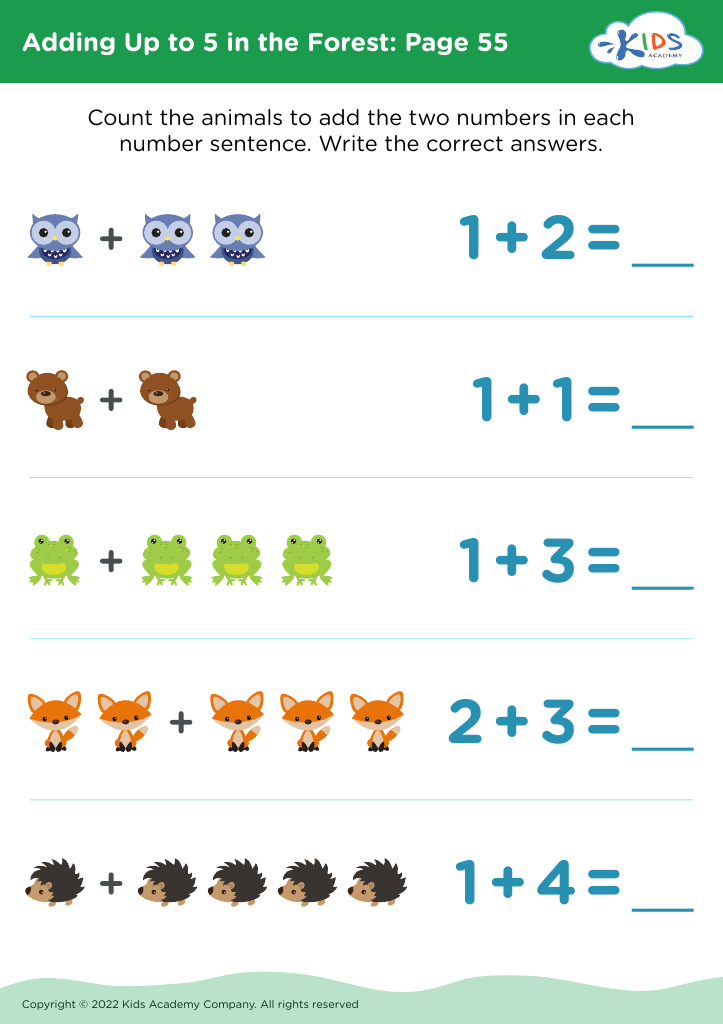
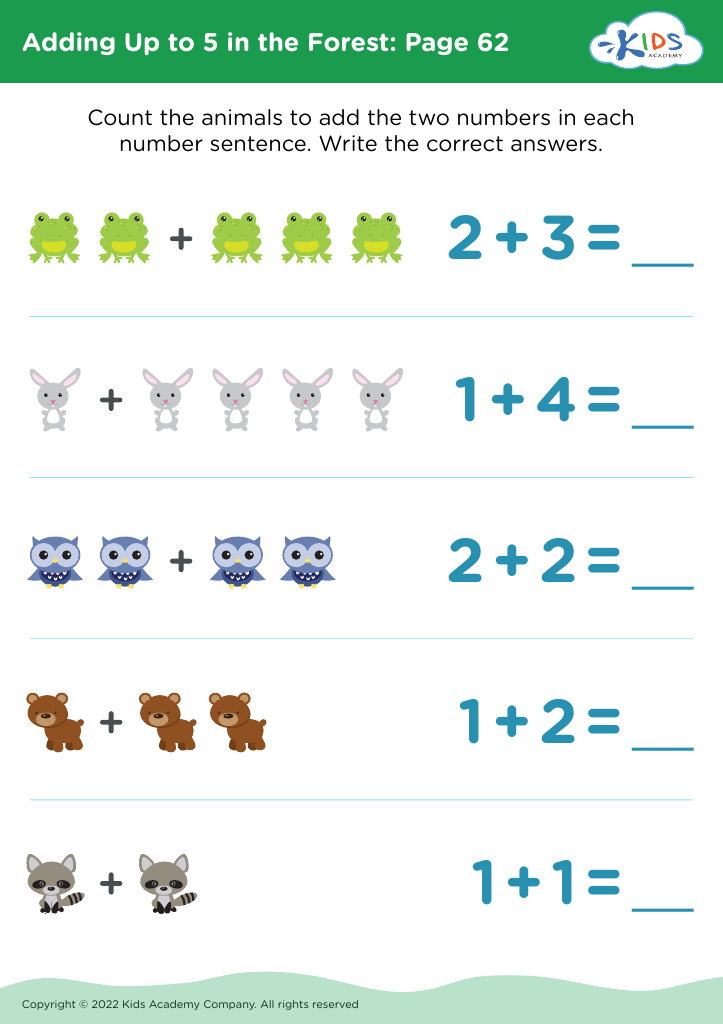
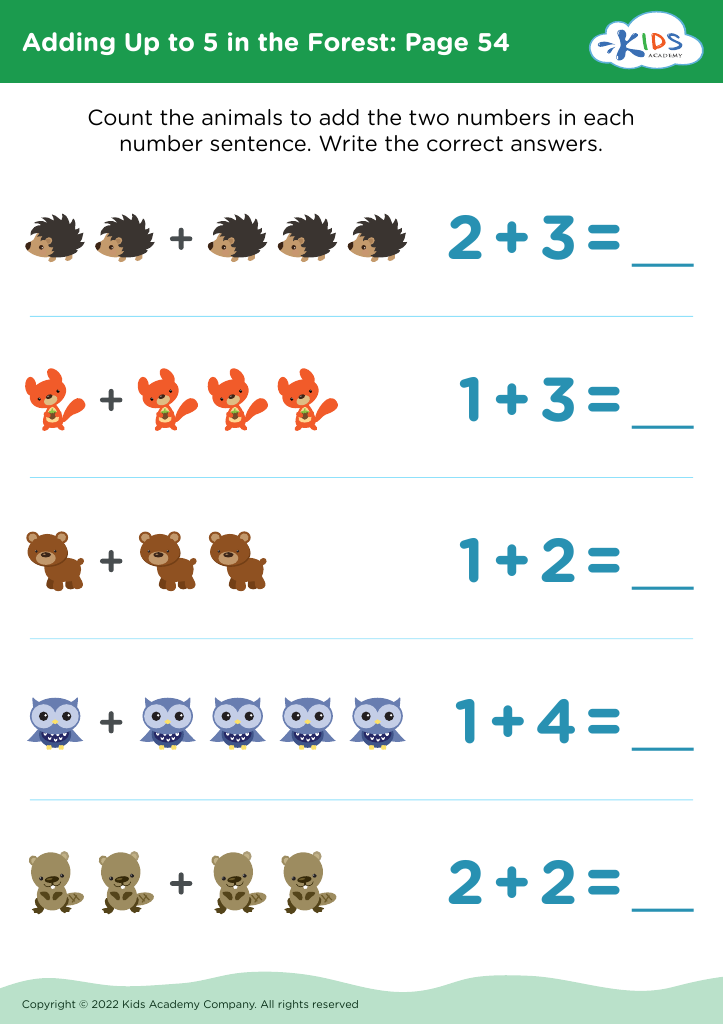
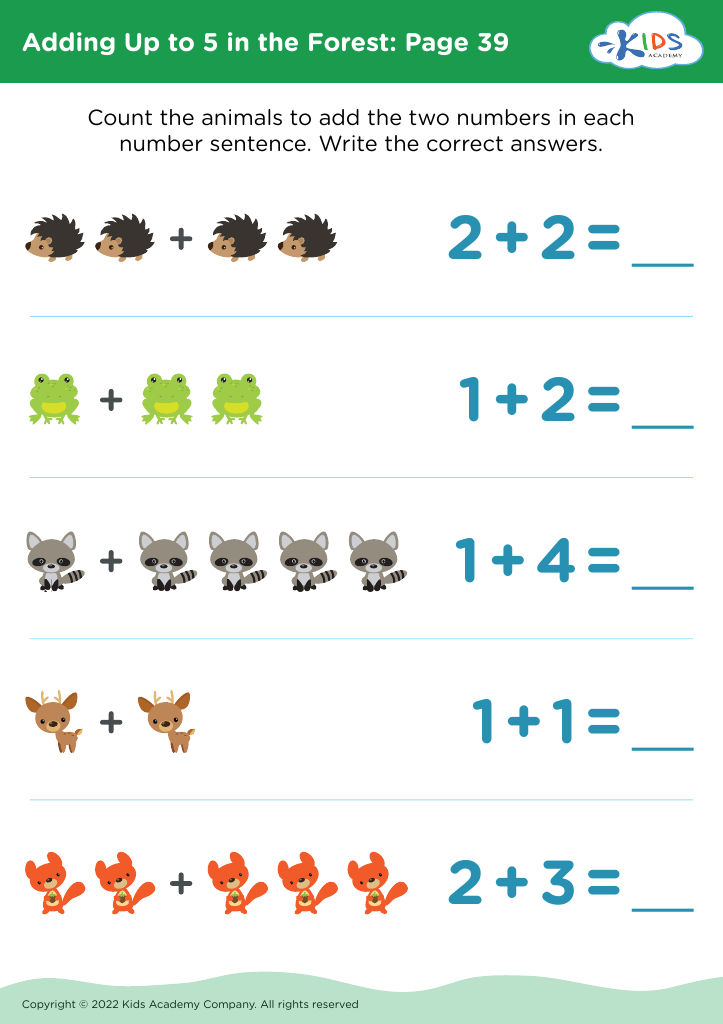
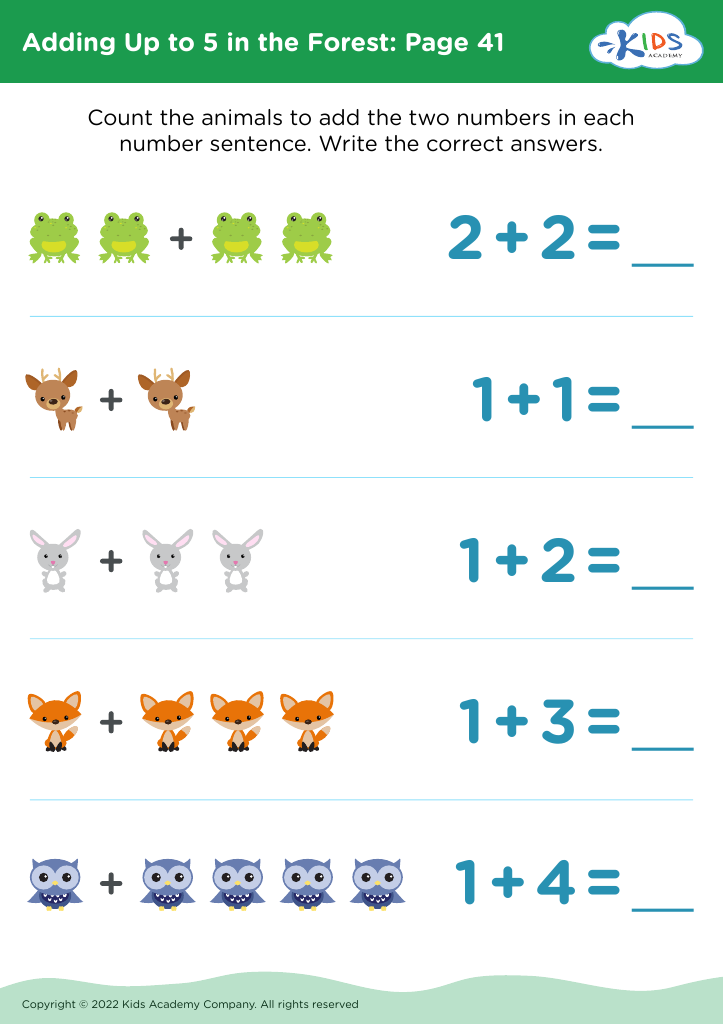



Fine motor skills are essential for children aged 3-9 as they form the foundation for a wide range of everyday tasks and future learning. When parents and teachers engage children in activities such as “Adding in the Forest,” they provide stimulating opportunities for the development of these crucial skills. Fine motor functions involve the coordination of small muscles in the hands and fingers, enabling children to perform tasks like writing, cutting, and buttoning–activities important for independence and later academic success.
Engaging in forest-themed activities combines nature exploration with fine motor skill practice. For example, picking up leaves or arranging natural objects enhances hand-eye coordination and grip strength. Additionally, incorporating counting games or sorting within this context can reinforce numeracy skills while making learning fun and relevant.
Moreover, these experiences cultivate concentration and patience in young learners, building their confidence in handling materials. Encouraging exploration of the outdoors enriches a child's sensory experiences, linking physical movement with cognitive development. In summary, parents and teachers should prioritize fine motor skill development through engaging activities like “Adding in the Forest” as these skills significantly contribute to a child's overall growth, learning potential, and readiness for future academic challenges.