Improves concentration Adding in the Forest Worksheets for Ages 3-9
4 filtered results
-
From - To
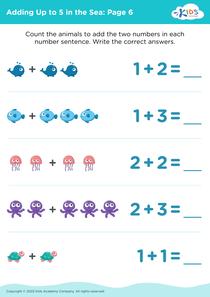
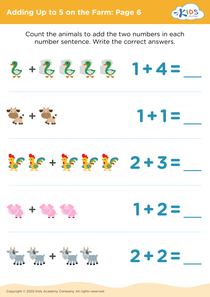
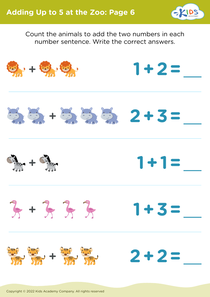
Boost your child's focus and cognitive skills with our "Adding in the Forest Worksheets" designed for ages 3-9! These engaging and beautifully illustrated worksheets help young learners improve their concentration by working through fun and interactive addition problems. Set in a vibrant forest theme, children will find themselves captivated as they navigate through various levels of challenging exercises. With each worksheet, kids enhance their attention span, critical thinking skills, and numerical understanding while exploring the wonders of nature. Transform math time into exciting adventures with these engaging worksheets, ensuring kids build strong foundational skills while having a blast learning!
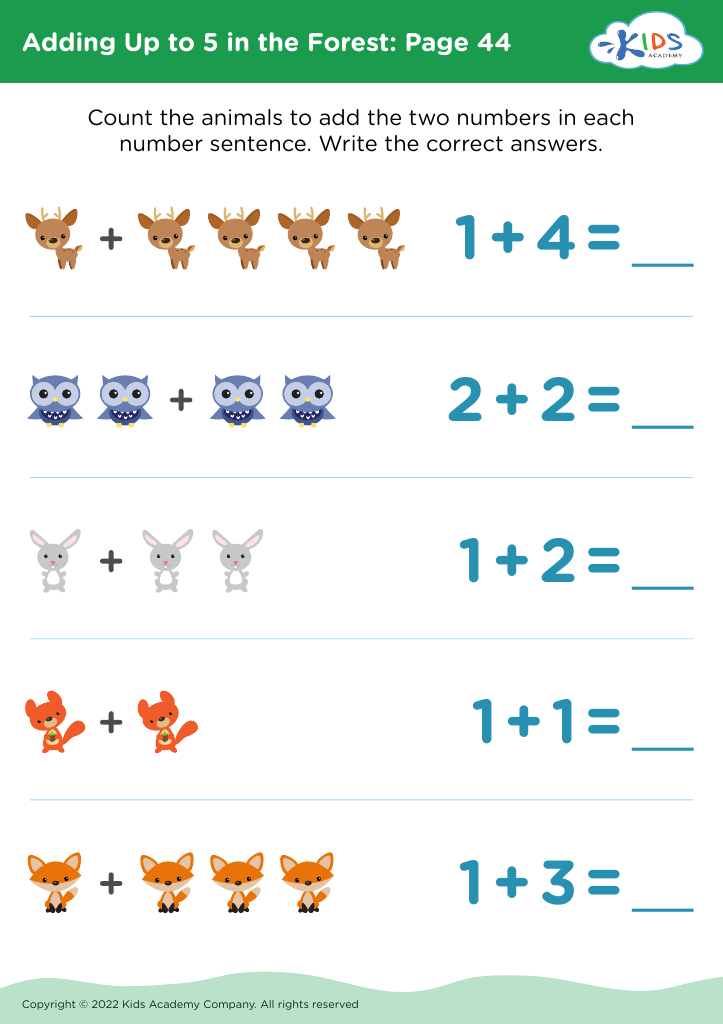
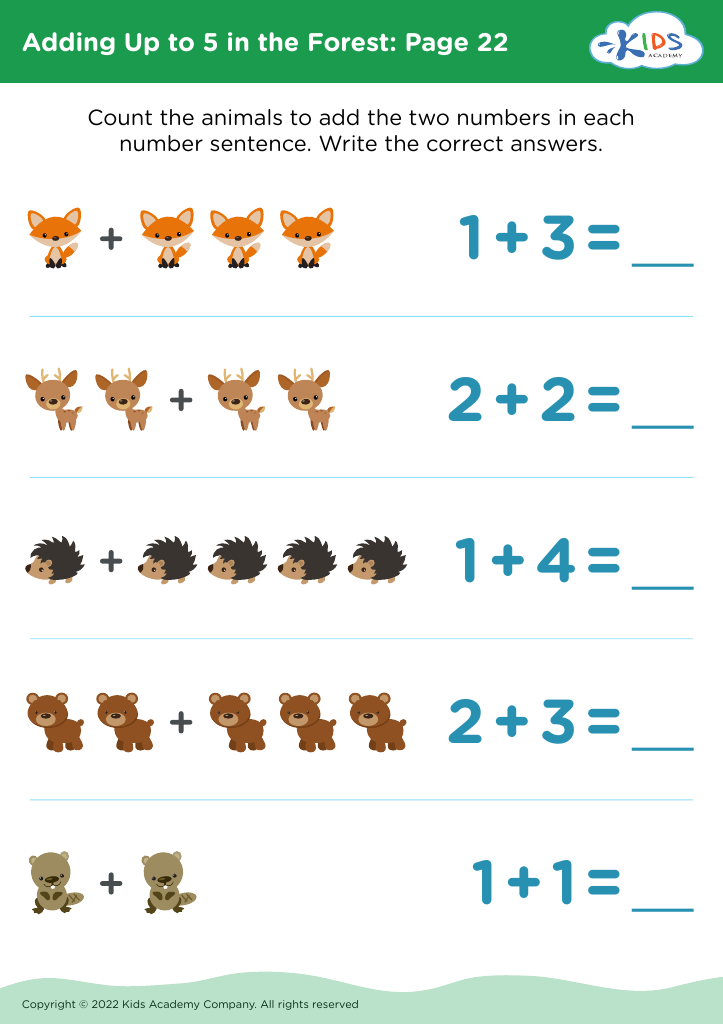
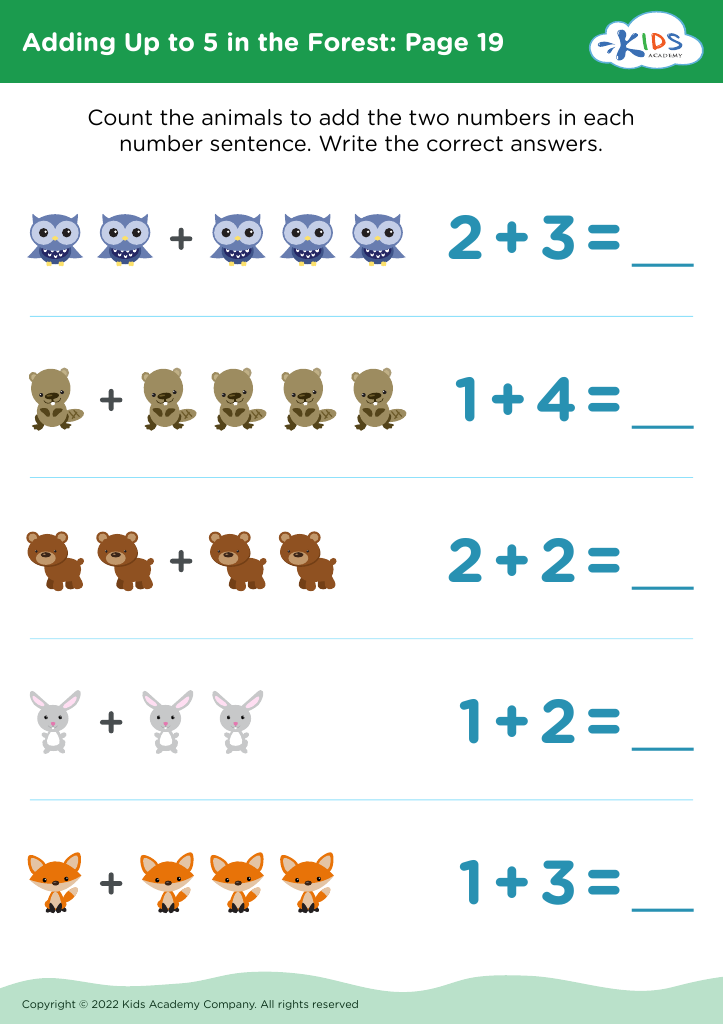
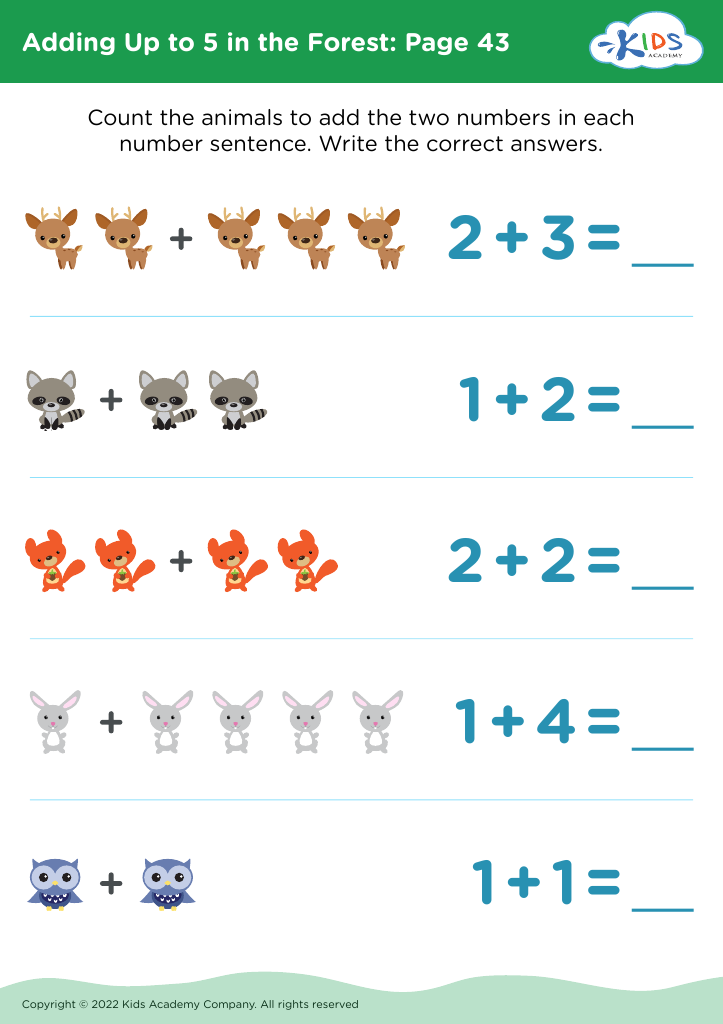



Parents and teachers should prioritize incorporating “Improves Concentration: Adding in the Forest” activities for children ages 3-9 due to the crucial role that concentration plays in early development. These outdoor activities not only enhance mathematical skills, such as addition, but also improve a child's ability to focus and engage with their environment.
Spending time in natural settings stimulates a child’s senses, promoting cognitive growth and emotional well-being. The connection to nature allows young learners to practice essential skills in a less stressful setting, facilitating better retention of information and improving problem-solving abilities. By engaging in these fun, hands-on math experiences, children are more likely to develop a positive attitude towards learning.
Additionally, forest activities encourage physical movement, which is linked to improved brain function and overall health. Children who are more active can concentrate better in structured learning environments, making the transition from play to academic settings smoother.
Finally, fostering an early love for math through creative, outdoor activities sets the foundation for lifelong learning and curiosity. By supporting such initiatives, parents and teachers create impactful, enriching experiences that contribute significantly to a child’s developmental journey.