Nature appreciation Adding in the Forest Worksheets for Ages 3-9
5 filtered results
-
From - To
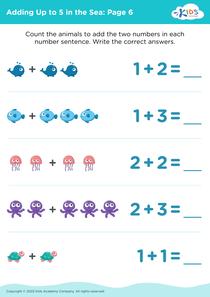
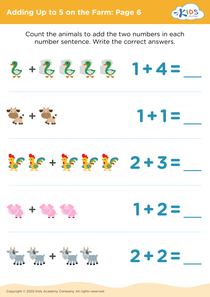
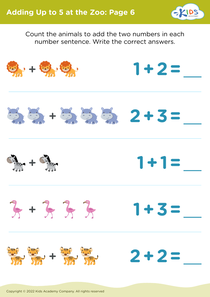
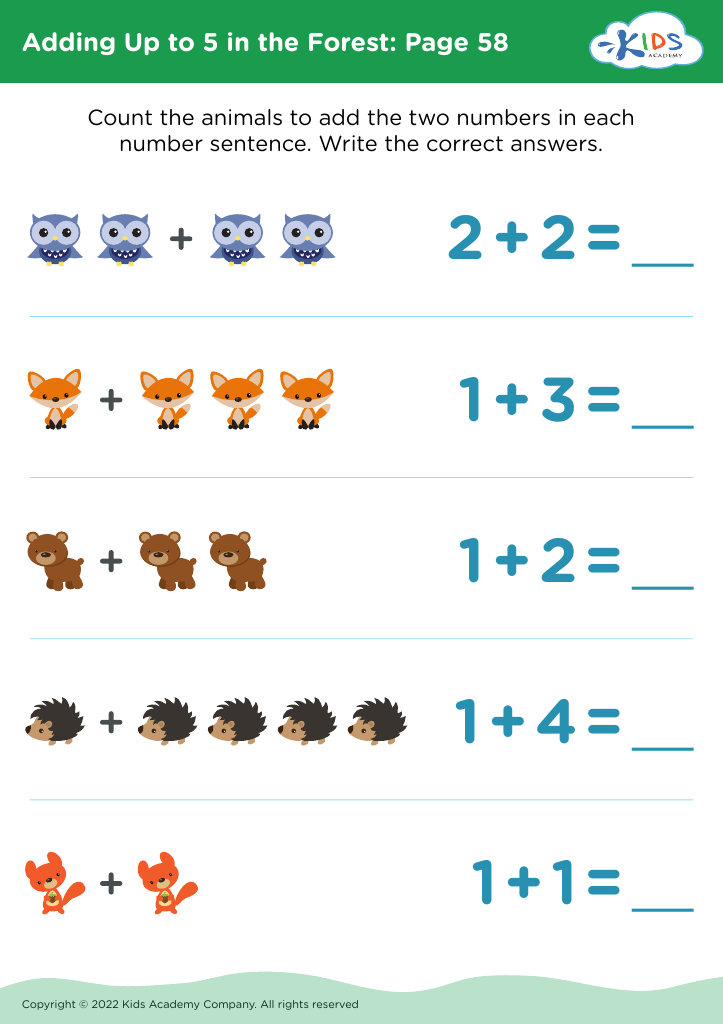
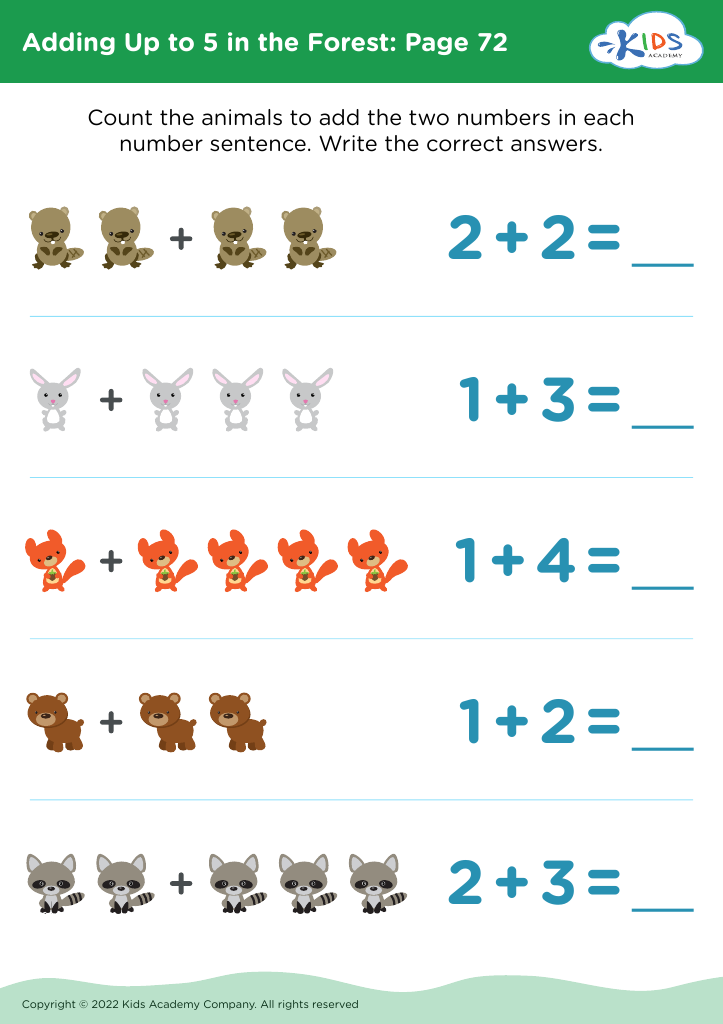
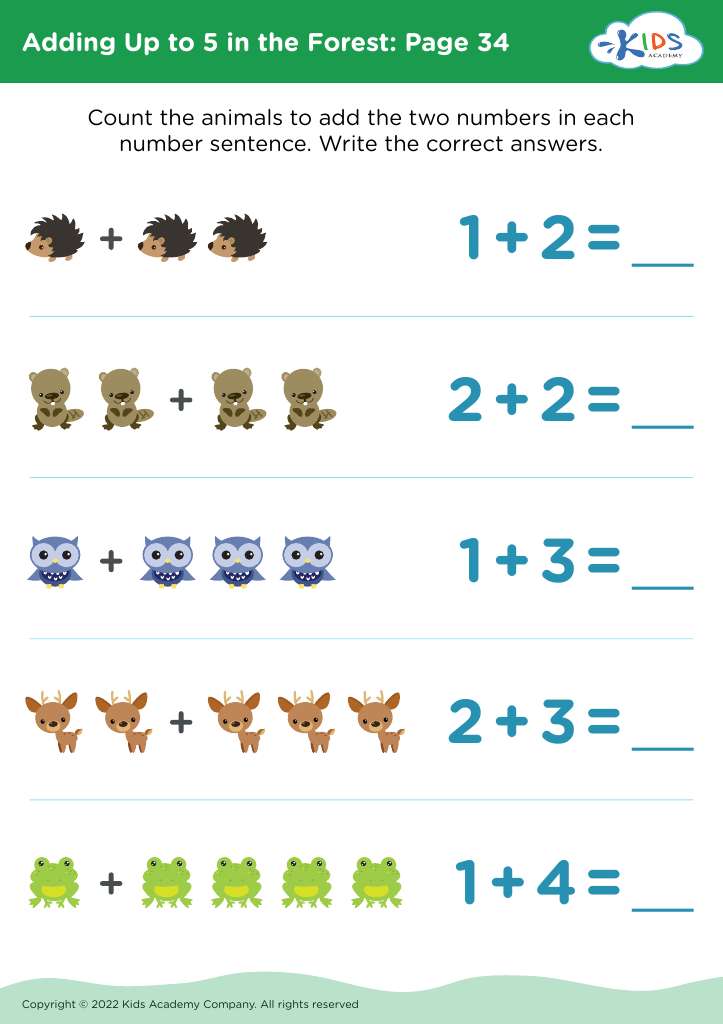
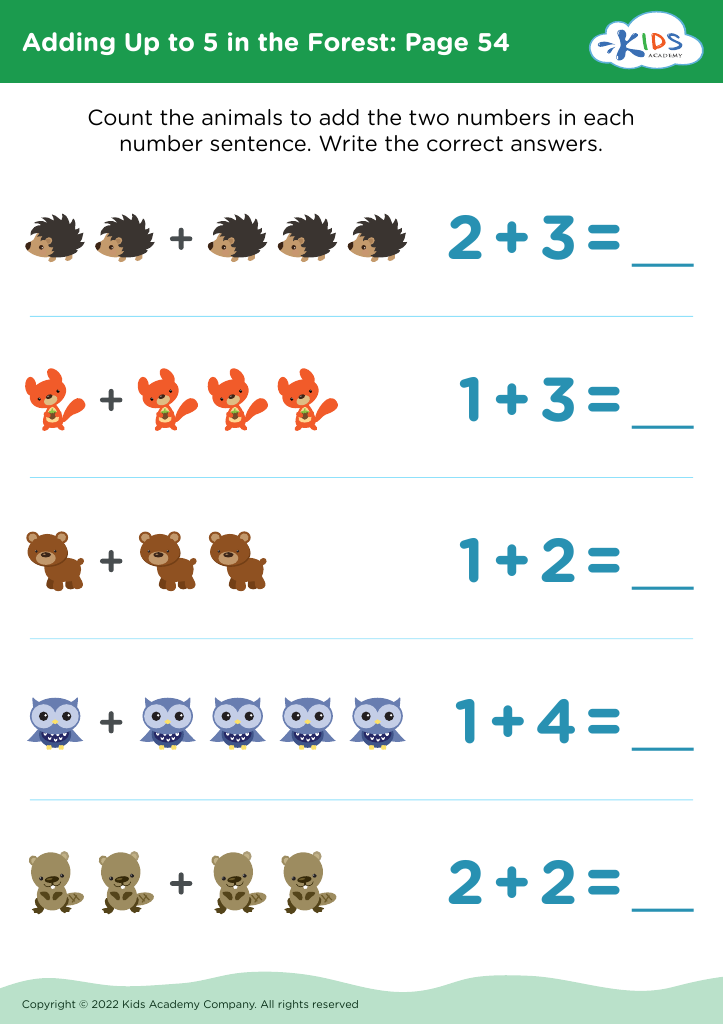
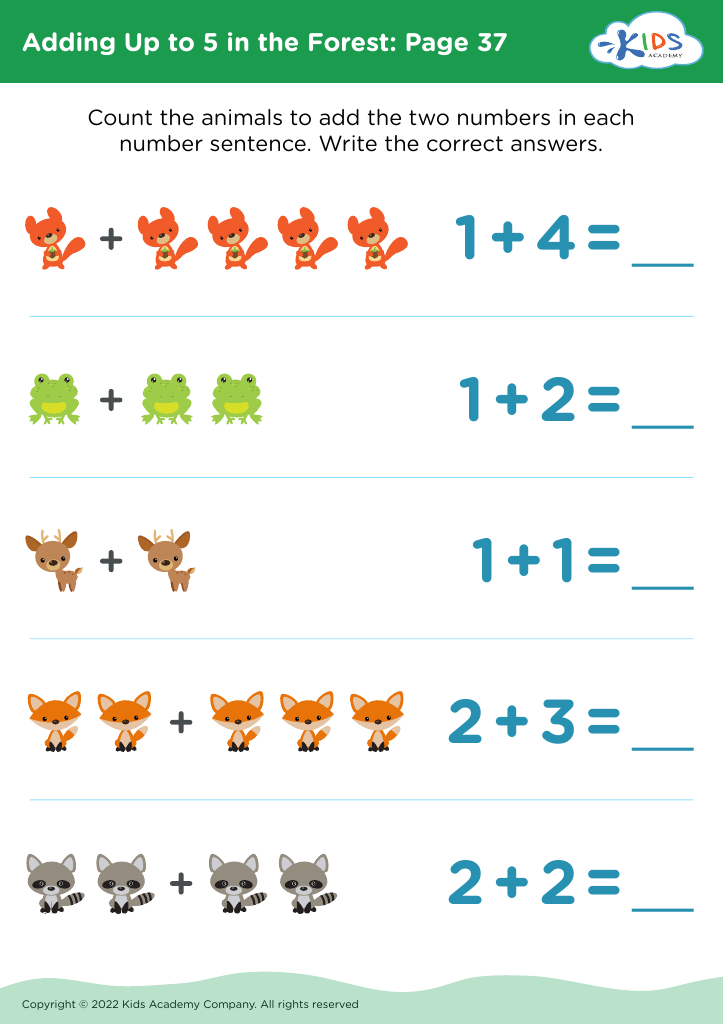
Discover the joy of nature and math with our "Nature Appreciation Adding in the Forest Worksheets" for children ages 3-9! These engaging worksheets combine fun jungle imagery with essential addition skills, fostering a love for both learning and the great outdoors. Young learners will explore forest animals, plants, and landscapes, making math an exciting adventure. By integrating nature themes, we inspire curiosity and compassion for the environment while promoting cognitive development. Perfect for home or classroom use, these worksheets are designed to spark creativity and critical thinking. Get your little ones excited about math and nature today!



Nature appreciation, especially through activities in the forest, is crucial for children ages 3-9. During these formative years, children are naturally curious, and engaging with nature deepens their understanding of the world. Forest exploration offers hands-on learning experiences, fostering a sense of wonder and respect for the environment.
For parents and teachers, promoting nature appreciation supports holistic development. First, it nurtures physical health: outdoor activities enhance motor skills and promote active lifestyles. Secondly, it boosts cognitive growth; children observe changing seasons, animal habitats, and plant life, instilling a basis for scientific inquiry.
Emotional and social skills also flourish in natural settings. Forest activities encourage teamwork, problem-solving, and communication as children engage in group activities. Nature becomes a backdrop for storytelling and imaginative play, enhancing creativity and emotional intelligence.
Moreover, early exposure to nature fosters lifelong environmental stewardship, instilling values of sustainability and eco-consciousness. As children learn to appreciate biodiversity, they develop empathy not only towards nature but towards each other.
Ultimately, encouraging nature appreciation through outdoor experiences in the forest supports children's overall growth, education, and well-being, making it a fundamental focus for parents and educators alike.