Understanding Quantities Adding in the Forest Worksheets for Ages 3-9
6 filtered results
-
From - To
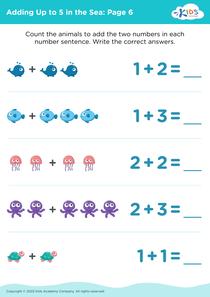
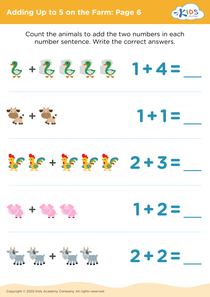
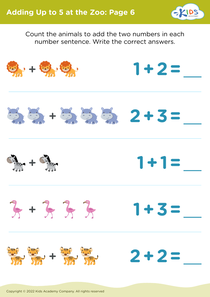
"Understanding Quantities: Adding in the Forest Worksheets" are designed for children ages 3-9 to help them master basic math skills in a fun and engaging way. These worksheets use colorful forest-themed imagery to capture children's interest while teaching them to understand and add quantities. Perfect for early learners, these exercises aid in the development of numerical proficiency and enhance problem-solving skills. Each worksheet incorporates visually appealing pictures of forest animals and natural elements to make learning enjoyable. Parents and educators will find this resource invaluable for instilling fundamental math concepts in young minds. Download today and watch your child's math confidence grow!
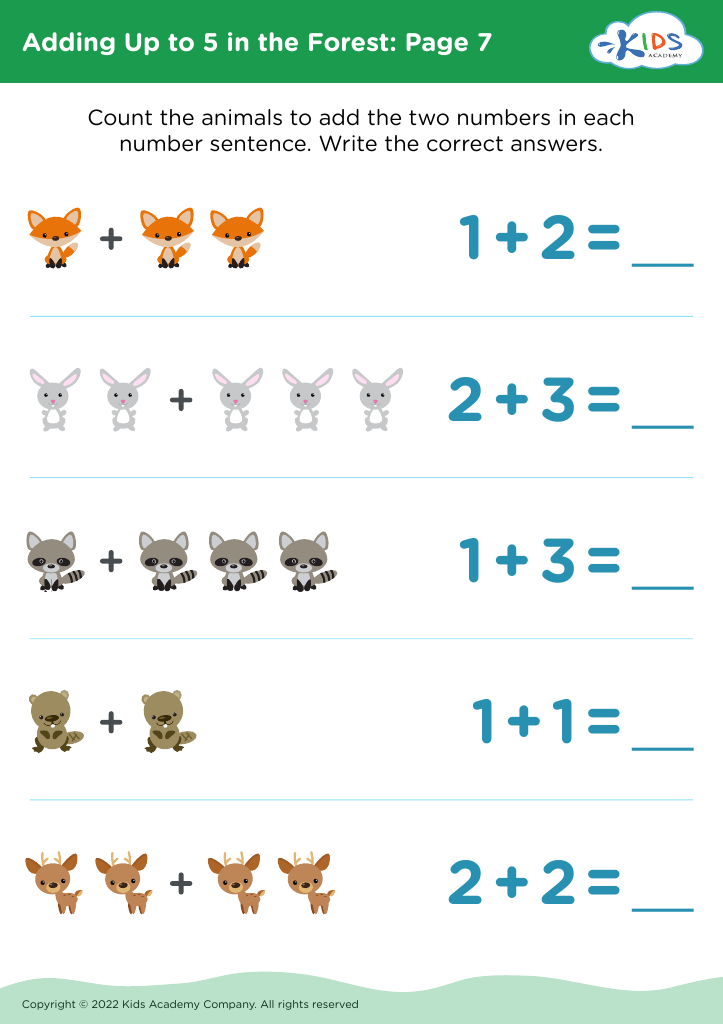
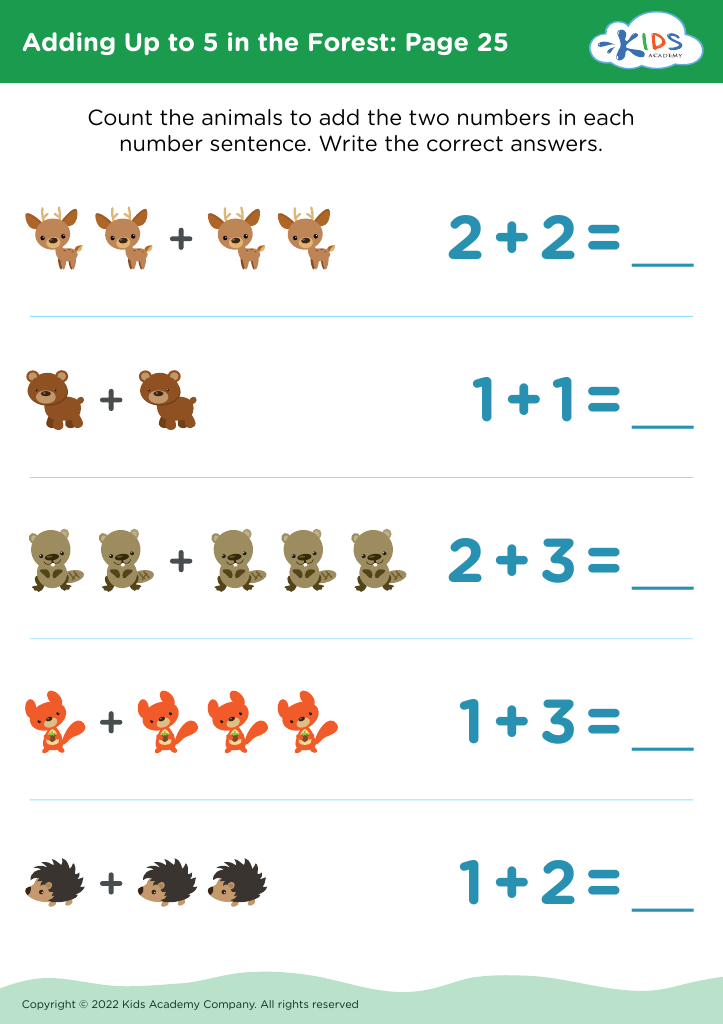
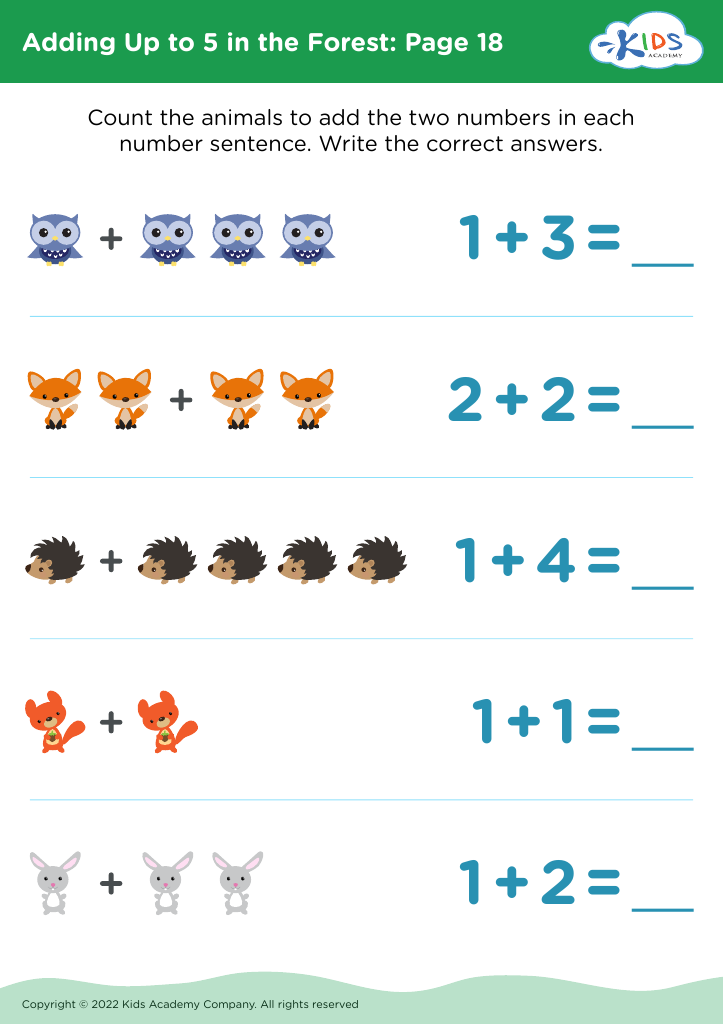
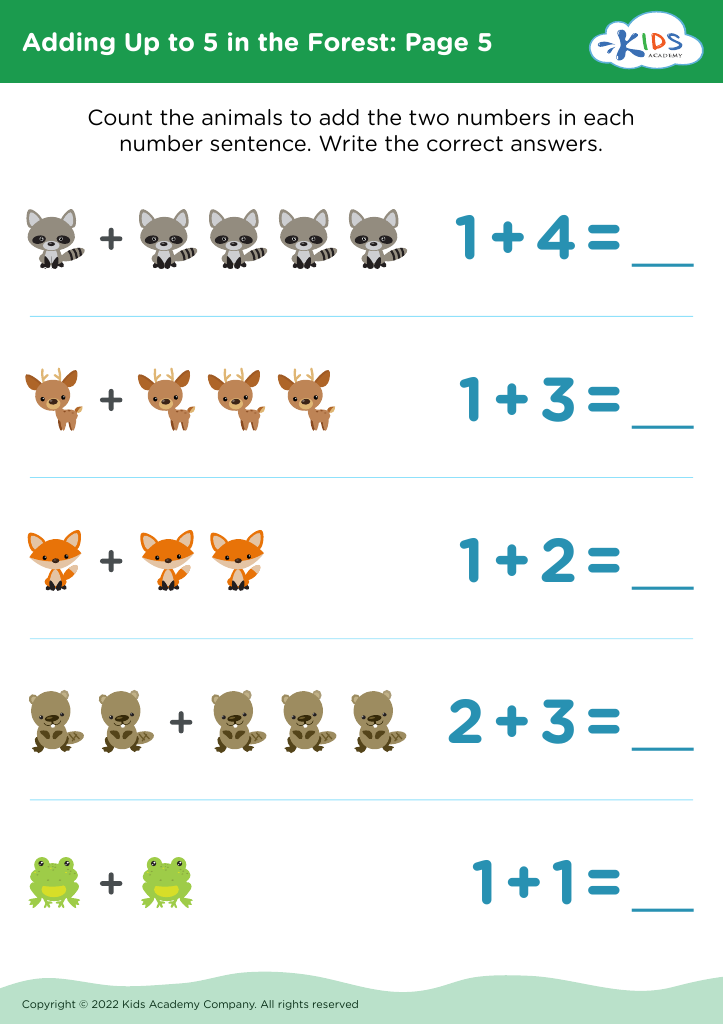
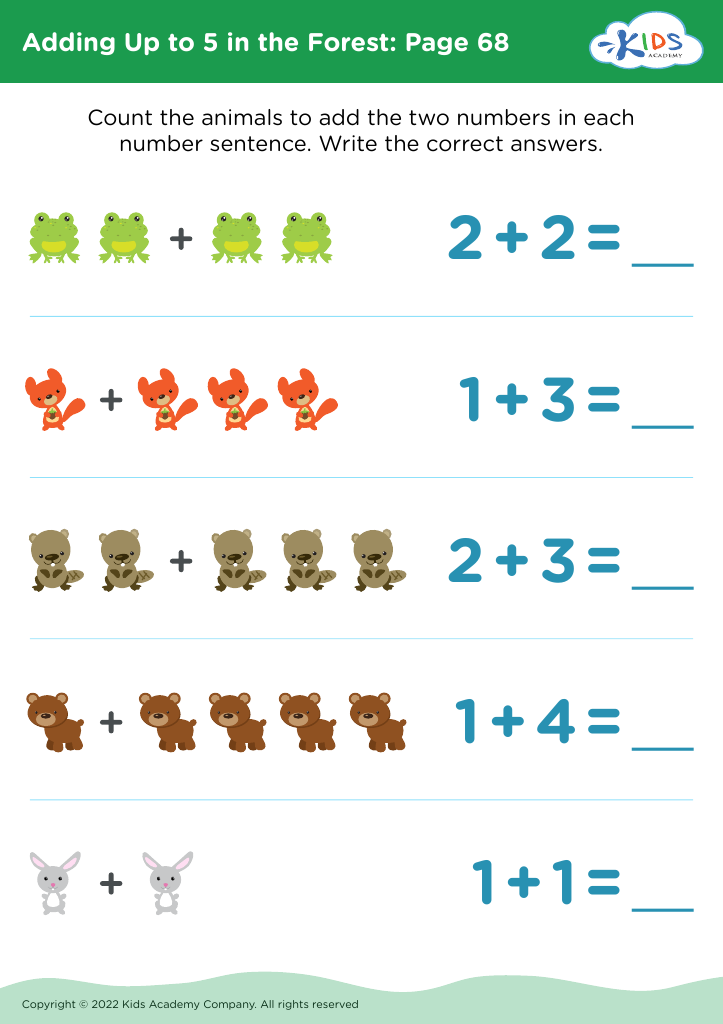
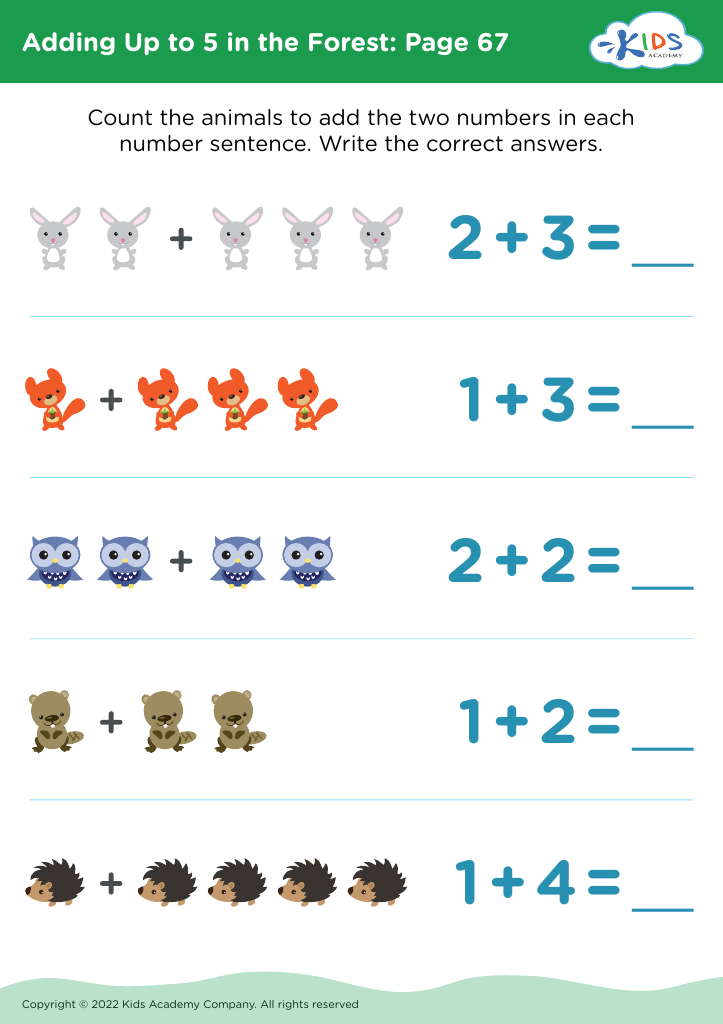



Understanding Quantities Adding in the Forest for children aged 3-9 is a fantastic tool for both parents and teachers because it provides a natural, engaging way to introduce and reinforce fundamental math concepts. This storyline integrates fun and adventure, which taps into children's innate curiosity and enthusiasm for exploring nature. By embedding math lessons in a forest setting, learning becomes a part of play, which can enhance cognitive development and retention of information.
At these ages, children develop crucial brain functions related to numeracy, including counting, recognizing numbers, and understanding basic addition. A playful, story-driven environment aids in making abstract concepts tangible. For instance, comparing numbers of animals or adding quantities of forest items can strengthen their ability to visualize math problems, enhancing their numerical literacy.
Moreover, such interactive learning fosters an early love for math and cultivates important life skills, like problem-solving and logical thinking. It also offers a sensory-rich experience by involving sight, sound, and possibly touch (if manipulatives or real objects are used) – creating multi-modal learning opportunities. In this formative stage, positive learning experiences can significantly shape attitudes towards subjects like mathematics, building a strong foundation for future academic success. Thus, both parents and teachers should integrate resources like these to facilitate a more engaging and effective math learning environment.