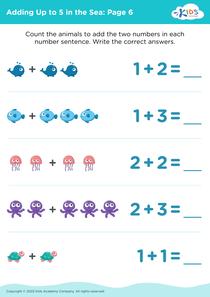
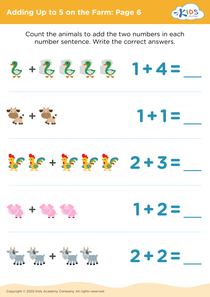
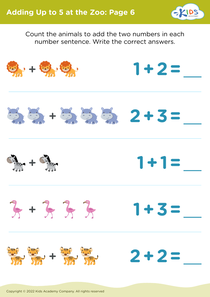
Visual perception Adding in the Forest Worksheets for Ages 3-9
4 filtered results
-
From - To
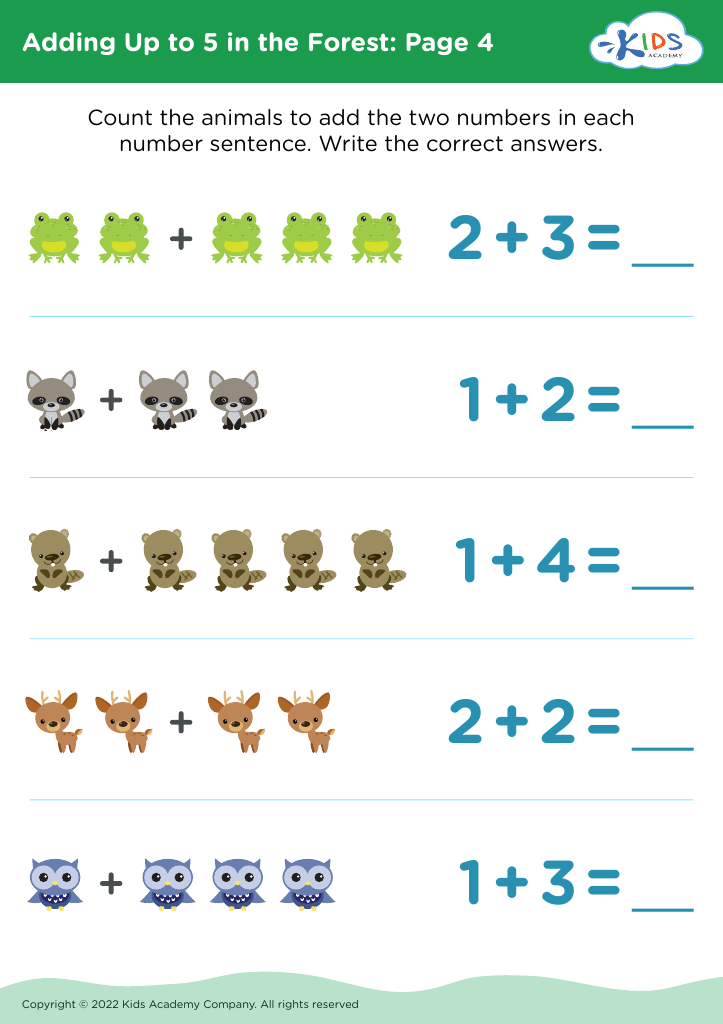
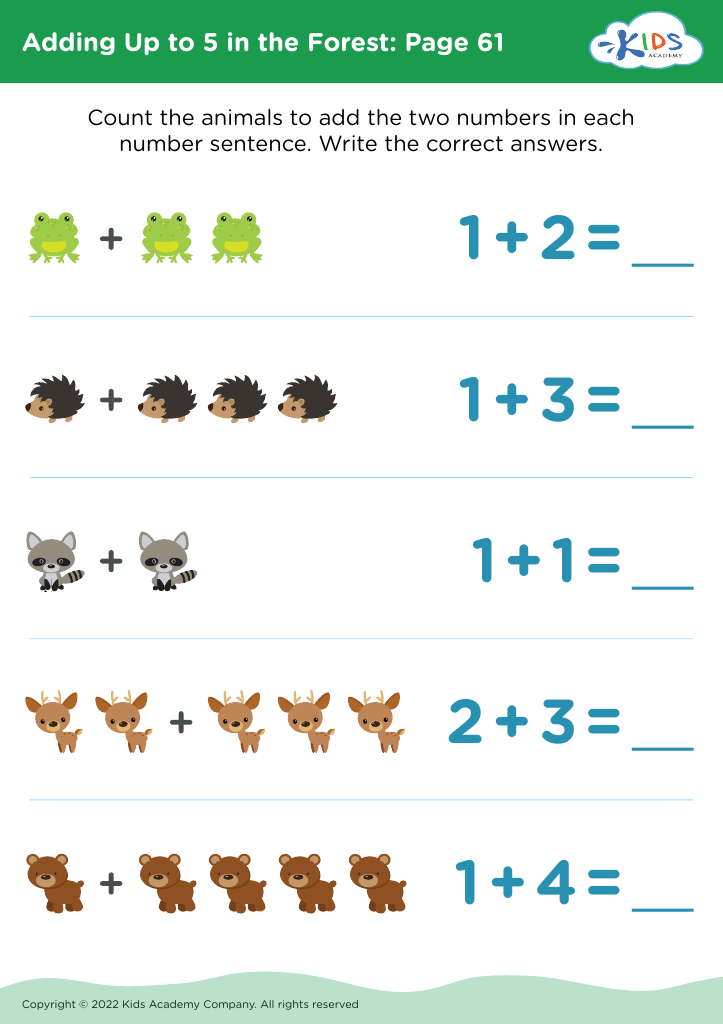
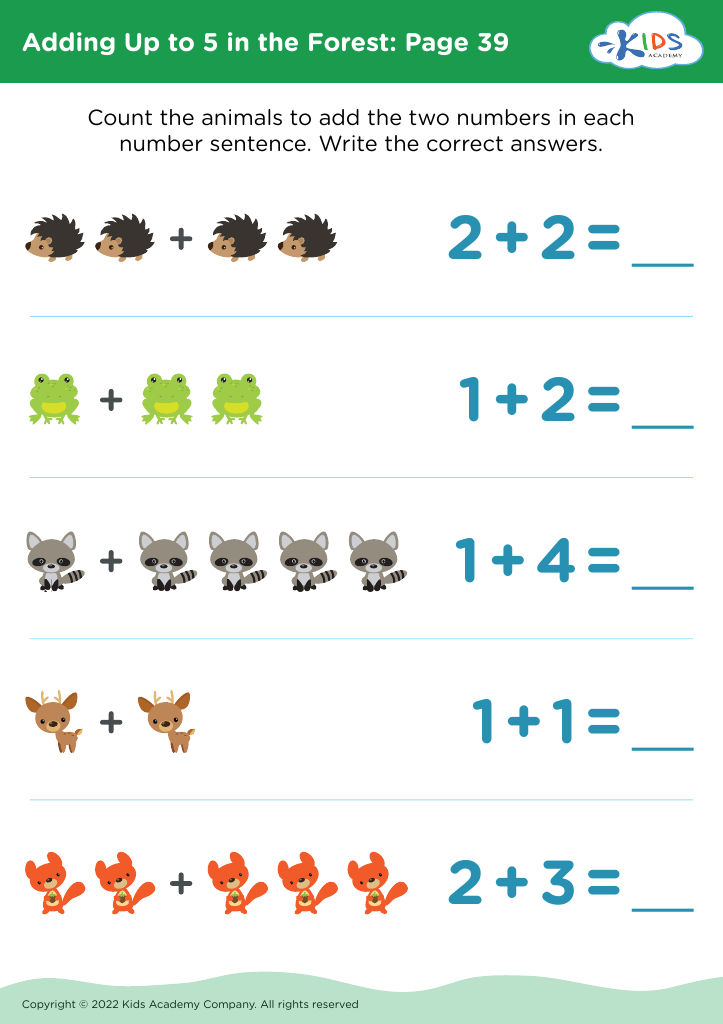
Explore our engaging "Visual Perception Adding in the Forest Worksheets" designed for children ages 3-9! These interactive worksheets enhance mathematical skills through delightful forest-themed activities that captivate young learners. Each worksheet is tailored to develop visual perception, critical for understanding numbers and their relationships. Children will practice addition in a fun and supportive environment, ensuring they grasp fundamental math concepts while enjoying nature's charm. Perfect for home or classroom use, these resources promote creativity and cognitive development. Ignite your child's love for learning with our enchanting worksheets that blend visual perception with essential math skills!
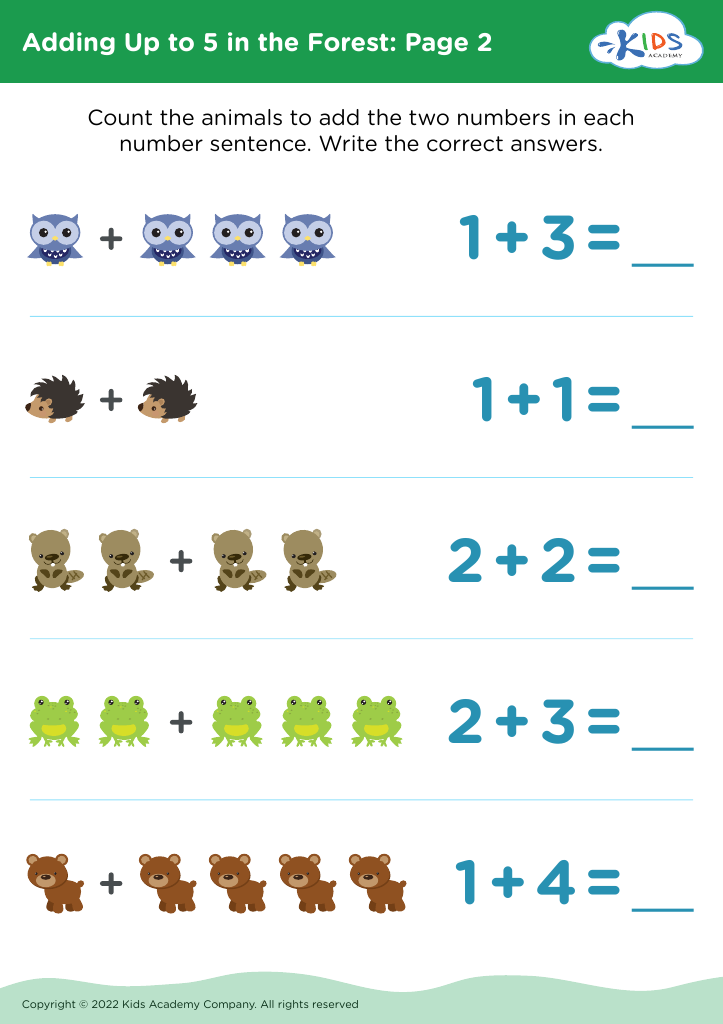



Visual perception is a vital cognitive skill that plays a crucial role in the development of young children aged 3-9. It encompasses the ability to interpret and make sense of what we see, helping children to understand their environment and navigate their learning experiences effectively. Parents and teachers should care about visual perception because it directly impacts relationships with other foundational skills, such as reading, mathematics, and problem-solving.
In a world increasingly filled with visual stimuli, fostering strong visual perceptual skills can aid children in differentiating shapes, understanding spatial relationships, and recognizing patterns—key elements in many academic tasks. Programs like "Adding in the Forest" can particularly benefit children, as they combine engaging outdoor elements with crucial visual activities. This playful and immersive approach captures children’s attention, making the learning process enjoyable and memorable.
Moreover, enhanced visual perceptual skills can promote self-confidence and independence in children, allowing them to interact with their surroundings more effectively. As children learn to interpret visual information better, they develop critical thinking skills and improve their ability to engage in cooperative play and communication with peers. Ultimately, by prioritizing visual perception, parents and teachers set the groundwork for lifelong learning and academic success.