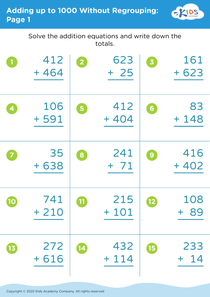
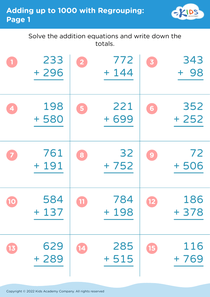
Comparing Fractions Adding up to 1000 Misc Worksheets for Ages 3-9
5 filtered results
-
From - To
Welcome to our "Comparing Fractions Adding up to 1000 Misc Worksheets" page, designed for kids aged 3-9! Our engaging worksheets help young learners grasp the concept of comparing fractions in a fun and interactive manner. This resource supports foundational math skills, allowing children to practice identifying, ordering, and understanding fractions while working with numbers up to 1000. With a variety of colorful visuals and activities, kids will reinforce their learning experience through hands-on practice. Perfect for both classroom settings and at-home learning, these worksheets foster critical thinking and encourage a love for math early on. Dive in and watch your child flourish!
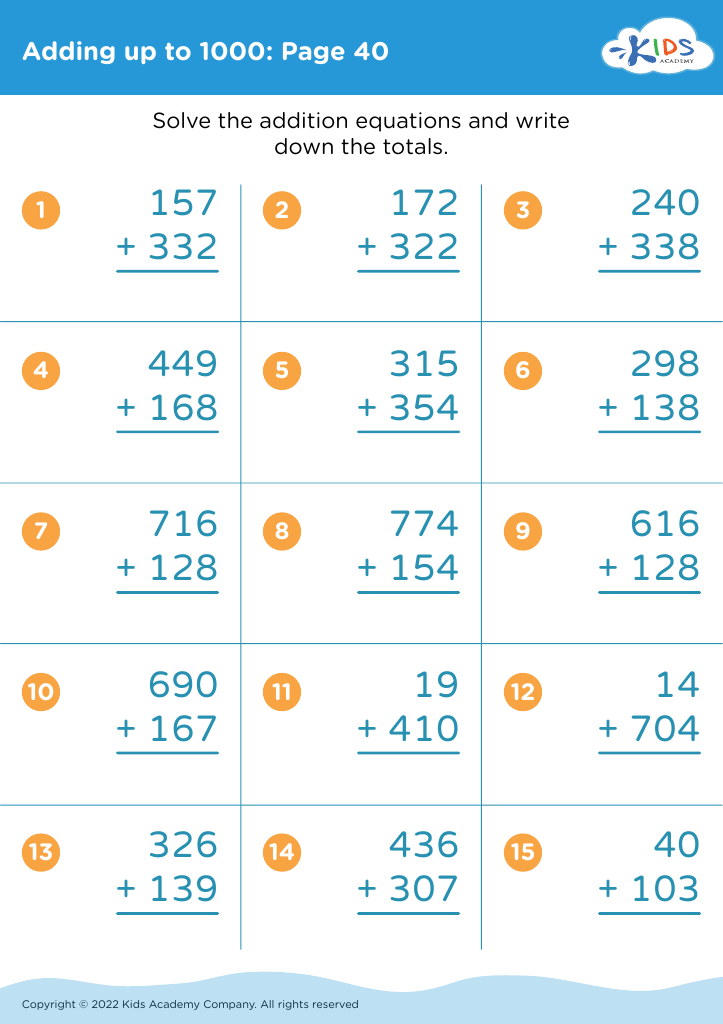
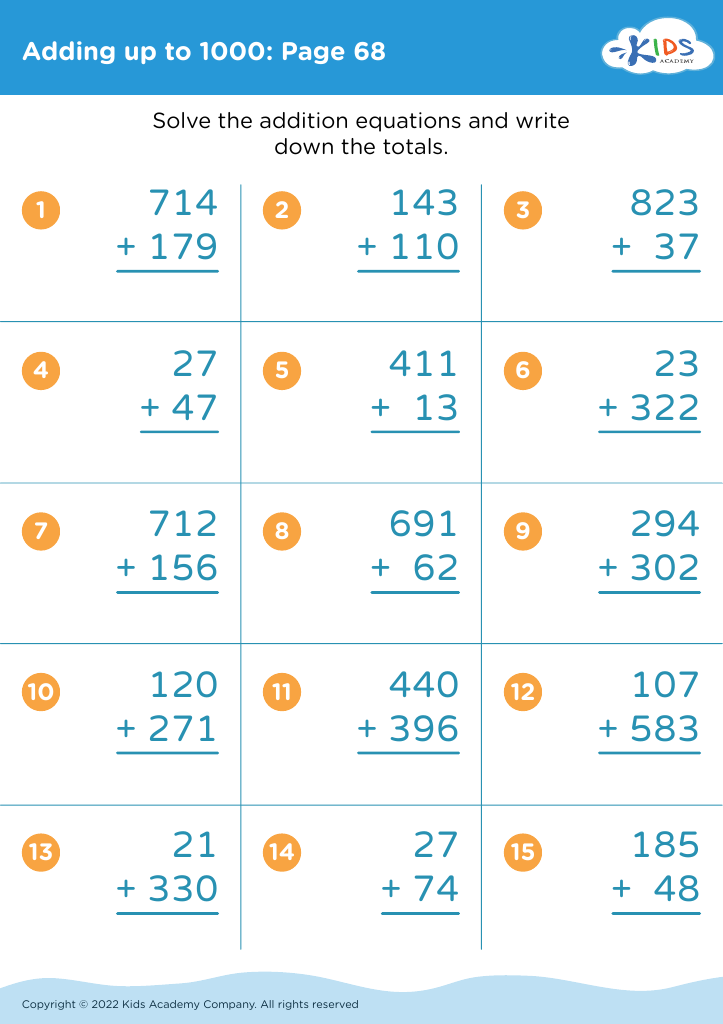
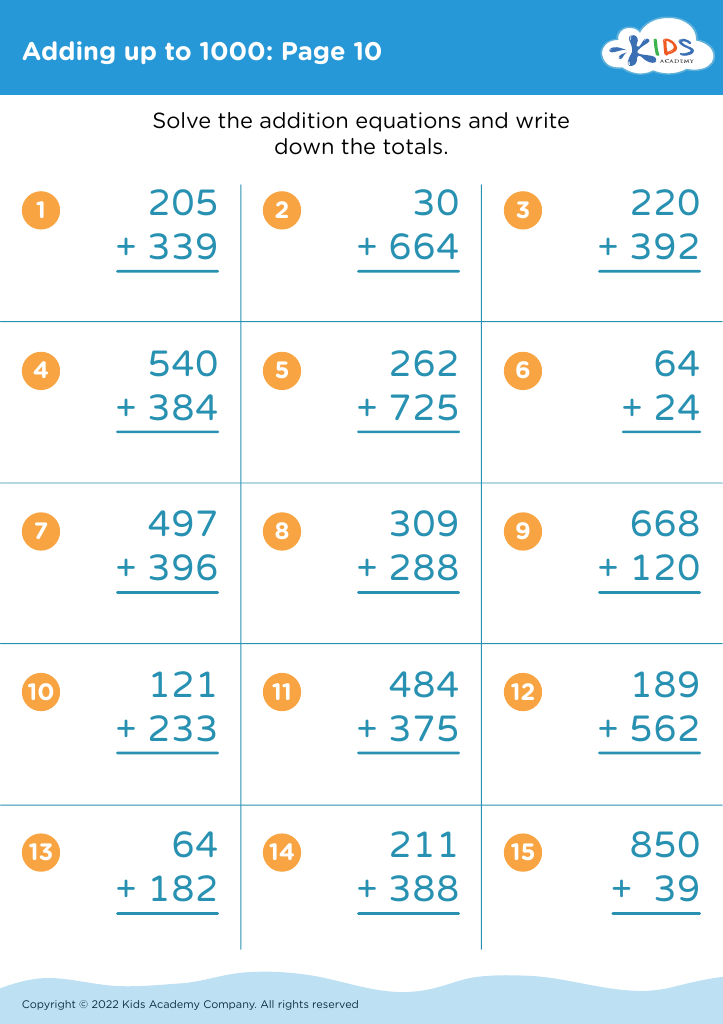
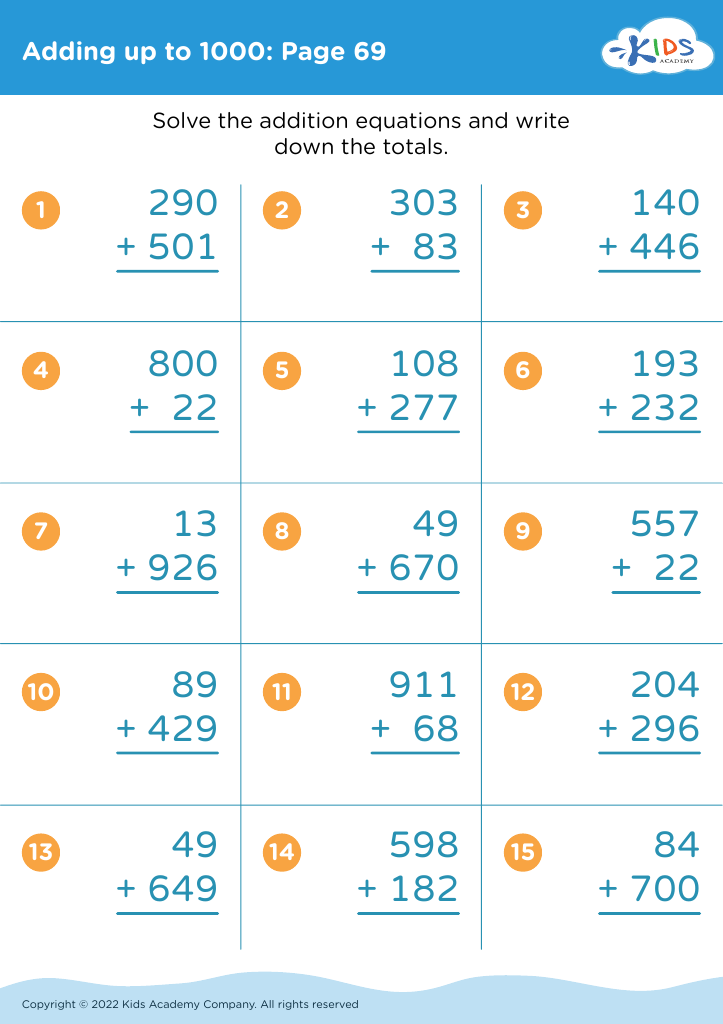
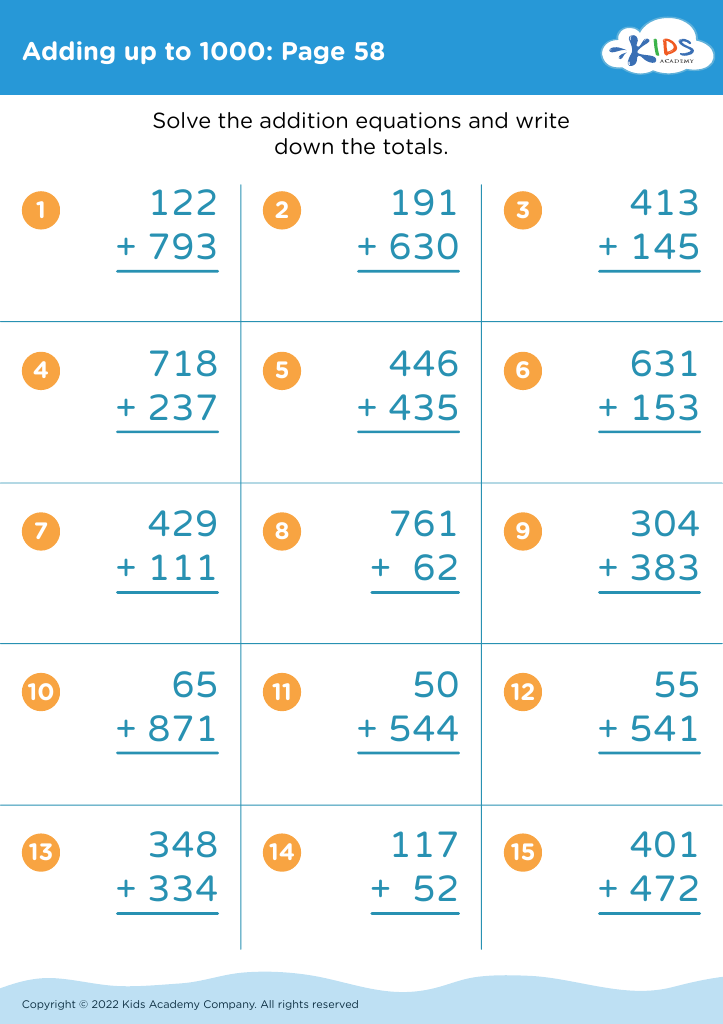


Understanding fraction comparison is essential for children aged 3-9, as it lays the foundation for more advanced mathematical concepts later on. For parents and teachers, recognizing the significance of comparing fractions fosters critical thinking and boosts problem-solving skills that are vital in everyday life.
When children learn to compare fractions, especially in playful and engaging ways, they develop a stronger number sense. It helps them grasp larger concepts related to fractions—such as how parts relate to wholes and how to work with divisions of numbers. These skills incorporate not only mathematics but also cognition, enhancing their cognitive development.
By learning to compare fractions effectively, children can better understand concepts like fairness in sharing or equal divisions in real-life scenarios, helping them relate mathematics to their daily lives. It nurtures confidence, allowing learners to take ownership of their math skills, and sets the stage for future academic success in subjects beyond math.
Encouraging engagement in activities that involve comparing fractions within playful contexts ensures learning remains engaging, relatable, and enjoyable. Together, parents and teachers can build an environment where children's early math experiences are positive and robust, promoting a lifelong appreciation for learning.