Counting practice Adding up to 1000 Misc Worksheets for Ages 3-9
8 filtered results
-
From - To
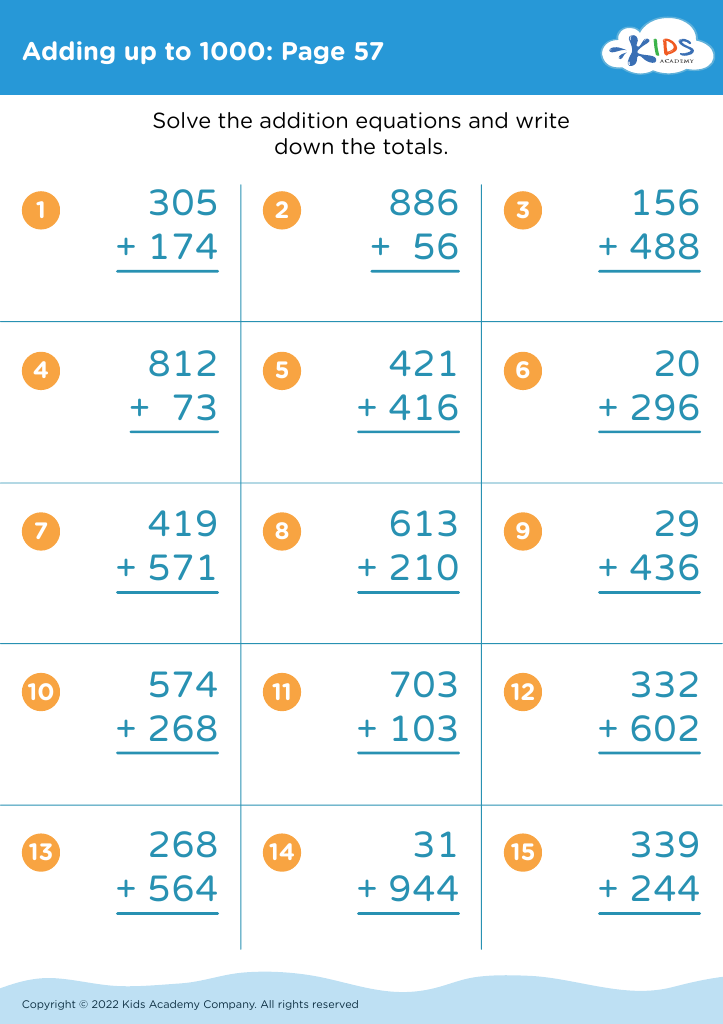
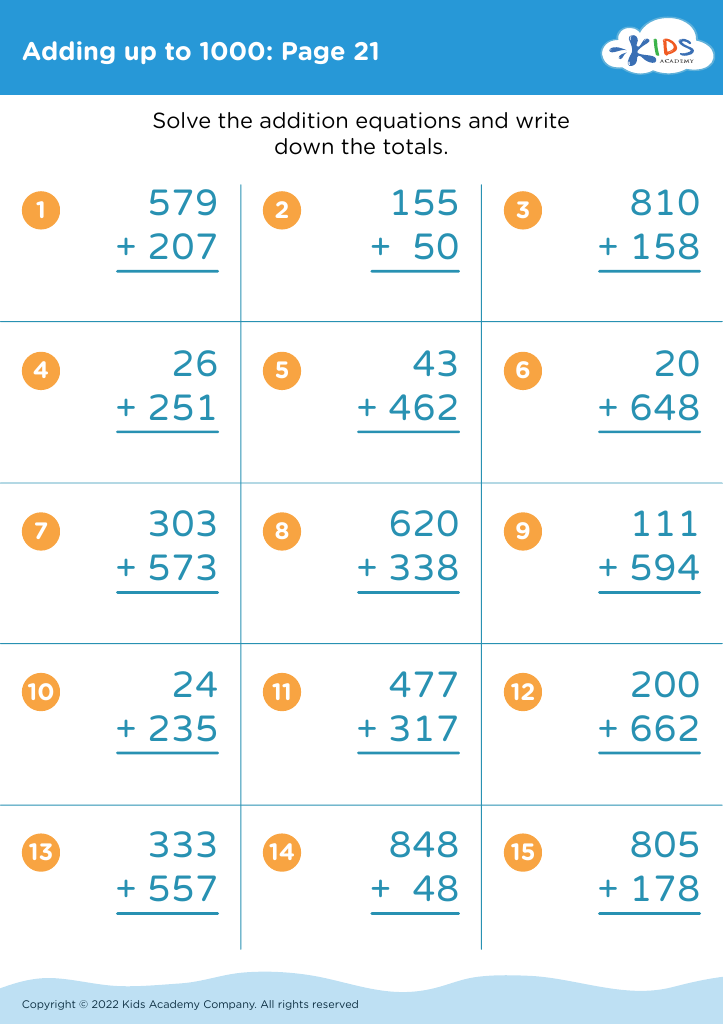
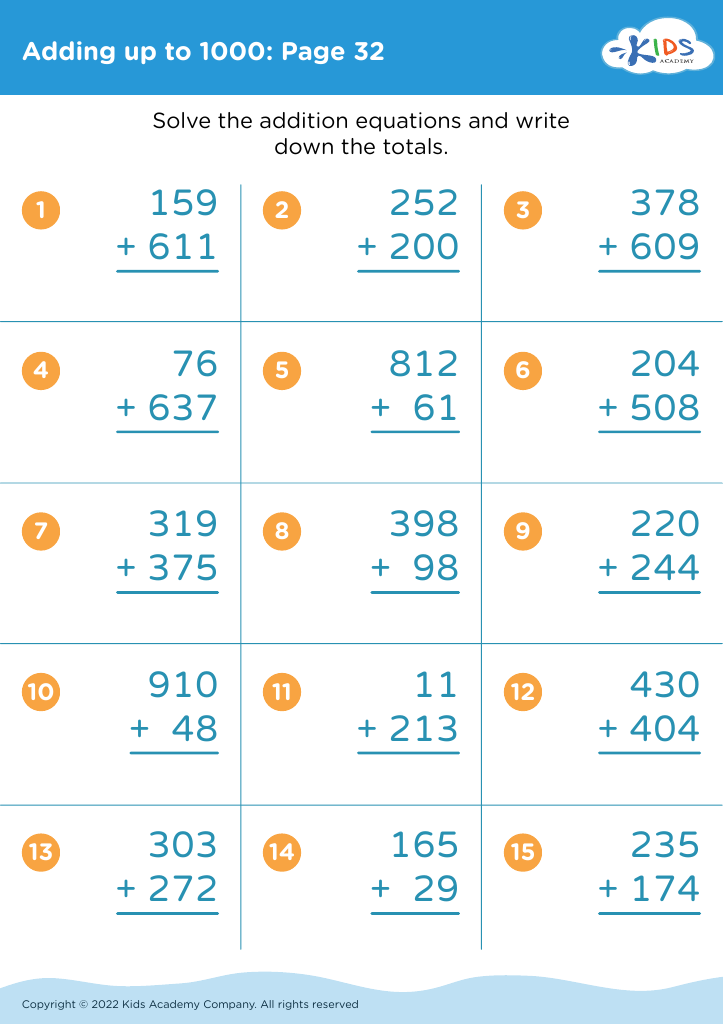
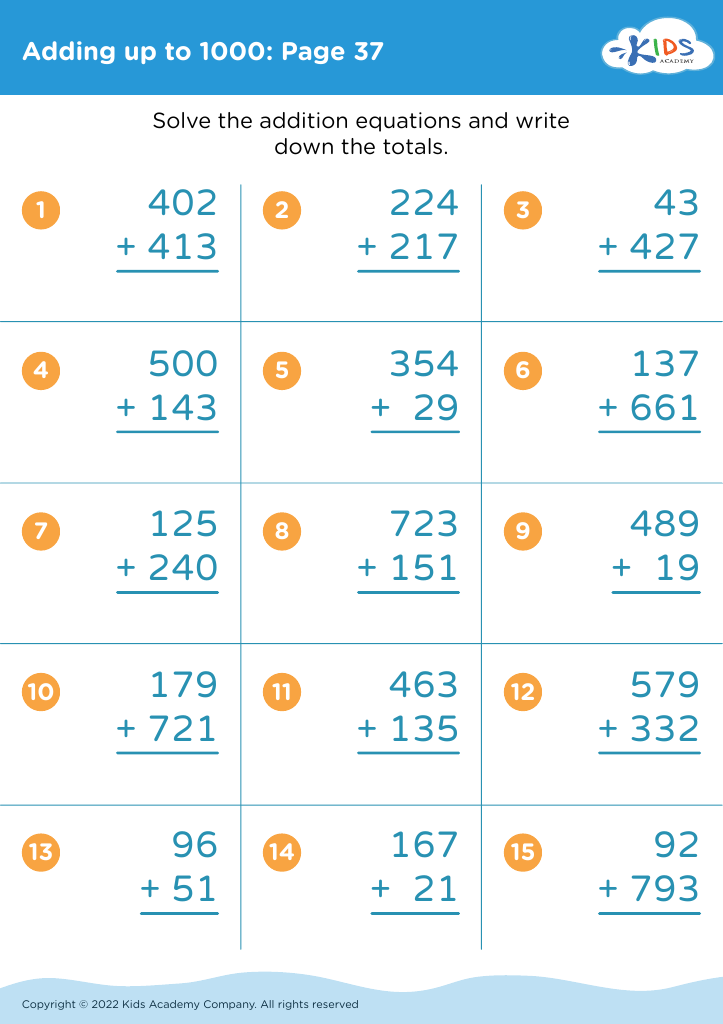
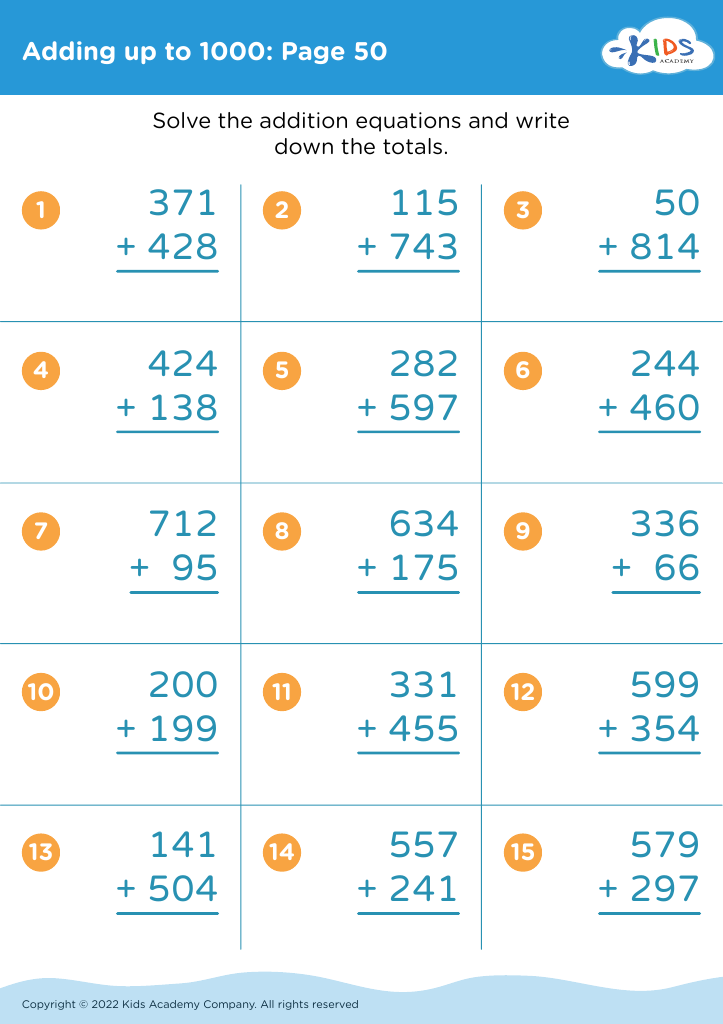
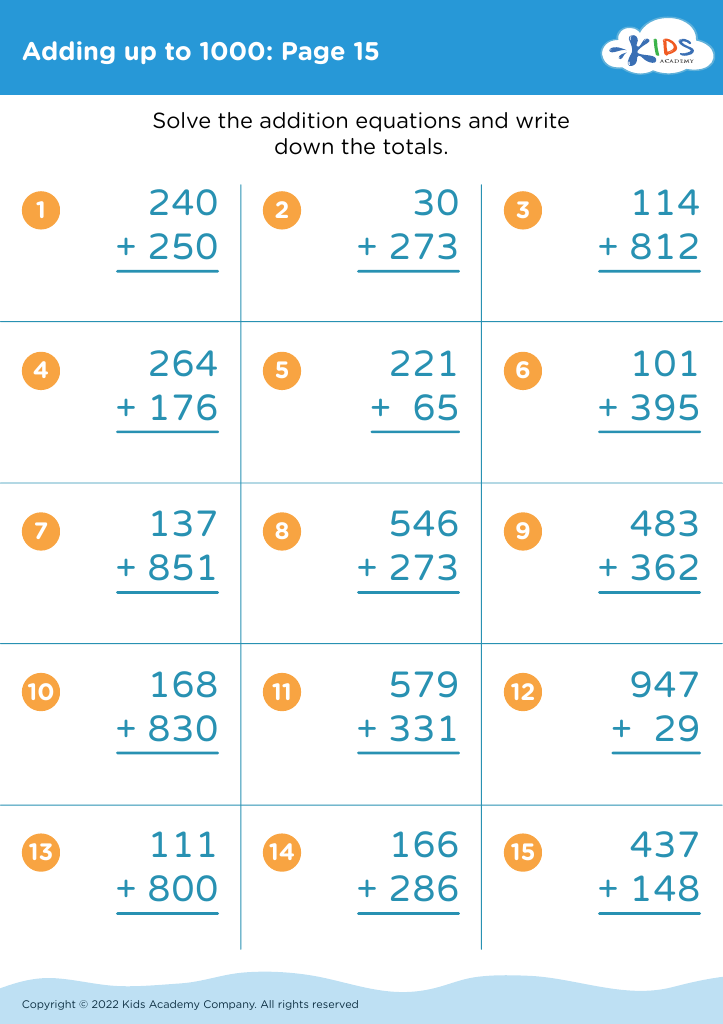
Welcome to our Counting Practice section dedicated to children aged 3-9! Our "Adding Up to 1000 Misc Worksheets" are designed to make learning fun and engaging. These worksheets help young learners enhance their counting skills through a variety of exercises that include adding, recognizing patterns, and number sequencing. With colorful illustrations and age-appropriate challenges, your child will enjoy mastering numbers up to 1000. Perfect for reinforcing classroom lessons or additional practice at home, these resources provide endless opportunities for skill development. Spark your child's love for math and build their confidence with our carefully curated worksheets today!
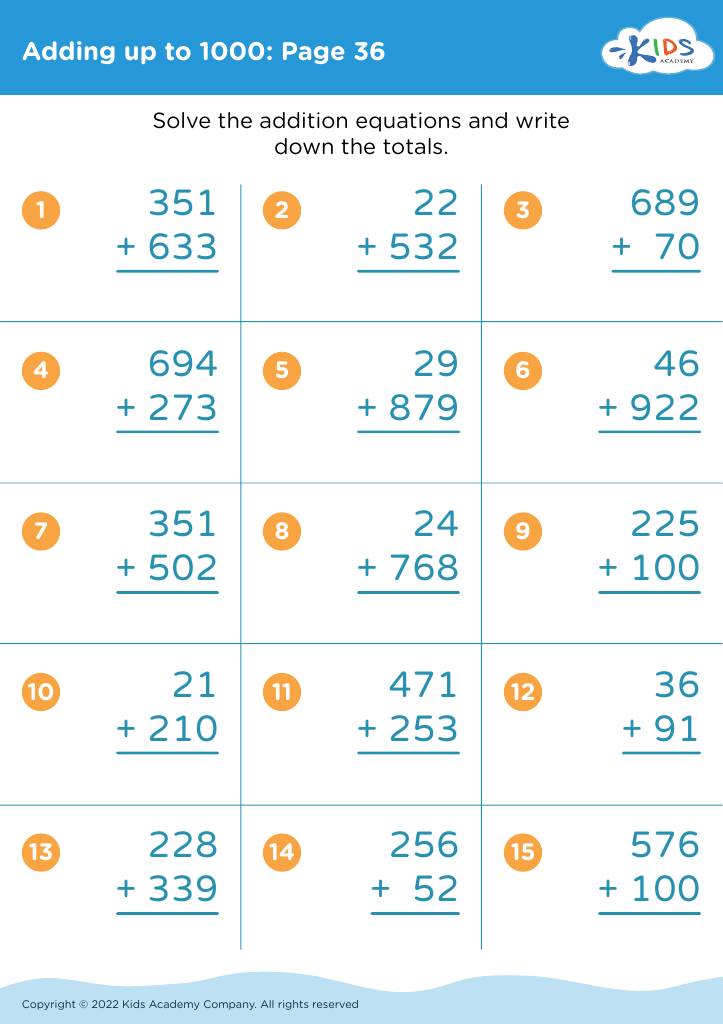
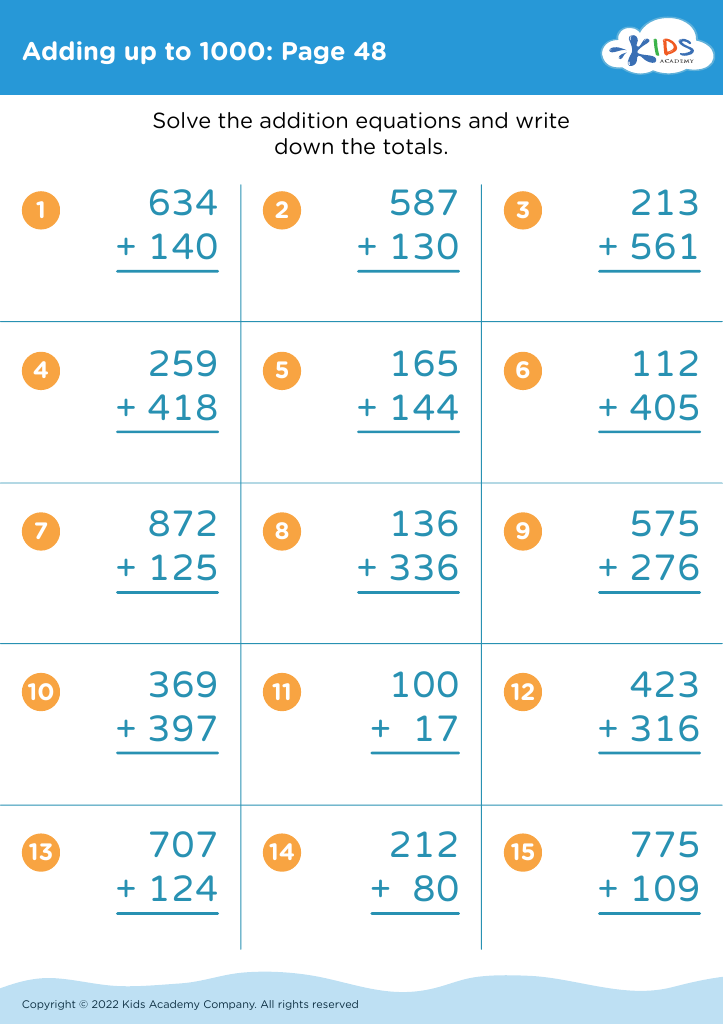


Counting practice, particularly adding up to 1000, is a vital component of early childhood education for children ages 3-9. Parents and teachers should care about this practice for several reasons.
Firstly, counting lays the foundational skills for more complex mathematical concepts. Early exposure to numbers and addition helps children develop number sense, which is crucial for their future academic success. Learning to count to 1000 enhances their understanding of patterns, sequencing, and the relationships between numbers.
Secondly, mastering counting enhances cognitive skills. It promotes critical thinking, problem-solving, and analytical capabilities. This practice also helps develop fine motor skills through writing numbers, with developmental benefits important during these formative years.
Additionally, integrating counting and adding activities into daily routines makes learning more engaging and fun. Parents can assist by using everyday objects and scenarios, while teachers can make it interactive through games and hands-on activities. This involvement fosters a positive attitude towards math.
Finally, proficiency in counting contributes to a child’s confidence in their abilities. By cultivating these skills early, parents and teachers prepare children not just for school, but for lifelong learning and success in a numerically driven world.