Critical Thinking Adding up to 1000 Misc Worksheets for Ages 3-9
3 filtered results
-
From - To
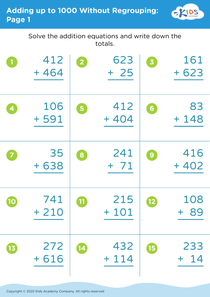
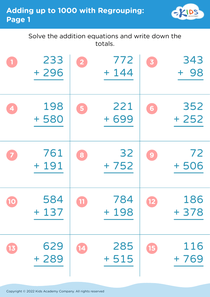
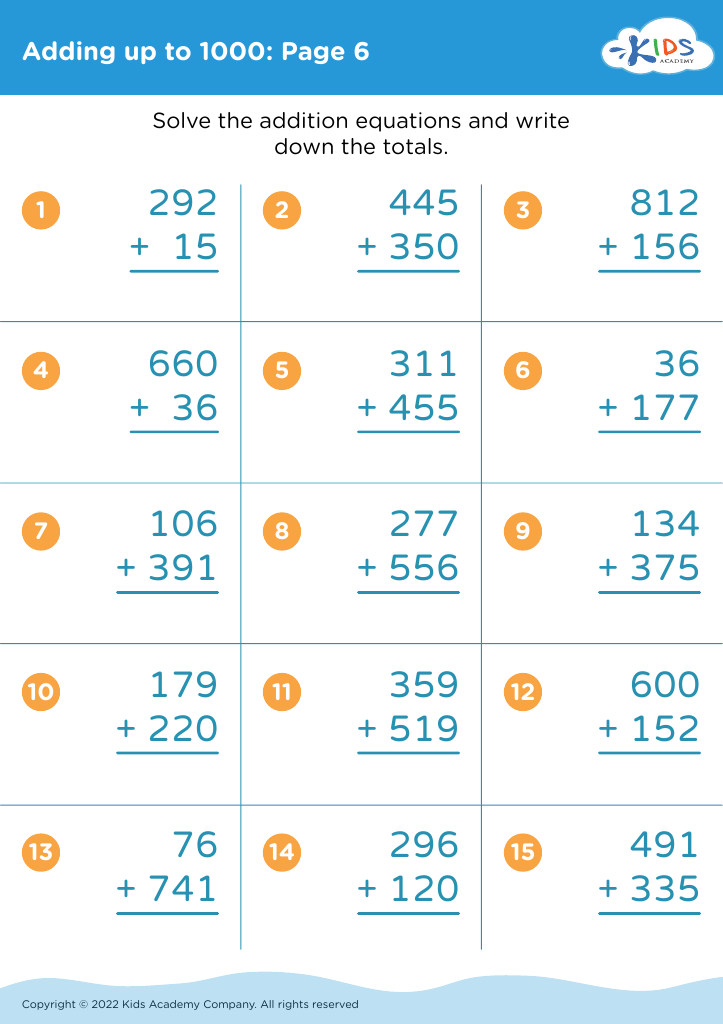
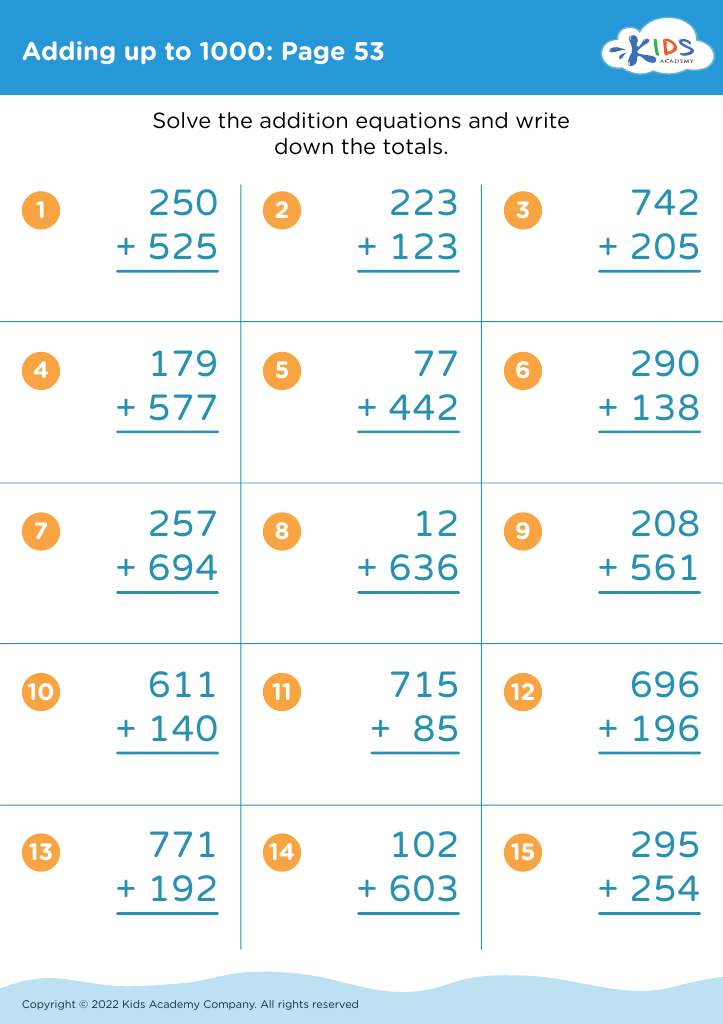
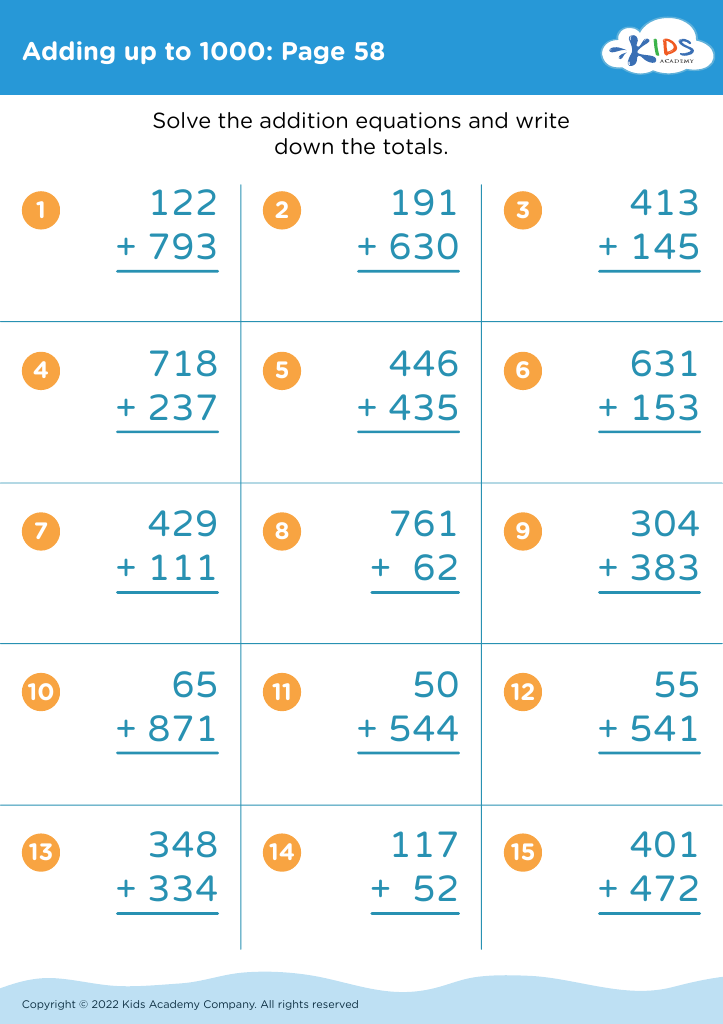
Discover the world of critical thinking with our "Adding Up to 1000 Misc Worksheets," specially designed for children ages 3-9. These engaging worksheets promote essential cognitive skills while making math fun! With a variety of exercises, children will tackle addition problems, develop problem-solving strategies, and enhance their analytical thinking. Each worksheet encourages creativity and boosts confidence in mathematical abilities, paving the way for academic success. Ideal for classrooms or home learning, our resources empower young learners to explore numbers and patterns while building critical thinking skills. Start your child’s journey to math mastery today!


Critical thinking is a fundamental skill that children need to develop from an early age, especially between the ages of 3 to 9. For parents and teachers, nurturing critical thinking during these formative years is pivotal for several reasons. First, it fosters curiosity and a love for learning. When children engage in critical thinking, they learn to question, analyze, and understand the world around them, laying the groundwork for lifelong learning.
Moreover, critical thinking encourages problem-solving abilities, which are crucial not only academically but in everyday life. Children learn to evaluate situations, make decisions, and think independently, fostering confidence and self-reliance. This is particularly important as they encounter various challenges and new experiences as they grow.
Additionally, critical thinking enhances communication skills. Children learn to articulate their thoughts clearly, listen to others’ perspectives, and construct coherent arguments. These skills are invaluable in a collaborative world where teamwork and negotiation are often essential.
Finally, instilling critical thinking helps to combat misinformation and develop empathetic social awareness. In a rapidly changing society, the ability to think critically supports better decision-making and promotes active citizenship. Thus, parents and teachers should prioritize critical thinking skills to equip children for a successful, engaged future.