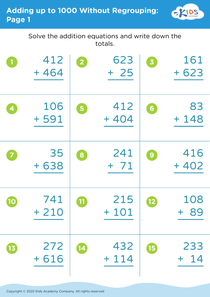
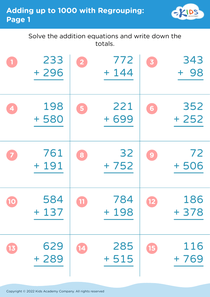
Fine Motor Skills Adding up to 1000 Misc Worksheets for Ages 3-9
5 filtered results
-
From - To
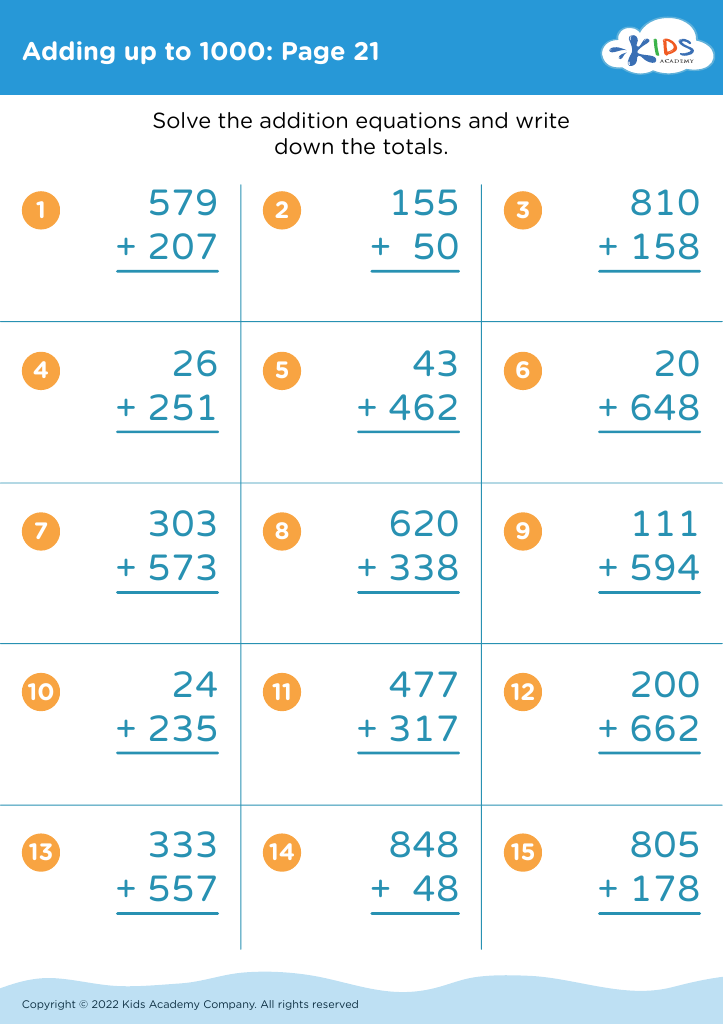
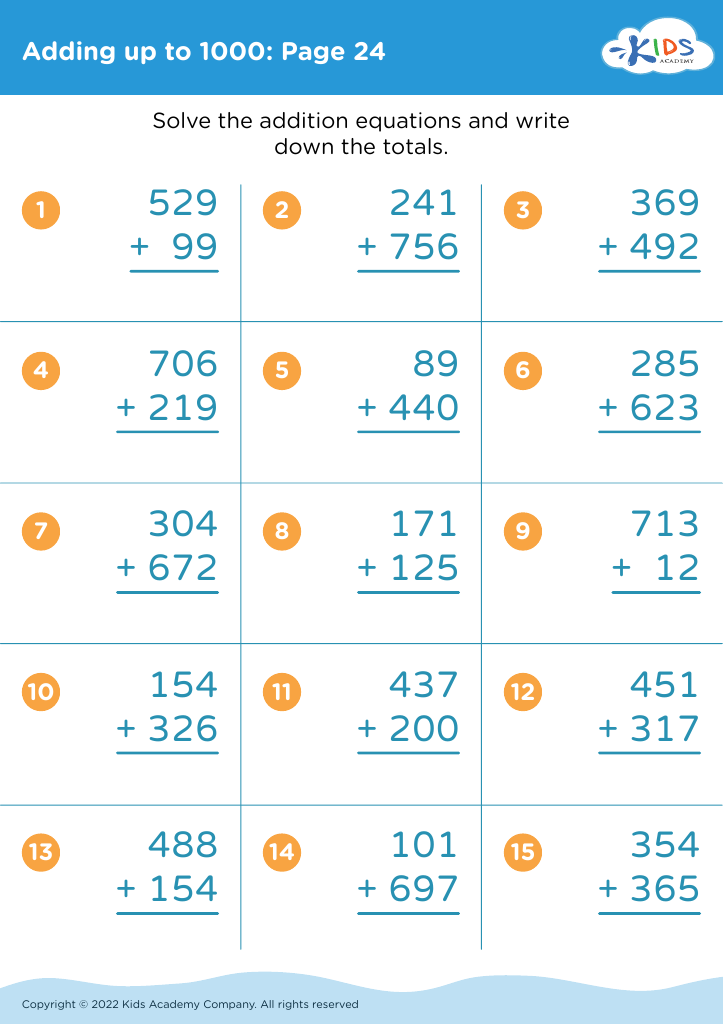
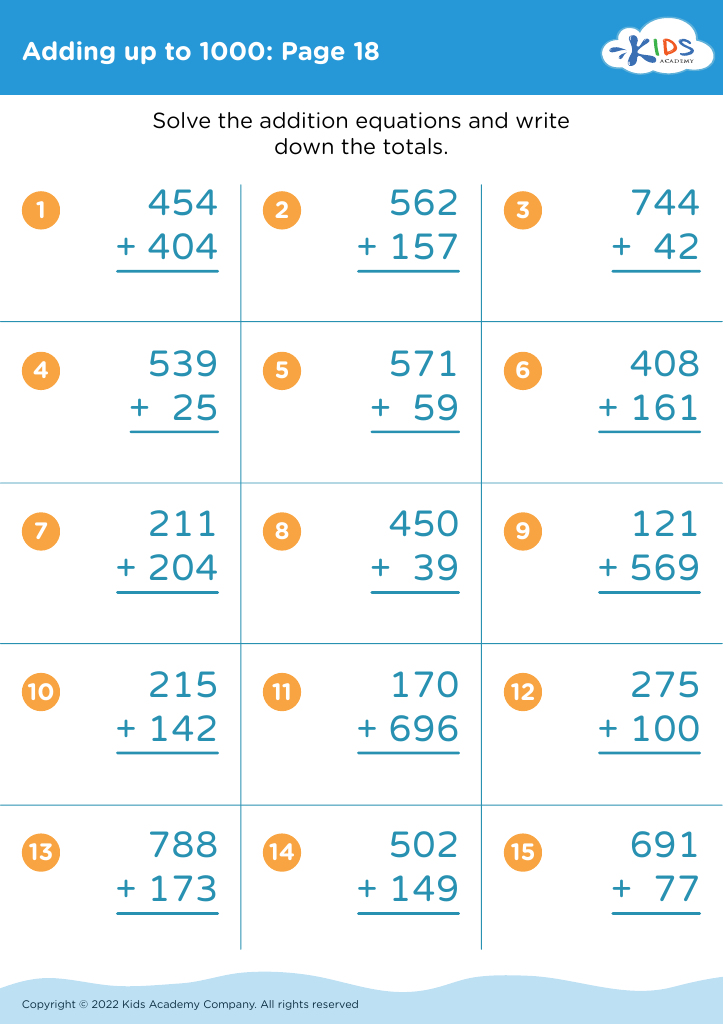
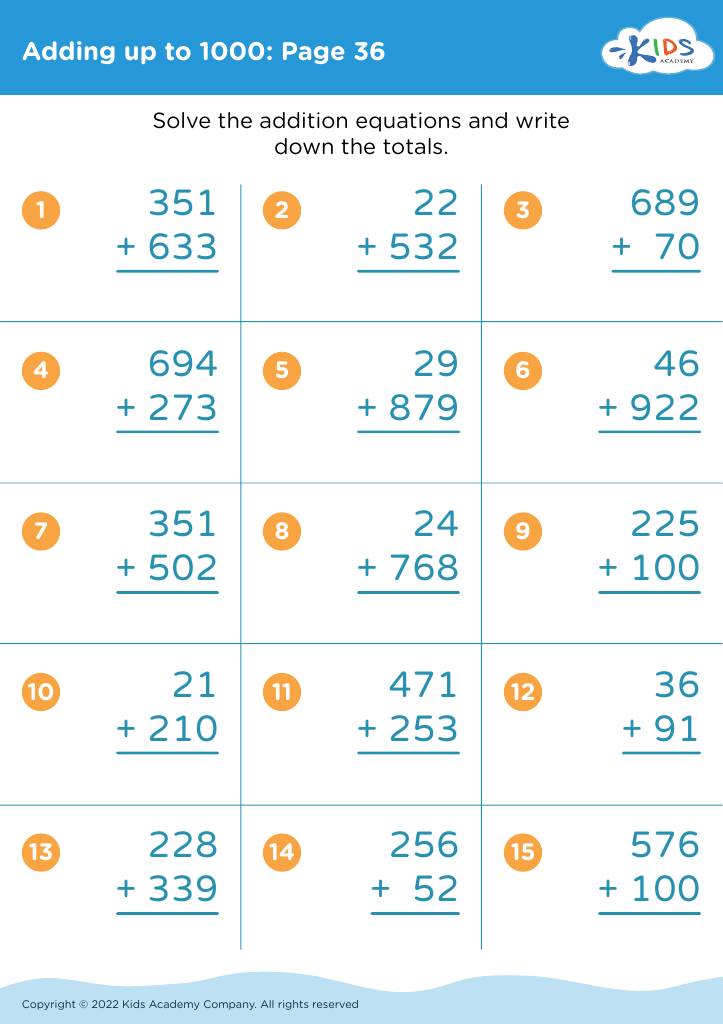
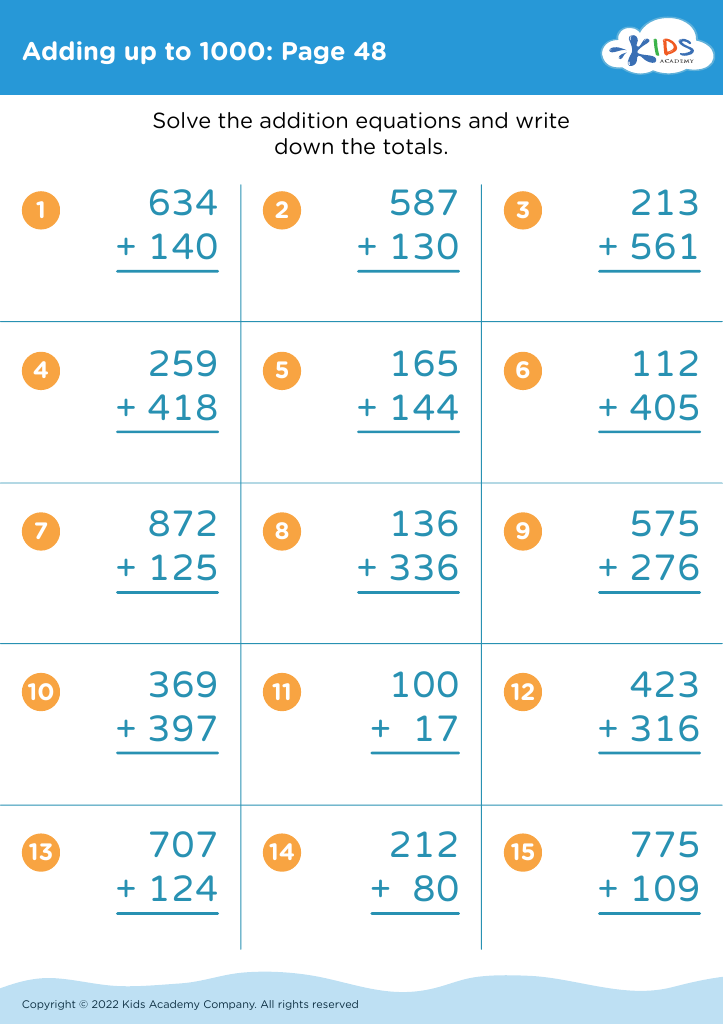
Enhance your child's fine motor skills with our comprehensive collection of over 1000 engaging worksheets designed for ages 3-9. These fun activities seamlessly blend learning and play, helping children strengthen their hand-eye coordination, grip, and dexterity while introducing them to essential math concepts of adding up to 1000. With a variety of colorful designs and interactive tasks, your little learners will enjoy building confidence in their abilities as they complete tasks that involve tracing, coloring, cutting, and more. Perfect for at-home practice or classroom use, our worksheets lay the foundation for future academic success and fine motor proficiency.


Fine motor skills are critical for children's development, particularly from ages 3 to 9, as these skills form the foundation for numerous everyday activities and academic tasks. Parents and teachers should prioritize these skills for several reasons. Firstly, fine motor skills involve the use of small muscles in the hands and fingers, which are essential for tasks like writing, buttoning clothes, and using scissors. When children master these skills, they gain independence in their daily activities.
Moreover, fine motor skills are closely linked to cognitive development. Activities that refine these skills, such as drawing, crafting, or playing with building blocks, encourage problem-solving, hand-eye coordination, and spatial awareness. Children also benefit from improved concentration and patience through engaging in fine motor activities.
Additionally, developing fine motor skills early can positively influence a child's academic performance as they transition to more complex tasks in school. Furthermore, fostering these skills can boost a child’s self-esteem, as they experience a sense of accomplishment when they master new abilities. Across various learning environments, investing in fine motor development ensures that children are well-prepared for the challenges they will face both in school and everyday life. Hence, parents and teachers play a crucial role in nurturing these skills.