Improve reading skills Adding up to 1000 Misc Worksheets for Ages 3-9
3 filtered results
-
From - To
Boost your child's reading skills with our comprehensive collection of 1000+ printable worksheets designed for ages 3-9. Our "Improve Reading Skills" section features engaging activities that enhance vocabulary, comprehension, and word recognition, all while making learning fun! Tailored to meet various developmental stages, these worksheets ensure a well-rounded educational experience, reinforcing essential reading fundamentals alongside math concepts. With colorful illustrations and interactive exercises, children will eagerly participate in hands-on learning. Ideal for parents and educators, these resources are perfect for home use or classroom settings. Help your child reach new reading heights today and enjoy the journey of learning together!
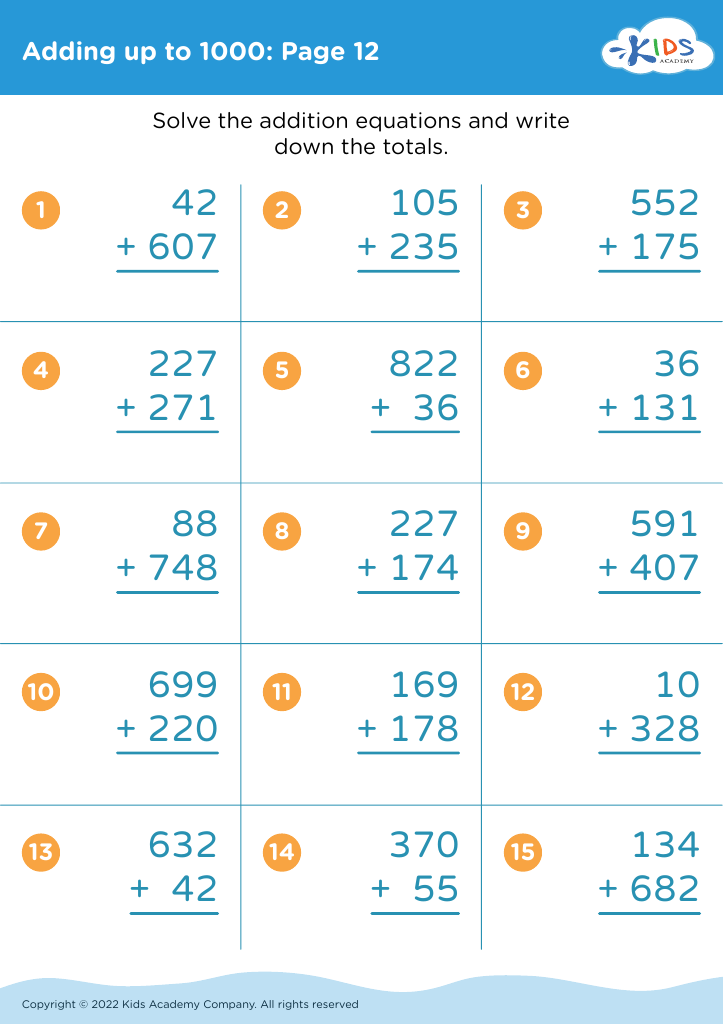


Improving reading skills is crucial for children aged 3-9, as this period lays the foundation for lifelong literacy. Parents and teachers should care about enhancing these skills for several reasons. Firstly, reading proficiency directly impacts overall academic performance. Children who read well are more likely to excel in other subjects such as math and science. Secondly, strong reading skills foster a love for learning. When children can engage with texts, they become curious and motivated to explore new ideas, enhancing their cognitive development.
Moreover, reading is essential for effective communication. Being able to express thoughts and understand others helps children form meaningful relationships. It also promotes empathy as they learn to appreciate diverse perspectives through stories. Improved reading skills can also significantly impact a child’s self-confidence. When children can read independently, they feel empowered, which translates to increased participation in class and a willingness to tackle challenges.
Finally, early literacy skills are predictive of future success. As children progress through school, their ability to read and comprehend increasingly complex texts can determine their educational and career opportunities. By prioritizing reading skills, parents and teachers invest in a child’s future, helping them navigate an ever-changing world with resilience and competence.